
The short answer
Getting your first cat is exciting, and it is easy to fall for a breed because of a photo. The real question is whether your daily routine, home and budget match that breed's needs. Four breeds come up again and again as difficult first cats: the Scottish Fold, the Persian, the Bengal and the Devon Rex. Each can be a wonderful cat in the right home, but each carries demands that a first-time owner may underestimate. This guide explains the risks in plain language, offers calmer alternatives, and gives you a practical checklist for a Malaysian home.
Why breed choice matters more than looks
A cat's breed is not a guarantee of personality, but it does shape health risks and care needs. Some breeds are bred for a specific look that comes with a physical cost. Others have energy or attachment levels that suit experienced owners better. When a high-need breed lands in a home that cannot meet those needs, both the cat and the owner struggle.
This is not about labelling any cat as bad. It is about honest matching. A first-time owner who works long hours, lives in a small apartment and has a limited budget will have a very different experience with a low-maintenance mixed-breed cat than with a breed that needs daily grooming, constant play or lifelong joint monitoring.
Before you choose a breed, write down three things: how many hours you are away from home each day, how much space you have for climbing and hiding, and how much you can set aside each year for vet care. These three answers will narrow your list faster than any breed quiz.
Breed 1: Scottish Fold
Why beginners are drawn to it
The folded ears look soft and expressive, and social media is full of charming photos. It is easy to see why people fall in love.
The reality
The folded ear comes from a cartilage gene variant. That same variant is linked to osteochondrodysplasia, a cartilage and bone condition that can cause joint pain, stiffness, lameness and a rigid tail. Every folded-ear cat carries this risk, and no breeder can promise a completely unaffected cat. Problems may appear early or later in life, and management is often lifelong.
For a new owner, that means possible repeated vet visits, pain management, weight control and home adjustments such as ramps or low-sided litter boxes. It also means emotional strain if the cat is uncomfortable.
A calmer alternative
A British Shorthair offers a round face, large eyes and a calm, steady temperament without the folded-ear gene risk. They still need grooming and play, but the health profile is generally simpler for a first-time owner.
Breed 2: Persian
Why beginners are drawn to it
The long coat and flat face give a doll-like, elegant look that many people find irresistible.
The reality
Flat-faced, or brachycephalic, breeds often have narrowed airways. This can show up as noisy breathing, frequent eye discharge, heat intolerance and a higher risk of overheating. In a hot and humid climate, that heat sensitivity deserves serious thought. Long fur also needs daily combing. Skip a few days and mats can form, and severe mats may need shaving, which is stressful and adds cost.
Persians can be gentle and affectionate, but the daily care load is real. A new owner who is already stretched by work and family may find the grooming and eye cleaning routine hard to sustain.
A calmer alternative
A Chinchilla cat has a long, elegant coat but a more typical facial structure and generally easier breathing. It still needs regular grooming, so treat the daily comb as part of the deal rather than an optional extra.
Breed 3: Bengal
Why beginners are drawn to it
The spotted, leopard-like coat is striking, and Bengals look like a piece of the wild brought home.
The reality
Bengals are active, intelligent and curious. They need daily interactive play, vertical space and things to climb. In a small home without a cat tree or regular play sessions, that energy can turn into loud calling, climbing on shelves, knocking things over and sometimes rough play. This is not naughtiness; it is an unmet need.
Bengals can also be skilled escape artists, so window screens and balcony safety matter even more. They are rewarding for owners who enjoy training and play, but they are not a low-effort apartment cat.
A calmer alternative
An American Shorthair has attractive tabby patterns and a steadier, more moderate activity level. They still enjoy play, but they are generally more content with a predictable routine.
Breed 4: Devon Rex
Why beginners are drawn to it
The large ears and elfin face are distinctive, and the short coat looks easy to care for.
The reality
Devon Rex cats are often intensely people-focused. They may follow you from room to room and dislike long periods alone. In a household where everyone works long hours, that can lead to separation-related stress, vocalising and destructive behaviour. Their short, sparse coat also offers less insulation, so cold air-conditioned rooms can be uncomfortable for them. Some lines carry genetic heart or muscle conditions, so health screening matters.
A calmer alternative
A mixed-breed cat, often called a domestic shorthair, is a strong first choice. Mixed-breed cats generally have broader genetic diversity, adapt well to different homes and are widely available through adoption. Many are already vaccinated and neutered, which reduces the early workload.
Comparison table
| Breed | Main challenge for beginners | Similar-looking or similar-tempered alternative | Beginner friendliness |
|---|---|---|---|
| Scottish Fold | Lifelong cartilage and joint risk | British Shorthair | Moderate |
| Persian | Daily grooming plus breathing and heat sensitivity | Chinchilla | Moderate to low |
| Bengal | Very high energy and need for daily enrichment | American Shorthair | Moderate |
| Devon Rex | Strong attachment needs and poor cold tolerance | Mixed-breed domestic shorthair | High |
What to choose instead
If you want a calm first cat, start with temperament and health rather than appearance. A British Shorthair or American Shorthair can suit a busy household that still has time for daily play. A Chinchilla suits someone who genuinely enjoys grooming. A mixed-breed cat from a shelter or rehoming group is often the most forgiving choice, especially an adult cat whose personality is already known.
Adopting an adult cat has practical advantages. You can ask the shelter how the cat behaves around people, other cats and noise. Many adopted cats are already neutered and vaccinated. You also skip the unpredictable kitten stage, which can be demanding for a first-time owner.
A Malaysia-focused preparation checklist
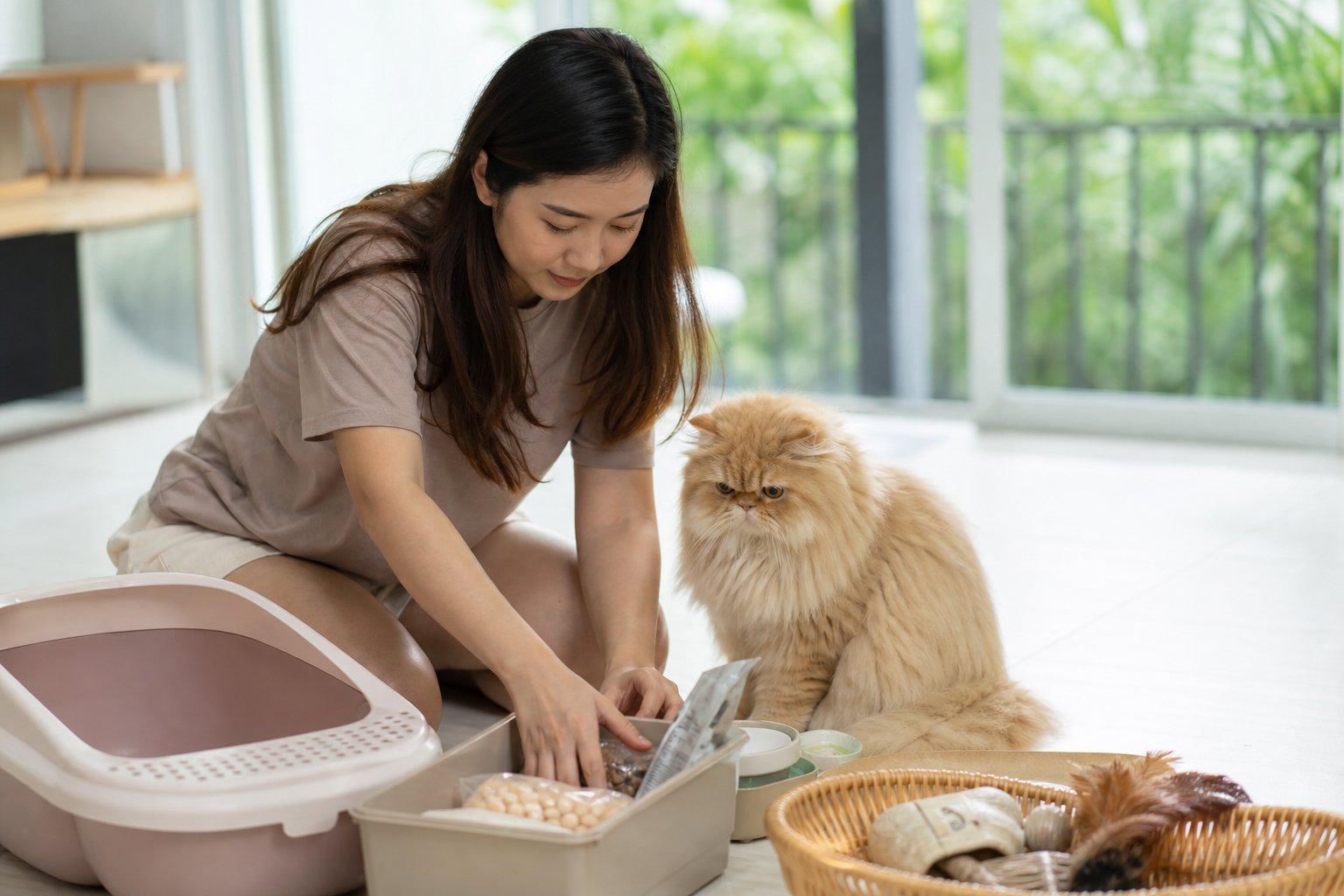
Use this checklist before you bring any cat home. It works for every breed.
- Measure your space. Identify where the litter box, food area, scratching post and climbing tree will go. In a Kuala Lumpur apartment, vertical space often matters more than floor space, so choose a sturdy cat tree that fits your ceiling height.
- Check window and balcony safety. Screens or grilles should have gaps small enough that a cat cannot slip through. If you rent, ask the landlord before drilling or installing anything.
- Build a budget. Separate one-time costs such as litter box, carrier, scratching post and neutering from monthly costs such as food, litter and parasite prevention. Add a buffer for unexpected vet visits. Local prices vary, so ask a Malaysian vet and retailer for current figures rather than relying on overseas comparisons.
- Find a vet before you need one. Save the clinic's number and ask about emergency hours. A Johor terrace house owner may have a different nearest clinic than someone in a Penang apartment, so check your own area.
- Prepare for heat and humidity. Malaysia's climate means fresh water, shade and good ventilation matter. Flat-faced breeds are especially vulnerable to overheating, so keep rooms cool and avoid midday outings in a carrier.
- Set a daily routine. Ten minutes of play before you leave, fifteen minutes of grooming or training after work, and five minutes of puzzle or toy time before bed add up to a manageable half hour.
- Plan for the rainy season. In Penang, heavy rain can keep cats indoors for days. Stock up on litter, food and indoor toys so you are not caught short.
Daily care in 30 minutes
A common worry is that a cat needs constant attention. In practice, short focused sessions work well.
- Morning, 10 minutes: active play with a wand toy. This helps the cat burn energy and settle while you are out.
- After work, 15 minutes: grooming plus a little training or treat time. For long-haired cats, comb gently and check for mats. For short-haired cats, a rubber brush is often enough.
- Before bed, 5 minutes: a puzzle feeder or a few minutes of chase play. This reduces night-time activity.
- Weekend, 30 minutes: deep clean the litter box, wash bowls, wipe the cat tree and do a longer play session.
This routine is easier to keep than an ambitious plan that collapses after a week.
When to see a vet
See a vet promptly if your cat shows noisy or laboured breathing, persistent eye discharge, limping, stiffness when jumping, reluctance to move, sudden weight loss, or a change in appetite or litter box habits. For flat-faced breeds, any sign of overheating such as heavy panting or weakness in warm weather needs urgent attention. For folded-ear cats, new lameness or tail stiffness should be checked rather than watched for weeks. If you are unsure, call the clinic and describe what you see.
Final thoughts
Choosing a first cat is not about finding the most beautiful breed. It is about finding a cat whose needs you can meet consistently for the next 15 years. If a breed's health or care demands feel like too much right now, that is useful information, not a failure. A calmer breed or an adopted mixed-breed cat can give you the companionship you want without the mismatch.
This article is general information only and is not a substitute for veterinary advice. Always consult a licensed veterinarian about your cat's health.