
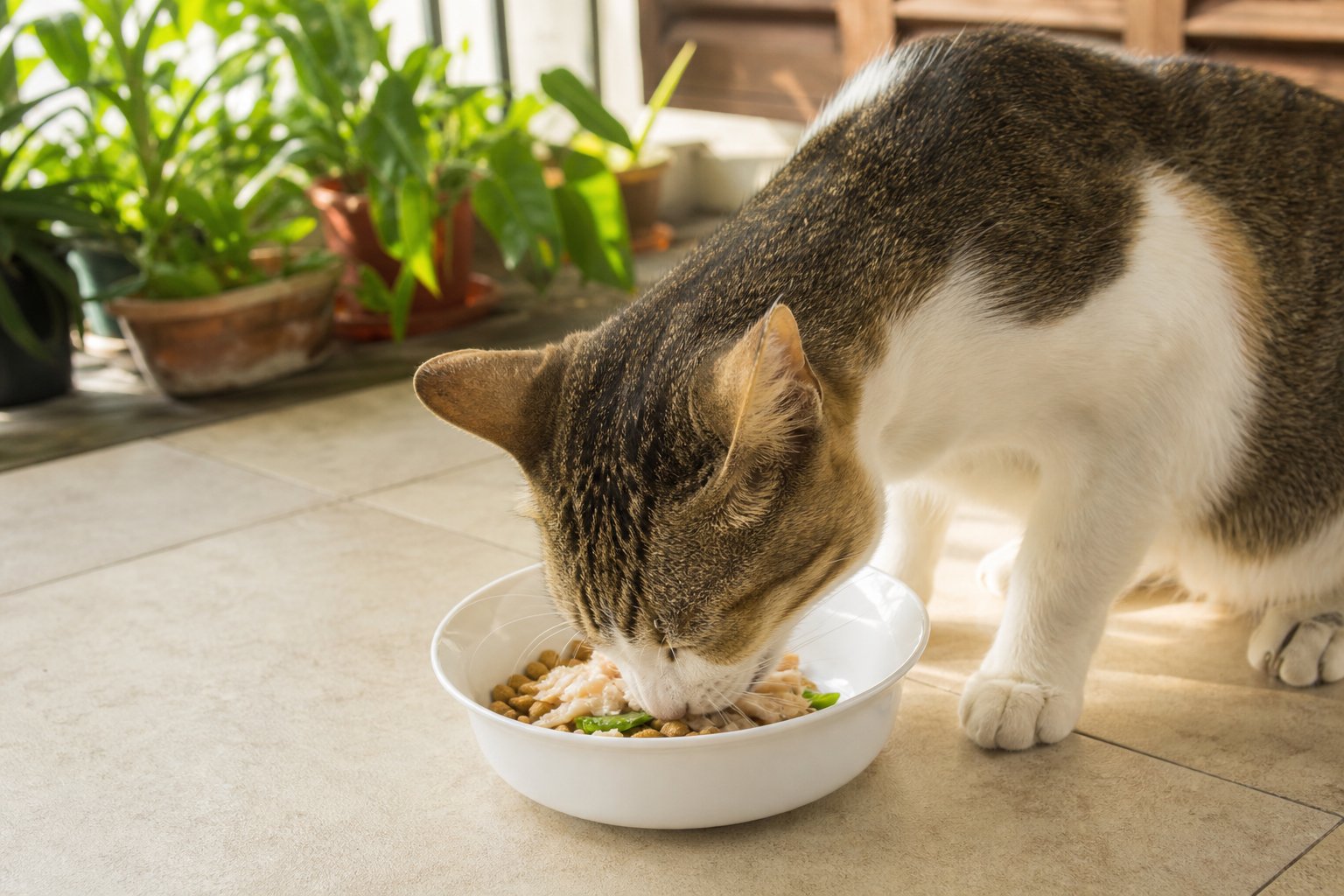
Most healthy dogs and cats eating a complete and balanced commercial diet do not need daily vitamin supplements. Supplementation only makes sense with a documented reason — a confirmed deficiency, a chronic illness, a prescription diet, a specific life stage, or professionally formulated home-cooked meals. Because fat-soluble vitamins and minerals accumulate in the body, giving too much is usually harder to correct than giving too little. The dose should always be set by your vet.
Do dogs and cats really need daily vitamins?
The answer splits into two situations: eating a balanced diet, and eating an unbalanced one.
If the main diet is commercially produced and labelled complete and balanced — the wording usually appears as "complete and balanced" plus the relevant life stage — then the formulation has already accounted for vitamin and mineral content, including losses during processing and storage. Adding a daily multivitamin on top of that does not make a pet healthier; it pushes fat-soluble vitamins and minerals closer to their upper limits.
Nutrition guidance from international small animal veterinary bodies makes the same point: a nutrition plan should be built around an individual assessment, not applied to every animal by default.
The second situation is a genuine gap in the diet. Common examples include long-term home-cooked meals that were never calculated for calcium-to-phosphorus ratio and vitamin content, a prescription diet combined with a second supplement that overlaps or cancels out part of the formula, a blood-confirmed deficiency such as low vitamin B12 in a cat with chronic intestinal disease, rapid growth in puppies and kittens, pregnancy and lactation, ageing pets with reduced absorption, and chronic conditions affecting the kidneys, liver, heart, pancreas or gut.
Only the last group genuinely calls for supplementation, and every case in that group needs veterinary involvement. A dull coat or a slightly reduced appetite is not, on its own, a reason to buy vitamins — those signs can come from parasites, dental pain, kidney disease or stress, and topping up nutrients may simply mask the real problem.
When supplements are genuinely justified
Think of the decision as a short sequence: confirm whether a deficiency exists, then decide how much, how long, and how to stop. Reversing that order is where most households get into trouble.
Supplements are most defensible in these situations:
- A veterinarian has identified a deficiency through examination or blood work, and will monitor whether it corrects.
- A chronic condition requires dietary support that the standard diet cannot provide on its own.
- The pet is on a prescription diet and the vet has specifically added a complementary product.
- Home-cooked food is being fed long term and the recipe was formulated by a veterinary nutrition professional, with periodic review.
- A defined life stage increases demand, such as growth, pregnancy or lactation, under veterinary supervision.
What does not count as a reason: a social media recommendation, a friend's pet taking the same product, packaging that promises shinier coats, or the feeling that doing nothing is negligent. Preventive care that genuinely works is unglamorous — a complete diet, healthy weight, dental care and regular check-ups.
The main categories of pet supplements
Recognising the category helps you spot duplication before you buy. Two products that sound completely different may deliver the same nutrients.
| Category | Common examples | Typical use | What to watch for |
|---|---|---|---|
| Multivitamins and minerals | Dog or cat multivitamin tablets, nutrient pastes, vitamin powders | Filling a gap the vet has confirmed | Cannot replace the main diet; fat-soluble vitamins accumulate |
| Probiotics and prebiotics | Probiotic powders, chewable tablets, gut-support pastes | Support during recovery from diarrhoea or a course of antibiotics | Use pet-specific strains; acute vomiting or diarrhoea needs a vet first |
| Omega-3 fatty acids | Fish oil, krill oil | Skin, coat and joint support | High doses affect clotting, so pause before surgery; check actual EPA and DHA |
| Joint support | Glucosamine, chondroitin, green-lipped mussel | Support for older or large-breed dogs | Supportive only, not a painkiller, and cannot repair worn cartilage |
| Specific vitamins | B-complex, vitamin B12, folate | Replacing a documented deficiency | Requires blood testing first; retest only after the course finishes |
| Specific amino acids and minerals | Taurine, lysine, calcium powder | Breed-specific needs or calculated home diets | Calcium-to-phosphorus ratio must be calculated; extra calcium can harm |
The most useful thing this table does is expose overlap. A cat might simultaneously be on a coat-support fish oil, a joint formula and a general multivitamin, and all three may contain vitamin E and zinc. Another household may buy a "digestive formula" and a separate probiotic that are effectively the same product.
Stacking is the single most common route to exceeding safe levels, because each product looks reasonable on its own but the combined total does not.
Also keep supplements and prescription diets apart conceptually. A prescription diet is a complete food selected for a diagnosed condition and may form part of treatment; a supplement only assists and will not change the direction of the disease.
Deficiency and overdose: which nutrients accumulate
This is the most important technical section. Water-soluble vitamins such as the B group and vitamin C are generally excreted in urine when taken in excess, so they are comparatively forgiving. Fat-soluble vitamins and minerals are not — they build up, and an overdose can cause real damage.
| Nutrient | Possible signs of deficiency | Risk of excess | Practical note |
|---|---|---|---|
| Vitamin A | Poor night vision, dull skin and coat, slowed growth | Bone changes and liver burden; cats are especially sensitive | Liver-rich foods contribute to the total; count everything fed |
| Vitamin D | Abnormal bone development, disturbed calcium and phosphorus balance | High blood calcium, calcification of kidneys and soft tissues | Human products are far more concentrated than pets need |
| Vitamin E | Weaker antioxidant defence, muscle weakness | Less common, but still dose-dependent | Often given alongside fish oil, so calculate the combined total |
| Calcium and phosphorus | Fragile bones, convulsions, abnormal growth | Skeletal problems in young animals, kidney burden | Home-cooked diets are the most likely to be imbalanced |
| Iron | Anaemia, low energy, reduced activity | Gastrointestinal irritation, oxidative damage | Never supplement iron without blood testing |
| Zinc | Skin problems, poor coat, slow wound healing | Interferes with absorption of other minerals | Follow the vet's dose; more is not better |
Three working rules follow from this table.
First, deficiency is confirmed by testing, not by appearance. Skin problems can stem from allergies, parasites or hormonal disease rather than a lack of zinc or Omega-3. Second, excess is harder to reverse than shortage — tissue calcification caused by vitamin D excess does not resolve the moment you stop feeding it. Third, human products carry the highest risk: a single adult multivitamin can contain vitamin D and iron at levels that are extreme for a four-kilogram cat.
If a pet already has kidney or heart disease, phosphorus and sodium intake need tighter control, and that is a prescription decision rather than something a bottle from the shelf can handle.
Supplements versus medicines: reading the label
Supplements are generally sold as health products rather than registered veterinary medicines. Two practical consequences follow. They should not claim to treat or cure a disease, and the standards applied to their composition are less exacting than those for registered medicines, so you are the one checking that what is stated matches what is inside.
When you read a label, these are the details worth your time:
| What to check | A reassuring label looks like | A warning sign looks like |
|---|---|---|
| Ingredient amounts | Actual milligrams or international units listed per tablet or per gram | "Proprietary blend" or "exclusive formula" with no per-ingredient figures |
| Intended user | Clearly marked for dogs, cats or both, with a weight-based feeding guide | Only "suitable for pets", with no dosing guidance |
| Production details | Batch number, production date, expiry date, manufacturer or distributor contact | No batch number, or a vague "see packaging for shelf life" |
| Quality checks | Third-party testing, veterinary involvement in formulation, or certification marks | Endorsements or the word "natural" used as the main selling point |
| Overlap risk | Full disclosure of ingredients shared with other products or foods | Quietly presented as a complex formula that invites repeat purchases |
One point deserves emphasis: natural does not mean safe. Vitamin A, vitamin D, iron and zinc all occur naturally, and at high concentration they poison. Some herbal ingredients also interact with prescription drugs.
If your pet is taking heart medication, anti-epileptic drugs, immune-suppressing drugs or thyroid medication, check with your vet before adding anything at all. Official guidance on responsible pet care and animal health is available from the Department of Veterinary Services at dvs.gov.my, and general welfare and care advice is published by the SPCA at spca.org.my.
How to choose: an eight-point checklist
Use this sequence every time, whether it is your first purchase or your fifth.
- State the reason in one sentence. If you can write a specific justification — blood test showing low B12, prescription diet pairing, joint support for an ageing large breed — the purchase may be worth it. If you cannot, you probably do not need it.
- Confirm it is pet-specific with a weight-based guide. A product without a feeding guide forces you to guess.
- Read the amount per serving, not the total pack weight. Two products both stating "fish oil 500 mg" can differ several-fold in actual EPA plus DHA.
- Check for duplication with current food, treats and medication, especially vitamins A, D and E, zinc, calcium and phosphorus.
- Verify batch number and expiry date. Supplements expire too; an expired product delivers unreliable amounts.
- Add only one product at a time and observe for one to two weeks, so any reaction can be traced.
- Record the start date, product name and amount. Bringing the actual bottle to a follow-up appointment is far more accurate than recalling it from memory.
- Review whether it is still needed. Supplements are not for life; once a documented deficiency has resolved, the vet may advise stopping.
Prices and availability vary widely between Malaysian retailers, so compare specifications rather than assuming a higher price means a better product, and ask your vet or a pet retailer for current pricing.
A practical illustration: a cat living in a Kuala Lumpur apartment on a complete dry diet with steady weight, bright eyes and a normal coat is the classic case where no supplement is required — the apartment lifestyle changes exercise and weight management, not vitamin requirements. The same cat on long-term home-cooked food, by contrast, needs a formulated recipe and periodic review rather than a random multivitamin from the shelf.
Feeding supplements correctly: six common mistakes
Once the vet has confirmed supplementation, execution matters as much as the choice of product.
- Measure by weight and guide, using a proper scoop or pill splitter. Eyeballing a dose is unreliable, especially with powders.
- Mix into a small amount of food, not the whole bowl. If the meal is not finished, you no longer know how much was consumed.
- Introduce one product at a time and watch for one to two weeks. Soft stools, vomiting or itching mean stop and contact the vet.
- Do not adjust the dose yourself. "It does not seem to work" is not a reason to double it.
- Store as labelled — away from light, moisture and heat; some products need refrigeration after opening.
- Bring the original packaging to every follow-up appointment.
The six mistakes to avoid are cutting up human vitamins for pets; running several products at once with overlapping ingredients; judging the need by appearance alone; continuing indefinitely after improvement with no reassessment; confusing treat quantities with supplement quantities; and assuming that natural or organic means there is no upper limit.
During Penang's rainy season, high humidity can trigger skin and coat worries that owners instinctively reach for fish oil or biotin to fix. Itching and recurrent skin irritation in that weather are more often related to parasites, allergies or fungal infection, so a veterinary check should come before any supplement — otherwise the underlying cause keeps running while you wait for a bottle to work.
When to see a vet
Do not wait, and do not rely on online advice, in these situations:
- Suspected supplement overdose. Swallowing half a bottle or more — particularly iron, vitamin D, zinc, or any human product — is an emergency.
- Acute symptoms. Repeated vomiting, bloody or black stools, excessive drooling, seizures, unsteady walking, or a pet that is unresponsive and dull.
- Possible allergic reaction. Facial or eye swelling, hives, rapid breathing or open-mouth breathing after a new product.
- Existing chronic illness or prescription medication. Kidney, liver, heart or diabetic patients, and any pet on anti-epileptic, heart or immune-suppressing drugs, need veterinary approval before anything new is added.
- Persistent loss of appetite, weight loss, or clear changes in drinking and urination. These need diagnostic tests, not supplements.
- No improvement after a reasonable period of supplementation. That suggests the original assumption was wrong and the cause needs re-evaluation.
In an emergency, contact a veterinarian or emergency clinic immediately. This article is for reference only and cannot replace veterinary diagnosis.
Frequently asked questions
Q: My cat eats a complete and balanced diet. Does it still need extra vitamins?
A: Generally no. If the food meets complete and balanced standards for its life stage and your cat's energy, weight and coat are normal, extra multivitamins bring no real benefit and raise the risk of fat-soluble vitamin and mineral build-up. Supplementation is normally reserved for confirmed deficiency, chronic disease or prescription diet pairing.
Q: What is the difference between pet multivitamins and human ones?
A: They are not interchangeable. Human doses are designed around adult body weight, so one tablet can exceed a pet's requirement many times over, and chewables, gummies and sprays often contain sweeteners or xylitol harmful to dogs. Vitamin D, iron and zinc concentrations also overshoot easily. Use a pet product at a vet-set dose.
Q: Do joint products such as glucosamine really work for dogs?
A: They are supportive rather than analgesic and cannot restore cartilage that has already worn away. Typical candidates are large breeds, older dogs, or pets with a vet-diagnosed joint problem, used as part of a plan that includes weight control and suitable exercise. Hesitation on stairs or reluctance to jump warrants a vet visit first.
Q: Can cats take fish oil or Omega-3 supplements?
A: That is a veterinary decision. Omega-3 is often used for skin, coat and joint support, but high doses influence clotting and are usually paused before surgery or with bleeding disorders. Fish oil also adds calories and excess can soften stools. Check the EPA and DHA per serving rather than total oil weight.
Q: What should I do if my pet swallows too many supplements?
A: Handle it as an emergency. Move the remaining product and cap away, note roughly how many capsules or milliliters were swallowed and at what time, then call your vet or a 24-hour emergency clinic straight away. Products containing iron, vitamin D, zinc or human formulations are highest risk. Do not induce vomiting, and take the packaging.
Q: What are the common signs of vitamin B12 excess in pets?
A: B12 is water-soluble and surplus amounts are typically cleared in urine, so no characteristic overdose symptoms are described. The nutrients that actually accumulate are fat-soluble vitamins A, D, E and K plus minerals. Swallowing a large quantity still needs a prompt vet call, without attempting to make the pet vomit.
This article is for general information only and does not replace veterinary diagnosis, prescription or treatment. Speak to your veterinarian before starting, changing or stopping any supplement for your pet.
Related reading
- Cat & Dog Fruits and Vegetables Safety Part 5: Banana, Mango, Jasmine and Sweet-Smell Warning Signs in Malaysia
- Cat & Dog Fruits and Vegetables: Part 2 Safety Guide for Malaysia
- Cat and Dog Fruit & Vegetable Feeding Safety in Malaysia: Portions, Poisoning Risks and Storage (Part 2)
- Fruits and Vegetables for Cats and Dogs: What Is Safe, What Is Not (Malaysia, Part 5)
- Cat Vitamin B12 Supplement Forms in Malaysia: 6 Dosage Forms and How to Choose
- Dog Food Label Malaysia: Guaranteed Analysis, Dry Matter Conversion and Carb Calculation
- Human Food and Pets in Malaysia: What's Safe, What's Toxic, and What to Do After Ingestion
- Pet Food Storage in Malaysia: Keep Dry Food, Cans and Fresh Meals Safe in Humid Weather
- Fruit and Vegetable Safety for Malaysian Cats and Dogs: What to Feed, What to Avoid
- Pet Nutrition Hub Malaysia: Protein, Phosphorus, Calories, Weight & Prescription Diets