
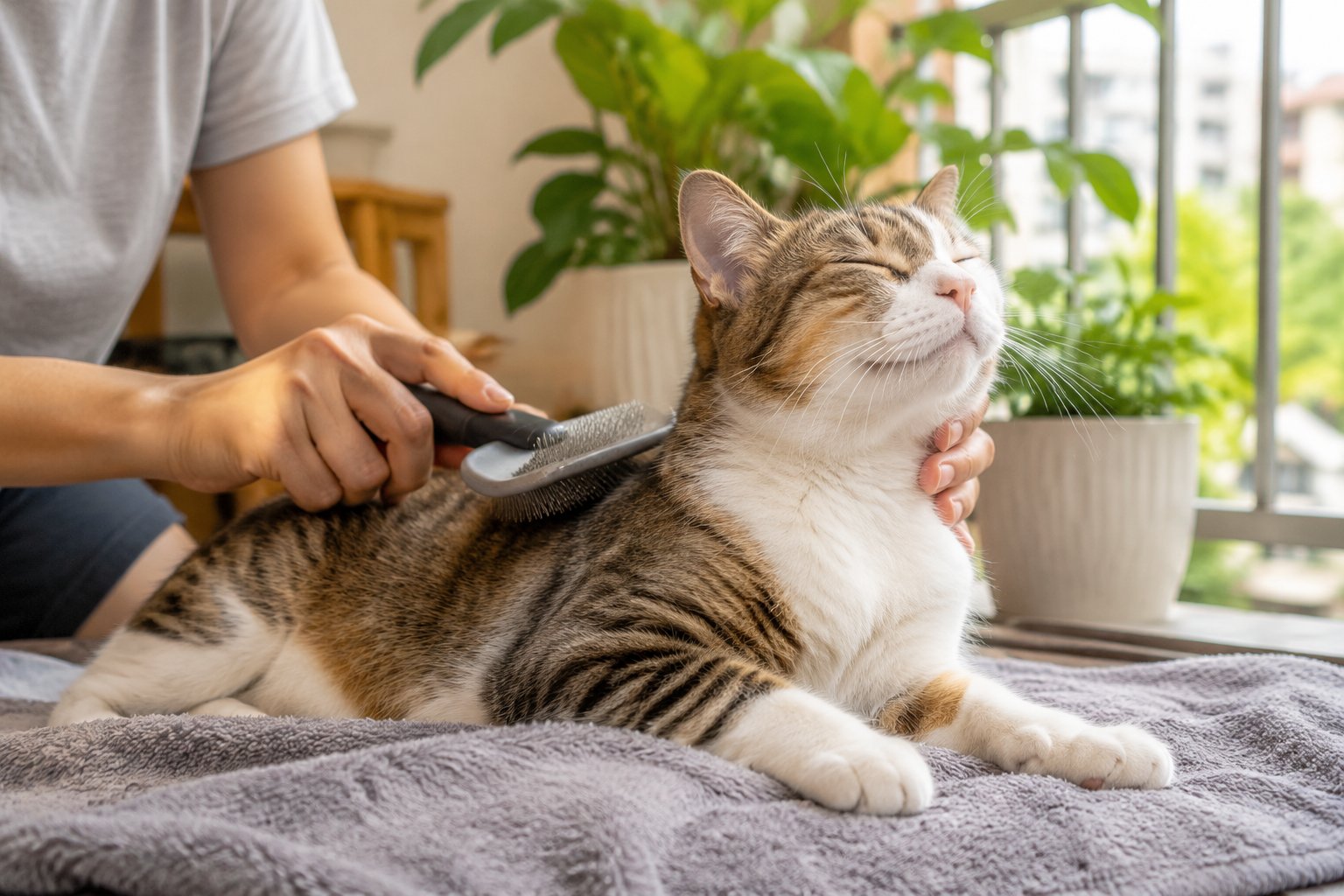
The short answer
Buy the freshest, best-sealed catnip you can find, in a form your cat will actually use, and store it dry. Loose dried leaf and fine powder are the most reliable choices in Malaysia's climate; sprays and plush toys are convenient but lose potency faster. Aroma, not brand prestige, is the best test.
Catnip is a behaviour and enrichment product, not medicine. It will not fix anxiety, urinary problems or boredom on its own, and it does nothing for a large minority of cats. The right purchase is the one your cat responds to, kept fresh enough to keep working.
What catnip actually does
Catnip comes from the plant Nepeta cataria. The active compound, nepetalactone, is detected by a cat's vomeronasal organ when the cat sniffs and sometimes chews the material. The typical response lasts a few minutes: sniffing, rubbing, rolling, chin and cheek marking, sometimes a burst of zooming, then a period of disinterest that can last from minutes to a couple of hours.
Three things follow from that mechanism, and they should shape how you shop:
- It is smell-driven. A product with no aroma is a product with no effect. Packaging and storage matter as much as the plant itself.
- Response is genetic. Many cats carry the gene that makes them responsive and many do not. A cat that ignores catnip is not broken, and a product that fails on one cat may work perfectly on another in the same house.
- It is short-acting and self-limiting. Cats regulate their own exposure. You do not need to ration heavily, but you also do not need to leave a bowl of it out permanently.
Kittens usually do not respond until they are a few months old, and some cats only develop a clear reaction as adults. Senior cats may respond less intensely, and a sudden loss of interest in a cat that used to love catnip is worth noting, though it is usually just stale product.
The forms of catnip compared
Most catnip sold to Malaysian households falls into a handful of categories. Each has trade-offs in a hot, humid climate.
| Form | How it works | Strengths | Weaknesses in Malaysian humidity | Best for |
|---|---|---|---|---|
| Loose dried leaf | Cat sniffs and rolls in it | Strong aroma, easy to refresh, cheap per use | Absorbs moisture quickly once opened; can go musty | Cats that roll and rub; refillable toys |
| Fine powder / ground | Dusted on toys, scratchers, floor | Concentrated aroma, easy to portion | Clumps in damp air; can be inhaled if too fine | Testing whether a cat responds at all |
| Catnip spray | Liquid extract misted on toys | Mess-free, good for fabric toys and scratchers | Degrades after opening; alcohol-based sprays need drying time | Owners who dislike loose plant mess |
| Filled plush toys | Catnip sealed inside fabric | Ready to use, no mess | Aroma fades; fabric holds sweat, dust and odour | Kittens and gentle players |
| Catnip-infused cardboard | Corrugate with catnip dust | Combines scratching and scent | Cardboard softens in humid rooms | Scratcher-loving cats |
| Silvervine blends | Mixed plant material | Some non-responders react to silvervine | Same storage issues as dried leaf | Cats that ignore plain catnip |
A practical approach for most households is to keep one small pack of dried leaf or powder as a base supply, plus one spray for refreshing fabric toys and scratchers. That covers most situations without buying five products that all go stale.
How to judge quality before you buy
You cannot smell a sealed packet online, so use these signals instead.
- Check the ingredient list. It should say catnip leaf, catnip flower, or ground catnip. Beware products that list "cat attractant" or "herbal blend" without naming the plant.
- Prefer flower-and-leaf mixes. The flowers and upper leaves carry more of the aroma compounds than coarse stems. Stems and dust are filler.
- Look for a packed-on or harvest date. Freshness is the single biggest quality factor. A product with no date at all is a gamble.
- Choose resealable, opaque packaging. Light and air are the enemies. Clear bags on a sunny shelf have already lost potency.
- Buy a small size first. A small pack you finish in a few months beats a large bargain bag that goes musty in a cupboard.
- Read reviews for aroma complaints. Comments about "no smell" or "my cat ignored it" are the most useful reviews for catnip.
- Be cautious with very cheap bulk bags. They are often stem-heavy and have travelled a long way in uncontrolled conditions.
If you buy in person at a pet shop, ask to smell a sample where the shop allows it. A strong, green, herby scent is what you want; a dusty, hay-like or faintly mouldy smell means walk away.
Storing catnip in Malaysia's climate
This is where most catnip fails. Dried plant material is hygroscopic: it pulls moisture from the air. In a Malaysian home, an opened bag left in a kitchen cupboard during the rainy season can lose aroma and start to smell stale within weeks.
A workable routine:
- Keep the main supply in a small airtight container, ideally glass with a tight lid, stored in a dark cupboard away from the stove and kettle.
- Keep only a week's worth in a small jar you open often, and refill it from the main container.
- Never store catnip in the fridge. Condensation when you take it out is worse than room temperature.
- Keep it away from bathrooms, laundry areas and windows that catch afternoon sun.
- If a sachet feels damp or clumps, discard it. Mouldy catnip is not worth the risk.
- Refresh toys by emptying old filling, adding a pinch of fresh leaf, and resealing, rather than spraying perfume-like products on them.
A simple test before each use: crush a pinch between your fingers and smell it. If you get nothing, your cat probably will too.
Matching catnip to your cat and your home
Catnip is enrichment, so the delivery method should suit the cat and the space.
For the roller. Cats that sniff, flop and roll want loose leaf on a hard floor or a low-pile mat. Sprinkle a small pinch on a tiled area, let the cat enjoy it, then sweep up. This is easy to manage in a Kuala Lumpur apartment where floor space is limited and a quick sweep takes seconds.
For the toy destroyer. Cats that bite and bunny-kick need a filled kicker toy with a refillable opening. Check stitching regularly; loose catnip inside a torn toy is a choking and blockage risk.
For the scratcher loyalist. Rub powder into a cardboard scratcher or mist it lightly with spray, then let it dry fully before offering it. This is useful in a Johor terrace house where a car porch or utility area holds the scratcher and humidity is higher.
For the non-responder. Try silvervine or a valerian toy. Some cats that ignore catnip respond to these. If nothing works, your cat may simply be insensitive, and that is normal.
For multi-cat homes. Offer catnip in more than one spot so one cat cannot guard the fun. Watch for tension; a catnip session can tip a fragile truce into a scuffle.
Safety, hygiene and common mistakes
Catnip is not toxic to cats, but how it is used can still cause problems.
- Do not let cats eat large amounts. A little nibbling is normal; a cat that gulps a whole sachet may vomit or have loose stool. Store it out of reach.
- Avoid essential oils. Never use catnip essential oil or any essential oil diffuser around cats. Concentrated oils are a genuine poisoning risk.
- Skip the alcohol-heavy sprays on surfaces cats lick. Let sprayed items dry completely, and prefer water-based products.
- Watch the reaction. Normal responses include rolling, rubbing, purring and zooming. Stop the session if a cat becomes tense, hisses, or targets another pet.
- Do not use catnip as a substitute for play. It is a garnish on top of daily interactive play, scratching outlets and climbing space.
- Keep it away from kittens and pregnant queens unless your vet has okayed it.
- Check toys for wear. Replace torn fabric toys rather than topping them up.
A common mistake is buying a large bag, decanting it into an open decorative jar, and leaving it on a sunny shelf. That is the fastest way to waste money on catnip in this climate.
When to see a vet
Catnip itself rarely causes a problem, but some situations need professional advice.
- Your cat vomits repeatedly, has diarrhoea, or stops eating after eating catnip.
- Your cat shows signs of poisoning: drooling, tremors, wobbliness, dilated pupils, vomiting after contact with an essential oil or a sprayed surface.
- Your cat has a known heart, respiratory or seizure condition and you are unsure whether intense play is appropriate.
- A cat that previously loved catnip suddenly loses interest alongside other changes such as reduced appetite, hiding or irritability.
- Your cat becomes unusually aggressive during or after catnip sessions, especially toward people or other pets.
- You are introducing catnip to a pregnant, nursing or very young cat.
- Your cat has asthma or sensitive airways and reacts to dusty powder.
Bring the product packaging with you if you can. The ingredient list helps your vet assess what your cat was exposed to.
A simple buying checklist
Before you pay, run through this list:
- Ingredient list names catnip leaf or flower, not a vague blend
- Pack has a packed-on or harvest date
- Packaging is resealable and opaque
- Size is realistic for use within a few months
- Reviews mention strong aroma, not just cute packaging
- Form matches how your cat plays
- You have an airtight container ready at home
- You know your cat's response, or you are buying a small pack to test
If you are testing for the first time, buy the smallest pack of plain dried leaf you can find, offer a pinch on a clean floor, and watch for ten minutes. That single test tells you more than any label.
Final word
The best catnip for cats in Malaysia is not the most expensive bag or the most elaborate toy. It is fresh, clearly labelled, stored dry, and matched to a cat that actually responds. Buy small, smell before you trust, refresh toys yourself, and treat catnip as one small part of a richer daily routine built on play, scratching and climbing.
This article is general information, not veterinary advice. If your cat has a health condition, is pregnant or nursing, or reacts badly to any product, consult a licensed veterinarian.
Related reading
- Best Puzzle Feeder for Cats in Malaysia: A Practical Buying Guide
- Catnip for Indoor Cats: A Complete Malaysian Guide
- Daily Care Guide Malaysia: A Practical Routine for Dogs and Cats
- Interactive Toys for Indoor Cats: A Practical Malaysian Guide
- Best Interactive Toys for Cats in Malaysia: A Practical Buying Guide
- Cat Grass for Indoor Cats: A Practical Malaysian Guide
- How to Exercise a Cat: A Practical Daily Play Plan for Malaysian Homes
- How to Use Interactive Toys for Cats: A Malaysian Pet Parent's Guide
- How to Use a Puzzle Feeder for Cats: A Practical Guide for Malaysian Homes
- How to Use a Scratching Post for Cats: A Complete Malaysian Guide
- Pet Daily Care Guide Malaysia: Brushing, Nails, Ears, Eyes, Teeth and Weight (2026)



