
Answer first
Breathing difficulty in cats is often preventable. The core steps are: keep your cat lean, reduce dust and fumes at home, manage stress, treat infections early, and book regular vet checks. In Malaysia, humidity, mosquito coils, open windows and apartment living add extra triggers, so a few local habits matter.
Why prevention matters more than rescue
A cat that struggles to breathe is frightening to watch. Cats hide illness well, so by the time you notice laboured breathing, the problem may be advanced. Prevention focuses on lowering known triggers and catching small changes early.
Breathing problems can come from the nose, throat, airways, lungs, heart or chest cavity. Common examples include feline asthma, respiratory infections, heart disease, obesity, foreign objects, and smoke or chemical irritation. Because causes overlap, prevention is not one single action. It is a set of habits that protect the whole respiratory system.
Know the normal before you judge abnormal
A relaxed cat breathes quietly through the nose. At rest, many cats breathe around 20–30 breaths per minute, but this varies with temperature, stress and health. Learn your own cat's resting rate when calm.
| Check | Normal pattern | Warning pattern |
|---|---|---|
| Breathing rate at rest | Steady, quiet, usually 20–30 per minute | Above 40 per minute at rest, or rising |
| Breathing effort | Belly moves gently | Deep belly pumping, ribs pulling in |
| Mouth | Closed | Open-mouth breathing |
| Posture | Relaxed | Neck stretched out, elbows out |
| Gums | Pink | Blue, grey or pale |
| Noise | Silent | Wheeze, whistle or crackle |
Count breaths for 15 seconds and multiply by four. Do this when your cat is asleep or resting, not after play. Keep a simple note in your phone. A trend is more useful than a single number.
Step 1: Control weight and body condition
Obesity is one of the most overlooked breathing risks. Extra fat around the chest and abdomen makes breathing harder, reduces exercise tolerance and increases the risk of other diseases. It also makes surgery and anaesthesia riskier if your cat ever needs [treatment.
Practical](/articles/cat-hair-loss-treatment-malaysia "mylink") steps:
- Ask your vet to score your cat's body condition at every check.
- Measure food with a cup or scale rather than free-feeding.
- Split daily food into several small meals.
- Use puzzle feeders and short play sessions to increase activity.
- Avoid high-calorie treats; use a few kibbles from the daily ration instead.
- Weigh your cat monthly on a baby scale if possible.
Weight loss should be gradual. Sudden crash diets are dangerous for cats and can cause liver problems. Ask your vet for a safe target and timeline.
Step 2: Reduce dust, smoke and fumes at home
Air quality matters. Irritants inflame airways and can trigger coughing or wheezing, especially in cats with asthma or sensitive lungs.
Indoor air checklist
- Use low-dust, unscented cat litter. Avoid fine clay dust and strong perfumes.
- Keep litter boxes away from sleeping areas and ventilate the room.
- Vacuum with a HEPA filter if possible, and damp-wipe surfaces.
- Avoid indoor smoking. Smoke lingers on furniture and clothes.
- Skip mosquito coils, incense and strong air fresheners in rooms your cat uses.
- Store cleaning chemicals in closed cabinets and ventilate while cleaning.
- Use exhaust fans when cooking, especially with strong spices or oil.
- Wash bedding regularly in hot water to reduce dust mites.
In Malaysian apartments, windows are often kept open for airflow. That is good for ventilation, but it also lets in haze, dust and smoke from nearby cooking or burning. On hazy days, keep windows closed and use a fan or air purifier. If you use an air conditioner, clean the filters regularly.
Mosquito coils and repellents
Mosquito coils produce smoke and chemical fumes that irritate cat airways. Use window screens, fans, and vet-approved mosquito prevention instead. Never apply human insect repellent to cats; some ingredients are toxic.
Step 3: Manage humidity and mould
Malaysia's humid climate encourages mould and dust mites, both of which can irritate breathing. Keep rooms dry and well ventilated. Fix leaks quickly, dry damp bedding in sunlight, and avoid over-watering indoor plants. If you use a dehumidifier, keep it clean and empty the tank often.
Step 4: Lower stress and support calm breathing
Stress does not cause asthma directly, but it can worsen breathing and make signs harder to judge. Cats in busy homes, multi-cat households or recent moves may breathe faster when anxious.
Ways to reduce stress:
- Provide quiet hiding spots and vertical space.
- Keep routines predictable for feeding, play and litter cleaning.
- Use separate feeding and litter areas in multi-cat homes.
- Introduce new pets slowly and supervise early meetings.
- Use pheromone diffusers only as directed and check with your vet.
During festive seasons with fireworks or visitors, set up a quiet room with water, litter and bedding. Calm cats breathe more normally and are easier to monitor.
Step 5: Prevent and treat infections early
Respiratory infections can cause sneezing, nasal discharge and breathing changes. Keep vaccinations up to date as advised by your vet, isolate sick cats from healthy ones, and wash food and water bowls daily. If your cat has persistent sneezing, eye discharge or a change in breathing, book a vet visit rather than waiting.
Dental disease is also linked to general health. Ask your vet about dental checks and home care. Healthy mouths reduce the risk of some infections.
Step 6: Use a carrier safely and avoid choking hazards
Small objects can lodge in the airway. Keep string, ribbons, small toys, bones and plastic bags out of reach. Choose toys that are too large to swallow. If your cat plays with string, supervise and put it away afterwards.
When travelling, use a secure carrier with good ventilation. Do not leave a cat in a hot car. In Malaysian heat, even a short errand can become dangerous. Cover the carrier with a light cloth to reduce stress, but never block airflow.
Step 7: Regular vet checks and records
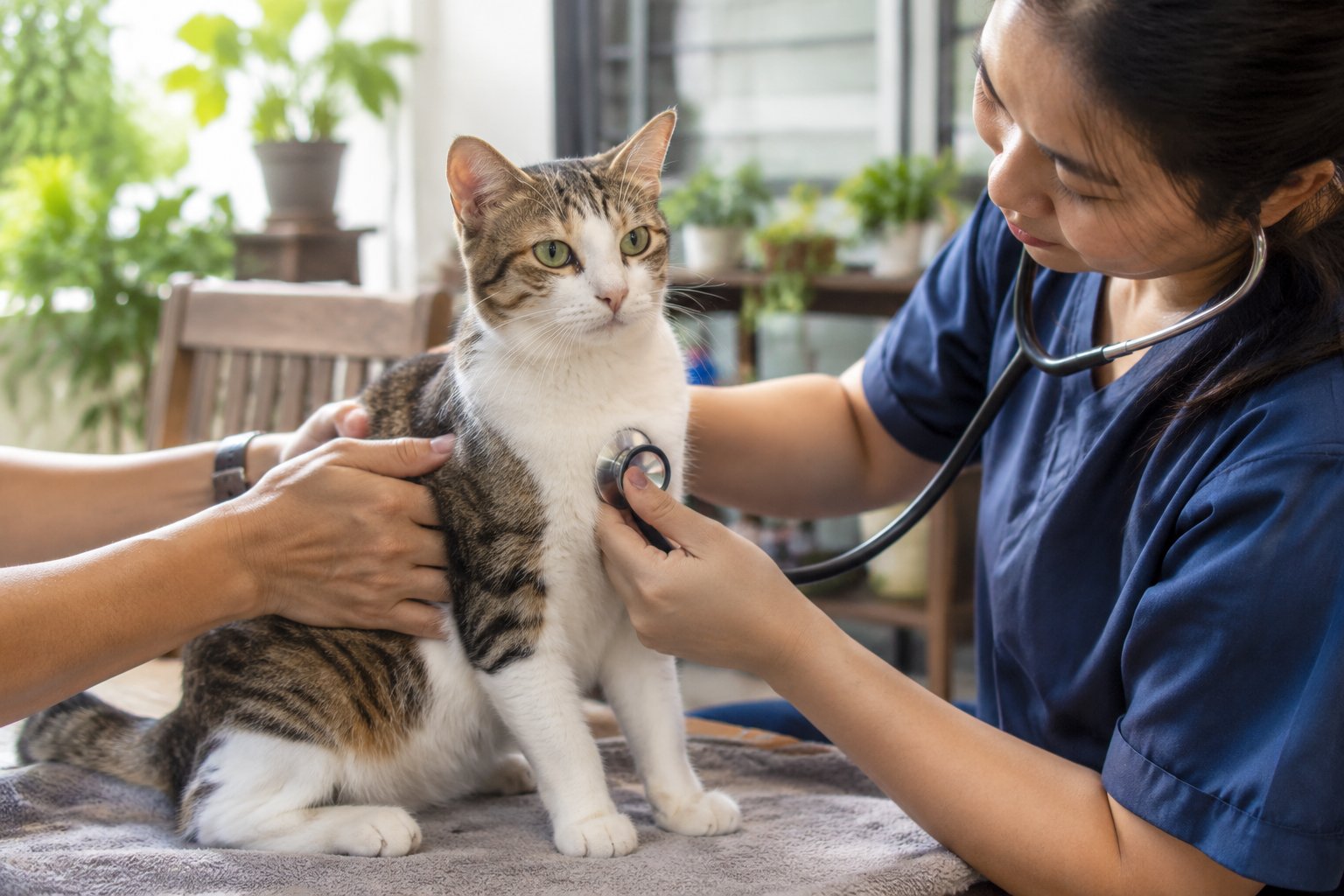
Prevention works best with a vet partner. Healthy adult cats need at least an annual check. Senior cats, or cats with known heart or lung issues, may need checks every 3–6 months. Ask your vet what is appropriate for your cat.
Bring a simple log to appointments:
- Resting breathing rate over several days.
- Any coughing, wheezing or noisy breathing.
- Changes in appetite, weight or activity.
- Medicines, supplements and flea or tick products used.
Your vet may recommend tests such as blood work, X-rays or other checks if something seems off. Early detection often makes treatment easier.
A prevention comparison table
| Risk area | Everyday action | Why it helps |
|---|---|---|
| Weight | Measure food, play daily, weigh monthly | Less chest pressure, better stamina |
| Dust | Low-dust litter, HEPA vacuum, damp wiping | Fewer airway irritants |
| Smoke and fumes | No indoor smoking, no coils or strong sprays | Reduces inflammation triggers |
| Humidity and mould | Ventilate, fix leaks, clean filters | Fewer mould and dust-mite irritants |
| Stress | Quiet spaces, routine, slow introductions | Calmer breathing, easier monitoring |
| Infections | Vaccination, hygiene, early vet visit | Stops problems worsening |
| Hazards | Safe toys, secure carrier, no hot cars | Prevents injury and choking |
| Vet care | Annual or 6-monthly checks | Catches changes early |
When to see a vet
Seek veterinary help immediately if your cat shows any of these signs:
- Open-mouth breathing at rest.
- Blue, grey or pale gums or tongue.
- Very fast breathing that does not settle.
- Deep belly effort, ribs pulling in, or neck stretched out.
- Collapse, weakness or inability to settle.
- Coughing that is frequent or worsening.
- Noisy breathing, wheezing or a whistle sound.
- A known asthma cat using a rescue inhaler without improvement, or breathing worse than usual.
Do not wait to see if it passes. Breathing problems can worsen quickly. Call your vet for advice on the safest way to bring your cat in. Keep your cat calm and in a cool, quiet space while you arrange transport.
A simple weekly prevention routine
- Check resting breathing rate twice a week.
- Weigh food portions and review treats.
- Clean litter boxes daily and wash bowls.
- Vacuum or damp-wipe high-dust areas.
- Check air conditioner and purifier filters monthly.
- Play with your cat for short sessions daily.
- Note any coughing, sneezing or changes in appetite.
Local context for Malaysian homes
In a Kuala Lumpur apartment, open windows and balcony doors bring airflow but also haze and cooking smoke. Use screens, close windows on hazy days, and keep the litter box away from the kitchen. In a Johor terrace house, garden dust, mosquito coils and open drains can add irritants. Keep coils out of cat areas, wipe paws and keep indoor rooms well ventilated. Penang's rainy season raises indoor humidity, so dry bedding, fix leaks and watch for mould.
Vet disclaimer
This article is general information and not a substitute for veterinary advice. Breathing problems can be serious. Always consult a licensed veterinarian about your cat's health, and seek urgent care if breathing is laboured.
Related reading
- Cat Health Guide Malaysia: Symptom Check, Red-Flag Triage & When to See a Vet
- Bad Breath Prevention for Cats: A Practical Guide for Malaysian Owners
- Cat Ringworm Treatment in Malaysia: A Practical Owner's Guide
- Cat Skin Fungus Treatment in Malaysia: A Practical Owner's Guide
- Cat Swollen Belly Treatment in Malaysia: Causes, Home Care and When to See a Vet
- Cat Urinary Blockage Treatment in Malaysia: What to Do, Step by Step
- Constipation in Cats: Causes, Care and When to See a Vet in Malaysia
- Constipation Prevention for Cats: A Practical Guide for Malaysian Owners
- Dehydration in Cats in Malaysia: Signs, Causes and How to Help
- Dehydration Prevention for Cats: A Practical Guide for Malaysian Owners

