
Quick answer
Breathing difficulty in cats is an emergency. Signs include open-mouth breathing, fast or noisy breathing, blue gums, and neck stretching. Keep your cat calm, do not force its mouth open, and get to a vet immediately. Malaysian heat, smoke haze, and indoor allergens can worsen breathing problems.
Why breathing difficulty is serious in cats
Cats are masters at hiding illness. A cat that is breathing hard may have been struggling for days before you notice. Unlike dogs, cats do not normally pant to cool down. Open-mouth breathing in a cat is almost always a red flag.
When a cat cannot get enough oxygen, its body prioritises the brain and heart. Other organs suffer. Without treatment, breathing difficulty can lead to collapse and death within hours. That is why this is one of the few situations where you should not wait and see.
In Malaysia, cats face extra breathing challenges. The hot, humid climate can make asthma and heart disease worse. Haze episodes from regional fires can irritate airways. Many cats live indoors in apartments with poor ventilation, dust, and strong cleaning products. All of these can trigger or worsen breathing problems.
Recognising the signs: what normal and abnormal breathing look like
A healthy cat at rest breathes about 20 to 30 times per minute. You can count breaths by watching the chest rise and fall for 15 seconds and multiplying by four. Do this when your cat is asleep or relaxed, not after play.
Abnormal signs include:
- Open-mouth breathing
- Breathing faster than 40 breaths per minute at rest
- Noisy breathing: wheezing, whistling, or crackling
- Stretching the neck forward to breathe
- Flaring nostrils
- Blue, grey, or pale gums and tongue
- Reluctance to lie down; sitting hunched with elbows out
- Coughing, especially at night or after exercise
- Weakness, collapse, or confusion
A cat that is breathing hard may also stop grooming, hide, or refuse food. These are subtle signs that something is wrong.
Normal vs abnormal breathing at a glance
| Feature | Normal | Abnormal (see a vet) |
|---|---|---|
| Breathing rate at rest | 20–30 breaths/min | Over 40 breaths/min |
| Mouth position | Closed | Open, panting |
| Noise | Silent | Wheezing, whistling, crackling |
| Posture | Relaxed, curled or stretched | Neck extended, elbows out, hunched |
| Gum colour | Pink | Blue, grey, pale, or white |
| Activity | Comfortable | Restless, hiding, collapsing |
If you see any abnormal sign, treat it as urgent. Do not try to diagnose your cat at home.
Common causes of breathing difficulty in cats
There are many possible causes. A vet will examine your cat and may run tests such as X-rays, blood tests, or ultrasound. Here are the main categories.
Asthma and allergic airway disease
Feline asthma is one of the most common causes of breathing difficulty in cats. It is similar to asthma in people. The airways become inflamed and narrow, making it hard to breathe. Signs include coughing, wheezing, and open-mouth breathing. Asthma can be triggered by dust, smoke, pollen, strong fragrances, and cat litter dust.
In Malaysia, haze and indoor air pollution can make asthma worse. Cats with asthma may need medication, often given by inhaler with a spacer made for cats.
Respiratory infections
Cat flu, caused by viruses such as feline herpesvirus and calicivirus, can cause nasal congestion and breathing difficulty. Bacterial infections can also affect the lungs. Kittens, older cats, and cats in crowded conditions are at higher risk. Vaccination helps prevent some of these infections.
Heart disease
Heart failure can cause fluid to build up in or around the lungs, making breathing hard. Cats with heart disease may breathe fast, cough, or tire easily. Some cats have no obvious signs until they are in crisis. Heart disease is more common in certain breeds, but any cat can be affected.
Fluid around the lungs (pleural effusion)
Fluid in the chest cavity presses on the lungs and prevents them from expanding. This can be caused by heart disease, cancer, infection, or trauma. A cat with pleural effusion often sits hunched and breathes rapidly with its mouth open. This is a life-threatening emergency.
Foreign objects and trauma
Cats can inhale small objects, especially kittens. Trauma from falls, road accidents, or fights can cause lung bruises or collapsed lungs. If your cat has had an accident and is breathing hard, go to a vet immediately.
Tumours and masses
Growths in the nose, throat, or lungs can block airflow. Older cats are more likely to develop tumours. Signs may come on slowly, with noisy breathing or a change in meow.
Heatstroke and stress
Malaysia's heat can cause heatstroke in cats, especially if they are trapped in a hot room or car. Heatstroke causes rapid, noisy breathing, drooling, and collapse. Stress can also make a cat breathe fast, but this usually settles quickly once the cat calms down.
What to do if your cat is breathing hard
Stay calm. Your cat picks up on your stress. Follow these steps.
- Do not force your cat's mouth open. You could be bitten, and it will make breathing harder.
- Keep your cat cool and quiet. Move it to a shaded, well-ventilated area. If it is hot, wipe paws and ears with a cool damp cloth. Do not use ice-cold water.
- Handle gently. Use a carrier with good airflow. Avoid picking up a cat that is struggling to breathe; if you must move it, support the chest and hindquarters.
- Remove tight collars or harnesses.
- Call your vet ahead. Tell them you are coming and describe the signs. They can prepare oxygen and equipment.
- Drive safely. Do not speed dangerously. Keep the car cool and the carrier secure.
Do not give any medication, including human medicines, without veterinary advice. Some human drugs are toxic to cats.
What not to do
- Do not wait to see if it improves.
- Do not try to clear the airway with your fingers unless you can clearly see and safely remove an object.
- Do not put your cat in a hot car or a closed box with poor airflow.
- Do not use essential oils or strong fragrances around a cat with breathing difficulty.
How vets diagnose breathing difficulty
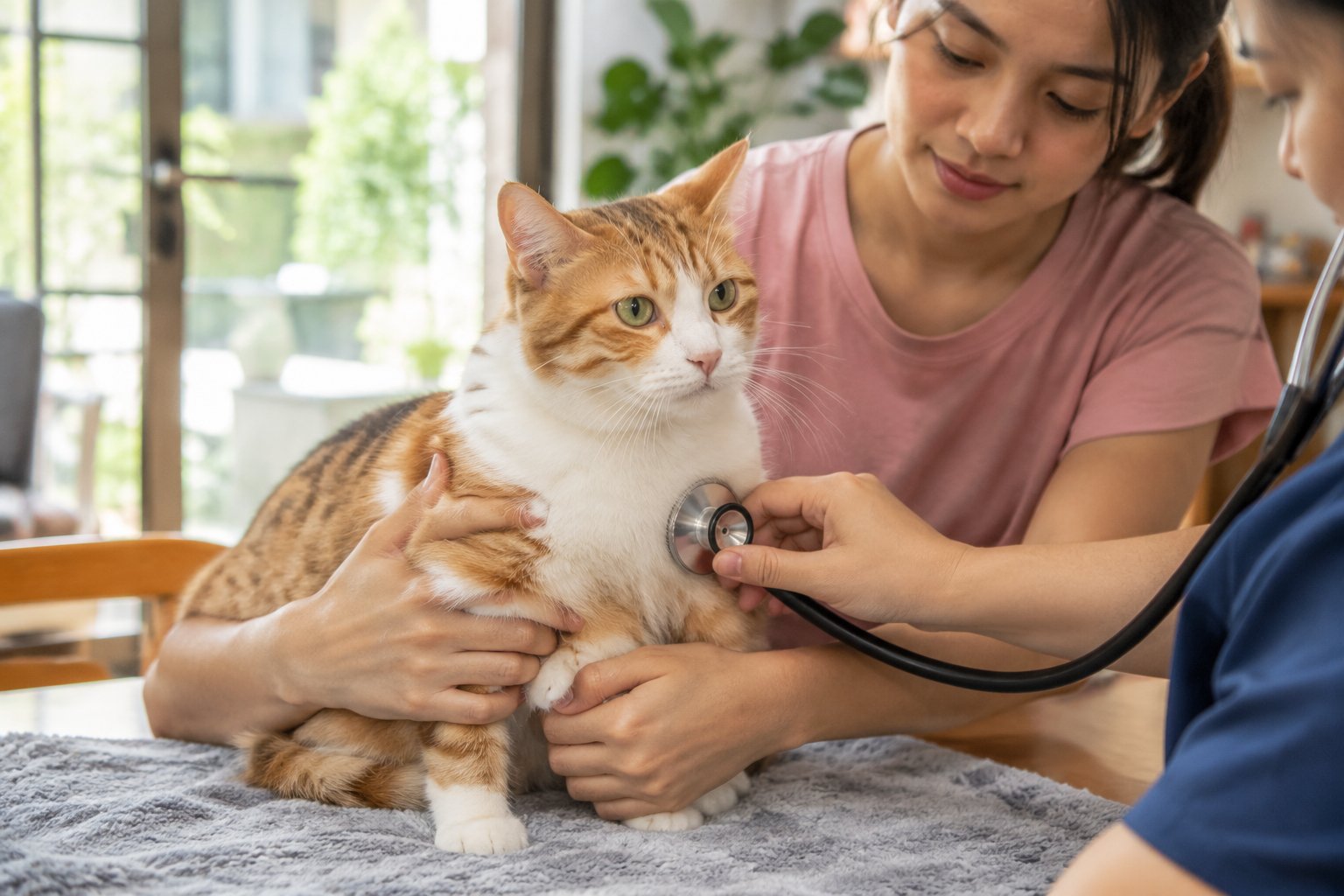
Your vet will start with a physical examination. They will listen to the heart and lungs, check gum colour, and assess breathing effort. They may use a pulse oximeter to measure oxygen levels.
Common tests include:
- Chest X-rays to look at the lungs and heart
- Blood tests to check for infection and organ function
- Ultrasound to look for fluid around the heart or lungs
- Airway sampling in some cases
Treatment depends on the cause. It may include oxygen therapy, medications to open airways, diuretics to remove fluid, antibiotics for infection, or surgery for foreign objects or tumours. Some cats need hospitalisation for oxygen and monitoring.
Living with a cat that has breathing problems in Malaysia
If your cat has a chronic breathing condition such as asthma or heart disease, you can reduce flare-ups at home.
- Keep the air clean. Avoid smoking indoors. Use an air purifier during haze episodes. Keep windows closed when air quality is poor.
- Choose low-dust litter. Clumping clay litters can be dusty. Some owners find paper-based or wood-based litters less irritating.
- Avoid strong smells. Perfumes, air fresheners, incense, and strong cleaning products can trigger asthma.
- Control the heat. Provide cool, shaded resting spots. Use fans or air conditioning on hot days. Never leave a cat in a car.
- Maintain a healthy weight. Obesity makes breathing harder and worsens heart disease.
- Follow your vet's treatment plan. Give medications as prescribed and keep follow-up appointments.
- Monitor breathing at home. Count breaths at rest and note any changes. Keep a simple log.
A simple home breathing log
| Date | Breaths per minute (at rest) | Notes |
|---|---|---|
| Example | 24 | Normal, sleeping |
| Example | 38 | After playing, settled in 5 min |
| Example | 44 | Open-mouth, called vet |
This log helps your vet see patterns and adjust treatment.
When to see a vet
See a vet immediately if your cat has any of these signs:
- Open-mouth breathing that does not stop within a minute
- Breathing rate over 40 breaths per minute at rest
- Blue, grey, or pale gums
- Noisy breathing or wheezing that is new or worsening
- Coughing that lasts more than a few days
- Reluctance to lie down or a hunched posture
- Collapse, weakness, or confusion
- Breathing difficulty after an accident or fall
- Heat exposure with rapid breathing and drooling
Do not wait for a scheduled appointment. Call the nearest veterinary clinic and tell them it is an emergency.
Prevention and long-term care
Not all breathing problems can be prevented, but you can lower the risk.
- Keep vaccinations up to date.
- Avoid overcrowded conditions if you have multiple cats.
- Keep your cat indoors to reduce trauma and exposure to smoke.
- Maintain a healthy weight.
- Schedule regular vet check-ups, especially for older cats.
- If your cat has asthma, avoid known triggers and keep medication on hand.
- During haze season, limit outdoor time and keep indoor air clean.
Final thoughts
Breathing difficulty in cats is one of the most urgent problems you will face as an owner. Learn the normal breathing rate, watch for open-mouth breathing and blue gums, and act fast. In Malaysia's climate, heat and haze add extra risk, so keep your cat cool, keep the air clean, and do not delay veterinary care.
This article is for general information only and is not a substitute for veterinary advice. If your cat is unwell, consult a licensed veterinarian.
Related reading
- How to Treat Coughing in Cats at Home: A Practical Guide for Malaysian Owners
- How to Treat Dehydration in Cats at Home: A Practical Malaysian Guide
- How to Treat Vomiting in Cats at Home: A Practical Malaysian Guide
- Licking Wounds in Cats Malaysia: When It's Normal and When to Stop It
- Urinary Blockage in Cats: Causes, Warning Signs and Care