
PetChill Pet Encyclopedia
Cat Health

Diarrhea Prevention for Cats: A Practical Guide for Malaysian Owners

Most cat diarrhea is preventable. Learn the daily habits — steady diet, clean bowls, fresh water, parasite control, low-stress routines and early vet checks — that keep your cat's gut settled, with practical tips for Malaysian homes and apartments.

Published: 2026-11-06·8 min read·Author: PetChill Editorial
Diarrhea Prevention for Cats: A Practical Guide for Malaysian Owners

💡 Quick Answer

Prevent cat diarrhea by keeping food and water clean, changing diets slowly over 7–10 days, avoiding spoiled or human food, controlling worms and fleas, reducing stress, and getting prompt vet checks for vomiting, weight loss or blood in stool.

The short answer

Most diarrhea in cats is not random bad luck. It usually traces back to something you can control: a sudden food change, a bowl left out in the heat, a parasite, a stressful week, or an underlying gut condition that was never checked. Prevention is mostly about consistency and hygiene, plus knowing when a loose stool is a warning rather than a one-off.

This guide walks through the practical habits that keep a cat's digestive system settled, with examples suited to Malaysian homes — from a Kuala Lumpur apartment with a single litter box to a Johor terrace house where the cat shares a garden with neighbourhood strays.

Why cats get diarrhea in the first place

Cat diarrhea happens when the large or small intestine moves contents too quickly, absorbs water poorly, or becomes inflamed. Common triggers include:

  • Sudden diet changes — switching brands, flavours or protein sources overnight.
  • Spoiled food — wet food left out in a warm, humid kitchen, or dry food stored in a damp cupboard.
  • Parasites — roundworms, tapeworms, giardia and coccidia are all seen in cats that go outdoors or hunt.
  • Stress — new home, new baby, boarding, renovation noise, or a crowded multi-cat household.
  • Food intolerance or allergy — often to a specific protein.
  • Infections — viral or bacterial, especially in kittens.
  • Underlying disease — inflammatory bowel disease, thyroid disease, kidney disease or pancreatitis, more common in older cats.
  • Toxins and foreign bodies — household plants, human medicines, string or bones.

Prevention means reducing the avoidable triggers and catching the rest early.
Why cats get diarrhea in the first place

Build a stable diet and stick to it

Diet is the single biggest lever most owners have. A cat's gut adapts to a routine, and constant switching keeps it guessing.

Choose one complete food and stay with it. Look for a label stating it is complete and balanced for your cat's life stage. Rotating flavours occasionally is fine for many cats, but do it one change at a time.

Transition slowly. When you must change food, mix 25% new with 75% old for a few days, then 50/50, then 75/25, reaching 100% over roughly 7–10 days. Cats with sensitive stomachs may need two weeks.

Respect portion sizes. Overfeeding and free-feeding dry food all day can lead to loose stool and weight gain. Measure portions with a scoop or kitchen scale rather than eyeballing.

Be careful with treats and human food. Rich treats, milk, cheese, oily fish and table scraps are common culprits. Many adult cats are lactose intolerant, so ordinary cow's milk is a poor choice. Keep treats to a small part of daily calories.

Consider the food format. Wet food supports hydration, which matters in a hot climate. Dry food is convenient and stays fresher in a sealed container. Neither prevents diarrhea on its own — tolerance and consistency matter more.

Habit Why it helps Simple rule
Same complete food Stable gut bacteria Change only when needed
7–10 day transition Avoids sudden upset 25/50/75/100% steps
Measured portions Prevents overeating Use a scoop or scale
Limited treats Fewer rich surprises Under 10% of daily calories
Fresh water daily Supports digestion Wash and refill bowls

Food hygiene in a hot, humid kitchen

Malaysia's warmth and humidity make food spoilage a real risk, especially for wet food.

  • Don't leave wet food out for hours. Offer it at mealtimes and remove what is uneaten within about 30 minutes, sooner in a hot room.
  • Refrigerate opened cans in a covered container and use within the timeframe on the label. Bring the food to room temperature before serving.
  • Store dry food sealed in its original bag inside an airtight container, away from damp cupboards and direct sun. Check the expiry date and smell the food — stale or rancid kibble can cause upset.
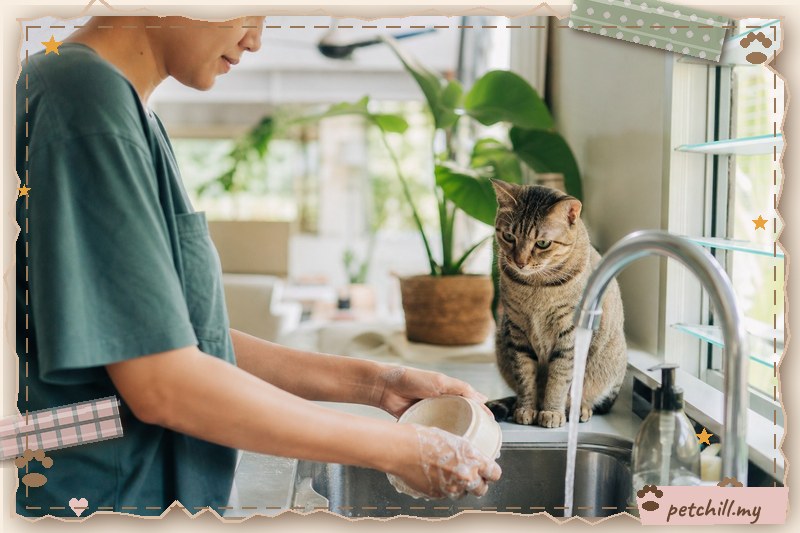
  • Wash bowls daily with hot water and soap. Plastic bowls scratch and harbour bacteria; stainless steel or ceramic is easier to keep clean.
  • Keep the feeding area dry. A bowl on a damp floor or near a bin attracts pests and contamination.
  • Separate food and litter areas. Nobody wants to eat next to a toilet, and cross-contamination is easier to avoid with distance.
Food hygiene in a hot, humid kitchen

Water, hydration and bowl placement

Good hydration supports normal stool consistency. Cats are descended from desert hunters and often drink less than they should.

  • Provide fresh water in several places, away from food and litter.
  • Try a wide ceramic bowl — some cats dislike their whiskers touching the sides.
  • A pet water fountain can encourage drinking, but clean it regularly; slimy fountains are worse than a plain bowl.
  • Wet food is a useful hydration source, especially for cats that rarely drink.
  • In warm weather, check water more often and top up throughout the day.

Parasite control: worms, fleas and protozoa

Parasites are a leading preventable cause of diarrhea, particularly in cats that go outside, hunt, or live with dogs.

  • Deworm on a schedule your vet recommends. Frequency depends on lifestyle: an indoor-only cat in a Kuala Lumpur apartment usually needs less frequent treatment than a cat that roams a Johor garden.
  • Control fleas. Tapeworms spread through fleas, so flea prevention is also worm prevention. Treat all pets in the household together.
  • Pick up feces promptly from the litter box and garden, and wash your hands afterwards.
  • Watch for giardia and coccidia, which can spread between pets and sometimes to people. A vet can test a stool sample if diarrhea persists.
  • Be cautious with raw feeding. Raw meat can carry bacteria and parasites. If you feed raw, discuss sourcing, freezing and hygiene with your vet, and be extra diligent about deworming.
Parasite control: worms, fleas and protozoa

Reduce stress and keep routines predictable

Stress affects the gut directly. Cats are creatures of habit, and upheaval often shows up as loose stool, appetite changes or hiding.

  • Keep meal times and litter cleaning predictable.
  • Provide hiding places and vertical space — shelves, cat trees, boxes — so a cat can retreat.
  • In multi-cat homes, spread resources. One litter box per cat plus one extra, separate food and water stations, and multiple resting spots reduce competition.
  • Introduce new pets slowly, with scent swapping and gradual visual contact before free access.
  • Plan for disruptions. During renovations, festivals with visitors, or a move, set up a quiet room with familiar bedding, food, water and litter.
  • Use pheromone diffusers or calming aids if your vet recommends them; they are not a cure but can take the edge off.

Litter box and household hygiene

A clean box is not just about smell — it is a daily health check.

  • Scoop at least once daily and do a full litter change regularly.
  • Watch the stool. Note colour, consistency and frequency. A sudden change is your early warning system.
  • Clean accidents properly with an enzymatic cleaner, not ammonia-based products.
  • Keep household toxins out of reach — human medicines, cleaning products, lilies and some other plants, antifreeze, and spoiled food.
  • Secure bins. Cats that raid the bin can swallow bones, packaging or spoiled food.
Litter box and household hygiene

Weight, body condition and regular checks

A cat's weight trend tells you a lot. Gradual weight loss with intermittent diarrhea can signal chronic gut or thyroid disease.

  • Weigh your cat every few months, or ask your vet to weigh at check-ups.
  • Run your hands along the ribs — they should be easy to feel but not sharp.
  • Keep a simple log of appetite, stool quality and any vomiting. It helps your vet enormously.
  • Book a wellness check at least once a year, more often for seniors and kittens.

A prevention checklist you can use

Area Daily Weekly Monthly or as advised
Food Measure portions, remove uneaten wet food Check dry food storage and expiry Review diet and portion with vet
Water Refill and rinse bowls Deep clean bowls and fountain Replace filters
Litter Scoop once or more Top up and check odour Full litter change and box wash
Parasites Check for fleas Groom and inspect skin Deworming and flea control per vet
Stress Keep routine steady Play sessions and enrichment Review household changes
Health Note stool and appetite Weigh if possible Wellness check

When to see a vet

Some diarrhea settles within a day or two with simple supportive care. Others need prompt attention. Contact a veterinarian if:

  • A kitten or senior cat has diarrhea — they dehydrate quickly.
  • Diarrhea lasts more than two days in an adult cat, or keeps returning.
  • There is blood or black, tarry stool.
  • Your cat is vomiting repeatedly, especially if it cannot keep water down.
  • There are signs of dehydration — tacky gums, skin that tents when gently pinched, sunken eyes, weakness.
  • Your cat stops eating for more than 24 hours or is losing weight.
  • There is fever, abdominal pain, or a swollen belly.
  • You suspect poisoning, a foreign body, or access to human medicine.
  • Your cat is on medication and develops diarrhea — do not stop the drug without advice.

Bring a fresh stool sample if you can, and note when the diarrhea started, what your cat ate, and any other symptoms. Do not give human anti-diarrheal medicines unless your vet specifically instructs it; some are unsafe for cats.

Practical Malaysian contexts

Kuala Lumpur apartment with one indoor cat. Space is tight and the kitchen is warm, so wet food left out spoils fast. Feed at set times, remove leftovers quickly, and store dry food in a sealed container away from the cooker. With one litter box in a bathroom, scoop twice daily so you notice stool changes early. If the cat is indoor-only, ask your vet how often deworming is really needed.

Johor terrace house with garden access. A cat that wanders into the garden meets fleas, soil and possibly neighbourhood strays. Keep flea control consistent, pick up feces, cover sandboxes and vegetable beds, and check paws and coat after outdoor time. If the cat hunts, discuss a suitable deworming schedule and stool testing with your vet.

A note on supplements and home remedies

Probiotics, prebiotics and fibre supplements are popular, and some cats benefit — particularly after antibiotics or during stress. But products vary widely, evidence is mixed, and not every supplement suits every cat. Ask your vet before starting anything, especially for kittens, pregnant cats, seniors, or cats on other medication. Plain cooked pumpkin or a vet-recommended bland diet may help short-term, but persistent diarrhea needs a diagnosis, not just a home remedy.

The bottom line

Diarrhea prevention for cats comes down to boring, repeatable habits: one tolerated complete food, slow transitions, clean bowls, fresh water, parasite control, low stress and a clean litter box you actually look at. Do those consistently and you will catch most problems early — and when something does go wrong, you will have the notes your vet needs.

This article is general information for Malaysian cat owners and is not a substitute for veterinary advice. Always consult a licensed veterinarian about your cat's health, diet and parasite control.

Frequently Asked Questions

📌 Key Takeaways

  • This article covers: The short answer, Why cats get diarrhea in the first place, Build a stable diet and stick to it, Food hygiene in a hot, humid kitchen, Water, hydration and bowl placement, and more
  • Jump to any section via the table of contents for the key details
  • If in doubt, consult a registered veterinarian

Explore this topic cluster

This guide belongs to a Malaysia-focused topic cluster. Read the pillar guide and related articles.

View cluster →

📚 Cat Health article index

This article is part of the Cat Health topic cluster. Explore related articles:

⭐ Pillar guide: Cat Health complete guideBlood Test for Cats in Malaysia: What It Checks, Costs and When You Need One→ ReadBlood Test for Cats Step by Step: What Happens at the Clinic→ ReadBlood Test for Cats: What to Expect (Malaysian Owner's Guide)→ ReadCat Constipation Treatment in Malaysia: A Practical Owner's Guide→ ReadCat Dental Pain Treatment in Malaysia: A Practical Owner's Guide→ ReadCat Diarrhea Treatment in Malaysia: A Practical Owner's Guide→ ReadCat Ear Mites Treatment in Malaysia: A Complete Owner's Guide→ ReadCat Eye Infection Treatment in Malaysia: A Practical Owner's Guide→ ReadCat Fleas Treatment in Malaysia: A Practical Owner's Guide→ ReadCat Hair Loss Treatment in Malaysia: A Practical Owner's Guide→ ReadCat Licking Wounds: Why It Happens and How to Treat It in Malaysia→ ReadCat Poisoning Treatment in Malaysia: What to Do, What to Expect, and How to Prevent It→ ReadCat Ringworm Treatment in Malaysia: A Practical Owner's Guide→ ReadCat Skin Fungus Treatment in Malaysia: A Practical Owner's Guide→ ReadCat Sneezing Blood: Causes, Treatment and When to See a Vet in Malaysia→ ReadCat Vomiting Treatment in Malaysia: What to Do and When to See a Vet→ ReadCat Weight Loss Treatment in Malaysia: A Practical Guide for Owners→ ReadCat Worms Treatment in Malaysia: A Practical Owner's Guide→ ReadChocolate Poisoning and Cats in Malaysia: What Every Owner Should Know→ ReadConstipation in Cats: Causes, Care and When to See a Vet in Malaysia→ ReadConstipation in Cats in Malaysia: Causes, Signs and What to Do→ ReadConstipation Prevention for Cats: A Practical Guide for Malaysian Owners→ ReadDental Pain in Cats: Causes, Signs and Care (Malaysia Guide)→ ReadDental Pain in Cats in Malaysia: Signs, Causes and What to Do→ ReadDental Pain Prevention for Cats: A Practical Malaysian Guide→ ReadDeworming Schedule for Cats in Malaysia: A Practical, Vet-Led Guide→ ReadDeworming Schedule for Cats: A Step-by-Step Plan for Malaysian Owners→ ReadDeworming Schedule for Cats: What to Expect (Malaysia Guide)→ ReadDiarrhea in Cats: Causes and Care (Malaysian Owner's Guide)→ ReadDiarrhea in Cats in Malaysia: Causes, Home Care and When to See a Vet→ ReadE-Collar Recovery for Cats in Malaysia: A Practical Guide for Owners→ ReadE-Collar Recovery for Cats Step by Step: A Practical Guide for Malaysian Owners→ ReadE-Collar Recovery for Cats: What to Expect (Malaysia Guide)→ ReadEar Mites in Cats: Causes and Care (Malaysia Guide)→ ReadEar Mites in Cats in Malaysia: Signs, Treatment and Prevention→ ReadEar Mites Prevention for Cats: A Practical Malaysian Guide→ ReadElectrical Cables and Cats in Malaysia: A Practical Safety Guide→ ReadEye Infection in Cats: Causes and Care (Malaysia Guide)→ ReadEye Infection in Cats in Malaysia: Causes, Signs, Treatment & Prevention→ ReadEye Infection Prevention for Cats: A Practical Malaysian Guide→ ReadFans and Air Conditioning for Cats in Malaysia: A Practical Comfort Guide→ ReadFlea Treatment for Cats in Malaysia: A Complete Guide→ ReadFlea Treatment for Cats Step by Step: A Practical Malaysian Guide→ ReadFlea Treatment for Cats: What to Expect (Malaysia Guide)→ ReadFleas in Cats: Causes and Care (Malaysia Guide)→ ReadFleas in Cats in Malaysia: Signs, Treatment and Prevention→ ReadFleas Prevention for Cats in Malaysia: A Practical, Year-Round Plan→ ReadGiving Pills for Cats in Malaysia: A Stress-Free Step-by-Step Guide→ ReadGiving Pills for Cats Step by Step: A Calm, Practical Guide for Malaysian Owners→ ReadGiving Pills for Cats: What to Expect (Malaysian Owner's Guide)→ ReadHair Loss in Cats: Causes and Care (Malaysian Owner's Guide)→ ReadHair Loss in Cats in Malaysia: Causes, Home Checks and When to See a Vet→ ReadHair Loss Prevention for Cats: A Practical Grooming and Health Guide→ ReadHousehold Cleaning Products and Cats in Malaysia: A Safety Guide→ ReadHow to Prevent Chocolate Poisoning Around Cats: A Practical Guide for Malaysian Homes→ ReadHow to Prevent Electrical Cables Around Cats: A Practical Safety Guide for Malaysian Homes→ ReadHow to Prevent Fan and Aircond Problems Around Cats: A Malaysian Home Guide→ ReadHow to Prevent Household Cleaning Products Around Cats: A Practical Safety Guide for Malaysian Homes→ ReadHow to Prevent Lily Poisoning Around Cats: A Practical Safety Guide for Malaysian Homes→ ReadHow to Prevent Open Windows Around Cats: A Practical Safety Guide for Malaysian Homes→ ReadHow to Prevent Paracetamol Poisoning Around Cats: A Malaysian Safety Guide→ ReadHow to Prevent Plastic Bags Around Cats: A Practical Safety Guide for Malaysian Homes→ ReadHow to Treat Constipation in Cats at Home: A Practical Malaysian Guide→ ReadHow to Treat Dental Pain in Cats at Home: Safe Relief and When to See a Vet→ ReadHow to Treat Diarrhea in Cats at Home: A Practical Malaysian Guide→ ReadHow to Treat Ear Mites in Cats at Home: A Practical Malaysian Guide→ ReadHow to Treat Eye Infection in Cats at Home: Safe Steps for Malaysian Owners→ ReadHow to Treat Fleas in Cats at Home: A Practical Malaysian Guide→ ReadHow to Treat Hair Loss in Cats at Home: A Practical Malaysian Guide→ ReadHow to Treat Licking Wounds in Cats at Home: A Practical Guide for Malaysian Owners→ ReadHow to Treat Poisoning in Cats at Home: First Aid, Safe Steps and When to Rush to the Vet→ ReadHow to Treat Ringworm in Cats at Home: A Practical Guide for Malaysian Owners→ ReadHow to Treat Skin Fungus in Cats at Home: A Practical Malaysian Guide→ ReadHow to Treat Sneezing Blood in Cats at Home: Safe First Steps for Malaysian Owners→ ReadHow to Treat Vomiting in Cats at Home: A Practical Malaysian Guide→ ReadHow to Treat Weight Loss in Cats at Home: A Practical Guide for Malaysian Owners→ ReadHow to Treat Worms in Cats at Home: A Practical, Safe Guide for Malaysian Owners→ ReadLicking Wounds in Cats: Causes and Care (Malaysian Vet Guide)→ ReadLicking Wounds in Cats Malaysia: When It's Normal and When to Stop It→ ReadLicking Wounds Prevention for Cats: How to Stop the Lick Cycle and Let Skin Heal→ ReadLily Poisoning and Cats in Malaysia: Why Every Petal Is an Emergency→ ReadOpen Windows and Cats in Malaysia: How to Keep Your Cat Safe Without Locking Up the House→ ReadParacetamol Poisoning in Cats in Malaysia: Why Even One Tablet Can Be Deadly→ ReadPlastic Bags and Cats in Malaysia: Why They're Dangerous and How to Keep Your Cat Safe→ ReadPoisoning in Cats: Causes, Symptoms and Care (Malaysia Guide)→ ReadPoisoning in Cats in Malaysia: Common Toxins, Signs and What to Do→ ReadPoisoning Prevention for Cats in Malaysia: A Room-by-Room Safety Guide→ ReadRingworm in Cats: Causes, Symptoms and Care (Malaysia Guide)→ ReadRingworm in Cats in Malaysia: Signs, Treatment and Prevention→ ReadRingworm Prevention for Cats in Malaysia: A Practical, Vet-Informed Guide→ ReadSigns of Constipation in Cats in Malaysia: What to Watch For and When to Act→ ReadSigns of Dental Pain in Cats in Malaysia: What Owners Miss→ ReadSigns of Diarrhea in Cats in Malaysia: What's Normal, What's Not→ ReadSigns of Ear Mites in Cats in Malaysia: How to Spot, Treat and Prevent Them→ ReadSigns of Eye Infection in Cats in Malaysia: What Owners Should Look For→ ReadSigns of Fleas in Cats in Malaysia: How to Spot, Check and Act→ ReadSigns of Hair Loss in Cats in Malaysia: What to Look For and When to Worry→ ReadSigns of Licking Wounds in Cats Malaysia: How to Spot Problem Licking→ ReadSigns of Poisoning in Cats in Malaysia: What to Watch For and What to Do→ ReadSigns of Ringworm in Cats in Malaysia: What Owners Should Look For→ ReadSigns of Skin Fungus in Cats in Malaysia: How to Spot Ringworm Early→ ReadBlood in a Cat's Sneeze: Signs, Causes and What to Do in Malaysia→ ReadSigns of Vomiting in Cats in Malaysia: What's Normal, What's Not, and When to See a Vet→ ReadSigns of Weight Loss in Cats in Malaysia: What to Watch For and When to Worry→ ReadSigns of Worms in Cats in Malaysia: What Owners Should Look For→ ReadSkin Fungus in Cats: Causes, Signs and Care (Malaysia Guide)→ ReadSkin Fungus in Cats in Malaysia: Ringworm Signs, Treatment and Prevention→ ReadSkin Fungus Prevention for Cats: A Practical Guide for Malaysian Homes→ ReadSneezing Blood in Cats: Causes and Care (Malaysia Guide)→ ReadSneezing Blood in Cats in Malaysia: Causes, What to Do, and When to See a Vet→ ReadSneezing Blood Prevention for Cats: Causes, Care and When to Worry→ ReadSterilization for Cats in Malaysia: A Complete Guide for Owners→ ReadSterilization for Cats Step by Step: A Malaysian Owner's Guide→ ReadSterilisation for Cats: What to Expect (Malaysian Owner's Guide)→ ReadUltrasound for Cats in Malaysia: What It Is, When It's Needed, and What to Expect→ ReadUltrasound for Cats Step by Step: What Happens, What It Costs, and How to Prepare→ ReadUltrasound for Cats: What to Expect (Malaysian Owner's Guide)→ ReadVaccination Side Effects for Cats in Malaysia: What's Normal, What's Not→ ReadVaccination Side Effects for Cats: A Step-by-Step Guide for Malaysian Owners→ ReadCat Vaccination Side Effects: What Malaysian Owners Should Expect→ ReadVomiting in Cats: Causes and Care (Malaysia Guide)→ ReadVomiting in Cats in Malaysia: When It's Normal and When to Worry→ ReadVomiting Prevention for Cats: A Practical Guide for Malaysian Owners→ ReadWeight Loss in Cats: Causes and Care (Malaysian Vet Guide)→ ReadWeight Loss in Cats in Malaysia: Causes, Warning Signs and What to Do→ ReadWeight Loss Prevention for Cats: A Practical Malaysian Guide→ ReadWorms in Cats: Causes and Care (Malaysia Vet Guide)→ ReadWorms in Cats in Malaysia: A Practical Owner's Guide→ ReadWorms Prevention for Cats in Malaysia: A Complete Guide→ ReadWound Care for Cats in Malaysia: A Practical Owner's Guide→ ReadWound Care for Cats Step by Step: A Practical Malaysian Guide→ ReadWound Care for Cats: What to Expect, Step by Step→ ReadX-Ray for Cats in Malaysia: What to Expect, Costs and Safety→ ReadX-Ray for Cats Step by Step: What Malaysian Owners Should Expect→ ReadX-Ray for Cats: What to Expect (Malaysian Owner's Guide)→ ReadArthritis Pet Care in Malaysia: A Practical Guide for Cats and Dogs→ ReadCat Arthritis in Malaysia: 5 Home Signs Your Cat Is in Pain — and What to Do→ ReadEarly Signs of Chronic Disease in Cats: 7 Daily Checks and a 4-Week Record Sheet→ ReadCat Chronic Kidney Disease in Malaysia: The Daily Care Routine That Actually Slows It Down→ ReadCat Constipation in Malaysia: The 48-Hour Rule, Red Flags and What Actually Helps→ ReadCat Dehydration in Malaysia: Home Skin-Turgor Test, 7 Causes and Emergency Signs→ ReadCat Heart Disease in Malaysia: Sleep Breathing Count, HCM Early Signs and When to Rush to the Vet→ ReadCat Kidney Disease in Malaysia: Early Signs, Prevention and Everyday Care→ ReadCat Pancreatitis in Malaysia: Symptoms, fPLI Testing, Treatment and Home Recovery→ ReadCat Ringworm in Malaysia: Signs, Treatment and Home Cleaning Guide→ ReadCat Symptom Checker Malaysia: 12 Common Signs and a Green-Amber-Red Triage Table→ ReadPet Deworming in Malaysia: How Often to Worm Your Cat or Dog→ ReadPet Gut Health in Malaysia: Probiotics, Food Transitions and Stool Troubles (Part 2)→ ReadCat Gut Health: Probiotics, Antibiotics and Food Transitions Explained (Malaysia)→ ReadPet Health Malaysia 2026: Common Cat and Dog Illnesses, Prevention Care and Vet Guidance→ ReadPet Insurance in Malaysia: How to Compare Plans Before You Sign→ ReadPet Poisoning at Home: Household Chemicals, Toxic Plants and When Not to Induce Vomiting (Malaysia)→ ReadPet Poisoning at Home: Household Chemicals, Insecticides and Toxic Plants (Malaysia, Part 1)→ ReadCat Chronic Disease Early Signs in Malaysia: 7 Daily Checks and a 4-Week Log→ ReadCat Health Guide Malaysia: Symptom Check, Red-Flag Triage & When to See a Vet→ ReadCat Ringworm in Malaysia: Symptoms, Treatment and Home Cleaning Guide→ ReadGut Health, Probiotics & Food Transition Part 2: Practical Malaysia Guide→ ReadPet Health in Malaysia: A Practical Prevention Guide for Cats and Dogs→ Read

Related products at PetChill

