
Quick answer
Cats hide dental pain, so watch for drooling, dropping food, chewing on one side, bad breath, pawing the mouth, reduced grooming, irritability and weight loss. Gums may look red or bleed. Any of these signs warrants a vet dental check, because home inspection cannot diagnose the cause.
Why dental pain in cats is easy to miss
Cats are built to hide discomfort. In the wild, showing weakness can attract predators, so a cat with a sore tooth often keeps eating, sleeps a little more, and avoids hard food without any dramatic cry. Owners in Malaysia often notice the problem only when the cat stops eating altogether or develops a swollen face.
Dental pain is not only a toothache. It can come from inflamed gums, a fractured tooth, a resorbing tooth (where the tooth structure breaks down from the inside), an abscess, or ulcers in the mouth. Each cause produces different signs, and some cats show almost none until the disease is advanced.
A useful rule: compare your cat to its own normal. A cat that always eats slowly is different from a cat that suddenly starts dropping kibble. A cat that was friendly but now flinches when you touch its cheek is telling you something.

The main signs of dental pain in cats
Changes in eating
- Dropping food from the mouth while chewing, especially hard kibble.
- Chewing on one side, or tilting the head while eating.
- Eating slowly, taking breaks, or approaching the bowl and walking away.
- Preferring soft food and refusing crunchy treats.
- Crying or flinching while eating, though this is less common.
- Eating less overall, or losing weight despite a good appetite.
Mouth and face signs
- Drooling, sometimes with blood-tinged saliva.
- Bad breath that persists despite normal grooming.
- Pawing at the mouth or rubbing the face on furniture.
- Swelling on one side of the face, under the eye or along the jaw.
- Red, swollen or bleeding gums visible when the lip is lifted.
- Brown tartar on the teeth, or a broken or discoloured tooth.
Behaviour and grooming changes
- Reduced grooming, leading to a scruffy coat.
- Irritability when approached, or avoiding head pets.
- Hiding more, sleeping more, or withdrawing from family activity.
- Reluctance to play with toys that involve mouthing.
- Changes in temperament that seem unexplained.
General health signs
- Weight loss or muscle loss over weeks.
- Poor appetite or skipping meals.
- Vomiting or diarrhoea can occur with some mouth infections, but these are not specific to dental pain.
A practical comparison table
| Sign | What it may suggest | How urgent |
|---|---|---|
| Dropping hard food, eating soft food only | Pain on chewing, fractured tooth, gum disease | Book a vet visit soon |
| Drooling with blood | Gum inflammation, ulcer, tooth root problem | See a vet promptly |
| Bad breath | Tartar, gum disease, sometimes kidney or metabolic disease | Book a routine dental check |
| Pawing at the mouth | Irritation or pain in the mouth | Book a vet visit |
| Facial swelling | Abscess or infection | See a vet urgently |
| Not eating at all | Severe pain or systemic illness | See a vet urgently |
| Reduced grooming and hiding | Chronic discomfort | Book a vet visit |
How to do a gentle at-home mouth check
You do not need to open your cat's mouth wide. A brief look is enough to notice changes, and it should never become a struggle.
- Choose a calm time, such as after a meal or during a quiet cuddle.
- Sit behind or beside your cat, supporting the head gently.
- Lift the upper lip on one side to see the outer gums and canine tooth.
- Repeat on the other side.
- Look for redness, bleeding, tartar, broken teeth or swelling.
- Smell the breath briefly. Do not put your face close to a cat that may bite from pain.
- Stop immediately if your cat struggles, hisses or shows pain.
What you cannot see at home: the back teeth, the inside of the mouth, tooth roots, and whether a tooth is painful when probed. That is why a vet examination, sometimes with dental X-rays, matters.
Common causes of mouth pain in cats
- Gum disease (periodontal disease): plaque and tartar inflame the gums. It is common in cats of all ages, especially without home dental care.
- Tooth resorption: the tooth structure breaks down, often at the gum line. It can be very painful even when the tooth looks mostly normal.
- Fractured teeth: from chewing hard objects, falls or trauma. A broken tooth may expose the pulp and become infected.
- Abscess: a pocket of infection, often causing facial swelling and pain.
- Stomatitis or mouth ulcers: widespread inflammation of the mouth, sometimes linked to immune problems or viral infections.
- Foreign objects: a bone fragment, splinter or plant material stuck between teeth or under the gum.
Malaysia-specific contexts to watch
Kuala Lumpur apartment cats
Indoor cats in high-rise apartments may have less access to hard chews and more soft food, which can contribute to tartar build-up. Owners often miss early gum inflammation because the cat is not going outside and there is no obvious change in activity. Set a monthly reminder to lift the lip and check the gums, and mention dental health at every routine vet visit.
Penang rainy season and outdoor access
Cats with outdoor access during wet periods may chew on damp sticks, bones or debris, raising the risk of fractures or foreign objects. After a rainy spell, check for drooling, pawing at the mouth or a sudden refusal to eat. If your cat goes outdoors, inspect the mouth area briefly when it comes home, especially if it has been scavenging.
What to expect at a Malaysian vet visit
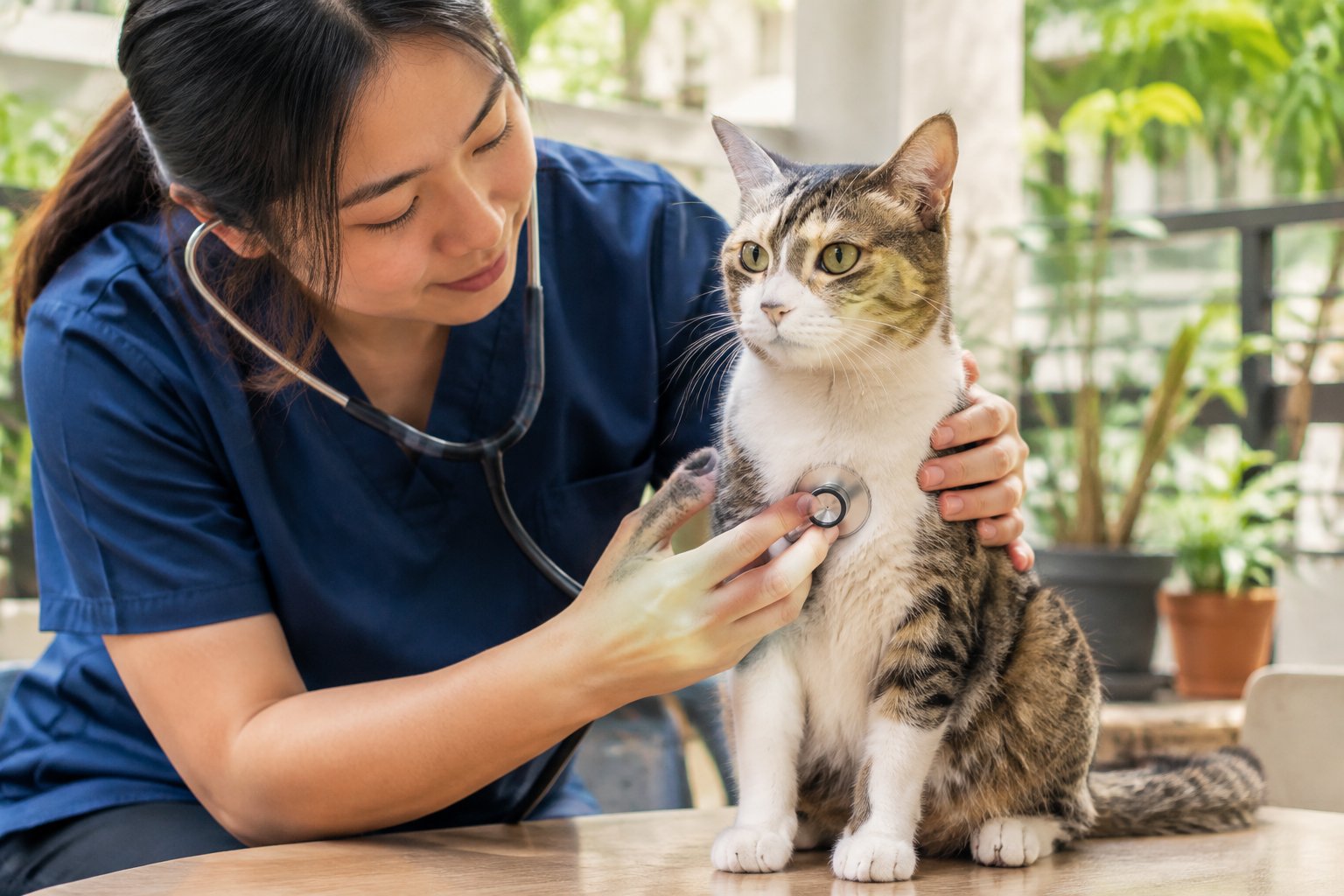
A dental examination usually starts with a general health check, because dental disease can affect the heart, kidneys and other organs. Your vet may:
- Ask about eating, grooming and behaviour changes.
- Examine the mouth, sometimes with a gentle restraint or sedation if the cat is painful.
- Recommend dental X-rays to see tooth roots and hidden disease.
- Suggest a professional dental cleaning under anaesthesia if tartar and gum disease are present.
- Discuss extractions if teeth are damaged beyond repair.
Costs vary widely between clinics and states, and depend on whether anaesthesia, X-rays or extractions are needed. Ask your vet for an estimate before treatment, and do not convert prices from other countries. Local prices vary, so request a written breakdown.
Home care that supports dental health
- Tooth brushing: the gold standard if your cat accepts it. Use cat-safe toothpaste and a soft brush, starting slowly.
- Dental diets and chews: choose products your vet recommends for your cat's size and health.
- Water additives: some products may help, but evidence varies; ask your vet first.
- Weight control: obesity is linked to more health problems overall, including reduced grooming and mobility.
- Regular checks: book a dental check at least once a year, and more often for older cats or cats with previous dental disease.
- Avoid hard objects: do not let cats chew on bones, antlers or hard plastic toys that can fracture teeth.
When to see a vet
See a vet promptly if your cat:
- Stops eating or drinking.
- Drools continuously or has blood in the saliva.
- Has facial swelling or a bad smell from the mouth.
- Drops food, chews on one side, or cries while eating.
- Shows pain when the head or mouth is touched.
- Has bleeding gums or a visibly broken tooth.
- Loses weight or stops grooming.
Do not wait for the cat to cry out. Dental pain in cats is often silent, and early treatment is usually simpler and less costly than waiting for advanced disease.
Prevention checklist for Malaysian cat owners
- Check the mouth briefly once a month.
- Brush teeth if your cat allows, ideally several times a week.
- Ask your vet about dental-friendly food or chews.
- Book an annual dental check, or twice yearly for senior cats.
- Keep a weight record and note any changes.
- Watch for changes in eating speed, food preference and grooming.
- Avoid bones and hard chews that can break teeth.
- Act quickly if you see drooling, swelling or refusal to eat.
Final note
Dental pain in cats is common, under-recognised and often hidden. The most useful thing you can do is know your cat's normal and act on small changes. A vet examination is the only reliable way to find the cause and plan treatment.
Vet disclaimer: This article is general information for Malaysian cat owners and is not a substitute for veterinary examination, diagnosis or treatment. Always consult a licensed veterinarian for advice about your cat's health.
Related reading
- Licking Wounds in Cats Malaysia: When It's Normal and When to Stop It
- Blood Test for Cats Step by Step: What Happens at the Clinic
- Cat Constipation Treatment in Malaysia: A Practical Owner's Guide
- Dental Pain Prevention for Cats: A Practical Malaysian Guide
- Deworming Schedule for Cats: A Step-by-Step Plan for Malaysian Owners
- Deworming Schedule for Cats: What to Expect (Malaysia Guide)

