
The short answer
Cat skin fungus, most often ringworm, is treatable but rarely quick. Expect a combination of topical antifungal products, oral medicine for stubborn or widespread cases, and serious home cleaning to remove spores from bedding, brushes and floors. Most cats recover fully with consistent treatment over roughly four to eight weeks. The key is getting a proper diagnosis first, because many skin conditions look alike.
What "skin fungus" usually means in cats
When owners say skin fungus, they usually mean dermatophytosis, commonly called ringworm. Despite the name, it is a fungal infection, not a worm. The classic sign is a circular patch of hair loss with a scaly or crusty edge, but cats do not always follow the textbook.
Some cats show only broken hairs, mild dandruff or small scabby areas. Long-haired cats can carry the fungus with almost no visible signs, which is one reason it spreads quietly in multi-cat homes. Kittens, senior cats and cats with weakened immunity tend to show more obvious signs.
Other skin problems can mimic ringworm, including:
- Flea allergy dermatitis and other allergies
- Mites such as Notoedres or Demodex
- Bacterial skin infections
- Yeast overgrowth
- Stress-related overgrooming
That overlap is why a vet visit matters. Treating the wrong condition wastes time and money, and delays relief for an itchy cat.
How vets diagnose skin fungus
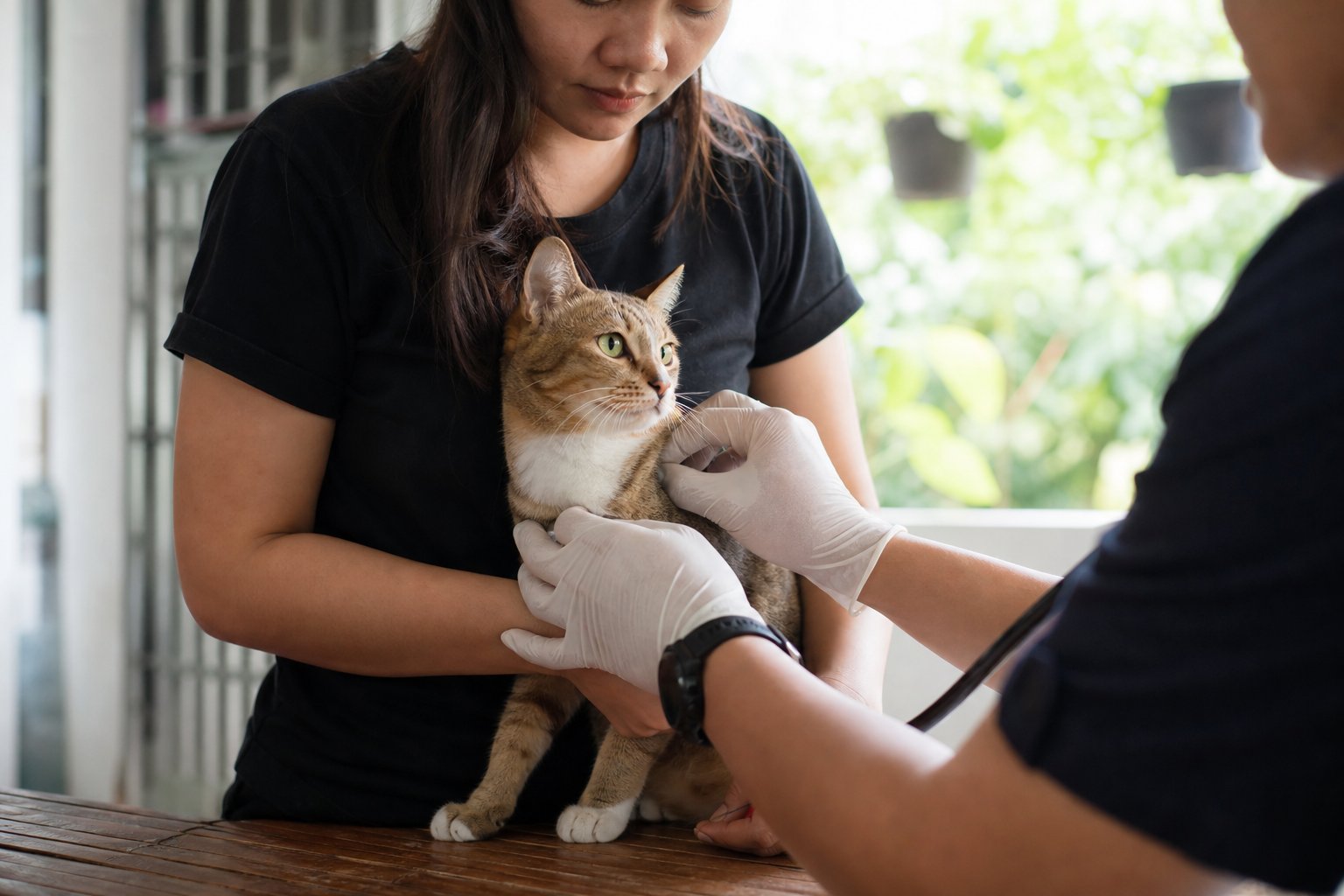
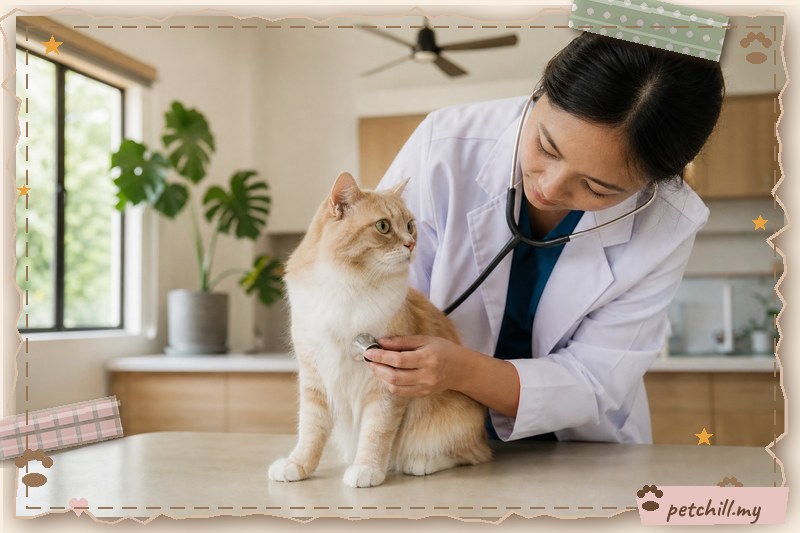
A Malaysian vet will typically start with a physical exam and a skin history: when the lesions appeared, whether they itch, whether other pets or people are affected, and whether the cat goes outdoors.
Common tests include:
| Test | What it does | What it tells you |
|---|---|---|
| Wood's lamp examination | Ultraviolet light shone on the coat | Some ringworm species glow apple-green, but a negative result does not rule it out |
| Fungal culture | Hair and scale samples grown in a lab | Confirms the species and whether it is truly ringworm |
| Microscopy | Hair or scale examined under a microscope | Can show spores or damaged hairs, though it is not always conclusive |
| Skin scraping | Samples checked for mites | Helps rule out parasites that look similar |
| Cytology | Stained smear of skin surface | Screens for bacteria and yeast |
In practice, a vet may treat based on strong clinical signs while waiting for culture results. Culture can take one to three weeks, so do not be surprised if treatment starts before the lab confirms anything.
Treatment options your vet may use
Treatment is usually layered rather than single-product. The right mix depends on how many lesions the cat has, whether the cat is long-haired, how many cats live in the home, and whether anyone in the household has a weakened immune system.
Topical treatment
Topical antifungals reduce spores on the coat and help lesions heal. Options include creams, sprays, mousses and medicated shampoos. Which one your vet picks depends on the lesion location and the cat's temperament.
Practical points:
- Clip hair around lesions if your vet advises it, so the product reaches the skin.
- Wear gloves when applying topical products.
- Prevent the cat from licking treated areas immediately afterwards.
- Follow the frequency your vet sets; skipping days slows recovery.
Whole-body washes
Medicated baths or rinses are often used for cats with widespread lesions or long coats. They help remove infected hairs and spores. Bathing a cat is rarely a favourite activity, so plan for a calm, warm space and have towels ready. In a Malaysian home, a bathroom with a closed door and a non-slip mat works well.
Oral antifungal medicine
Vets prescribe oral antifungals for widespread infection, long-haired cats, cats that will not tolerate topicals, or homes with multiple cats. These medicines need a prescription and a correct dose based on weight. Do not split or guess doses from a previous prescription.
Oral antifungals can affect the liver in some cats, so your vet may recommend blood tests before or during treatment, especially for longer courses. Report any vomiting, poor appetite or yellowing of the gums or eyes straight away.
Environmental cleaning
This is the part owners underestimate. Ringworm spores can survive in the environment for a long time, so treating the cat without cleaning the home often leads to reinfection.
A sensible cleaning routine:
- Vacuum floors, furniture and cat trees regularly, then empty the vacuum outside or into a sealed bag.
- Wash bedding, blankets and soft toys in hot water.
- Wipe hard surfaces with a vet-approved disinfectant.
- Replace or disinfect brushes and combs.
- Restrict the infected cat to easy-to-clean areas while treatment is ongoing.
- Wash your hands after handling the cat and before eating.
Diluted bleach is commonly used on hard surfaces, but it can damage fabrics and irritate skin. Ask your vet or a pet supplier in Malaysia for a suitable product and follow the label exactly.
A realistic treatment timeline
Every cat is different, but a typical course looks like this:
| Stage | What happens | Owner's job |
|---|---|---|
| Week 0 | Vet exam and tests; treatment starts | Begin topicals, start cleaning, isolate if advised |
| Weeks 1-2 | Lesions may look similar or slightly better | Keep treatment consistent; do not stop early |
| Weeks 3-4 | Hair may start regrowing; scaling reduces | Continue cleaning and topicals as directed |
| Weeks 4-8 | Vet rechecks; culture may be repeated | Finish the full course even if skin looks normal |
| After treatment | Confirm cure before relaxing cleaning | Watch for new patches in the following weeks |
Stopping treatment when the skin looks better is one of the most common reasons ringworm comes back. Fungal spores can linger on hairs that look healthy.
Living with a ringworm cat in a Malaysian home
Malaysia's warm, humid climate does not cause ringworm by itself, but damp conditions and close contact can help fungi and spores persist. Practical adjustments help.
Kuala Lumpur apartment
In a compact apartment, keep the infected cat in one room or a large pen during the early treatment phase. This limits spore spread to carpets, curtains and soft furniture. Vacuum daily if you can, wipe down hard floors, and wash your own clothes separately from cat bedding. Balcony time is fine if the cat is supervised, but avoid letting the cat roll in damp soil or share space with neighbourhood cats.
Johor terrace house
In a terrace house with a garden, keep the infected cat indoors while treatment is ongoing. Outdoor cats can pick up fungus from soil and other animals, and can spread spores around the porch and garden. Clean cat carriers and garden shoes, and wash hands after gardening before handling the cat.
Penang rainy season
During the wet season, indoor humidity rises and drying laundry takes longer. Damp bedding and soft furnishings can hold spores. Dry washed bedding thoroughly, use a dehumidifier or air-conditioning where practical, and avoid storing cat blankets in damp cupboards.
Multi-cat households and other pets
If you have more than one cat, assume the others have been exposed. Your vet may recommend examining all cats, testing suspicious patches, and treating in-contact cats with topical products even if they look normal.
Dogs and other pets can also catch ringworm from a cat, though species vary in susceptibility. Keep infected and healthy pets apart where possible, and do not share brushes, bedding or food bowls during treatment.
People are at risk too. Ringworm can spread to humans, especially children, older adults and anyone with lowered immunity. If you develop an itchy, ring-shaped rash, see a doctor and mention that your cat has ringworm.
Prevention: reducing the chance of round two
Once treatment ends, a few habits lower the risk of recurrence:
- Keep new cats separate for a short period and have them checked by a vet before mixing.
- Wash hands after handling unfamiliar cats.
- Clean brushes and bedding regularly, not only during an outbreak.
- Keep cats indoors or supervise outdoor time.
- Address underlying health issues that weaken immunity, such as poor nutrition or chronic illness.
- Maintain flea and parasite control as your vet advises.
Ringworm is not a sign of a dirty home. It is an infection that can affect any cat, including well-cared-for indoor pets.
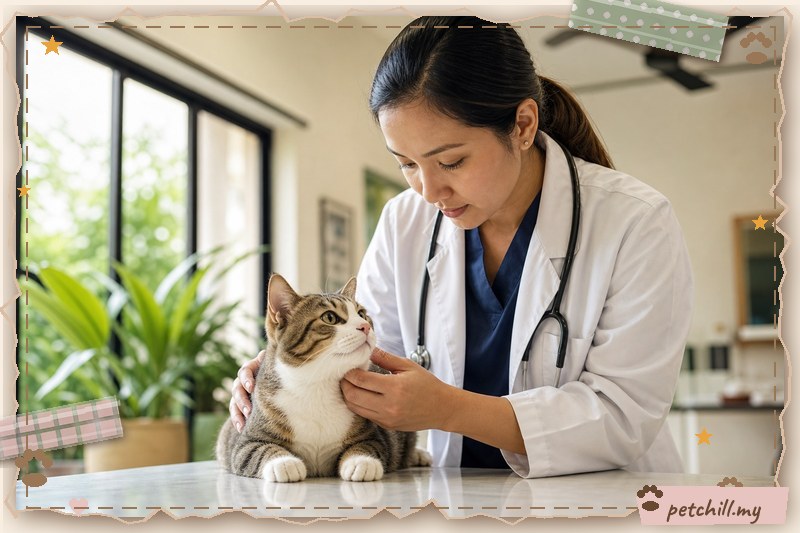
When to see a vet
Book a vet visit if you notice:
- Circular patches of hair loss, scaling or crusting
- Broken or patchy fur, especially on the head, ears or legs
- Persistent scratching, licking or scabbing
- Lesions that spread or do not improve after a week of home care
- Multiple cats developing skin problems
- A person in the household developing a ring-shaped rash
- Any cat that is lethargic, off food or losing weight alongside skin signs
Go sooner if your cat is very young, elderly, pregnant or has a known immune condition. These cats can become unwell faster and may need a different treatment plan.
Cost and product expectations in Malaysia
Prices for vet consultations, laboratory tests, antifungal medicines and cleaning products vary widely between clinics and retailers in Malaysia. Costs depend on the number of tests, the length of treatment and the size of your home. Ask your vet for an estimate before starting, and ask a local pet retailer about suitable disinfectants rather than assuming a product is safe for cats. Never use human antifungal creams on a cat without veterinary advice, and never give human oral antifungal tablets to a pet.
A simple owner checklist
- Confirm the diagnosis with a vet before treating
- Follow the full course, even when skin looks normal
- Wear gloves when applying topicals
- Clean bedding, brushes and floors regularly
- Keep infected cats separate from healthy pets early on
- Wash hands often, especially before meals
- Watch for rashes in people
- Recheck with your vet before ending treatment
Bottom line
Cat skin fungus is manageable, but it rewards patience and consistency. Get a diagnosis, use the treatment your vet prescribes, clean the environment thoroughly, and finish the course. In Malaysia's humid climate, drying bedding properly and keeping indoor spaces clean are small habits that make a real difference.
This article is general information only and is not a substitute for veterinary advice. Diagnosis and treatment of skin disease should be handled by a licensed veterinarian who has examined your cat.
Related reading
- Cat Health Guide Malaysia: Symptom Check, Red-Flag Triage & When to See a Vet
- Cat Ringworm Treatment in Malaysia: A Practical Owner's Guide
- Constipation in Cats: Causes, Care and When to See a Vet in Malaysia
- Fans and Air Conditioning for Cats in Malaysia: A Practical Comfort Guide
- Flea Treatment for Cats Step by Step: A Practical Malaysian Guide
- Fleas Prevention for Cats in Malaysia: A Practical, Year-Round Plan
- How to Treat Fleas in Cats at Home: A Practical Malaysian Guide

