
The short answer
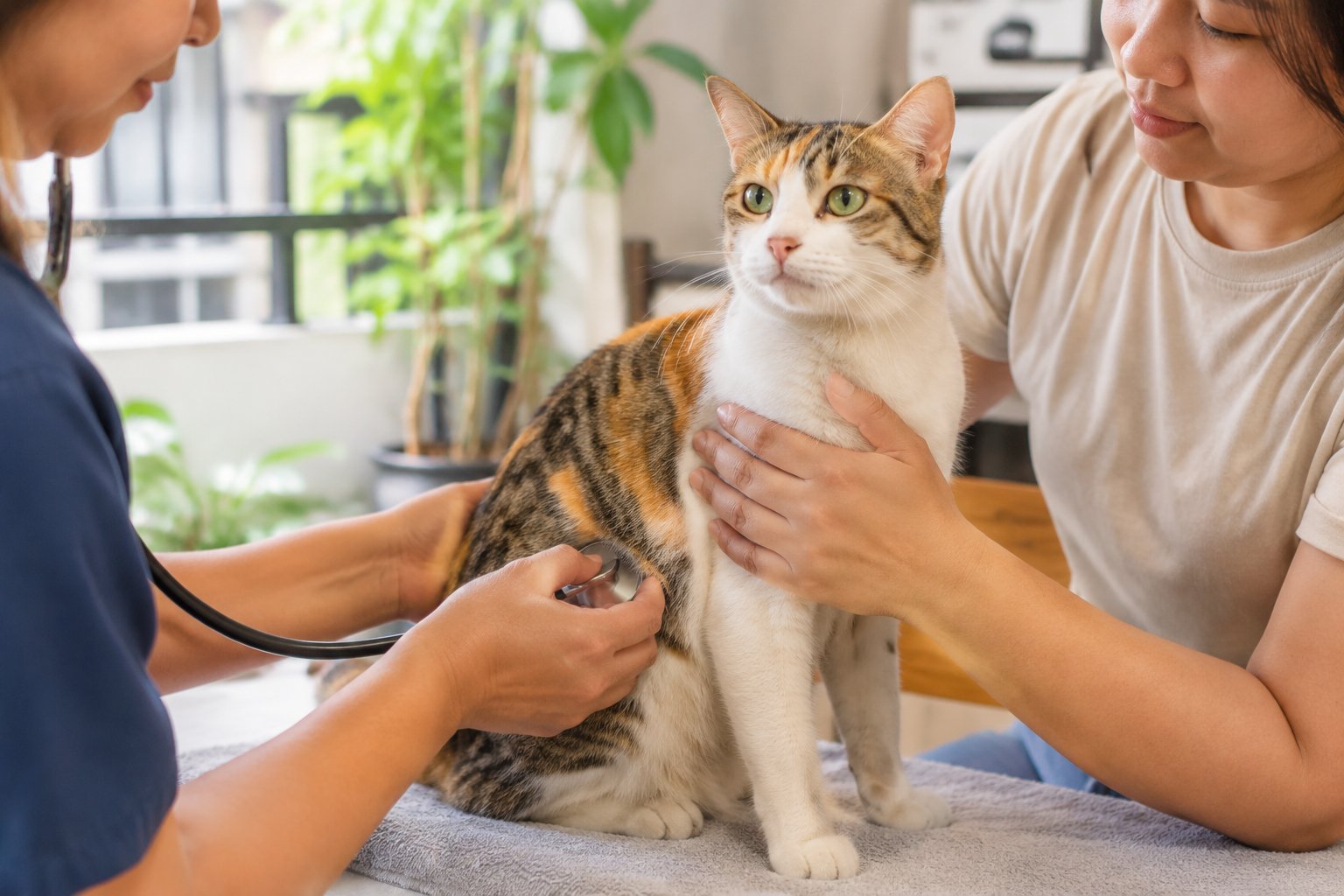
Fans and air-conditioners are not automatically dangerous for cats. The problems come from direct, continuous cold drafts, fans placed where a cat can reach the blades or cable, dirty filters, very low temperatures, and no warm retreat for a cat that wants to get away. Set your aircond to roughly 24-26°C, use fans on oscillate rather than fixed, keep airflow above or past resting spots, clean filters monthly, and always give your cat a warm, draft-free place to sleep. If your cat shivers, hides, sneezes repeatedly, has eye or nose discharge, or breathes oddly, see a vet.
Why airflow matters for cats in Malaysia
Malaysian homes are often warm and humid, and many cats cope well with that. Cats are descended from desert-dwelling ancestors, so they generally tolerate heat better than cold. But humidity changes the picture: high humidity reduces a cat's ability to cool by evaporation, and a cat that cannot escape heat can become uncomfortable or, in severe cases, overheated.
Fans and air-conditioners help by moving air and lowering temperature. The risk is not the appliance itself but how it is used. A fan aimed at a cat's face for hours can dry the eyes and nose. An aircond set very low can chill a wet, elderly or thin cat. A fan with exposed blades or a loose cable is a physical hazard. Dirty filters recirculate dust and allergens.
The goal is simple: comfort with choice. Your cat should be able to move between a cooler, airy spot and a warmer, sheltered spot without being trapped in a draft.
Fan safety: placement, type and daily checks
Choose the right fan for a cat household
| Fan type | Main risk to cats | Safer setup |
|---|---|---|
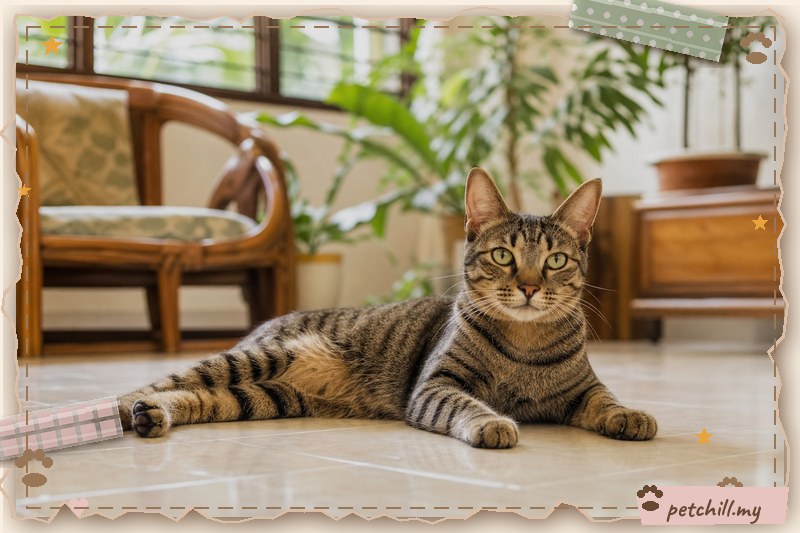
| Ceiling fan | Jumping cats, low clearance, wobble | Check blade height, balance, and that no cat can leap onto blades from a wardrobe or shelf |
| Standing/pedestal fan | Tip-over, exposed blades, cable chewing | Wide base, blade guard, cable clipped or in a conduit, placed in a corner |
| Table fan | Easy to knock over, close to faces | On a stable surface, oscillating, airflow above resting height |
| Tower fan | Blades hidden, but intake grille can trap paws | Keep grille clean, place where a cat cannot sit against the intake |
| Wall-mounted fan | Cable routing, direct draft | Mount high, angle away from beds, secure cable |
| Handheld/mini fan | Chewing, overheating | Do not leave unattended with cats |
Practical fan rules
- Use oscillate, not fixed. A moving airflow is less likely to dry one spot on the face or eyes.
- Aim above or past the cat. Point the fan toward a wall or ceiling so air circulates indirectly.
- Keep a safe distance. At least a metre or two from favourite sleeping spots is a reasonable starting point; adjust by watching your cat.
- Secure the cable. Cats chew cables. Use cable covers, clips or conduit, and unplug fans when not in use.
- Check stability. A cat brushing past a pedestal fan can topple it. Choose a wide base or wall-mount.
- Clean blades and guards. Dust on blades blows into the room. Wipe weekly in humid weather.
- Never leave a fan on the floor where a cat can lie against the motor. Motors can warm up, and small kittens may chew wires.
Signs a fan is bothering your cat
- Squinting, watery eyes or frequent blinking
- Turning the head away or moving to another spot
- Sneezing after sitting in front of the fan
- Restlessness or hiding
- Ear or nose twitching and rubbing
If you see these, redirect the airflow and offer an alternative resting place.
Aircond setup: temperature, humidity and drafts
Temperature
For most healthy cats, an aircond set to 24-26°C is comfortable. Very low settings (below about 22°C) for long periods can chill cats, especially:
- kittens and senior cats
- thin or short-haired cats
- cats that are wet after a bath or grooming
- cats recovering from illness
- cats with arthritis or joint stiffness
If your cat seeks the aircond vent, it may be hot. If it curls tightly, shivers or hides under blankets, it may be too cold. Let your cat's behaviour guide you.
Humidity
Malaysian humidity is often high. Air-conditioning removes some moisture, which can help, but very dry air can irritate eyes and airways. Aim for comfortable, moderate humidity rather than a bone-dry room. If the room feels very dry, a small humidifier or a bowl of water near the airflow can help; clean humidifiers regularly to avoid mould.
Drafts
Direct cold drafts are the main issue. Position beds, cat trees and scratching posts out of the direct line of the aircond. Use the swing/louvre setting so cold air is distributed rather than blasted at one spot. Do not place a cat bed directly under a ceiling cassette or in front of a split-unit indoor unit.
Filters and servicing
Clean or vacuum the filter every two to four weeks in a cat household, and book a proper service regularly. Cat hair, dust and dander clog filters quickly, reducing efficiency and blowing allergens back into the room. If your cat sneezes more when the aircond is on, dirty filters are a common culprit.
Doors and windows
Cats are escape artists. An aircond room usually has closed windows, which is safer, but check that screens are secure and that doors do not slam on tails. If you ventilate by opening windows, make sure screens are cat-proof.
Creating a comfort zone: the choice principle
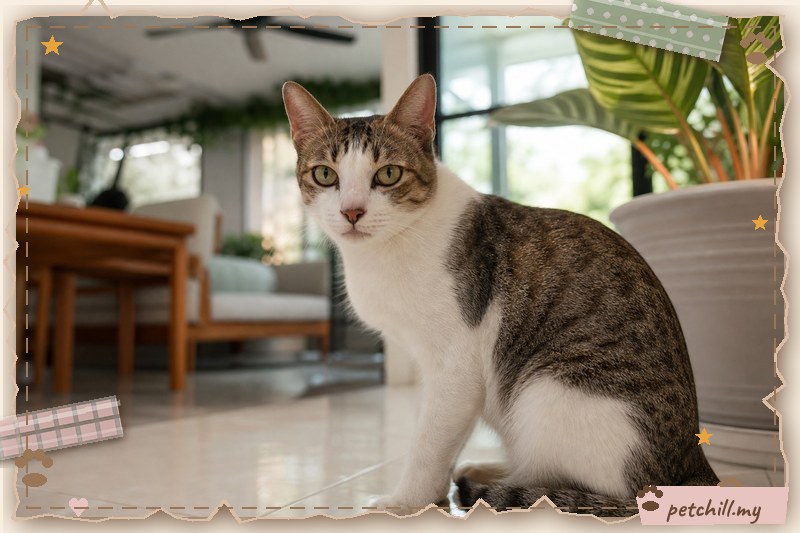
A cat should never be forced to stay in one microclimate. Set up at least two options:
- Cool zone: a spot with indirect airflow, shade and water.
- Warm zone: a bed away from drafts, perhaps with a blanket, in a warmer room or corner.
Add vertical space: cat trees, shelves and window perches let cats move to where they feel comfortable. Provide fresh water in several places; cats drink more when water is available and cool.
A simple room checklist
- Fan is stable, guarded and on oscillate
- Airflow is not aimed at beds or faces
- Aircond is around 24-26°C
- Filters are clean
- Cables are covered or clipped
- A warm, draft-free bed is available
- Fresh water is in at least two spots
- Screens and doors are secure
- Your cat can leave the room freely
Special cases: kittens, seniors and health conditions
Kittens have less body fat and less ability to regulate temperature. Keep them away from direct cold drafts and very low aircond settings. Senior cats may have arthritis and feel cold more easily; provide warm, soft bedding and avoid cold floors. Thin or hairless breeds need warmer settings and may appreciate a sweater in aircond rooms, though many cats dislike clothing.
Cats with kidney disease, heart disease, respiratory disease or thyroid disease may be more sensitive to temperature and humidity. Ask your vet for specific advice. Cats recovering from surgery or illness should be kept warm and away from direct drafts.
Wet cats: after a bath or a rainy walk, dry your cat before letting it sit in an aircond room. A wet coat plus cold airflow can chill a cat quickly.
Heat stress: when fans and aircond are not enough
Even with fans and aircond, a cat can overheat, especially in a hot room with poor ventilation or during a power cut. Warning signs include:
- heavy panting or open-mouth breathing
- drooling
- restlessness or weakness
- bright red gums or tongue
- vomiting or diarrhoea
- collapse or seizures
If you suspect heat stress, move the cat to a cooler, shaded area, offer cool water, and contact a vet immediately. Do not plunge a cat into ice water. Heat stress is an emergency.
Common mistakes to avoid
- Pointing a fan directly at a sleeping cat for hours. Use oscillate and indirect airflow.
- Setting the aircond very low because it feels hot outside. Cats in the room may be much colder than you.
- Forgetting the filter. A clogged filter undoes much of the benefit.
- Leaving cables exposed. Cats chew; use covers.
- Shaving a cat for summer. The coat protects against heat and sunburn; brush instead.
- Closing every door. Cats need choice and escape routes.
- Ignoring subtle signs. Hiding, squinting or sneezing can be early warnings.
When to see a vet
See a vet if your cat shows any of the following, especially if it started or worsened when fans or aircond use increased:
- persistent sneezing, nasal discharge or coughing
- eye redness, squinting, watery or sticky discharge
- shivering, hiding, lethargy or refusing food
- breathing that is fast, noisy or laboured
- stiffness or reluctance to move after cold exposure
- signs of heat stress such as panting, drooling or weakness
- any symptom in a kitten, senior cat or cat with a known health condition
Your vet can check for infections, allergies, eye problems and other conditions that airflow may be aggravating. Do not rely on home adjustments alone if symptoms persist.
A note on Malaysian homes
In a Kuala Lumpur apartment, aircond is often the main cooling method, so cats may spend most of the day in cooled rooms. Set a moderate temperature, keep a warm bed available, and check filters often because apartments can trap dust. In a Johor terrace house, fans and open windows are common; secure screens, guard fan blades and watch for cats seeking the cooler floor near the aircond. During the Penang rainy season, humidity rises, so keep bedding dry, clean filters and watch for sneezing or skin issues.
Vet disclaimer
This article is general information for Malaysian cat owners and is not a substitute for veterinary advice. Every cat is different. If you are worried about your cat's breathing, eyes, temperature tolerance or behaviour around fans and air-conditioners, consult a licensed veterinarian.
Related reading
- Blood Test for Cats in Malaysia: What It Checks, Costs and When You Need One
- Cat Weight Loss Treatment in Malaysia: A Practical Guide for Owners
- Chocolate Poisoning and Cats in Malaysia: What Every Owner Should Know
- Electrical Cables and Cats in Malaysia: A Practical Safety Guide
- Fans and Air Conditioning for Cats in Malaysia: A Practical Comfort Guide
- Household Cleaning Products and Cats in Malaysia: A Safety Guide
- How to Prevent Chocolate Poisoning Around Cats: A Practical Guide for Malaysian Homes
- How to Prevent Electrical Cables Around Cats: A Practical Safety Guide for Malaysian Homes

