
Quick answer
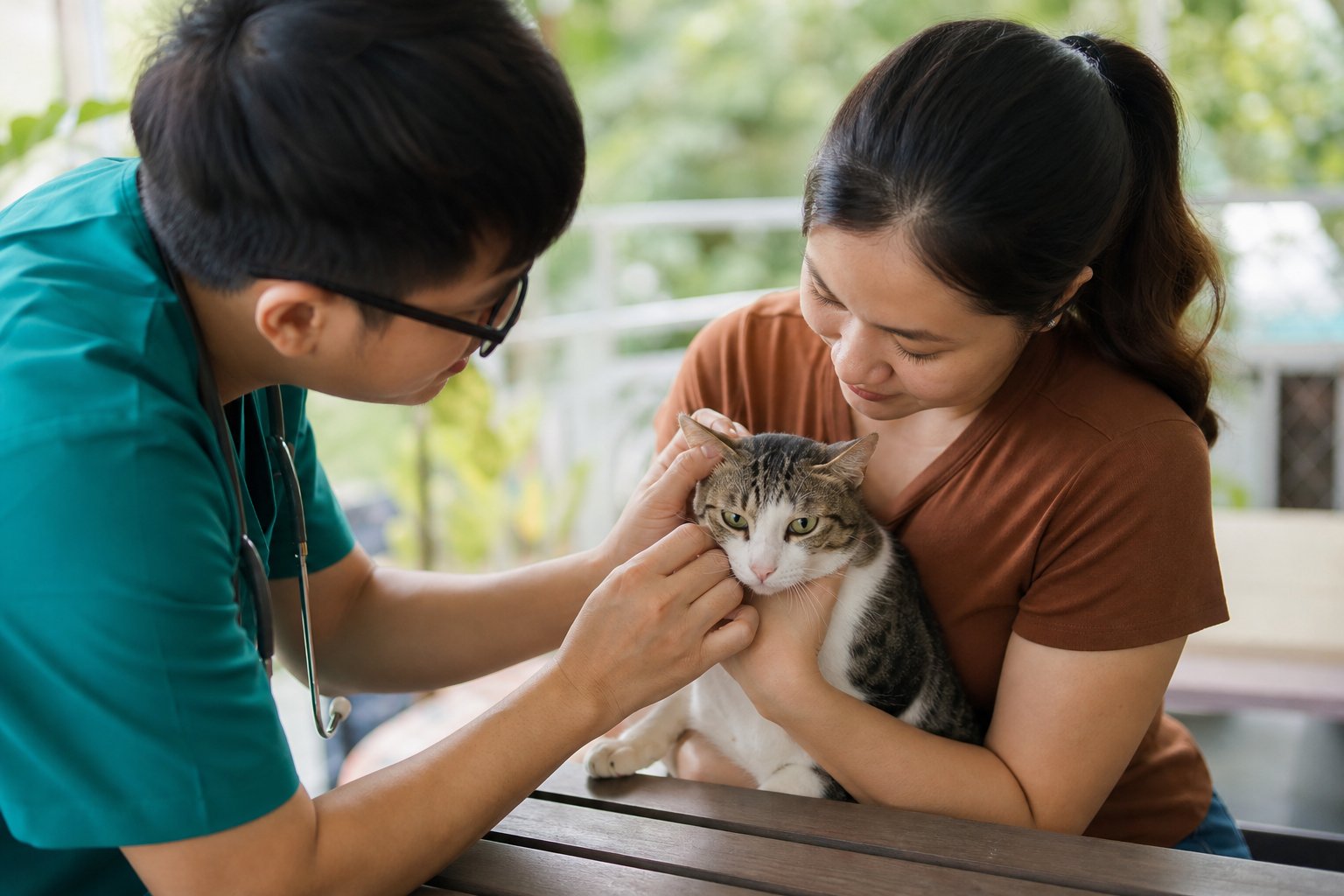
Vomiting in cats is common, but it is not automatically normal. A single episode in a bright, hungry cat is often minor. Repeated vomiting, vomiting with lethargy, blood, a painful belly or refusal to eat needs a vet. For mild cases, rest the stomach briefly, keep water available, then offer small bland meals and watch closely.
Why cats vomit: the short version
Vomiting is a symptom, not a diagnosis. The list of possible causes is long, which is why your vet will ask about diet, hairballs, plants, medicines, recent changes and your cat's appetite and litter tray habits.
Broadly, causes fall into a few groups:
- Dietary upset: eating too fast, sudden food changes, rich or fatty food, scavenging, spoiled food.
- Hairballs: more common in long-haired cats and during heavy shedding.
- Infections: gut infections, some viral illnesses, and parasites such as worms.
- Foreign bodies: string, hair ties, plastic, bones or plant material stuck in the gut.
- Organ disease: kidney disease, liver disease, pancreatitis, thyroid problems.
- Toxins: household cleaners, some plants, human medicines, pest control products.
- Stress and motion: car travel, boarding, moving house, a new pet in the home.
- Other conditions: inflammatory bowel disease, cancer, neurological problems, and metabolic disorders.
In Malaysia, the hot and humid climate adds a few practical concerns. Food left out spoils faster, wet food attracts flies, and cats that go outdoors may eat lizards, insects or rubbish. Indoor cats in apartments may also vomit from hairballs or from eating houseplants.
Vomiting or regurgitation? Why the difference matters
Owners often use the word vomiting for anything coming back up. Vets separate the two because they point to different problems.
| Feature | Vomiting | Regurgitation |
|---|---|---|
| Warning signs | Retching, heaving, salivation, nausea | Sudden, little or no warning |
| What comes up | Partly digested food, bile, sometimes blood | Undigested food, often tube-shaped |
| Where it comes from | Stomach or upper gut | Oesophagus |
| Common causes | Dietary upset, hairballs, infections, organ disease | Eating too fast, oesophageal narrowing, megaoesophagus |
| Typical timing | Variable, often after meals | Soon after eating |
If your cat regurgitates soon after every meal but is otherwise well, slow feeding and a raised bowl may help. If regurgitation is frequent, your vet may want to check the oesophagus.
Common causes in Malaysian homes
Hairballs
Cats groom themselves constantly, and long-haired breeds swallow more fur. Most hairballs pass through the gut, but some collect in the stomach and come up as a sausage-shaped clump. Occasional hairballs can be normal. Frequent hairball-like vomiting is not. It may mean overgrooming from fleas, skin allergies, stress or pain, or it may be a sign of gut disease.
Practical steps: brush your cat several times a week, especially in hot weather when shedding increases, and treat fleas promptly. Ask your vet before using hairball remedies, since some products are not suitable for every cat.
Eating too fast
Many cats gulp dry food, then bring it back up minutes later. Puzzle feeders, a slow-feed bowl or splitting meals into smaller portions often solve this. If your cat lives with other pets, feed separately so it does not compete.
Food changes and spoiled food
A sudden switch to a new brand can cause loose stools and vomiting. Transition over about a week, mixing increasing amounts of the new food. In Malaysia's heat, do not leave wet food out for long. Discard leftovers, cover food, and wash bowls daily.
Plants and household items
Some common ornamental plants are toxic to cats, and lilies are especially dangerous. Keep lilies out of homes with cats. Other risks include string, ribbon, hair ties, rubber bands, plastic wrappers and sewing thread. Cats swallow these while playing, and they can cause a life-threatening blockage.
Parasites and infections
Worms and some gut infections cause vomiting, especially in kittens. Regular deworming and vaccination, as advised by your vet, reduce the risk. Kittens and unvaccinated cats are more vulnerable.
Organ disease and chronic vomiting
Older cats may vomit because of kidney disease, thyroid disease, pancreatitis or inflammatory bowel disease. Chronic vomiting should never be dismissed as a habit. A vet can run blood tests, urine tests and imaging to find the cause.
Home care for a mildly vomiting cat
Home care suits a cat that is bright, drinking, not dehydrated and vomiting only once or twice. It is not suitable for kittens, elderly cats, pregnant cats, or cats with other illnesses.
A sensible approach:
- Remove food for a short period. A few hours is usually enough for an adult cat. Do not fast a cat for a long time without veterinary advice, because cats can develop serious liver problems when they stop eating.
- Keep fresh water available. Offer small amounts frequently. Some cats prefer a water fountain or a wide bowl.
- Watch for dehydration. Gently lift the skin at the back of the neck. If it stays up, or if the gums feel tacky, contact your vet.
- Reintroduce bland food. Offer small, frequent meals of plain cooked chicken or a vet-recommended bland diet. Avoid fatty food, milk and treats.
- Return to normal food gradually. Mix the usual food back in over a day or two if vomiting has stopped.
- Keep your cat indoors and quiet. Note how often it vomits, what it looks like and whether it is eating, drinking and using the litter tray.
Do not give human anti-nausea medicines, painkillers or antibiotics. Some are toxic to cats, and the wrong treatment can hide serious disease.
Hydration and monitoring checklist
Use this checklist to decide whether home care is reasonable or whether you should call a vet.
- Is your cat eating and drinking normally?
- Is it bright and responsive, or hiding and quiet?
- Is the vomiting once, or repeated over hours?
- Is there blood, coffee-coloured material or worms in the vomit?
- Is the belly swollen, hard or painful to touch?
- Is your cat straining to vomit with nothing coming up?
- Are there signs of dehydration, such as tacky gums or skin that stays tented?
- Has your cat lost weight or been vomiting on and off for weeks?
- Could your cat have eaten string, plastic, a plant or a human medicine?
If any answer worries you, contact your vet. It is better to ask than to wait.
When to see a vet
See a vet promptly if your cat:
- vomits more than a few times in a day, or vomits for more than 24 hours;
- cannot keep water down;
- stops eating or drinking;
- seems lethargic, weak or hides;
- has a painful, swollen or hard belly;
- has blood in the vomit, or vomit that looks like coffee grounds;
- strains to vomit with nothing coming up, which can indicate a blockage;
- has diarrhoea along with vomiting;
- is a kitten, an elderly cat, pregnant, or has an existing illness;
- may have eaten something toxic, such as a lily, human medicine or household cleaner.
Go to an emergency vet immediately if your cat collapses, has difficulty breathing, has a seizure, or you suspect poisoning or a swallowed object. Do not wait to see if it passes.
What your vet may do
Your vet will start with a history: diet, timing, frequency, appearance of the vomit, and any changes at home. They will examine your cat, check hydration and feel the abdomen. Depending on findings, they may recommend:
- blood tests and urine tests;
- faecal tests for parasites;
- X-rays or ultrasound;
- anti-nausea medication, fluids or a special diet;
- hospitalisation if your cat is dehydrated or very unwell.
Treatment depends on the cause. A foreign body may need surgery. Kidney disease needs long-term management. Dietary upset may settle with a bland diet and a gradual return to normal food.
Preventing vomiting where possible
You cannot prevent every cause, but you can reduce common triggers:
- Feed good-quality food and transition slowly.
- Store food properly and discard spoiled wet food.
- Brush your cat regularly and treat fleas.
- Keep string, plastic and small objects out of reach.
- Remove toxic plants, especially lilies.
- Keep medicines and cleaning products locked away.
- Deworm and vaccinate as advised by your vet.
- Feed small, frequent meals if your cat eats too fast.
- Schedule regular check-ups, especially for older cats.
Living with a vomiting cat in Malaysia
Malaysian homes vary widely. A Kuala Lumpur apartment cat may vomit from hairballs, boredom or eating houseplants, while a Johor terrace house cat that goes outdoors may scavenge or pick up parasites. During the rainy season, cats may spend more time indoors, which can increase hairball shedding and stress. Adjust care to your cat's routine and environment.
Vet disclaimer
This article is general information only and is not a substitute for veterinary advice. Every cat is different. If your cat is vomiting, unwell or you are unsure, consult a licensed veterinarian in Malaysia.
Related reading
- How to Treat Constipation in Cats at Home: A Practical Malaysian Guide
- Signs of Vomiting in Cats in Malaysia: What's Normal, What's Not, and When to See a Vet
- Vomiting in Cats in Malaysia: When It's Normal and When to Worry
- Vomiting Prevention for Cats: A Practical Guide for Malaysian Owners
- Blood Test for Cats Step by Step: What Happens at the Clinic
- Cat Constipation in Malaysia: The 48-Hour Rule, Red Flags and What Actually Helps
- Cat Vomiting Treatment in Malaysia: What to Do and When to See a Vet
- Dental Pain in Cats in Malaysia: Signs, Causes and What to Do
- Dental Pain Prevention for Cats: A Practical Malaysian Guide
- Deworming Schedule for Cats: A Step-by-Step Plan for Malaysian Owners
- Deworming Schedule for Cats: What to Expect (Malaysia Guide)

