
What to expect, in one paragraph
Wound care for a cat usually follows a predictable path: stay calm, assess the wound, control bleeding, flush it clean, stop the cat from licking, and check it daily for signs of infection. Minor grazes often heal in one to two weeks. Puncture wounds, bites, and deep cuts are a different story and usually need a vet the same day. The single biggest mistake owners make is waiting too long while a small surface wound turns into an abscess underneath.
First, decide: is this a home-care wound or a vet wound?
Before you touch anything, look at the wound in good light. Ask yourself four questions: how deep is it, how much is it bleeding, where is it, and how is the cat behaving?
Use this rough triage table as a starting point. It does not replace a vet's judgement.
| What you see | Likely category | What to expect |
|---|---|---|
| Small surface graze, no bleeding, cat bright and eating | Minor | Home cleaning and daily checks; heals in about 7 to 14 days |
| Scab that keeps re-opening, mild redness | Minor but needs monitoring | Clean, cone, watch for 48 hours; vet if worsening |
| Slow ooze that stops with 5 minutes of pressure | Borderline | Clean and cover lightly, vet if it restarts |
| Puncture hole from a bite or sharp object | Needs vet | Abscess risk is high; antibiotics often needed |
| Deep cut with visible fat or muscle, or gaping edges | Urgent | May need stitches or surgery |
| Bleeding that will not stop, or spurting blood | Emergency | Apply pressure and go now |
| Wound near eye, mouth, ear canal, or a joint | Needs vet | Delicate tissue, infection risk, function at stake |
| Cat is hiding, not eating, limping, or feverish | Needs vet | Pain or infection is likely already established |
If the wound falls anywhere in the bottom half of that table, skip the home-care steps below and arrange transport. Keep the cat calm, apply gentle pressure with a clean cloth if it is bleeding, and avoid prodding the wound repeatedly.
Step 1: Prepare before you touch the cat
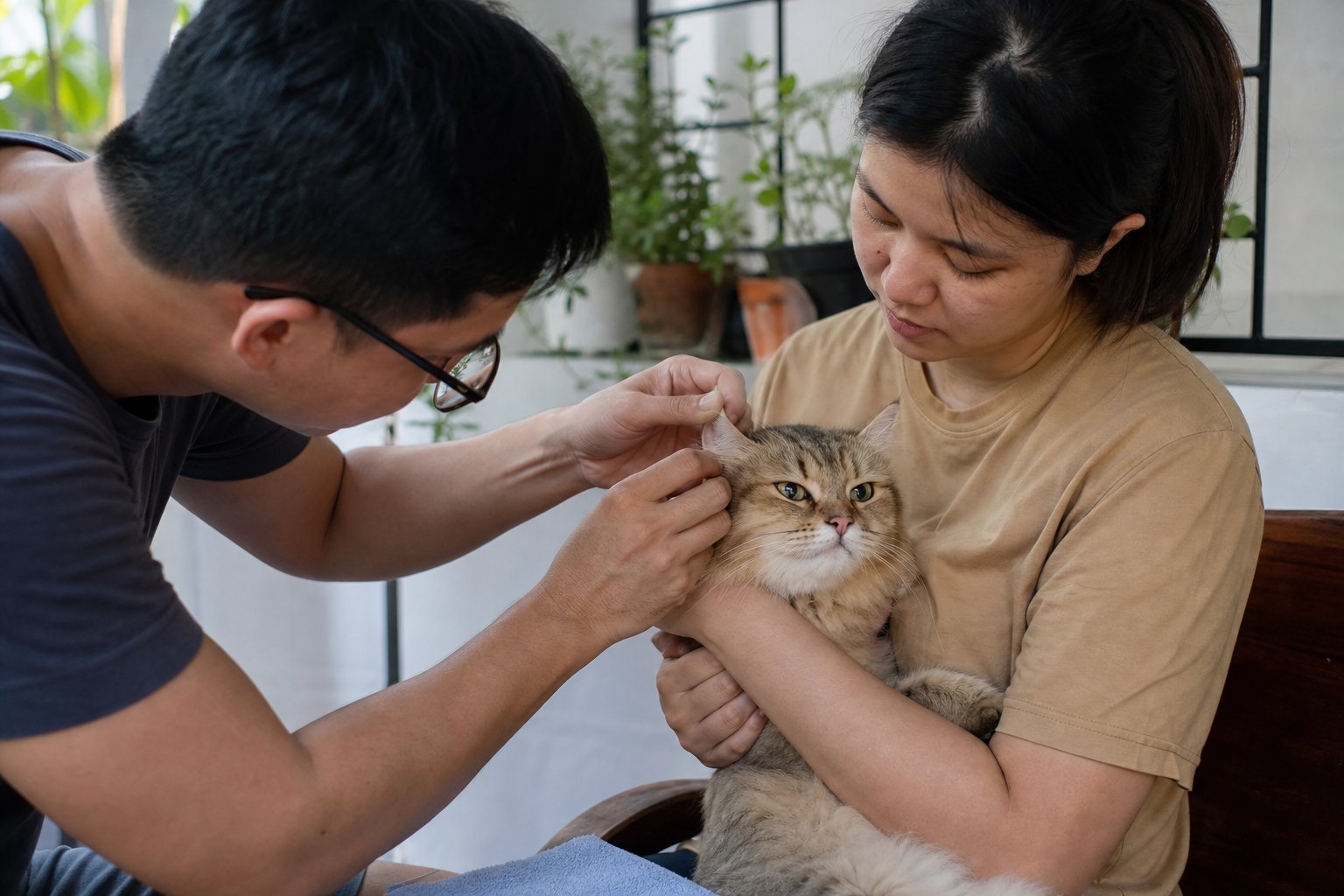
Cats in pain bite, even gentle ones. Have someone help you if possible. Wash your hands thoroughly. Set out what you need within reach so you are not rummaging while holding a struggling cat:
- Lukewarm saline or plain clean water in a syringe or squeeze bottle
- Clean gauze swabs or a clean cloth
- A towel for wrapping the cat
- A cone (Elizabethan collar) sized for your cat
- A carrier, in case you decide to go to the vet
Wrap the cat's body in a towel with one limb out at a time, or have a helper hold the scruff gently. Work in a quiet room with the door closed. If the cat is frantic, stop. A struggling cat can make the wound worse, and a vet can sedate if needed.
Step 2: Control bleeding
For active bleeding, press a clean gauze pad firmly on the wound for five full minutes without lifting to peek. Peeking restarts the clot. If blood soaks through, add another pad on top rather than removing the first. Most small cuts stop within a few minutes.
Do not use a tourniquet on a limb unless a vet has told you to. Do not pour powder or flour into the wound. If bleeding is heavy, spurting, or has not slowed after 10 minutes of steady pressure, go to a vet immediately.
Step 3: Flush and clean gently
The goal is to remove dirt, saliva, and debris without damaging tissue. Lukewarm saline is ideal; cooled boiled water is a reasonable substitute. Flush the wound with gentle pressure from a syringe, letting the fluid run off. Wipe around the edges with damp gauze, working outward from the wound so you do not drag dirt into it.
What to avoid:
- Hydrogen peroxide, alcohol, and iodine scrubs, which sting and slow healing
- Cotton wool, which leaves fibres in the wound
- Human antiseptic creams and sprays unless your vet has approved that specific product
- Repeated scrubbing, which re-injures the tissue
Pat the area dry with clean gauze. If the wound is on a paw, rinse carefully between the toes, where grit collects.
Step 4: Stop the licking, not with a bandage
A cat's tongue is rough and its mouth is full of bacteria. Licking is the most common reason a minor wound becomes an infected one. A properly fitted cone is the most reliable tool. Soft fabric collars work for some cats but can be slipped. Keep the cone on until the wound is fully closed, not just until it looks better.
Bandaging is usually unnecessary and often harmful. A bandage that is too tight can swell the limb below it, and a loose one slips off and gets chewed. Only bandage if your vet has shown you how and told you to. If you do bandage, check the toes twice daily for swelling, coldness, or a bad smell, and change the dressing as instructed.
Step 5: Daily wound checks, and what healing looks like
Check the wound at least once a day, ideally at the same time so you notice trends. Expect this normal progression:
- Days 1 to 2: fresh wound edges, mild redness and swelling, some clear fluid. This is normal inflammation.
- Days 3 to 5: a thin scab or crust forms. Redness should be stable or fading, not spreading.
- Days 5 to 10: the wound contracts and the scab tightens. The cat should be eating and behaving normally.
- Days 10 to 14: the scab lifts and new pink skin shows underneath. Hair may take longer to regrow.
Photograph the wound daily with your phone. It is surprisingly hard to remember whether redness was better or worse yesterday, and a photo makes the decision to call a vet much clearer.
Signs that home care is not working
Stop home care and book a vet if you see any of these:
- Redness or swelling that spreads beyond the original wound
- Pus, cloudy discharge, or a bad smell
- A soft, warm lump forming under or near the wound
- The cat flinching when the area is touched, or limping
- Loss of appetite, hiding, or lethargy
- Fever, which you may suspect if the cat feels hot and is off its food
- The wound re-opening after it had started to close
- No visible improvement after 48 hours of careful home care
Abscesses deserve special mention. A bite or puncture wound can seal at the surface while bacteria multiply underneath. Within a few days a painful swelling appears, and it may burst on its own. A burst abscess is not the end of the problem; the cat usually needs the wound cleaned, drained, and antibiotics, and sometimes a drain is placed. Do not squeeze a lump yourself.

Cat bites and scratches: why they are riskier than they look
Cat mouths carry a mix of bacteria, and a bite pushes them deep into tissue through a tiny hole. On the surface, a bite wound can look like two small dots. Underneath, the damage can be significant, especially over a joint or on the head and neck. Scratches are usually more superficial but can still become infected, and a scratch near the eye is always a vet matter.
If your cat has been in a fight, assume a bite wound until proven otherwise. Part the fur and look for small scabs, matted patches, or tender spots, particularly around the base of the tail, the head, and the front legs. If you find any, arrange a vet check even if the cat seems fine, because cats are skilled at hiding early infection.
What a vet visit usually involves
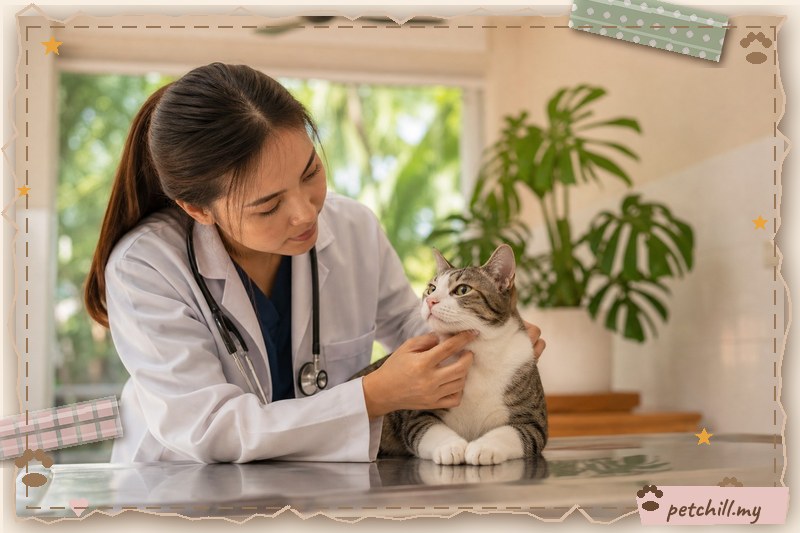
Knowing what to expect at the clinic reduces stress. A typical visit for a wound includes:
- History: how the wound happened, when, and whether the cat is vaccinated and eating.
- Examination: checking the wound depth, feeling for swelling, checking lymph nodes, and taking temperature.
- Cleaning and possibly clipping fur around the wound so it can be seen and kept clean.
- Decision on closure: some wounds are stitched, others are deliberately left open to drain, and some need a drain placed.
- Medication: antibiotics, pain relief, or both. Never give human painkillers to a cat; paracetamol and ibuprofen are toxic to them.
- A cone and a recheck appointment, often in a few days.
Costs vary widely depending on the procedure, whether sedation or surgery is needed, and the clinic. Ask your Malaysian vet for an estimate before treatment begins so there are no surprises.
Keeping the cat comfortable while it heals
Healing is faster in a calm, clean environment. Keep your cat indoors while the wound closes, both to protect the wound and to prevent further fights. Provide a quiet room away from other pets and children. Litter should be kept clean, and if the wound is on a paw or lower leg, consider paper pellets or shredded paper temporarily to reduce grit sticking to the wound.
Check that the cone does not stop the cat eating or drinking. Raise food and water bowls slightly if needed. Some cats manage better with a soft collar for meals and a firm cone overnight, but only if the cat cannot reach the wound in the soft collar.
A Malaysian context
In Malaysia's warm, humid climate, wounds stay moist and bacteria multiply quickly, so a wound that would scab over in a dry climate can become soggy and infected faster. In a Kuala Lumpur apartment, keep the cat in a tiled bathroom or a small room with good ventilation while a wound drains, and clean the floor daily. In a Johor terrace house, check that the cat cannot slip out through windows or gaps while it is supposed to be resting indoors, since an escaped cat in a cone is at risk of another fight. During the Penang rainy season, paws stay wet, so dry the feet gently after any outdoor contact and check between the toes for grazes that are not healing.
When to see a vet
See a vet promptly, ideally the same day, if any of the following apply:
- Bleeding that does not stop after 5 to 10 minutes of firm pressure
- A deep or gaping wound, or one where fat or muscle is visible
- Anything embedded in the wound, such as a splinter, glass, or a claw
- A bite wound, or a wound of unknown origin
- A wound near the eye, mouth, ear, or over a joint
- A swelling, lump, pus, or bad smell
- The cat is limping, lethargic, hiding, or not eating
- The cat is not vaccinated against tetanus-relevant risks or has an unknown vaccination history, so your vet can advise
- No improvement after 48 hours of home care, or any worsening at any point
If you are unsure, call the clinic and describe the wound. A phone call is cheaper than a delayed abscess.
A simple home wound-care checklist
- Hands washed, supplies ready, helper present
- Bleeding controlled with 5 minutes of steady pressure
- Wound flushed with saline, edges wiped outward
- Area patted dry, no human antiseptic applied
- Cone fitted and checked for eating and drinking
- Wound photographed
- Daily check scheduled for the next 7 to 14 days
- Vet appointment booked if any red flag is present
Bottom line
Most minor cat wounds do well with gentle cleaning, a cone, and daily observation. What you should expect is gradual improvement: less redness, a tightening scab, and a cat that behaves normally. What you should not expect is a puncture wound or bite to heal on its own. When in doubt, get the wound looked at. A quick vet visit is almost always simpler than treating an abscess later.
This article is general information for Malaysian cat owners and is not a substitute for veterinary examination. If your cat has a wound, contact a licensed veterinarian for advice specific to your cat.
Related reading
- How to Treat Licking Wounds in Cats at Home: A Practical Guide for Malaysian Owners
- How to Treat Vomiting in Cats at Home: A Practical Malaysian Guide
- Licking Wounds in Cats Malaysia: When It's Normal and When to Stop It
- Licking Wounds Prevention for Cats: How to Stop the Lick Cycle and Let Skin Heal
- Blood Test for Cats Step by Step: What Happens at the Clinic
- Cat Licking Wounds: Why It Happens and How to Treat It in Malaysia
- Dental Pain in Cats in Malaysia: Signs, Causes and What to Do
- Dental Pain Prevention for Cats: A Practical Malaysian Guide
- Deworming Schedule for Cats: A Step-by-Step Plan for Malaysian Owners
- Deworming Schedule for Cats: What to Expect (Malaysia Guide)
- E-Collar Recovery for Cats Step by Step: A Practical Guide for Malaysian Owners

