
PetChill Pet Encyclopedia
Cat Health

E-Collar Recovery for Cats: What to Expect (Malaysia Guide)

Your cat has an e-collar and you're not sure what's normal? This guide explains how to fit a cone, help your cat eat and rest, spot problems early, and know when to call the vet.

Published: 2026-11-06·7 min read·Author: PetChill Editorial
E-Collar Recovery for Cats: What to Expect (Malaysia Guide)

💡 Quick Answer

Expect 1–3 days of clumsy adjustment, then gradual acceptance. Keep the collar on 24/7 unless your vet says otherwise, check fit twice daily, and watch for stress, poor eating or swelling. Most cats recover well with patience and a quiet, safe space.

What to expect in the first 48 hours

Your cat will likely wobble, bump into furniture, and try to back out of the collar. That's normal. Most cats settle within one to three days. The first night is usually the hardest: they may cry, pace, or refuse food. Keep the environment calm and resist the urge to take the collar off "just for a minute" — that minute is often when wounds get licked open.

Answer first: Expect a clumsy, stressed cat for 1–3 days, then gradual acceptance. The collar stays on 24/7 unless your vet says otherwise. Your job is to make eating, sleeping and toileting easier, and to spot problems early.

Why e-collars matter (and why vets insist)

An Elizabethan collar (E-collar), often called a cone, prevents your cat from licking, chewing or scratching a wound or surgical site. Cats' tongues are rough and their mouths carry bacteria; a few minutes of licking can undo stitches, introduce infection, or delay healing. The collar also protects topical medications and bandages.

Some cats are Houdinis. If your cat can reach the wound even with the collar on, tell your vet — you may need a different size or style.
Why e-collars matter (and why vets insist)

Types of collars: plastic vs soft vs alternatives

Type Pros Cons Best for
Hard plastic cone Maximum protection, easy to clean, vet-standard Bulky, noisy, can scare cats, restricts vision First days after surgery, wounds on body or head
Soft fabric/foam collar Comfortable, good for sleeping, less claustrophobic Some cats can still reach wounds; gets dirty Cats that panic in plastic, or as a backup once healing is underway
Inflatable ring Less restrictive, good for neck-area wounds Not for paw or face wounds; can be punctured Short-term use under vet guidance
Recovery suit/onesie Covers body wounds, allows movement Not for head/face wounds; hygiene challenges Body incisions, if your cat tolerates clothing

Ask your vet which type suits your cat's procedure. In Malaysia, you'll find plastic cones at most vet clinics and pet shops; soft collars are increasingly available online. Prices vary, so check with your local retailer.

How to fit an e-collar correctly

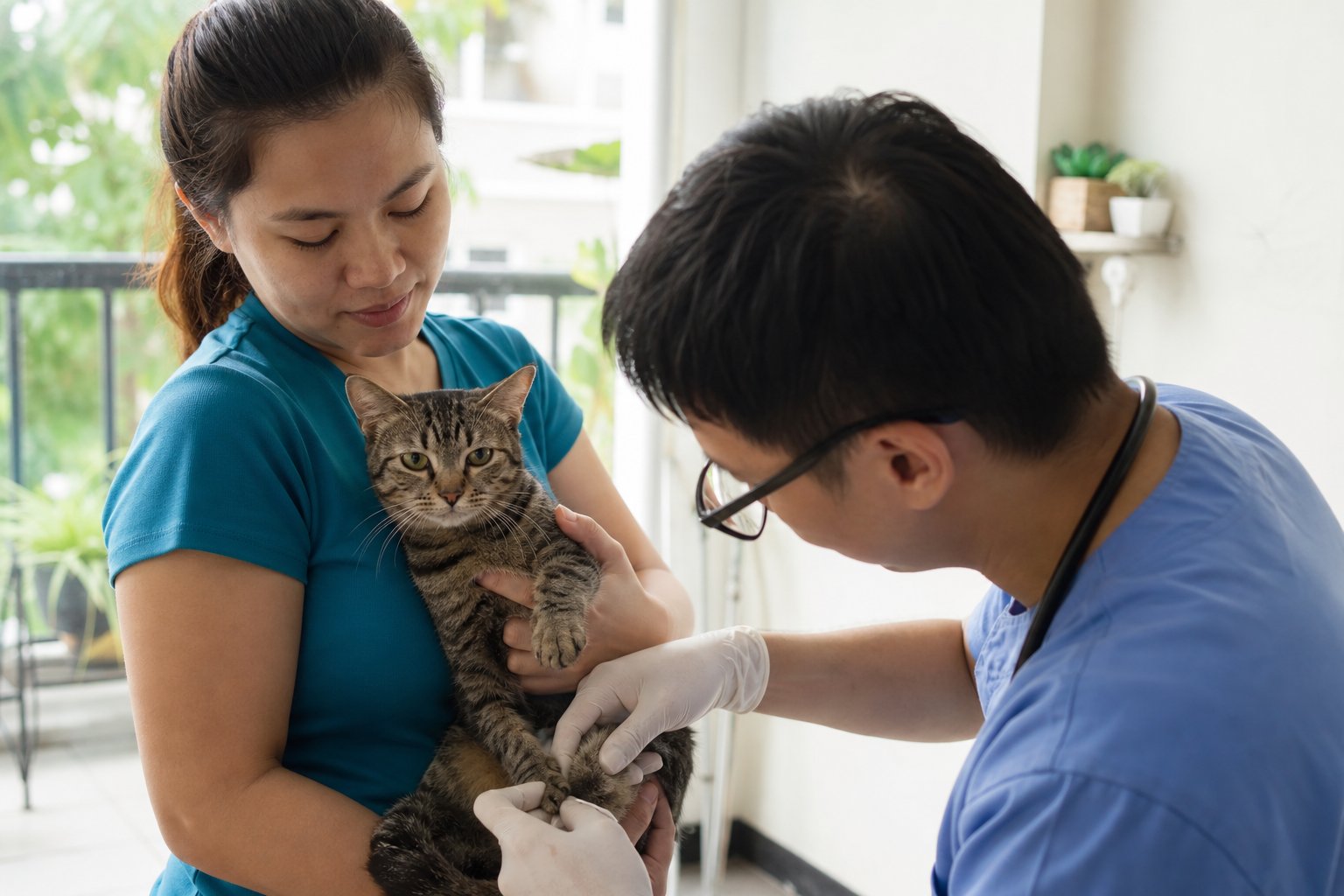
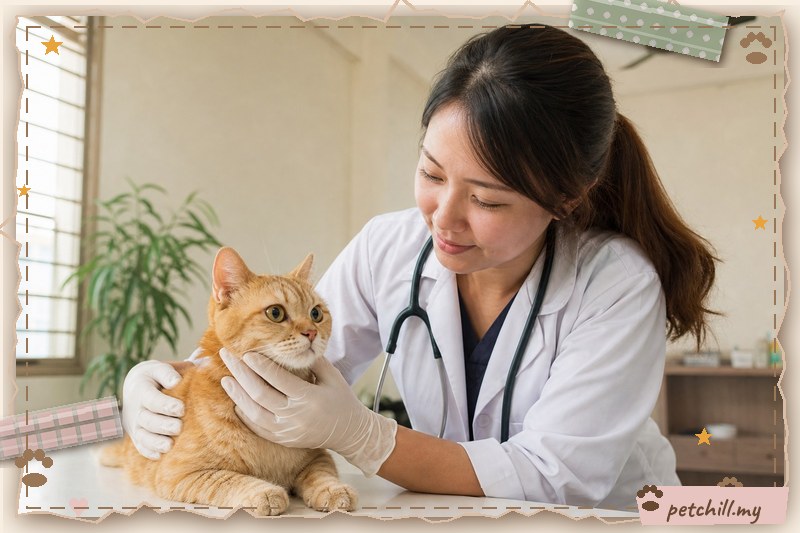
A well-fitted cone should extend past your cat's nose when they stretch forward, and be snug enough that it can't slip over the head but loose enough to fit two fingers under the neck strap. Check it twice daily: too tight causes swelling and rubbing; too loose lets the collar come off or the cat reach the wound.

  • Measure neck circumference with a soft tape, then choose the collar size accordingly.
  • Trim excess length only if the manufacturer allows; never cut a cone so short that the cat can lick the wound.
  • Use a breakaway or vet-approved fastener — never a rubber band or string.
  • Check for rubbing behind the ears and under the chin; pad with soft gauze if needed.
  • Recheck after meals and naps, as position shifts.
How to fit an e-collar correctly

Setting up a recovery room

A quiet, dim room works best. Ideally, this is a spare bedroom or a large bathroom — somewhere your cat can't jump onto high furniture or hide under a bed where you can't reach them. Provide:

  • A soft bed or folded blankets at floor level.
  • Food and water in shallow, wide bowls (raised a few centimetres if your cat struggles).
  • A litter box with low sides — a cone can make it hard to see the edge.
  • A pheromone diffuser (e.g., Feliway) if your cat is anxious.
  • Safe hiding spots, like a cardboard box with a door cut in.

In a Kuala Lumpur apartment, a small utility room or a bathroom with the door closed can work well. In a Johor terrace house, keep your cat in one room away from other pets and open doors. Avoid letting your cat roam the whole house at first; stairs and slippery floors are hazards with a cone.

Feeding and watering with a cone

Many cats manage fine, but some need adjustments:

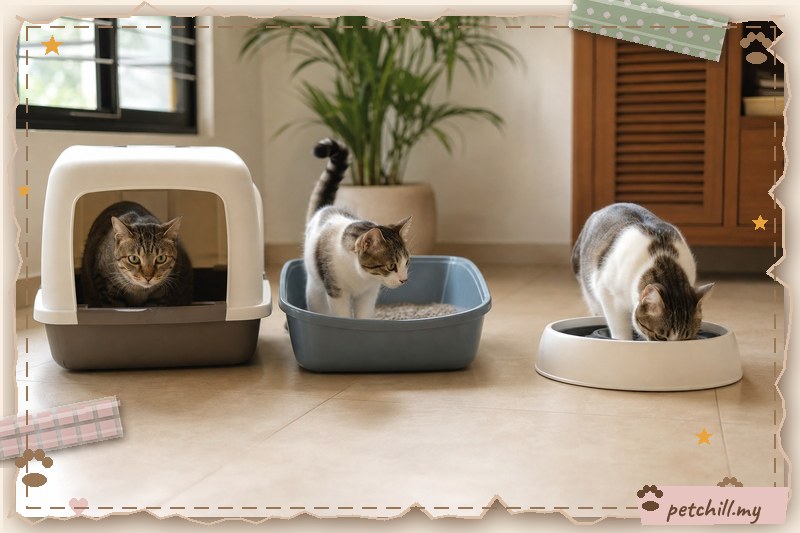
  • Use shallow, wide ceramic or stainless steel bowls; deep bowls block the cone.
  • Raise bowls on a small box or stack of books so your cat doesn't have to lower its head as far.
  • Offer wet food with strong aroma to tempt appetite.
  • If your cat can't drink, try a water fountain with a low spout, or offer water from a syringe (ask your vet first).
  • Never remove the collar to feed unless your vet says it's safe; instead, adjust the bowl.

If your cat refuses food for more than 24 hours, call your vet. Cats can develop liver problems if they stop eating for several days.
Feeding and watering with a cone

Litter box tips

A cone can make aiming difficult. Use a low-sided box, or cut a notch in a cardboard box to create a low entrance. Keep the box clean and close by. Some cats accidentally soil the cone; wipe it with pet-safe disinfectant and dry it thoroughly. If your cat seems painful when toileting, or you see blood, call your vet.

Managing stress and boredom

Cats hate restricted vision and altered routines. To reduce stress:

  • Keep the room dim and quiet; avoid loud music or visitors.
  • Use pheromone sprays or diffusers.
  • Offer gentle grooming with a soft brush (avoid the wound area).
  • Provide low-energy enrichment: a cardboard box, a paper bag with treats, or a food puzzle that doesn't require jumping.
  • Spend quiet time nearby so your cat doesn't feel isolated.
  • Never punish or force; if your cat is panicking, stop and call your vet.

Some cats benefit from vet-prescribed anti-anxiety medication or a different collar style. Don't use human sedatives.
Managing stress and boredom

Exercise and restriction

No jumping, running or stairs for the first week or as advised. A cone affects balance, so even a small jump off the sofa can cause a fall. Keep your cat in a single room and block furniture. If you have other pets, separate them unless supervised; a playful dog or cat can snag the cone.

Grooming and hygiene

  • Wipe food off the cone after meals.
  • Check the skin under the collar for redness or moisture.
  • Don't bathe your cat unless your vet approves; damp fur under a cone can cause skin irritation.
  • If your cat has a wound drain or bandage, follow your vet's cleaning instructions exactly.

Timeline: what to expect week by week

Time What you may see What to do
Day 1–2 Clumsiness, crying, hiding, poor appetite Keep calm, offer tasty food, check fit, call vet if no eating in 24h
Day 3–5 Better eating, more settled, still bumping Maintain collar, start gentle play, check wound daily
Day 6–10 Mostly adjusted, may try to scratch collar Keep collar on, watch for rubbing, keep indoors
Day 10–14 Vet recheck often around now Don't remove collar until vet says so
After removal Cat may groom excessively at first Monitor wound for a few days; call vet if licking resumes

Common problems and fixes

  • Cat won't eat: try stinky wet food, raise bowls, warm food slightly. Call vet if over 24 hours.
  • Collar keeps slipping off: check strap tightness; consider a different style.
  • Cat is depressed: quiet room, pheromones, gentle interaction; ask vet about medication.
  • Wound looks red or swollen: call vet; don't apply human creams.
  • Cat can reach the wound: tell your vet; you may need a longer cone.
  • Collar is cracked: replace it; a damaged cone won't protect.

When to see a vet

Call your vet promptly if:

  • Your cat hasn't eaten for more than 24 hours.
  • Breathing seems laboured or noisy.
  • The collar is too tight (swelling, rubbing, head pressing).
  • The wound is bleeding, discharging pus, or smells bad.
  • Your cat is vomiting, lethargic, or hiding more than usual.
  • Your cat seems unable to toilet.
  • You notice a bad smell from the mouth or ears (possible infection).
  • Your cat panics severely or injures itself trying to remove the collar.

If you're unsure, call. It's better to ask than to wait.

A note for Malaysian cat owners

Malaysia's warm, humid climate means wounds can get moist under a cone. Keep the area dry and check daily. If your cat goes outdoors normally, keep them strictly indoors during recovery — even in a landed house with a garden. For travel or boarding, ask your vet about timing.

Final checklist

  • Collar fits: two fingers under strap, extends past nose.
  • Recovery room set up: low bowls, low litter box, soft bed.
  • Vet's contact number saved.
  • Feeding and litter routine adjusted.
  • Daily wound check scheduled.
  • Other pets separated.
  • Follow-up appointment booked.

Vet disclaimer

This article is for general information only and is not a substitute for veterinary advice. Every cat and every procedure is different. Always follow your veterinarian's instructions and contact your vet if you have concerns about your cat's recovery.

Frequently Asked Questions

📌 Key Takeaways

  • This article covers: What to expect in the first 48 hours, Why e-collars matter (and why vets insist), Types of collars: plastic vs soft vs alternatives, How to fit an e-collar correctly, Setting up a recovery room, and more
  • Jump to any section via the table of contents for the key details
  • If in doubt, consult a registered veterinarian

Explore this topic cluster

This guide belongs to a Malaysia-focused topic cluster. Read the pillar guide and related articles.

View cluster →

📚 Cat Health article index

This article is part of the Cat Health topic cluster. Explore related articles:

⭐ Pillar guide: Cat Health complete guideBlood Test for Cats in Malaysia: What It Checks, Costs and When You Need One→ ReadBlood Test for Cats Step by Step: What Happens at the Clinic→ ReadBlood Test for Cats: What to Expect (Malaysian Owner's Guide)→ ReadCat Constipation Treatment in Malaysia: A Practical Owner's Guide→ ReadCat Dental Pain Treatment in Malaysia: A Practical Owner's Guide→ ReadCat Diarrhea Treatment in Malaysia: A Practical Owner's Guide→ ReadCat Ear Mites Treatment in Malaysia: A Complete Owner's Guide→ ReadCat Eye Infection Treatment in Malaysia: A Practical Owner's Guide→ ReadCat Fleas Treatment in Malaysia: A Practical Owner's Guide→ ReadCat Hair Loss Treatment in Malaysia: A Practical Owner's Guide→ ReadCat Licking Wounds: Why It Happens and How to Treat It in Malaysia→ ReadCat Poisoning Treatment in Malaysia: What to Do, What to Expect, and How to Prevent It→ ReadCat Ringworm Treatment in Malaysia: A Practical Owner's Guide→ ReadCat Skin Fungus Treatment in Malaysia: A Practical Owner's Guide→ ReadCat Sneezing Blood: Causes, Treatment and When to See a Vet in Malaysia→ ReadCat Vomiting Treatment in Malaysia: What to Do and When to See a Vet→ ReadCat Weight Loss Treatment in Malaysia: A Practical Guide for Owners→ ReadCat Worms Treatment in Malaysia: A Practical Owner's Guide→ ReadChocolate Poisoning and Cats in Malaysia: What Every Owner Should Know→ ReadConstipation in Cats: Causes, Care and When to See a Vet in Malaysia→ ReadConstipation in Cats in Malaysia: Causes, Signs and What to Do→ ReadConstipation Prevention for Cats: A Practical Guide for Malaysian Owners→ ReadDental Pain in Cats: Causes, Signs and Care (Malaysia Guide)→ ReadDental Pain in Cats in Malaysia: Signs, Causes and What to Do→ ReadDental Pain Prevention for Cats: A Practical Malaysian Guide→ ReadDeworming Schedule for Cats in Malaysia: A Practical, Vet-Led Guide→ ReadDeworming Schedule for Cats: A Step-by-Step Plan for Malaysian Owners→ ReadDeworming Schedule for Cats: What to Expect (Malaysia Guide)→ ReadDiarrhea in Cats: Causes and Care (Malaysian Owner's Guide)→ ReadDiarrhea in Cats in Malaysia: Causes, Home Care and When to See a Vet→ ReadDiarrhea Prevention for Cats: A Practical Guide for Malaysian Owners→ ReadE-Collar Recovery for Cats in Malaysia: A Practical Guide for Owners→ ReadE-Collar Recovery for Cats Step by Step: A Practical Guide for Malaysian Owners→ ReadEar Mites in Cats: Causes and Care (Malaysia Guide)→ ReadEar Mites in Cats in Malaysia: Signs, Treatment and Prevention→ ReadEar Mites Prevention for Cats: A Practical Malaysian Guide→ ReadElectrical Cables and Cats in Malaysia: A Practical Safety Guide→ ReadEye Infection in Cats: Causes and Care (Malaysia Guide)→ ReadEye Infection in Cats in Malaysia: Causes, Signs, Treatment & Prevention→ ReadEye Infection Prevention for Cats: A Practical Malaysian Guide→ ReadFans and Air Conditioning for Cats in Malaysia: A Practical Comfort Guide→ ReadFlea Treatment for Cats in Malaysia: A Complete Guide→ ReadFlea Treatment for Cats Step by Step: A Practical Malaysian Guide→ ReadFlea Treatment for Cats: What to Expect (Malaysia Guide)→ ReadFleas in Cats: Causes and Care (Malaysia Guide)→ ReadFleas in Cats in Malaysia: Signs, Treatment and Prevention→ ReadFleas Prevention for Cats in Malaysia: A Practical, Year-Round Plan→ ReadGiving Pills for Cats in Malaysia: A Stress-Free Step-by-Step Guide→ ReadGiving Pills for Cats Step by Step: A Calm, Practical Guide for Malaysian Owners→ ReadGiving Pills for Cats: What to Expect (Malaysian Owner's Guide)→ ReadHair Loss in Cats: Causes and Care (Malaysian Owner's Guide)→ ReadHair Loss in Cats in Malaysia: Causes, Home Checks and When to See a Vet→ ReadHair Loss Prevention for Cats: A Practical Grooming and Health Guide→ ReadHousehold Cleaning Products and Cats in Malaysia: A Safety Guide→ ReadHow to Prevent Chocolate Poisoning Around Cats: A Practical Guide for Malaysian Homes→ ReadHow to Prevent Electrical Cables Around Cats: A Practical Safety Guide for Malaysian Homes→ ReadHow to Prevent Fan and Aircond Problems Around Cats: A Malaysian Home Guide→ ReadHow to Prevent Household Cleaning Products Around Cats: A Practical Safety Guide for Malaysian Homes→ ReadHow to Prevent Lily Poisoning Around Cats: A Practical Safety Guide for Malaysian Homes→ ReadHow to Prevent Open Windows Around Cats: A Practical Safety Guide for Malaysian Homes→ ReadHow to Prevent Paracetamol Poisoning Around Cats: A Malaysian Safety Guide→ ReadHow to Prevent Plastic Bags Around Cats: A Practical Safety Guide for Malaysian Homes→ ReadHow to Treat Constipation in Cats at Home: A Practical Malaysian Guide→ ReadHow to Treat Dental Pain in Cats at Home: Safe Relief and When to See a Vet→ ReadHow to Treat Diarrhea in Cats at Home: A Practical Malaysian Guide→ ReadHow to Treat Ear Mites in Cats at Home: A Practical Malaysian Guide→ ReadHow to Treat Eye Infection in Cats at Home: Safe Steps for Malaysian Owners→ ReadHow to Treat Fleas in Cats at Home: A Practical Malaysian Guide→ ReadHow to Treat Hair Loss in Cats at Home: A Practical Malaysian Guide→ ReadHow to Treat Licking Wounds in Cats at Home: A Practical Guide for Malaysian Owners→ ReadHow to Treat Poisoning in Cats at Home: First Aid, Safe Steps and When to Rush to the Vet→ ReadHow to Treat Ringworm in Cats at Home: A Practical Guide for Malaysian Owners→ ReadHow to Treat Skin Fungus in Cats at Home: A Practical Malaysian Guide→ ReadHow to Treat Sneezing Blood in Cats at Home: Safe First Steps for Malaysian Owners→ ReadHow to Treat Vomiting in Cats at Home: A Practical Malaysian Guide→ ReadHow to Treat Weight Loss in Cats at Home: A Practical Guide for Malaysian Owners→ ReadHow to Treat Worms in Cats at Home: A Practical, Safe Guide for Malaysian Owners→ ReadLicking Wounds in Cats: Causes and Care (Malaysian Vet Guide)→ ReadLicking Wounds in Cats Malaysia: When It's Normal and When to Stop It→ ReadLicking Wounds Prevention for Cats: How to Stop the Lick Cycle and Let Skin Heal→ ReadLily Poisoning and Cats in Malaysia: Why Every Petal Is an Emergency→ ReadOpen Windows and Cats in Malaysia: How to Keep Your Cat Safe Without Locking Up the House→ ReadParacetamol Poisoning in Cats in Malaysia: Why Even One Tablet Can Be Deadly→ ReadPlastic Bags and Cats in Malaysia: Why They're Dangerous and How to Keep Your Cat Safe→ ReadPoisoning in Cats: Causes, Symptoms and Care (Malaysia Guide)→ ReadPoisoning in Cats in Malaysia: Common Toxins, Signs and What to Do→ ReadPoisoning Prevention for Cats in Malaysia: A Room-by-Room Safety Guide→ ReadRingworm in Cats: Causes, Symptoms and Care (Malaysia Guide)→ ReadRingworm in Cats in Malaysia: Signs, Treatment and Prevention→ ReadRingworm Prevention for Cats in Malaysia: A Practical, Vet-Informed Guide→ ReadSigns of Constipation in Cats in Malaysia: What to Watch For and When to Act→ ReadSigns of Dental Pain in Cats in Malaysia: What Owners Miss→ ReadSigns of Diarrhea in Cats in Malaysia: What's Normal, What's Not→ ReadSigns of Ear Mites in Cats in Malaysia: How to Spot, Treat and Prevent Them→ ReadSigns of Eye Infection in Cats in Malaysia: What Owners Should Look For→ ReadSigns of Fleas in Cats in Malaysia: How to Spot, Check and Act→ ReadSigns of Hair Loss in Cats in Malaysia: What to Look For and When to Worry→ ReadSigns of Licking Wounds in Cats Malaysia: How to Spot Problem Licking→ ReadSigns of Poisoning in Cats in Malaysia: What to Watch For and What to Do→ ReadSigns of Ringworm in Cats in Malaysia: What Owners Should Look For→ ReadSigns of Skin Fungus in Cats in Malaysia: How to Spot Ringworm Early→ ReadBlood in a Cat's Sneeze: Signs, Causes and What to Do in Malaysia→ ReadSigns of Vomiting in Cats in Malaysia: What's Normal, What's Not, and When to See a Vet→ ReadSigns of Weight Loss in Cats in Malaysia: What to Watch For and When to Worry→ ReadSigns of Worms in Cats in Malaysia: What Owners Should Look For→ ReadSkin Fungus in Cats: Causes, Signs and Care (Malaysia Guide)→ ReadSkin Fungus in Cats in Malaysia: Ringworm Signs, Treatment and Prevention→ ReadSkin Fungus Prevention for Cats: A Practical Guide for Malaysian Homes→ ReadSneezing Blood in Cats: Causes and Care (Malaysia Guide)→ ReadSneezing Blood in Cats in Malaysia: Causes, What to Do, and When to See a Vet→ ReadSneezing Blood Prevention for Cats: Causes, Care and When to Worry→ ReadSterilization for Cats in Malaysia: A Complete Guide for Owners→ ReadSterilization for Cats Step by Step: A Malaysian Owner's Guide→ ReadSterilisation for Cats: What to Expect (Malaysian Owner's Guide)→ ReadUltrasound for Cats in Malaysia: What It Is, When It's Needed, and What to Expect→ ReadUltrasound for Cats Step by Step: What Happens, What It Costs, and How to Prepare→ ReadUltrasound for Cats: What to Expect (Malaysian Owner's Guide)→ ReadVaccination Side Effects for Cats in Malaysia: What's Normal, What's Not→ ReadVaccination Side Effects for Cats: A Step-by-Step Guide for Malaysian Owners→ ReadCat Vaccination Side Effects: What Malaysian Owners Should Expect→ ReadVomiting in Cats: Causes and Care (Malaysia Guide)→ ReadVomiting in Cats in Malaysia: When It's Normal and When to Worry→ ReadVomiting Prevention for Cats: A Practical Guide for Malaysian Owners→ ReadWeight Loss in Cats: Causes and Care (Malaysian Vet Guide)→ ReadWeight Loss in Cats in Malaysia: Causes, Warning Signs and What to Do→ ReadWeight Loss Prevention for Cats: A Practical Malaysian Guide→ ReadWorms in Cats: Causes and Care (Malaysia Vet Guide)→ ReadWorms in Cats in Malaysia: A Practical Owner's Guide→ ReadWorms Prevention for Cats in Malaysia: A Complete Guide→ ReadWound Care for Cats in Malaysia: A Practical Owner's Guide→ ReadWound Care for Cats Step by Step: A Practical Malaysian Guide→ ReadWound Care for Cats: What to Expect, Step by Step→ ReadX-Ray for Cats in Malaysia: What to Expect, Costs and Safety→ ReadX-Ray for Cats Step by Step: What Malaysian Owners Should Expect→ ReadX-Ray for Cats: What to Expect (Malaysian Owner's Guide)→ ReadArthritis Pet Care in Malaysia: A Practical Guide for Cats and Dogs→ ReadCat Arthritis in Malaysia: 5 Home Signs Your Cat Is in Pain — and What to Do→ ReadEarly Signs of Chronic Disease in Cats: 7 Daily Checks and a 4-Week Record Sheet→ ReadCat Chronic Kidney Disease in Malaysia: The Daily Care Routine That Actually Slows It Down→ ReadCat Constipation in Malaysia: The 48-Hour Rule, Red Flags and What Actually Helps→ ReadCat Dehydration in Malaysia: Home Skin-Turgor Test, 7 Causes and Emergency Signs→ ReadCat Heart Disease in Malaysia: Sleep Breathing Count, HCM Early Signs and When to Rush to the Vet→ ReadCat Kidney Disease in Malaysia: Early Signs, Prevention and Everyday Care→ ReadCat Pancreatitis in Malaysia: Symptoms, fPLI Testing, Treatment and Home Recovery→ ReadCat Ringworm in Malaysia: Signs, Treatment and Home Cleaning Guide→ ReadCat Symptom Checker Malaysia: 12 Common Signs and a Green-Amber-Red Triage Table→ ReadPet Deworming in Malaysia: How Often to Worm Your Cat or Dog→ ReadPet Gut Health in Malaysia: Probiotics, Food Transitions and Stool Troubles (Part 2)→ ReadCat Gut Health: Probiotics, Antibiotics and Food Transitions Explained (Malaysia)→ ReadPet Health Malaysia 2026: Common Cat and Dog Illnesses, Prevention Care and Vet Guidance→ ReadPet Insurance in Malaysia: How to Compare Plans Before You Sign→ ReadPet Poisoning at Home: Household Chemicals, Toxic Plants and When Not to Induce Vomiting (Malaysia)→ ReadPet Poisoning at Home: Household Chemicals, Insecticides and Toxic Plants (Malaysia, Part 1)→ ReadCat Chronic Disease Early Signs in Malaysia: 7 Daily Checks and a 4-Week Log→ ReadCat Health Guide Malaysia: Symptom Check, Red-Flag Triage & When to See a Vet→ ReadCat Ringworm in Malaysia: Symptoms, Treatment and Home Cleaning Guide→ ReadGut Health, Probiotics & Food Transition Part 2: Practical Malaysia Guide→ ReadPet Health in Malaysia: A Practical Prevention Guide for Cats and Dogs→ Read

Related products at PetChill

