
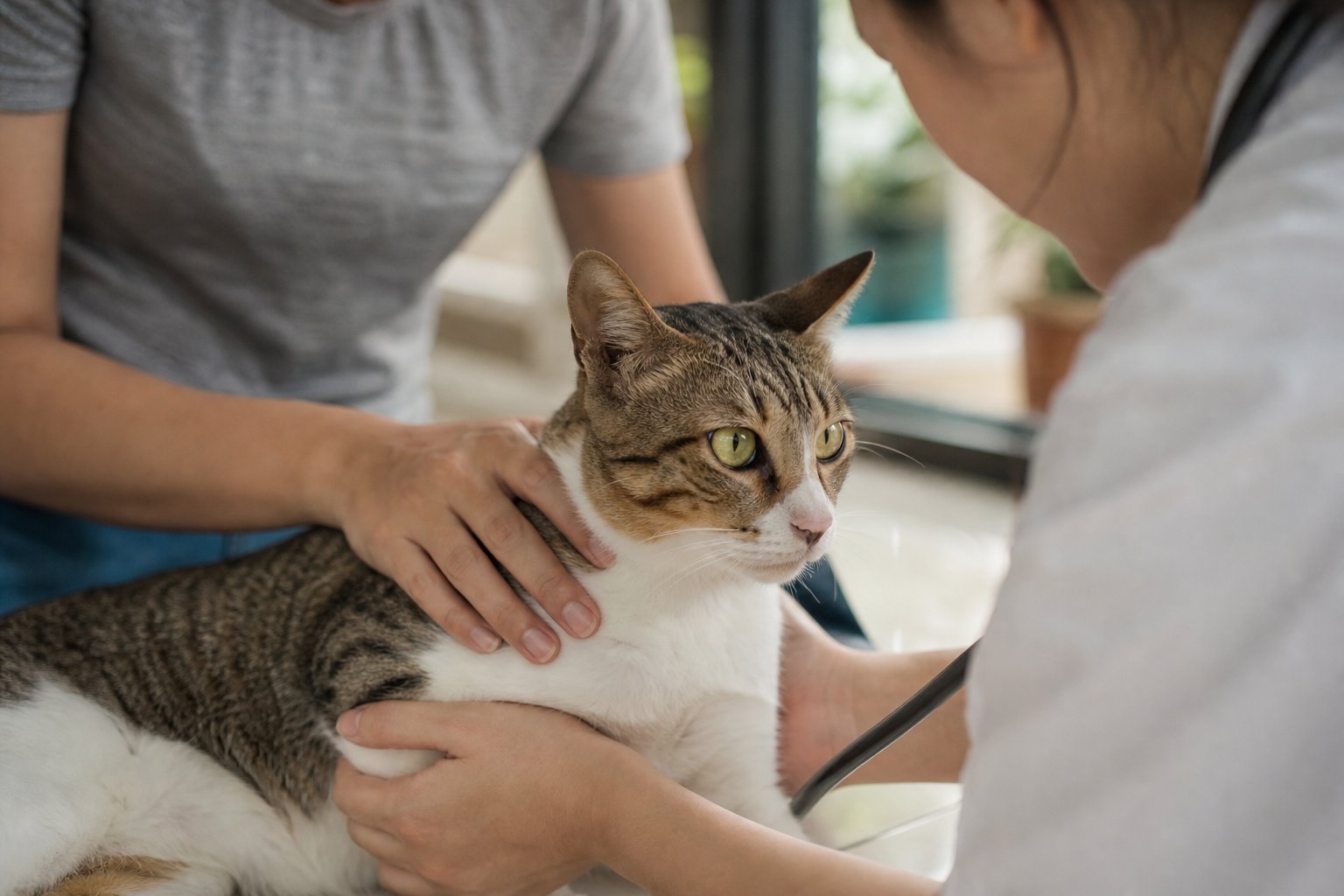
What skin fungus in cats actually is
Skin fungus in cats is an infection of the skin, hair or claws by a fungus. In practice, most cases fall into two groups: ringworm (the medical term is dermatophytosis), which is a true fungal infection of the hair and skin, and yeast overgrowth, usually Malassezia, which is a normal skin resident that multiplies when the skin barrier or immune system is off balance.
Ringworm is not a worm. It is a fungus that feeds on keratin in hair and skin, causing hairs to break and fall out. It is the most common contagious skin fungus in cats and the one most likely to spread to other pets and to people in the household.
Yeast overgrowth behaves differently. It tends to cause greasy, smelly, thickened skin, often in ear canals, skin folds, armpits and around the claws. It is often secondary to allergies, moisture, or another skin disease rather than a standalone infection.
Causes: why some cats get fungal skin disease
Fungi are everywhere in the environment. Whether a cat develops disease depends on exposure plus the cat's defences. Key causes and risk factors include:
- Direct contact with infected animals. Ringworm spreads through spores on fur and skin scales. A new kitten, a stray, or a cat from a multi-cat household can bring spores home.
- Contaminated objects. Spores survive in brushes, bedding, carpets, cat trees, carriers and grooming tools. Shared equipment is a common hidden source.
- Age and immune status. Kittens, senior cats, and cats with immune suppression from illness or certain medicines are more susceptible.
- Long hair and dense coats. Long-haired cats and cats with matted fur are harder to examine and groom, and spores can persist in the coat.
- Skin damage or moisture. Small wounds, scratching, and persistently damp skin folds create opportunities for yeast and bacteria.
- Crowded or stressful environments. Shelters, catteries and multi-cat homes increase contact and stress, both of which raise risk.
- Underlying allergies. Cats with allergic skin disease scratch and damage the skin barrier, making yeast overgrowth more likely.
In Malaysia's warm, humid climate, skin folds and ears can stay damp, and rainy-season humidity can make it harder to keep bedding and floors dry. That does not mean humidity causes ringworm by itself, but a damp environment supports fungal survival and skin irritation.
What it looks like: signs to check at home
Fungal skin disease can look like many other skin problems, so pattern recognition helps but is not a diagnosis.
Common signs of ringworm in cats:
- Circular patches of hair loss, often with a scaly or crusty edge
- Broken, stubby hairs within the patch
- Mild to moderate itch, though some cats barely scratch
- Patches on the head, ears, face, paws and tail, but anywhere is possible
- Thickened, crusty skin in longer-standing cases
- Sometimes nail involvement (crumbling or thickened claws)
Common signs of yeast overgrowth:
- Greasy, yellowish or brown discharge and a musty or sour smell
- Reddish-brown staining and thickening in skin folds
- Itchy ears with head shaking or scratching
- Licking and chewing at paws
- Skin that looks inflamed rather than neatly circular
A practical home check: part the fur with your fingers in good light and look for broken hairs, scales, crusts and redness. Note whether the cat is itchy, where the lesions are, and whether other pets or people have similar spots. Take photos over time; this helps your vet judge progress.
| Feature | Ringworm (dermatophytosis) | Yeast overgrowth (Malassezia) |
|---|---|---|
| Main cause | Fungal infection of hair/skin | Normal yeast multiplying abnormally |
| Typical look | Circular hair loss, scaling, broken hairs | Greasy, smelly, thickened, stained skin |
| Common sites | Face, ears, paws, tail, anywhere | Ears, skin folds, armpits, paws, claw beds |
| Itch | Variable, sometimes mild | Often itchy, especially ears and paws |
| Contagious to people | Yes | Not in the usual sense |
| Diagnosis | Lamp, microscopy, culture | Cytology (swab/tape prep) |
| Treatment | Systemic antifungal +/- topical | Treat yeast plus underlying cause |
How vets diagnose skin fungus
Because ringworm and yeast can resemble allergies, bacterial infections and mite problems, vets use tests rather than appearance alone.
- Wood's lamp examination. Some ringworm species fluoresce under ultraviolet light. A positive result is helpful, but a negative lamp does not rule out ringworm.
- Microscopy. Hair plucks or skin scrapes are examined for fungal spores or yeast organisms.
- Fungal culture. Hair samples are cultured to confirm ringworm and identify the species. Culture is the gold standard but results take time.
- Cytology. Tape preparations or swabs help identify yeast and bacteria, especially in ears and skin folds.
- Skin scrapes and hair plucks. These also check for mites and other causes.
- Blood or other tests. If the cat is unwell or infections keep returning, vets may look for underlying disease.
Expect your vet to ask about other pets, new animals, boarding, grooming, and any skin spots on family members. Honest history shortens the diagnostic path.
Treatment: what care usually involves
Treatment depends on the diagnosis, the cat's age and health, and how extensive the infection is. Your vet will tailor a plan; the following is general education, not a prescription.
For ringworm, vets commonly combine:
- Systemic antifungal medicine. Given by mouth or sometimes by injection, for several weeks. This reaches hair follicles where topical products cannot.
- Topical therapy. Medicated shampoos, rinses or sprays may be prescribed to reduce spores on the coat. Some vets recommend clipping long coats to improve contact and reduce environmental contamination.
- Environmental cleaning. Spore control at home is part of treatment, not optional housekeeping.
- Isolation and recheck tests. Infected cats are often kept separate from other pets and children until tests are negative.
For yeast overgrowth, vets usually treat the yeast (medicated ear drops, shampoos or wipes) and also address the trigger: allergies, moisture, ear anatomy, or another skin disease. If the underlying cause is not managed, yeast tends to return.
Important care principles:
- Do not stop medicine early because the skin looks better. Fungal spores persist.
- Do not use human creams or leftover pet medicines without veterinary advice.
- Bathe only as directed. Over-bathing can irritate skin; under-bathing can leave spores.
- Keep the cat comfortable. Use an Elizabethan collar if the vet advises it to stop licking.
- Treat all affected pets together. Otherwise, pets reinfect each other.
Home care and cleaning in Malaysian homes
Spore control is where owners make the biggest difference. Ringworm spores can survive in the environment for months, so cleaning needs to be regular, not a one-off.
A practical cleaning routine:
- Bedding and fabric: wash in hot water where possible, dry fully in sun or a dryer. Rotate bedding so one set is always clean.
- Floors and furniture: vacuum carpets, rugs, sofa seams and cat trees. Empty the vacuum bag or canister outside and wash hands after.
- Hard surfaces: wipe tables, floors, carriers and food mats with a suitable household cleaner. Ask your vet which disinfectants are safe around cats.
- Grooming tools: use separate brushes for the affected cat, clean them, and replace cheap tools if needed.
- Litter area: scoop daily and clean the box regularly; spores can settle in dust.
- Hand hygiene: wash hands after handling the cat, bedding or cleaning. This protects people as much as pets.
- Limit spread: keep the infected cat out of bedrooms and off soft furnishings if possible, and separate food bowls and toys.
Malaysian context matters here. In a Kuala Lumpur apartment, limited space and shared air-conditioning mean the cat may roam the same rooms constantly, so designating one easy-to-clean area for the cat during treatment helps. In a Johor terrace house, cats may have access to a car porch, garden or shaded yard; damp soil, rainy-season humidity and outdoor mats can hold moisture and spores, so keep resting spots dry and wash outdoor bedding often. Penang's rainy season can make drying laundry and bedding slow, so a dryer or a covered, ventilated drying area is useful during [treatment.
Preventing skin fungus from coming back
Prevention](/articles/skin-fungus-in-cats-malaysia "mylink") is mostly about exposure control and skin health.
- Quarantine new cats briefly and have them checked, especially kittens or rescues with patchy fur.
- Do not share grooming tools between a new cat and resident cats until cleared.
- Keep coats groomed and dry. Brush regularly, dry damp fur after baths or rain, and check skin folds.
- Manage allergies and ear disease promptly; healthy skin resists yeast overgrowth.
- Reduce stress in multi-cat homes with enough resources: litter boxes, scratching posts, resting spots and feeding stations.
- Wash hands and change clothes after handling animals with skin lesions.
- Ask your vet about vaccination and prevention advice relevant to your cat's risk; recommendations vary by country and case.
When to see a vet
See a vet promptly if your cat has any of the following:
- Circular patches of hair loss, broken hairs or spreading crusts
- Persistent scratching, head shaking, or paw chewing
- A musty smell, greasy skin or stained skin folds
- Skin lesions that are painful, bleeding, oozing or rapidly worsening
- Multiple pets or a person in the home with similar skin spots
- A kitten, senior cat, or cat with other illness showing skin problems
- No improvement after starting treatment, or new lesions during treatment
Do not wait for a home remedy to work. Early diagnosis shortens treatment and reduces spread to pets and people.
Quick checklist for owners
- Photograph lesions and note dates
- List all pets and any new animals or grooming visits
- Wash hands after every contact
- Set up a clean, dry isolation area if advised
- Follow the exact medicine schedule and recheck dates
- Clean bedding, floors and tools on a routine, not once
- Ask your vet before any home treatment or shampoo
Vet disclaimer
This article is general information for Malaysian cat owners and is not a diagnosis or prescription. Skin conditions can look alike and some are contagious to people. Always consult a licensed veterinarian for examination, testing and treatment tailored to your cat.
Related reading
- Ringworm in Cats: Causes, Symptoms and Care (Malaysia Guide)
- Ringworm Prevention for Cats in Malaysia: A Practical, Vet-Informed Guide
- Signs of Ringworm in Cats in Malaysia: What Owners Should Look For
- Signs of Skin Fungus in Cats in Malaysia: How to Spot Ringworm Early
- Skin Fungus in Cats in Malaysia: Ringworm Signs, Treatment and Prevention
- Blood Test for Cats Step by Step: What Happens at the Clinic

