
PetChill Pet Encyclopedia
Cat Health

Ultrasound for Cats in Malaysia: What It Is, When It's Needed, and What to Expect

Ultrasound is a painless imaging test that helps vets see inside your cat without surgery. This guide explains how it works, what it can find, how to prepare your cat, and what Malaysian owners should ask their vet.

Published: 2026-11-06·7 min read·Author: PetChill Editorial
Ultrasound for Cats in Malaysia: What It Is, When It''s Needed, and What to

💡 Quick Answer

Ultrasound for cats in Malaysia is a non-invasive imaging test using sound waves to examine organs and detect issues like pregnancy, bladder stones, or heart disease. It requires no radiation, is painless, and usually needs little preparation. Your vet will advise if it's appropriate for your cat's symptoms.

What is ultrasound for cats?

Ultrasound (also called sonography) is a painless imaging technique that uses high-frequency sound waves to create pictures of your cat's internal organs. A small handheld device called a transducer is placed on your cat's skin (after clipping fur and applying gel) and sends sound waves into the body. These waves bounce off tissues and are converted into real-time images on a screen. Unlike X-rays, ultrasound does not use radiation, and it is particularly good for looking at soft tissues such as the heart, liver, kidneys, bladder, and reproductive organs. In Malaysia, ultrasound is widely available in veterinary clinics, from general practices to specialist referral centres. It is a valuable tool for diagnosing many conditions, from bladder stones to heart disease, and for monitoring pregnancy.

How does ultrasound work?

Ultrasound works on the principle of echolocation. The transducer emits sound waves at frequencies too high for humans to hear (typically 2–18 MHz). These waves travel through body tissues and bounce back when they hit boundaries between different types of tissue (e.g., fluid and solid). The reflected waves are picked up by the transducer and processed by a computer to produce an image. Different tissues reflect sound differently: fluid appears black (anechoic), solid organs appear grey, and bone or gas reflects strongly and appears white. This allows the vet to distinguish between a fluid-filled bladder and a solid mass, for example. Real-time imaging means the vet can see organs moving, blood flowing (with Doppler), and even guide needles for biopsies or fluid collection.
How does ultrasound work?

When might your cat need an ultrasound?

Vets recommend ultrasound for a variety of reasons. Common indications include:

  • Abdominal problems: vomiting, diarrhoea, abdominal pain, loss of appetite, weight loss. Ultrasound can check for foreign bodies, tumours, inflammation of the pancreas or intestines, and organ abnormalities.
  • Urinary issues: straining to urinate, blood in urine, frequent urination. Ultrasound can detect bladder stones, crystals, polyps, or tumours, and assess the kidneys.
  • Reproductive health: confirming pregnancy, monitoring fetal development, diagnosing pyometra (uterine infection), or investigating infertility.
  • Heart disease: echocardiography (ultrasound of the heart) is essential for diagnosing heart conditions like hypertrophic cardiomyopathy (HCM), which is common in cats. It assesses heart muscle thickness, chamber size, and valve function.
  • Cancer staging: to measure tumour size, check for spread, and guide biopsies.
  • Guided procedures: to safely obtain urine samples via cystocentesis, or to aspirate fluid or cells from organs.

Your vet will decide if ultrasound is appropriate based on your cat's history, physical exam, and other tests like blood work or X-rays.

Types of ultrasound used in cats

There are several types of ultrasound examinations:

  • Abdominal ultrasound: examines the liver, gallbladder, spleen, kidneys, bladder, reproductive organs, and gastrointestinal tract. It is the most common type.
  • Echocardiography (cardiac ultrasound): evaluates the heart's structure and function. It is crucial for diagnosing heart disease and monitoring response to treatment.
  • Thoracic ultrasound: looks at the lungs and chest cavity, often to detect fluid or masses.
  • Ocular ultrasound: examines the eye when the cornea or lens is opaque.
  • Musculoskeletal ultrasound: assesses tendons, muscles, and joints, though less commonly used in cats.
  • Pregnancy ultrasound: confirms pregnancy and checks fetal viability.

Each type requires specific training and equipment, and may be performed by your general vet or a specialist.
Types of ultrasound used in cats

How to prepare your cat for an ultrasound

Preparation depends on the type of ultrasound. For abdominal ultrasound, your vet will usually ask you to fast your cat for 8–12 hours before the appointment. This reduces gas in the stomach and intestines, which can interfere with image quality. Water is generally allowed. For other types, fasting may not be necessary. Always follow your vet's instructions.

On the day, bring your cat in a secure carrier. If your cat is anxious or aggressive, the vet may recommend a mild sedative to ensure a safe and thorough examination. Sedation is also used if the procedure is likely to be painful (e.g., guided biopsy).

What happens during the ultrasound?

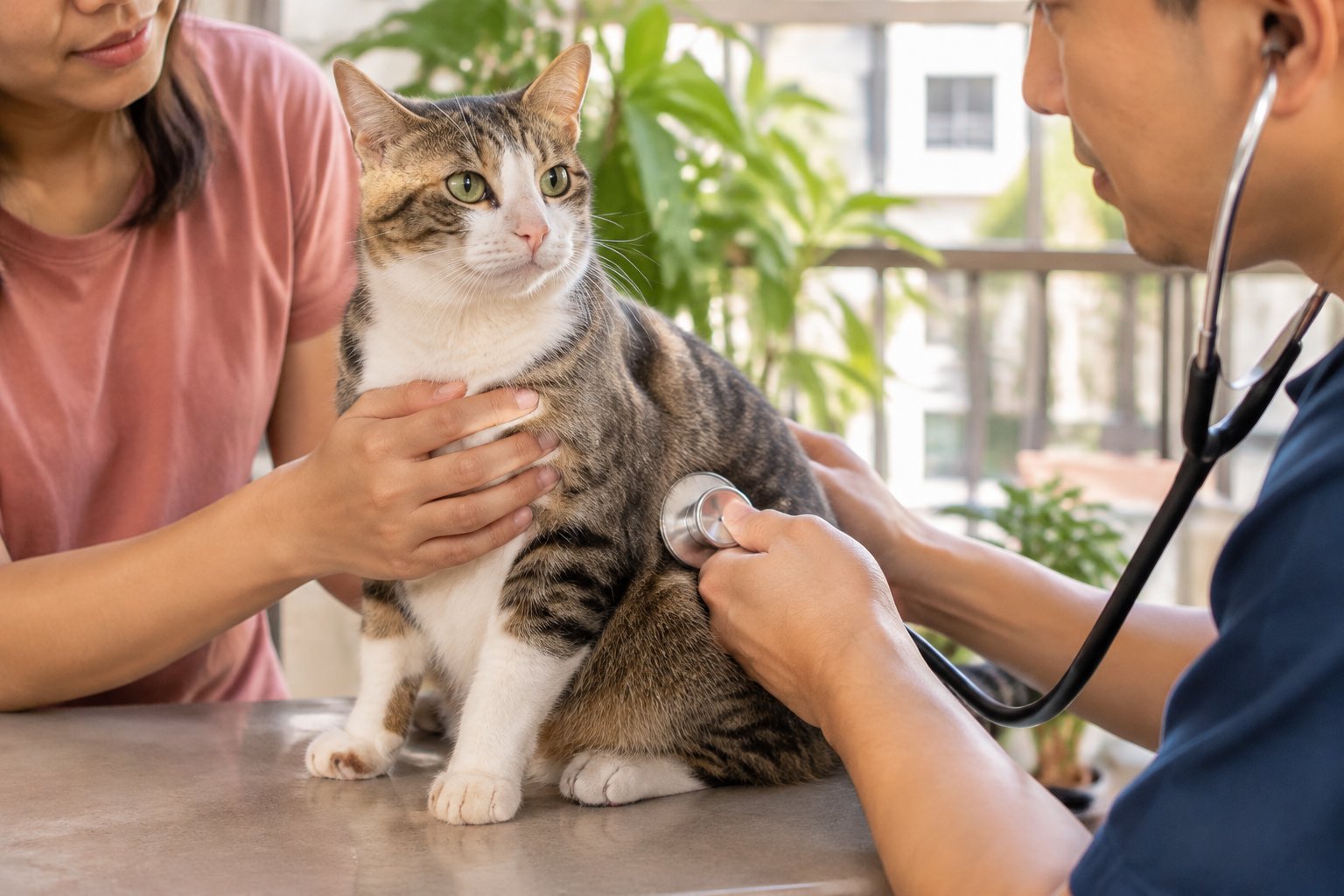
When you arrive, the vet or vet nurse will explain the procedure. Your cat will be placed on a comfortable table, often lying on its side or back. The area to be scanned will be clipped of fur to ensure good contact between the skin and the transducer. A water-based gel is applied to the skin, which may feel cold. The vet will gently press the transducer against the skin and move it around to get different views. The procedure is painless, but some cats may resent being held still. If your cat is stressed, the vet may use gentle restraint or sedation.

The ultrasound room is usually dimly lit to help the vet see the screen clearly. You may be allowed to stay with your cat if it helps keep them calm, but this depends on the clinic's policy. The exam typically takes 20–45 minutes, though it can be longer if many areas are examined or if abnormalities are found.
What happens during the ultrasound?

What can ultrasound detect?

Ultrasound is excellent for detecting:

  • Fluid: free fluid in the abdomen (ascites) or around the heart (pericardial effusion).
  • Stones and crystals: bladder stones, kidney stones, gallstones.
  • Tumours and masses: in the liver, spleen, kidneys, bladder, intestines, etc.
  • Organ changes: enlarged liver, shrunken kidneys, thickened bladder wall, pancreatic inflammation.
  • Pregnancy: fetal sacs, heartbeats, and fetal abnormalities.
  • Heart disease: thickened heart muscle (HCM), valve disease, fluid around the heart.
  • Foreign bodies: some objects in the stomach or intestines, though X-rays are often better for this.

Ultrasound cannot see through bone or gas, so it is not ideal for examining the lungs (which are air-filled) or bones. It is also less useful for evaluating the entire intestinal tract because gas can obscure parts of it.

Benefits and limitations of ultrasound

Benefits:

  • Non-invasive and painless.
  • No radiation exposure.
  • Real-time imaging allows assessment of organ movement and blood flow.
  • Can guide needles for biopsies or fluid collection.
  • Often does not require general anaesthesia (sedation may be used).
  • Can be performed on critically ill patients.

Limitations:

  • Image quality depends on the operator's skill and experience.
  • Gas and bone block sound waves, limiting views of some organs.
  • Not all clinics have high-quality equipment or trained staff.
  • Results can be subjective; a second opinion may be needed.
  • It does not replace other tests like blood work or X-rays; it complements them.
Benefits and limitations of ultrasound

Ultrasound vs X-ray for cats

Feature Ultrasound X-ray
Radiation None Yes (low dose)
Best for Soft tissues (heart, liver, bladder, pregnancy) Bones, lungs, foreign bodies, overall organ size
Real-time Yes No
Sedation Sometimes Often needed for positioning
Cost Varies; often higher Varies; often lower
Availability Common in urban clinics Widely available

Both imaging techniques are complementary. Your vet may recommend one or both depending on your cat's condition.

Cost of ultrasound for cats in Malaysia

Ultrasound costs in Malaysia vary widely depending on the clinic's location, the equipment used, the expertise of the vet, and the complexity of the case. A general abdominal ultrasound might cost a few hundred ringgit, while a specialised echocardiogram or a scan performed by a board-certified specialist could be more expensive. Prices also differ between general practices and referral hospitals. Because there is no standard pricing, it is best to ask your vet for an estimate before the procedure. Some clinics offer packages that include consultation and ultrasound. Pet insurance may cover part of the cost if the procedure is medically necessary. Always confirm fees upfront and ask what is included (e.g., sedation, report, follow-up).

How to choose a vet for ultrasound

Not all vets have the same level of training in ultrasound. If your cat needs a specialised scan (e.g., echocardiography), ask if your vet has a particular interest or additional qualifications in imaging. In Malaysia, some vets have pursued further training and hold certificates in ultrasonography. You can also ask how many ultrasounds they perform weekly and whether they have a dedicated ultrasound machine. For complex cases, your vet may refer you to a specialist or a referral hospital with advanced imaging equipment. Don't hesitate to ask questions; a good vet will be happy to explain their experience and the equipment they use.

After the ultrasound

After the scan, your vet will discuss the findings with you, often immediately. They may show you images and explain what they see. If a biopsy or fluid sample was taken, results may take a few days. Your cat can usually go home right away, unless sedation was used, in which case they may need to stay until fully awake. There are no after-effects from the ultrasound itself; your cat can eat and drink normally unless advised otherwise. If fur was clipped, it will grow back over a few weeks. Keep an eye on your cat for any signs of discomfort, though this is rare.

When to see a vet

You should consult a vet if your cat shows any of the following signs, as they may indicate a condition that ultrasound could help diagnose:

  • Persistent vomiting or diarrhoea
  • Loss of appetite or weight loss
  • Straining to urinate or blood in urine
  • Difficulty breathing or coughing
  • Lethargy or weakness
  • Abdominal swelling or pain
  • Abnormal discharge from the vulva
  • Suspected pregnancy (to confirm and monitor)

If your cat has been diagnosed with a heart condition, regular ultrasound (echocardiography) may be recommended to monitor progress.

Conclusion

Ultrasound is a safe, non-invasive imaging tool that provides valuable information about your cat's internal health. In Malaysia, it is readily available in many veterinary clinics and can help diagnose a wide range of conditions, from bladder stones to heart disease. By understanding what to expect, you can help your cat have a stress-free experience and make informed decisions about their care. Always discuss any concerns with your veterinarian.

Disclaimer: This article is for general information only and does not replace professional veterinary advice. Always consult a licensed veterinarian for diagnosis and treatment of your cat's health issues.

Frequently Asked Questions

📌 Key Takeaways

  • This article covers: What is ultrasound for cats?, How does ultrasound work?, When might your cat need an ultrasound?, Types of ultrasound used in cats, How to prepare your cat for an ultrasound, and more
  • Jump to any section via the table of contents for the key details
  • If in doubt, consult a registered veterinarian

Explore this topic cluster

This guide belongs to a Malaysia-focused topic cluster. Read the pillar guide and related articles.

View cluster →

📚 Cat Health article index

This article is part of the Cat Health topic cluster. Explore related articles:

⭐ Pillar guide: Cat Health complete guideBlood Test for Cats in Malaysia: What It Checks, Costs and When You Need One→ ReadBlood Test for Cats Step by Step: What Happens at the Clinic→ ReadBlood Test for Cats: What to Expect (Malaysian Owner's Guide)→ ReadCat Constipation Treatment in Malaysia: A Practical Owner's Guide→ ReadCat Dental Pain Treatment in Malaysia: A Practical Owner's Guide→ ReadCat Diarrhea Treatment in Malaysia: A Practical Owner's Guide→ ReadCat Ear Mites Treatment in Malaysia: A Complete Owner's Guide→ ReadCat Eye Infection Treatment in Malaysia: A Practical Owner's Guide→ ReadCat Fleas Treatment in Malaysia: A Practical Owner's Guide→ ReadCat Hair Loss Treatment in Malaysia: A Practical Owner's Guide→ ReadCat Licking Wounds: Why It Happens and How to Treat It in Malaysia→ ReadCat Poisoning Treatment in Malaysia: What to Do, What to Expect, and How to Prevent It→ ReadCat Ringworm Treatment in Malaysia: A Practical Owner's Guide→ ReadCat Skin Fungus Treatment in Malaysia: A Practical Owner's Guide→ ReadCat Sneezing Blood: Causes, Treatment and When to See a Vet in Malaysia→ ReadCat Vomiting Treatment in Malaysia: What to Do and When to See a Vet→ ReadCat Weight Loss Treatment in Malaysia: A Practical Guide for Owners→ ReadCat Worms Treatment in Malaysia: A Practical Owner's Guide→ ReadChocolate Poisoning and Cats in Malaysia: What Every Owner Should Know→ ReadConstipation in Cats: Causes, Care and When to See a Vet in Malaysia→ ReadConstipation in Cats in Malaysia: Causes, Signs and What to Do→ ReadConstipation Prevention for Cats: A Practical Guide for Malaysian Owners→ ReadDental Pain in Cats: Causes, Signs and Care (Malaysia Guide)→ ReadDental Pain in Cats in Malaysia: Signs, Causes and What to Do→ ReadDental Pain Prevention for Cats: A Practical Malaysian Guide→ ReadDeworming Schedule for Cats in Malaysia: A Practical, Vet-Led Guide→ ReadDeworming Schedule for Cats: A Step-by-Step Plan for Malaysian Owners→ ReadDeworming Schedule for Cats: What to Expect (Malaysia Guide)→ ReadDiarrhea in Cats: Causes and Care (Malaysian Owner's Guide)→ ReadDiarrhea in Cats in Malaysia: Causes, Home Care and When to See a Vet→ ReadDiarrhea Prevention for Cats: A Practical Guide for Malaysian Owners→ ReadE-Collar Recovery for Cats in Malaysia: A Practical Guide for Owners→ ReadE-Collar Recovery for Cats Step by Step: A Practical Guide for Malaysian Owners→ ReadE-Collar Recovery for Cats: What to Expect (Malaysia Guide)→ ReadEar Mites in Cats: Causes and Care (Malaysia Guide)→ ReadEar Mites in Cats in Malaysia: Signs, Treatment and Prevention→ ReadEar Mites Prevention for Cats: A Practical Malaysian Guide→ ReadElectrical Cables and Cats in Malaysia: A Practical Safety Guide→ ReadEye Infection in Cats: Causes and Care (Malaysia Guide)→ ReadEye Infection in Cats in Malaysia: Causes, Signs, Treatment & Prevention→ ReadEye Infection Prevention for Cats: A Practical Malaysian Guide→ ReadFans and Air Conditioning for Cats in Malaysia: A Practical Comfort Guide→ ReadFlea Treatment for Cats in Malaysia: A Complete Guide→ ReadFlea Treatment for Cats Step by Step: A Practical Malaysian Guide→ ReadFlea Treatment for Cats: What to Expect (Malaysia Guide)→ ReadFleas in Cats: Causes and Care (Malaysia Guide)→ ReadFleas in Cats in Malaysia: Signs, Treatment and Prevention→ ReadFleas Prevention for Cats in Malaysia: A Practical, Year-Round Plan→ ReadGiving Pills for Cats in Malaysia: A Stress-Free Step-by-Step Guide→ ReadGiving Pills for Cats Step by Step: A Calm, Practical Guide for Malaysian Owners→ ReadGiving Pills for Cats: What to Expect (Malaysian Owner's Guide)→ ReadHair Loss in Cats: Causes and Care (Malaysian Owner's Guide)→ ReadHair Loss in Cats in Malaysia: Causes, Home Checks and When to See a Vet→ ReadHair Loss Prevention for Cats: A Practical Grooming and Health Guide→ ReadHousehold Cleaning Products and Cats in Malaysia: A Safety Guide→ ReadHow to Prevent Chocolate Poisoning Around Cats: A Practical Guide for Malaysian Homes→ ReadHow to Prevent Electrical Cables Around Cats: A Practical Safety Guide for Malaysian Homes→ ReadHow to Prevent Fan and Aircond Problems Around Cats: A Malaysian Home Guide→ ReadHow to Prevent Household Cleaning Products Around Cats: A Practical Safety Guide for Malaysian Homes→ ReadHow to Prevent Lily Poisoning Around Cats: A Practical Safety Guide for Malaysian Homes→ ReadHow to Prevent Open Windows Around Cats: A Practical Safety Guide for Malaysian Homes→ ReadHow to Prevent Paracetamol Poisoning Around Cats: A Malaysian Safety Guide→ ReadHow to Prevent Plastic Bags Around Cats: A Practical Safety Guide for Malaysian Homes→ ReadHow to Treat Constipation in Cats at Home: A Practical Malaysian Guide→ ReadHow to Treat Dental Pain in Cats at Home: Safe Relief and When to See a Vet→ ReadHow to Treat Diarrhea in Cats at Home: A Practical Malaysian Guide→ ReadHow to Treat Ear Mites in Cats at Home: A Practical Malaysian Guide→ ReadHow to Treat Eye Infection in Cats at Home: Safe Steps for Malaysian Owners→ ReadHow to Treat Fleas in Cats at Home: A Practical Malaysian Guide→ ReadHow to Treat Hair Loss in Cats at Home: A Practical Malaysian Guide→ ReadHow to Treat Licking Wounds in Cats at Home: A Practical Guide for Malaysian Owners→ ReadHow to Treat Poisoning in Cats at Home: First Aid, Safe Steps and When to Rush to the Vet→ ReadHow to Treat Ringworm in Cats at Home: A Practical Guide for Malaysian Owners→ ReadHow to Treat Skin Fungus in Cats at Home: A Practical Malaysian Guide→ ReadHow to Treat Sneezing Blood in Cats at Home: Safe First Steps for Malaysian Owners→ ReadHow to Treat Vomiting in Cats at Home: A Practical Malaysian Guide→ ReadHow to Treat Weight Loss in Cats at Home: A Practical Guide for Malaysian Owners→ ReadHow to Treat Worms in Cats at Home: A Practical, Safe Guide for Malaysian Owners→ ReadLicking Wounds in Cats: Causes and Care (Malaysian Vet Guide)→ ReadLicking Wounds in Cats Malaysia: When It's Normal and When to Stop It→ ReadLicking Wounds Prevention for Cats: How to Stop the Lick Cycle and Let Skin Heal→ ReadLily Poisoning and Cats in Malaysia: Why Every Petal Is an Emergency→ ReadOpen Windows and Cats in Malaysia: How to Keep Your Cat Safe Without Locking Up the House→ ReadParacetamol Poisoning in Cats in Malaysia: Why Even One Tablet Can Be Deadly→ ReadPlastic Bags and Cats in Malaysia: Why They're Dangerous and How to Keep Your Cat Safe→ ReadPoisoning in Cats: Causes, Symptoms and Care (Malaysia Guide)→ ReadPoisoning in Cats in Malaysia: Common Toxins, Signs and What to Do→ ReadPoisoning Prevention for Cats in Malaysia: A Room-by-Room Safety Guide→ ReadRingworm in Cats: Causes, Symptoms and Care (Malaysia Guide)→ ReadRingworm in Cats in Malaysia: Signs, Treatment and Prevention→ ReadRingworm Prevention for Cats in Malaysia: A Practical, Vet-Informed Guide→ ReadSigns of Constipation in Cats in Malaysia: What to Watch For and When to Act→ ReadSigns of Dental Pain in Cats in Malaysia: What Owners Miss→ ReadSigns of Diarrhea in Cats in Malaysia: What's Normal, What's Not→ ReadSigns of Ear Mites in Cats in Malaysia: How to Spot, Treat and Prevent Them→ ReadSigns of Eye Infection in Cats in Malaysia: What Owners Should Look For→ ReadSigns of Fleas in Cats in Malaysia: How to Spot, Check and Act→ ReadSigns of Hair Loss in Cats in Malaysia: What to Look For and When to Worry→ ReadSigns of Licking Wounds in Cats Malaysia: How to Spot Problem Licking→ ReadSigns of Poisoning in Cats in Malaysia: What to Watch For and What to Do→ ReadSigns of Ringworm in Cats in Malaysia: What Owners Should Look For→ ReadSigns of Skin Fungus in Cats in Malaysia: How to Spot Ringworm Early→ ReadBlood in a Cat's Sneeze: Signs, Causes and What to Do in Malaysia→ ReadSigns of Vomiting in Cats in Malaysia: What's Normal, What's Not, and When to See a Vet→ ReadSigns of Weight Loss in Cats in Malaysia: What to Watch For and When to Worry→ ReadSigns of Worms in Cats in Malaysia: What Owners Should Look For→ ReadSkin Fungus in Cats: Causes, Signs and Care (Malaysia Guide)→ ReadSkin Fungus in Cats in Malaysia: Ringworm Signs, Treatment and Prevention→ ReadSkin Fungus Prevention for Cats: A Practical Guide for Malaysian Homes→ ReadSneezing Blood in Cats: Causes and Care (Malaysia Guide)→ ReadSneezing Blood in Cats in Malaysia: Causes, What to Do, and When to See a Vet→ ReadSneezing Blood Prevention for Cats: Causes, Care and When to Worry→ ReadSterilization for Cats in Malaysia: A Complete Guide for Owners→ ReadSterilization for Cats Step by Step: A Malaysian Owner's Guide→ ReadSterilisation for Cats: What to Expect (Malaysian Owner's Guide)→ ReadUltrasound for Cats Step by Step: What Happens, What It Costs, and How to Prepare→ ReadUltrasound for Cats: What to Expect (Malaysian Owner's Guide)→ ReadVaccination Side Effects for Cats in Malaysia: What's Normal, What's Not→ ReadVaccination Side Effects for Cats: A Step-by-Step Guide for Malaysian Owners→ ReadCat Vaccination Side Effects: What Malaysian Owners Should Expect→ ReadVomiting in Cats: Causes and Care (Malaysia Guide)→ ReadVomiting in Cats in Malaysia: When It's Normal and When to Worry→ ReadVomiting Prevention for Cats: A Practical Guide for Malaysian Owners→ ReadWeight Loss in Cats: Causes and Care (Malaysian Vet Guide)→ ReadWeight Loss in Cats in Malaysia: Causes, Warning Signs and What to Do→ ReadWeight Loss Prevention for Cats: A Practical Malaysian Guide→ ReadWorms in Cats: Causes and Care (Malaysia Vet Guide)→ ReadWorms in Cats in Malaysia: A Practical Owner's Guide→ ReadWorms Prevention for Cats in Malaysia: A Complete Guide→ ReadWound Care for Cats in Malaysia: A Practical Owner's Guide→ ReadWound Care for Cats Step by Step: A Practical Malaysian Guide→ ReadWound Care for Cats: What to Expect, Step by Step→ ReadX-Ray for Cats in Malaysia: What to Expect, Costs and Safety→ ReadX-Ray for Cats Step by Step: What Malaysian Owners Should Expect→ ReadX-Ray for Cats: What to Expect (Malaysian Owner's Guide)→ ReadArthritis Pet Care in Malaysia: A Practical Guide for Cats and Dogs→ ReadCat Arthritis in Malaysia: 5 Home Signs Your Cat Is in Pain — and What to Do→ ReadEarly Signs of Chronic Disease in Cats: 7 Daily Checks and a 4-Week Record Sheet→ ReadCat Chronic Kidney Disease in Malaysia: The Daily Care Routine That Actually Slows It Down→ ReadCat Constipation in Malaysia: The 48-Hour Rule, Red Flags and What Actually Helps→ ReadCat Dehydration in Malaysia: Home Skin-Turgor Test, 7 Causes and Emergency Signs→ ReadCat Heart Disease in Malaysia: Sleep Breathing Count, HCM Early Signs and When to Rush to the Vet→ ReadCat Kidney Disease in Malaysia: Early Signs, Prevention and Everyday Care→ ReadCat Pancreatitis in Malaysia: Symptoms, fPLI Testing, Treatment and Home Recovery→ ReadCat Ringworm in Malaysia: Signs, Treatment and Home Cleaning Guide→ ReadCat Symptom Checker Malaysia: 12 Common Signs and a Green-Amber-Red Triage Table→ ReadPet Deworming in Malaysia: How Often to Worm Your Cat or Dog→ ReadPet Gut Health in Malaysia: Probiotics, Food Transitions and Stool Troubles (Part 2)→ ReadCat Gut Health: Probiotics, Antibiotics and Food Transitions Explained (Malaysia)→ ReadPet Health Malaysia 2026: Common Cat and Dog Illnesses, Prevention Care and Vet Guidance→ ReadPet Insurance in Malaysia: How to Compare Plans Before You Sign→ ReadPet Poisoning at Home: Household Chemicals, Toxic Plants and When Not to Induce Vomiting (Malaysia)→ ReadPet Poisoning at Home: Household Chemicals, Insecticides and Toxic Plants (Malaysia, Part 1)→ ReadCat Chronic Disease Early Signs in Malaysia: 7 Daily Checks and a 4-Week Log→ ReadCat Health Guide Malaysia: Symptom Check, Red-Flag Triage & When to See a Vet→ ReadCat Ringworm in Malaysia: Symptoms, Treatment and Home Cleaning Guide→ ReadGut Health, Probiotics & Food Transition Part 2: Practical Malaysia Guide→ ReadPet Health in Malaysia: A Practical Prevention Guide for Cats and Dogs→ Read

Related products at PetChill

