PetChill Pet Encyclopedia
Cat Health

How to Treat Vomiting in Cats at Home: A Practical Malaysian Guide

A practical, vet-informed guide to managing mild cat vomiting at home in Malaysia, including fasting rules, bland food, hydration, red flags and when to call a vet.

Published: 2026-11-06Β·8 min readΒ·Author: PetChill Editorial
How to Treat Vomiting in Cats at Home: A Practical Malaysian Guide

πŸ’‘ Quick Answer

For a single mild vomit in an otherwise bright, eating cat, withhold food for a few hours, keep water available, then offer small bland meals such as plain boiled chicken. Never give human medicines. See a vet urgently if vomiting repeats, lasts over 24 hours, or comes with lethargy, blood or no appetite.

The short answer

Most single episodes of cat vomiting are not an emergency. If your cat is bright, still interested in food and has vomited once or twice, a short rest from food, free access to water and a gentle return to small bland meals is a reasonable home plan. If vomiting repeats, lasts more than a day, or comes with lethargy, blood, a painful belly or refusal to eat, stop home treatment and contact a vet.

This guide walks through a safe home-care plan, the signs that mean stop, and the practical details Malaysian cat owners ask about most.

First, work out what kind of vomiting you are seeing

Not all vomiting is the same, and the pattern tells you a lot about urgency.

Food vomiting or regurgitation. Your cat eats quickly, then brings up almost unchewed food within minutes. This is often regurgitation from eating too fast or hairballs, not true vomiting. It is usually low-risk if it happens occasionally.

Bile or foam. A cat that vomits yellow or white foam in the morning on an empty stomach may have a mild stomach irritation. Smaller, more frequent meals sometimes help.

Repeated vomiting. Several episodes in a few hours, or vomiting that continues after the stomach should be empty, is a warning sign. It can point to obstruction, pancreatitis, kidney disease or poisoning.

Vomiting with other signs. If vomiting comes with diarrhoea, lethargy, hiding, drooling, a swollen abdomen or refusal to eat, treat it as a medical problem rather than a home-care problem.

A simple way to think about it:

Pattern Likely meaning Home care?
One vomit, cat bright and eating Minor upset, hairball, fast eating Yes, with monitoring
Two or three vomits in a day, cat still active Mild gastritis possible Cautious home care for 24 hours
Vomiting after every meal or water Obstruction or serious illness possible No, see a vet
Vomit with blood, coffee-ground material Bleeding in the gut No, emergency
Vomiting plus no urine, straining in litter box Blocked bladder, especially male cats No, emergency
Vomiting plus wobbliness, tremors, drooling Possible poisoning No, emergency

First, work out what kind of vomiting you are seeing

Step 1: Rest the stomach, but not for too long

Older advice said to fast a vomiting cat for a full day. Current thinking is gentler. A short rest of roughly four to six hours is enough for most adult cats that are otherwise well. The aim is to let the stomach settle without triggering the serious liver problem that can develop when a cat stops eating for too long.

Rules for the rest period:

  • Water stays available at all times. Never withhold water from a vomiting cat unless a vet has specifically told you to.
  • Do not fast kittens, elderly cats, pregnant cats or cats with other health conditions. These cats have less reserve and should be assessed by a vet early.
  • Do not fast a cat that is already thin or has a known chronic illness.
  • Keep the house calm. Separate your cat from other pets and children during the rest period so it can settle.

If your cat vomits again during the rest period, do not restart the clock and keep waiting. That is your cue to call a vet.

Step 2: Reintroduce food in small amounts

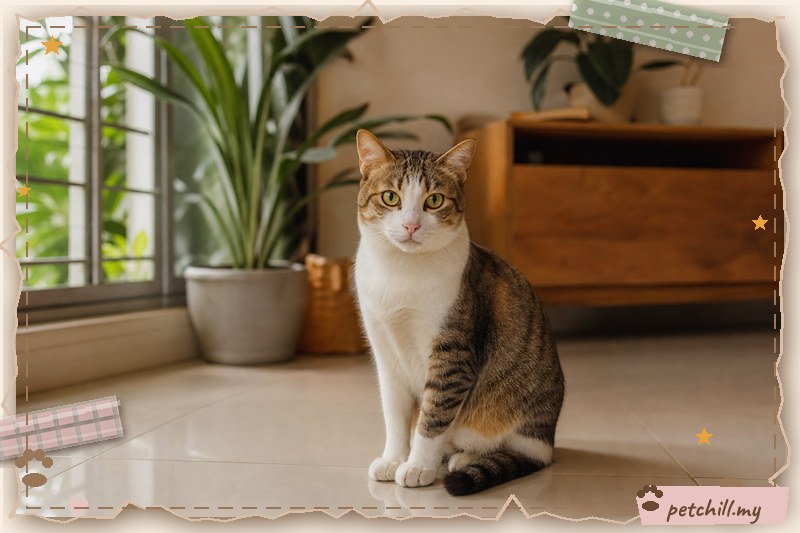
The first meal after a rest should be small, plain and easy to digest. Offer about one to two tablespoons, wait an hour, and if it stays down, offer another small portion. Repeat through the day rather than returning to a full bowl straight away.

Suitable bland options include:

  • Plain cooked chicken breast, skinless, with no salt, oil, garlic, onion or seasoning
  • Plain boiled white rice, mashed slightly
  • A vet-recommended bland or gastrointestinal diet, which is often the most balanced choice

Avoid these common mistakes:

  • Milk and cheese. Many cats are lactose intolerant and dairy can worsen vomiting and diarrhoea.
  • Tuna in oil or brine. Too rich and too salty.
  • Fatty meat, skin, gravy and table scraps. High fat can trigger pancreatitis.
  • Raw fish or raw meat. Bacterial and parasite risk.
  • Treats and dental chews. Pause all extras until your cat is normal again.

If your cat refuses bland food but will eat its normal food, that is often acceptable. The goal is to get gentle calories in, not to force a strict diet.
Step 2: Reintroduce food in small amounts

Step 3: Support hydration

Vomiting costs fluid, and dehydration makes nausea worse. Encourage drinking without forcing anything.

Practical hydration tips:

  • Place several water bowls around the home, including one in a quiet room away from the litter box.
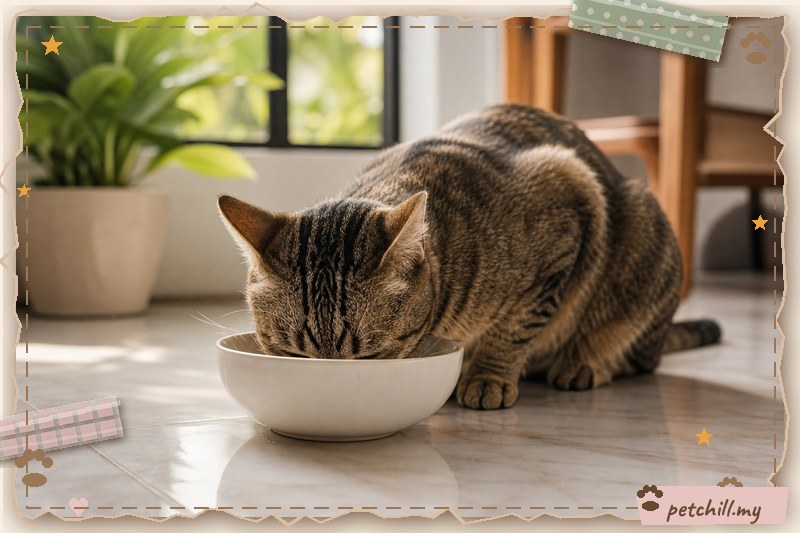
  • Try a wide, shallow bowl; some cats dislike their whiskers touching the sides.
  • Refresh water twice daily and wash bowls often, especially in warm weather.
  • Add a spoonful of water to food, or offer a little plain cooked chicken with its cooking water.
  • Some cats prefer running water; a pet fountain can help.
  • Ask your vet about a pet-specific electrolyte solution if your cat is drinking poorly.

Do not syringe water into your cat's mouth unless a vet has shown you how and advised it. Forcing fluids risks choking and aspiration.

Step 4: Watch closely for 24 hours

Home care is really a monitoring exercise. Keep a simple written log so you can give your vet clear information if things change.

Record:

  • Time of each vomit and what it looked like (food, foam, bile, blood, hair)
  • Whether food or water stayed down
  • Appetite and how much was eaten
  • Litter box output, including urine and stool
  • Energy level compared with normal
  • Any new signs such as drooling, hiding, trembling or belly pain

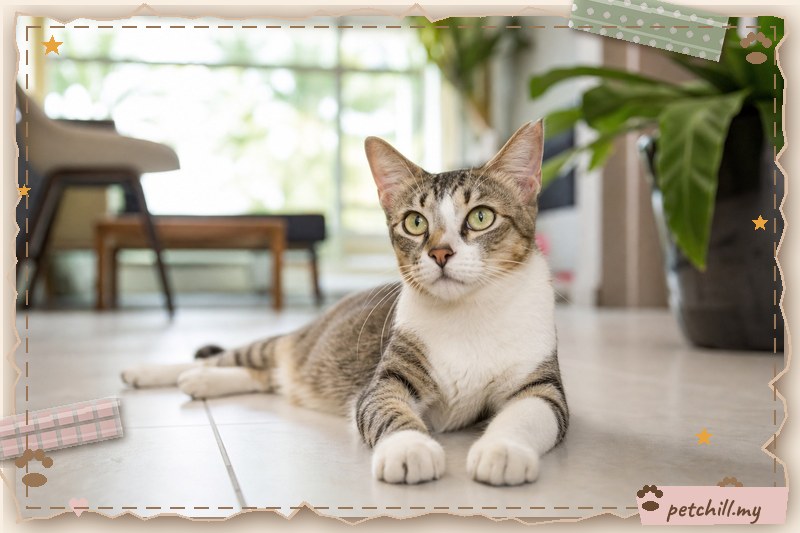
A cat that is improving will usually show interest in food, groom itself, and move around normally within a day. A cat that is getting worse will hide more, sit hunched, resist being touched on the belly, or stop grooming.
Step 4: Watch closely for 24 hours

What never to do at home

Some well-meant home remedies cause real harm. Avoid all of the following unless a vet has prescribed them for your cat:

  • Human anti-nausea and acid-reducing medicines. Doses are not designed for cats and some ingredients are toxic.
  • Paracetamol, ibuprofen and aspirin. These are dangerous to cats, sometimes fatally so.
  • Human rehydration drinks. High sugar and electrolyte levels are not balanced for cats.
  • Essential oils and herbal drops. Many essential oils are toxic to cats, especially tea tree and eucalyptus.
  • Hydrogen peroxide to induce vomiting. This is unsafe and can cause severe stomach injury.
  • Forcing food or water. This increases the risk of aspiration and aversion to food.
  • Repeated courses of deworming or random supplements without a diagnosis.

If you suspect your cat has eaten something toxic, call a vet immediately rather than trying to make it vomit.

Common causes of vomiting in cats

Understanding causes helps you judge whether home care is sensible.

Dietary upset. Sudden food changes, overeating, scavenging or rich treats are common and usually mild.

Hairballs. Long-haired cats and heavy groomers can vomit hair. Regular brushing helps; frequent hairball vomiting deserves a vet check.

Intestinal parasites. Roundworms and tapeworms can cause vomiting, especially in cats that hunt or go outdoors.

Infections. Viral and bacterial gut infections cause vomiting, often with diarrhoea and lethargy.

Foreign bodies. String, hair ties, bones, plastic and corn cobs can block the gut. This is a surgical emergency.

Chronic disease. Kidney disease, hyperthyroidism, liver disease and inflammatory bowel disease often cause intermittent vomiting in older cats.

Pancreatitis. Painful and serious, often with lethargy and appetite loss.

Toxins. Lilies, certain human foods, rodenticides and some plants are dangerous to cats.

Motion sickness and stress. Car trips and household changes can trigger vomiting in sensitive cats.
Common causes of vomiting in cats

A simple home-care checklist

Use this as a quick reference before you start.

  • Cat is an adult, not a kitten or senior with chronic illness
  • Vomiting has happened only once or twice
  • Cat is still alert and interested in surroundings
  • No blood in vomit
  • No bloating, straining or difficulty breathing
  • No suspected poisoning or foreign object
  • Water is available and the cat is drinking
  • Bland food is ready for small meals
  • You can monitor for the next 24 hours

If you cannot tick most of these, contact a vet rather than starting home care.

When to see a vet

Stop home treatment and contact a veterinarian promptly if any of the following apply:

  • Vomiting continues for more than 24 hours, or happens more than three or four times in a day
  • Your cat cannot keep water down
  • There is blood, coffee-ground material or unusual colour in the vomit
  • Your cat is lethargic, weak, wobbly or collapsed
  • The abdomen looks swollen, feels hard or is painful to touch
  • Your cat is straining in the litter box with little or no urine, especially a male cat
  • There is drooling, trembling, seizures or possible exposure to poison or lilies
  • Your cat refuses food for more than 24 hours
  • Your cat is a kitten, pregnant, elderly or has a known chronic disease
  • Vomiting keeps returning over weeks even if each episode seems mild

Malaysian pet owners can contact their regular veterinary clinic for advice. For travel and animal health requirements, official information is available from the Department of Veterinary Services Malaysia. Welfare guidance is also available from SPCA Selangor.

Preventing repeat episodes

Once your cat has recovered, a few habits reduce the chance of another bout.

  • Change food gradually over seven to ten days, mixing increasing amounts of the new food.
  • Use puzzle feeders or slow-feed bowls for cats that gulp food.
  • Brush regularly, especially long-haired cats, to reduce hairballs.
  • Keep bins, string, hair ties and toxic plants out of reach. Lilies are particularly dangerous to cats.
  • Stick to a deworming schedule advised by your vet.
  • Book annual health checks for older cats, including blood and urine tests.
  • Keep meals small and frequent for cats prone to empty-stomach vomiting.

A note on local conditions

In a Kuala Lumpur apartment, a vomiting cat is easy to monitor closely because you can keep it in one room away from noise and other pets. In a Johor terrace house, watch for outdoor access: cats that roam can pick up parasites, eat spoiled food or chew on plants, so keep doors and windows screened during recovery. During the Penang rainy season, higher humidity can make food spoil faster, so discard wet food left out for more than a short period and wash bowls more often.

Final word

Home treatment for cat vomiting works best for mild, single episodes in otherwise healthy adult cats. Rest the stomach briefly, keep water flowing, reintroduce bland food in small meals and monitor closely for a day. The moment the pattern changes, or your cat looks unwell rather than just a bit sick, let a vet take over.

This article is general information only and is not a substitute for veterinary examination. If your cat is unwell, contact a licensed veterinarian in Malaysia for diagnosis and treatment.

Frequently Asked Questions

πŸ“Œ Key Takeaways

  • This article covers: The short answer, First, work out what kind of vomiting you are seeing, Step 1: Rest the stomach, but not for too long, Step 2: Reintroduce food in small amounts, Step 3: Support hydration, and more
  • Jump to any section via the table of contents for the key details
  • If in doubt, consult a registered veterinarian

Explore this topic cluster

This guide belongs to a Malaysia-focused topic cluster. Read the pillar guide and related articles.

View cluster β†’

πŸ“š Cat Health article index

This article is part of the Cat Health topic cluster. Explore related articles:

⭐ Pillar guide: Cat Health complete guideBlood Test for Cats in Malaysia: What It Checks, Costs and When You Need Oneβ†’ ReadBlood Test for Cats Step by Step: What Happens at the Clinicβ†’ ReadBlood Test for Cats: What to Expect (Malaysian Owner's Guide)β†’ ReadCat Constipation Treatment in Malaysia: A Practical Owner's Guideβ†’ ReadCat Dental Pain Treatment in Malaysia: A Practical Owner's Guideβ†’ ReadCat Diarrhea Treatment in Malaysia: A Practical Owner's Guideβ†’ ReadCat Ear Mites Treatment in Malaysia: A Complete Owner's Guideβ†’ ReadCat Eye Infection Treatment in Malaysia: A Practical Owner's Guideβ†’ ReadCat Fleas Treatment in Malaysia: A Practical Owner's Guideβ†’ ReadCat Hair Loss Treatment in Malaysia: A Practical Owner's Guideβ†’ ReadCat Licking Wounds: Why It Happens and How to Treat It in Malaysiaβ†’ ReadCat Poisoning Treatment in Malaysia: What to Do, What to Expect, and How to Prevent Itβ†’ ReadCat Ringworm Treatment in Malaysia: A Practical Owner's Guideβ†’ ReadCat Skin Fungus Treatment in Malaysia: A Practical Owner's Guideβ†’ ReadCat Sneezing Blood: Causes, Treatment and When to See a Vet in Malaysiaβ†’ ReadCat Vomiting Treatment in Malaysia: What to Do and When to See a Vetβ†’ ReadCat Weight Loss Treatment in Malaysia: A Practical Guide for Ownersβ†’ ReadCat Worms Treatment in Malaysia: A Practical Owner's Guideβ†’ ReadChocolate Poisoning and Cats in Malaysia: What Every Owner Should Knowβ†’ ReadConstipation in Cats: Causes, Care and When to See a Vet in Malaysiaβ†’ ReadConstipation in Cats in Malaysia: Causes, Signs and What to Doβ†’ ReadConstipation Prevention for Cats: A Practical Guide for Malaysian Ownersβ†’ ReadDental Pain in Cats: Causes, Signs and Care (Malaysia Guide)β†’ ReadDental Pain in Cats in Malaysia: Signs, Causes and What to Doβ†’ ReadDental Pain Prevention for Cats: A Practical Malaysian Guideβ†’ ReadDeworming Schedule for Cats in Malaysia: A Practical, Vet-Led Guideβ†’ ReadDeworming Schedule for Cats: A Step-by-Step Plan for Malaysian Ownersβ†’ ReadDeworming Schedule for Cats: What to Expect (Malaysia Guide)β†’ ReadDiarrhea in Cats: Causes and Care (Malaysian Owner's Guide)β†’ ReadDiarrhea in Cats in Malaysia: Causes, Home Care and When to See a Vetβ†’ ReadDiarrhea Prevention for Cats: A Practical Guide for Malaysian Ownersβ†’ ReadE-Collar Recovery for Cats in Malaysia: A Practical Guide for Ownersβ†’ ReadE-Collar Recovery for Cats Step by Step: A Practical Guide for Malaysian Ownersβ†’ ReadE-Collar Recovery for Cats: What to Expect (Malaysia Guide)β†’ ReadEar Mites in Cats: Causes and Care (Malaysia Guide)β†’ ReadEar Mites in Cats in Malaysia: Signs, Treatment and Preventionβ†’ ReadEar Mites Prevention for Cats: A Practical Malaysian Guideβ†’ ReadElectrical Cables and Cats in Malaysia: A Practical Safety Guideβ†’ ReadEye Infection in Cats: Causes and Care (Malaysia Guide)β†’ ReadEye Infection in Cats in Malaysia: Causes, Signs, Treatment & Preventionβ†’ ReadEye Infection Prevention for Cats: A Practical Malaysian Guideβ†’ ReadFans and Air Conditioning for Cats in Malaysia: A Practical Comfort Guideβ†’ ReadFlea Treatment for Cats in Malaysia: A Complete Guideβ†’ ReadFlea Treatment for Cats Step by Step: A Practical Malaysian Guideβ†’ ReadFlea Treatment for Cats: What to Expect (Malaysia Guide)β†’ ReadFleas in Cats: Causes and Care (Malaysia Guide)β†’ ReadFleas in Cats in Malaysia: Signs, Treatment and Preventionβ†’ ReadFleas Prevention for Cats in Malaysia: A Practical, Year-Round Planβ†’ ReadGiving Pills for Cats in Malaysia: A Stress-Free Step-by-Step Guideβ†’ ReadGiving Pills for Cats Step by Step: A Calm, Practical Guide for Malaysian Ownersβ†’ ReadGiving Pills for Cats: What to Expect (Malaysian Owner's Guide)β†’ ReadHair Loss in Cats: Causes and Care (Malaysian Owner's Guide)β†’ ReadHair Loss in Cats in Malaysia: Causes, Home Checks and When to See a Vetβ†’ ReadHair Loss Prevention for Cats: A Practical Grooming and Health Guideβ†’ ReadHousehold Cleaning Products and Cats in Malaysia: A Safety Guideβ†’ ReadHow to Prevent Chocolate Poisoning Around Cats: A Practical Guide for Malaysian Homesβ†’ ReadHow to Prevent Electrical Cables Around Cats: A Practical Safety Guide for Malaysian Homesβ†’ ReadHow to Prevent Fan and Aircond Problems Around Cats: A Malaysian Home Guideβ†’ ReadHow to Prevent Household Cleaning Products Around Cats: A Practical Safety Guide for Malaysian Homesβ†’ ReadHow to Prevent Lily Poisoning Around Cats: A Practical Safety Guide for Malaysian Homesβ†’ ReadHow to Prevent Open Windows Around Cats: A Practical Safety Guide for Malaysian Homesβ†’ ReadHow to Prevent Paracetamol Poisoning Around Cats: A Malaysian Safety Guideβ†’ ReadHow to Prevent Plastic Bags Around Cats: A Practical Safety Guide for Malaysian Homesβ†’ ReadHow to Treat Constipation in Cats at Home: A Practical Malaysian Guideβ†’ ReadHow to Treat Dental Pain in Cats at Home: Safe Relief and When to See a Vetβ†’ ReadHow to Treat Diarrhea in Cats at Home: A Practical Malaysian Guideβ†’ ReadHow to Treat Ear Mites in Cats at Home: A Practical Malaysian Guideβ†’ ReadHow to Treat Eye Infection in Cats at Home: Safe Steps for Malaysian Ownersβ†’ ReadHow to Treat Fleas in Cats at Home: A Practical Malaysian Guideβ†’ ReadHow to Treat Hair Loss in Cats at Home: A Practical Malaysian Guideβ†’ ReadHow to Treat Licking Wounds in Cats at Home: A Practical Guide for Malaysian Ownersβ†’ ReadHow to Treat Poisoning in Cats at Home: First Aid, Safe Steps and When to Rush to the Vetβ†’ ReadHow to Treat Ringworm in Cats at Home: A Practical Guide for Malaysian Ownersβ†’ ReadHow to Treat Skin Fungus in Cats at Home: A Practical Malaysian Guideβ†’ ReadHow to Treat Sneezing Blood in Cats at Home: Safe First Steps for Malaysian Ownersβ†’ ReadHow to Treat Weight Loss in Cats at Home: A Practical Guide for Malaysian Ownersβ†’ ReadHow to Treat Worms in Cats at Home: A Practical, Safe Guide for Malaysian Ownersβ†’ ReadLicking Wounds in Cats: Causes and Care (Malaysian Vet Guide)β†’ ReadLicking Wounds in Cats Malaysia: When It's Normal and When to Stop Itβ†’ ReadLicking Wounds Prevention for Cats: How to Stop the Lick Cycle and Let Skin Healβ†’ ReadLily Poisoning and Cats in Malaysia: Why Every Petal Is an Emergencyβ†’ ReadOpen Windows and Cats in Malaysia: How to Keep Your Cat Safe Without Locking Up the Houseβ†’ ReadParacetamol Poisoning in Cats in Malaysia: Why Even One Tablet Can Be Deadlyβ†’ ReadPlastic Bags and Cats in Malaysia: Why They're Dangerous and How to Keep Your Cat Safeβ†’ ReadPoisoning in Cats: Causes, Symptoms and Care (Malaysia Guide)β†’ ReadPoisoning in Cats in Malaysia: Common Toxins, Signs and What to Doβ†’ ReadPoisoning Prevention for Cats in Malaysia: A Room-by-Room Safety Guideβ†’ ReadRingworm in Cats: Causes, Symptoms and Care (Malaysia Guide)β†’ ReadRingworm in Cats in Malaysia: Signs, Treatment and Preventionβ†’ ReadRingworm Prevention for Cats in Malaysia: A Practical, Vet-Informed Guideβ†’ ReadSigns of Constipation in Cats in Malaysia: What to Watch For and When to Actβ†’ ReadSigns of Dental Pain in Cats in Malaysia: What Owners Missβ†’ ReadSigns of Diarrhea in Cats in Malaysia: What's Normal, What's Notβ†’ ReadSigns of Ear Mites in Cats in Malaysia: How to Spot, Treat and Prevent Themβ†’ ReadSigns of Eye Infection in Cats in Malaysia: What Owners Should Look Forβ†’ ReadSigns of Fleas in Cats in Malaysia: How to Spot, Check and Actβ†’ ReadSigns of Hair Loss in Cats in Malaysia: What to Look For and When to Worryβ†’ ReadSigns of Licking Wounds in Cats Malaysia: How to Spot Problem Lickingβ†’ ReadSigns of Poisoning in Cats in Malaysia: What to Watch For and What to Doβ†’ ReadSigns of Ringworm in Cats in Malaysia: What Owners Should Look Forβ†’ ReadSigns of Skin Fungus in Cats in Malaysia: How to Spot Ringworm Earlyβ†’ ReadBlood in a Cat's Sneeze: Signs, Causes and What to Do in Malaysiaβ†’ ReadSigns of Vomiting in Cats in Malaysia: What's Normal, What's Not, and When to See a Vetβ†’ ReadSigns of Weight Loss in Cats in Malaysia: What to Watch For and When to Worryβ†’ ReadSigns of Worms in Cats in Malaysia: What Owners Should Look Forβ†’ ReadSkin Fungus in Cats: Causes, Signs and Care (Malaysia Guide)β†’ ReadSkin Fungus in Cats in Malaysia: Ringworm Signs, Treatment and Preventionβ†’ ReadSkin Fungus Prevention for Cats: A Practical Guide for Malaysian Homesβ†’ ReadSneezing Blood in Cats: Causes and Care (Malaysia Guide)β†’ ReadSneezing Blood in Cats in Malaysia: Causes, What to Do, and When to See a Vetβ†’ ReadSneezing Blood Prevention for Cats: Causes, Care and When to Worryβ†’ ReadSterilization for Cats in Malaysia: A Complete Guide for Ownersβ†’ ReadSterilization for Cats Step by Step: A Malaysian Owner's Guideβ†’ ReadSterilisation for Cats: What to Expect (Malaysian Owner's Guide)β†’ ReadUltrasound for Cats in Malaysia: What It Is, When It's Needed, and What to Expectβ†’ ReadUltrasound for Cats Step by Step: What Happens, What It Costs, and How to Prepareβ†’ ReadUltrasound for Cats: What to Expect (Malaysian Owner's Guide)β†’ ReadVaccination Side Effects for Cats in Malaysia: What's Normal, What's Notβ†’ ReadVaccination Side Effects for Cats: A Step-by-Step Guide for Malaysian Ownersβ†’ ReadCat Vaccination Side Effects: What Malaysian Owners Should Expectβ†’ ReadVomiting in Cats: Causes and Care (Malaysia Guide)β†’ ReadVomiting in Cats in Malaysia: When It's Normal and When to Worryβ†’ ReadVomiting Prevention for Cats: A Practical Guide for Malaysian Ownersβ†’ ReadWeight Loss in Cats: Causes and Care (Malaysian Vet Guide)β†’ ReadWeight Loss in Cats in Malaysia: Causes, Warning Signs and What to Doβ†’ ReadWeight Loss Prevention for Cats: A Practical Malaysian Guideβ†’ ReadWorms in Cats: Causes and Care (Malaysia Vet Guide)β†’ ReadWorms in Cats in Malaysia: A Practical Owner's Guideβ†’ ReadWorms Prevention for Cats in Malaysia: A Complete Guideβ†’ ReadWound Care for Cats in Malaysia: A Practical Owner's Guideβ†’ ReadWound Care for Cats Step by Step: A Practical Malaysian Guideβ†’ ReadWound Care for Cats: What to Expect, Step by Stepβ†’ ReadX-Ray for Cats in Malaysia: What to Expect, Costs and Safetyβ†’ ReadX-Ray for Cats Step by Step: What Malaysian Owners Should Expectβ†’ ReadX-Ray for Cats: What to Expect (Malaysian Owner's Guide)β†’ ReadArthritis Pet Care in Malaysia: A Practical Guide for Cats and Dogsβ†’ ReadCat Arthritis in Malaysia: 5 Home Signs Your Cat Is in Pain β€” and What to Doβ†’ ReadEarly Signs of Chronic Disease in Cats: 7 Daily Checks and a 4-Week Record Sheetβ†’ ReadCat Chronic Kidney Disease in Malaysia: The Daily Care Routine That Actually Slows It Downβ†’ ReadCat Constipation in Malaysia: The 48-Hour Rule, Red Flags and What Actually Helpsβ†’ ReadCat Dehydration in Malaysia: Home Skin-Turgor Test, 7 Causes and Emergency Signsβ†’ ReadCat Heart Disease in Malaysia: Sleep Breathing Count, HCM Early Signs and When to Rush to the Vetβ†’ ReadCat Kidney Disease in Malaysia: Early Signs, Prevention and Everyday Careβ†’ ReadCat Pancreatitis in Malaysia: Symptoms, fPLI Testing, Treatment and Home Recoveryβ†’ ReadCat Ringworm in Malaysia: Signs, Treatment and Home Cleaning Guideβ†’ ReadCat Symptom Checker Malaysia: 12 Common Signs and a Green-Amber-Red Triage Tableβ†’ ReadPet Deworming in Malaysia: How Often to Worm Your Cat or Dogβ†’ ReadPet Gut Health in Malaysia: Probiotics, Food Transitions and Stool Troubles (Part 2)β†’ ReadCat Gut Health: Probiotics, Antibiotics and Food Transitions Explained (Malaysia)β†’ ReadPet Health Malaysia 2026: Common Cat and Dog Illnesses, Prevention Care and Vet Guidanceβ†’ ReadPet Insurance in Malaysia: How to Compare Plans Before You Signβ†’ ReadPet Poisoning at Home: Household Chemicals, Toxic Plants and When Not to Induce Vomiting (Malaysia)β†’ ReadPet Poisoning at Home: Household Chemicals, Insecticides and Toxic Plants (Malaysia, Part 1)β†’ ReadCat Chronic Disease Early Signs in Malaysia: 7 Daily Checks and a 4-Week Logβ†’ ReadCat Health Guide Malaysia: Symptom Check, Red-Flag Triage & When to See a Vetβ†’ ReadCat Ringworm in Malaysia: Symptoms, Treatment and Home Cleaning Guideβ†’ ReadGut Health, Probiotics & Food Transition Part 2: Practical Malaysia Guideβ†’ ReadPet Health in Malaysia: A Practical Prevention Guide for Cats and Dogsβ†’ Read

Related products at PetChill