
The short answer: lilies and cats do not mix
If you live with a cat, lilies should never enter your home. Not as a bouquet, not as a gift, not as a potted plant on the balcony. Many lilies are so toxic to cats that a small amount of pollen, a single petal, or a lick of vase water can cause acute kidney failure. There is no safe lily for cats, and there is no home remedy that works. The only reliable response is immediate veterinary care.
This guide explains which lilies are dangerous, how poisoning happens, what signs to watch for, and how Malaysian cat owners can prevent exposure at home. It is written for everyday cat owners, not botanists, so you can act quickly if something goes wrong.
Which lilies are dangerous to cats?
Not every plant called a "lily" is the same. Some are deadly, some cause irritation, and some are safe. The problem is that common names are confusing. A florist may call a plant a lily when it is not a true lily at all.
The most dangerous group is the true lilies in the Lilium and Hemerocallis families. These include Easter lilies, tiger lilies, Asiatic lilies, Oriental lilies, stargazer lilies, and daylilies. For cats, these are extremely toxic. Ingesting even a tiny amount can lead to kidney failure.
Other plants with "lily" in the name are less dangerous but still a concern. Peace lilies, calla lilies, and lily of the valley are not true lilies. Peace lilies and calla lilies contain insoluble calcium oxalate crystals that cause intense mouth pain, drooling, and swelling. Lily of the valley contains cardiac glycosides and can affect the heart. These are serious but different from the kidney failure caused by true lilies.
| Plant type | Examples | Main danger to cats |
|---|---|---|
| True lilies (Lilium, Hemerocallis) | Easter lily, tiger lily, Asiatic lily, Oriental lily, stargazer lily, daylily | Acute kidney failure; toxic even in tiny amounts |
| Aroid "lilies" | Peace lily, calla lily | Mouth and throat irritation, drooling, swelling; rarely fatal |
| Lily of the valley | Convallaria majalis | Heart rhythm problems, vomiting, weakness |
| Other "lilies" | Peruvian lily, water lily | Generally low risk, but avoid ingestion |
If you are unsure what plant you have, assume it is dangerous and keep it away from your cat. A vet or a plant identification app can help, but do not wait for confirmation if exposure has already happened.
How does lily poisoning happen?
Cats are curious groomers. They investigate new things with their noses and paws, then lick their fur. That is why lily poisoning often happens indirectly.
A cat may brush against a bouquet and get pollen on its coat. Later, while grooming, it swallows the pollen. A cat may drink from a vase and swallow plant material or contaminated water. A cat may chew a leaf or petal out of boredom or play. In some cases, a cat may walk through fallen pollen on a table and lick its paws.
This is why "keeping it out of reach" is not enough. Pollen is light and sticky. It falls. It transfers. It ends up on floors, counters, and fur. For a cat, the whole room around a lily bouquet is a potential exposure zone.
What lily poisoning does to a cat's body
The toxin in true lilies has not been fully identified, but the effect is well documented. It damages the kidneys, specifically the renal tubular cells. The kidneys filter waste from the blood. When those cells are damaged, waste builds up and kidney function declines rapidly.
Signs can appear within a few hours, but sometimes the first signs are subtle. A cat may vomit once and then seem fine. That quiet period is dangerous because kidney damage can continue even when the cat looks normal. By the time a cat stops urinating or becomes very weak, the damage may be severe.
Signs of lily poisoning in cats
Early signs usually appear within 2 to 12 hours of exposure. Watch for:
- Vomiting
- Drooling
- Loss of appetite
- Lethargy or hiding
- Diarrhea
- Tremors or weakness
Later signs, often after 12 to 24 hours, may include:
- Increased thirst
- Increased urination, then reduced or no urination
- Dehydration
- Bad breath
- Seizures
- Collapse
Not every cat shows every sign. A cat that vomits once and then acts normal is still at risk. If you know or suspect your cat touched a lily, treat it as an emergency even without signs.
What to do in the first hour
If you suspect lily exposure, act immediately. Do not wait to see what happens.
- Remove your cat from the area. Close the door to the room with the plant.
- Call your vet or the nearest emergency clinic. Tell them you suspect lily poisoning and ask if you should come in now.
- Bring the plant or a clear photo. Identification helps the vet confirm the risk.
- Do not induce vomiting unless a vet instructs you to. Some treatments are only safe under supervision.
- Do not give home remedies, milk, oil, or human medicines. They can make things worse.
- Collect information. Note the time of exposure, what part of the plant was involved, and any signs you have seen.
At the clinic, the vet may induce vomiting, give activated charcoal, start intravenous fluids, and run blood tests to check kidney values. Treatment often continues for several days. Early fluid therapy is the mainstay of care and can improve the chance of recovery.
Why timing matters so much
Lily poisoning is a race against kidney damage. Cats treated within the first few hours have a much better chance than cats treated after a day of vomiting and dehydration. This is why the advice is not "watch and wait." The advice is "go now."
In Malaysia, many cat owners rely on nearby clinics during the day. At night or on public holidays, emergency options may be limited depending on where you live. It helps to know your nearest 24-hour or emergency vet before you need one. Save the number in your phone. Ask your regular vet what they recommend for after-hours emergencies. A little preparation can save precious time.
Treatment and outlook
The vet will decide on treatment based on the time since exposure, the cat's condition, and blood test results. Common steps include:
- Decontamination if exposure was recent
- Intravenous fluids to support kidney function and hydration
- Anti-nausea medication
- Blood tests to monitor kidney values and electrolytes
- Supportive care such as appetite support and warmth
Some cats recover fully with early treatment. Others develop permanent kidney damage. In severe cases, kidney failure can be fatal. The outcome depends heavily on how quickly care starts and how much toxin was absorbed.
There is no antidote. Treatment is supportive and aimed at protecting the kidneys while the body clears the toxin. This is another reason prevention is so important.
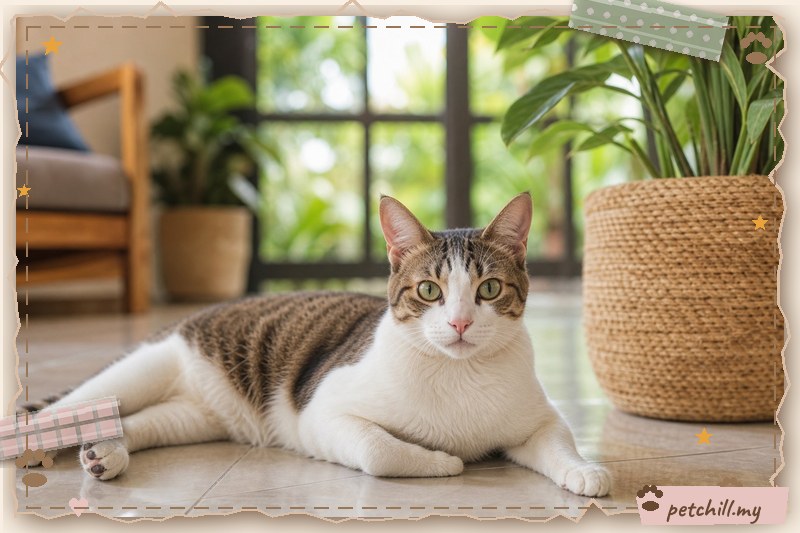
Preventing lily poisoning at home
The simplest prevention is a strict no-lily rule. But life is not always simple. Gifts arrive. Visitors bring flowers. Bouquets appear at celebrations. Here is how to reduce risk in a Malaysian home.
Set a household rule
Tell family members, housemates, and regular visitors that lilies are not allowed in the house. This includes potted plants, cut flowers, and mixed bouquets. If someone gives you lilies, thank them and rehome the flowers immediately, ideally to a home without cats.
Check bouquets before bringing them inside
Mixed bouquets often contain lilies as filler or focal flowers. Open the wrapping outside and inspect the flowers. If you see lily buds, petals, or pollen, do not bring the bouquet in. If you are unsure, keep it outside and ask the sender or florist.
Be careful with gifts and festive seasons
Flowers are common gifts during festive periods, housewarmings, and office celebrations. If you receive flowers, inspect them before placing them in your home. A quick check can prevent a serious accident.
Watch balcony and garden plants
Cats that spend time on balconies or in gardens may encounter lilies growing outdoors. In Malaysia's warm, humid climate, many plants grow well, and lilies can be part of a garden display. If your cat has outdoor access, check what is growing within reach. Remove toxic plants or keep cats away from those areas.
Think about pollen transfer
If lilies were in your home recently, clean surfaces. Wipe tables and floors. Vacuum carpets and soft furnishings. Wash your hands after handling flowers. Pollen can linger, and a cat's grooming habit makes even small amounts a risk.
Choose cat-safe flowers
If you want flowers at home, choose options that are safer for cats. Examples include roses, sunflowers, orchids, and snapdragons. Even safe flowers should be placed where cats cannot knock them over or chew them, and vase water should be changed regularly. Ask your florist for a cat-safe bouquet and double-check the plant names.
A practical home checklist
Use this checklist when flowers enter your home:
- Ask the sender or florist what plants are in the bouquet.
- Inspect for lily buds, open flowers, and pollen before bringing it inside.
- Keep flowers in a room your cat cannot access.
- Clean any surfaces where flowers were placed.
- Wash your hands after handling flowers.
- Tell everyone in the household about the no-lily rule.
- Save your vet's number and an emergency vet contact in your phone.
- If you suspect exposure, go to the vet immediately.
Local contexts: what this looks like in Malaysia
In a Kuala Lumpur apartment, a bouquet might arrive as a gift and sit on a dining table. Space is limited, and cats often share the same living area. A cat can jump onto the table, brush past the flowers, and later groom pollen off its fur. In a small apartment, there is no "far away" room. The safest approach is to keep lilies out entirely and inspect any flowers before they cross the threshold.
In a Johor terrace house, a cat may have access to a garden or a car porch. Potted plants and garden beds can include lilies or daylilies. A cat that roams outdoors may chew on leaves or walk through fallen pollen. Check what is growing in your garden and remove toxic plants from areas your cat can reach. If your cat goes outside, supervise or create a cat-safe outdoor area.
In Penang during the rainy season, flowers may be brought indoors to protect them from heavy rain. That indoor period is exactly when cats are most likely to investigate. If you bring plants inside during wet weather, place them in a closed room or a cat-free zone, and check for fallen petals and pollen.
Other common household dangers
Lily poisoning is serious, but it is not the only plant risk for cats. Other common toxic plants include sago palm, oleander, azaleas, and some types of ivy. Chocolate, onions, garlic, grapes, and raisins are also dangerous. Keep medicines, cleaning products, and pest control items out of reach. If you are unsure about a plant or food, ask your vet before exposing your cat.
When to see a vet
See a vet immediately if you know or suspect your cat has eaten any part of a lily, including petals, leaves, pollen, or vase water. Do not wait for signs. Also seek urgent care if your cat shows vomiting, drooling, lethargy, loss of appetite, increased thirst, changes in urination, or weakness after possible plant exposure. If you are unsure whether the plant was a lily, treat it as an emergency and bring a photo or sample. Quick action is the best chance your cat has.
Final thoughts
Lily poisoning is one of the most preventable cat emergencies. The rule is simple: no lilies in a cat's home. Check bouquets, watch garden plants, clean pollen, and act fast if exposure happens. In Malaysia, where flowers are part of celebrations and gifts, a little vigilance goes a long way. Your cat's kidneys will thank you.
This article is for general information only and is not a substitute for veterinary advice. If you suspect your cat has been exposed to a toxic plant, contact a licensed veterinarian immediately.
Related reading
- Cat Poisoning Treatment in Malaysia: What to Do, What to Expect, and How to Prevent It
- How to Prevent Paracetamol Poisoning Around Cats: A Malaysian Safety Guide
- Poisoning in Cats: Causes, Symptoms and Care (Malaysia Guide)
- Poisoning in Cats in Malaysia: Common Toxins, Signs and What to Do
- Signs of Poisoning in Cats in Malaysia: What to Watch For and What to Do
- Wound Care for Cats Step by Step: A Practical Malaysian Guide
- Blood Test for Cats: What to Expect (Malaysian Owner's Guide)
- Cat Dental Pain Treatment in Malaysia: A Practical Owner's Guide
- Cat Ear Mites Treatment in Malaysia: A Complete Owner's Guide

