
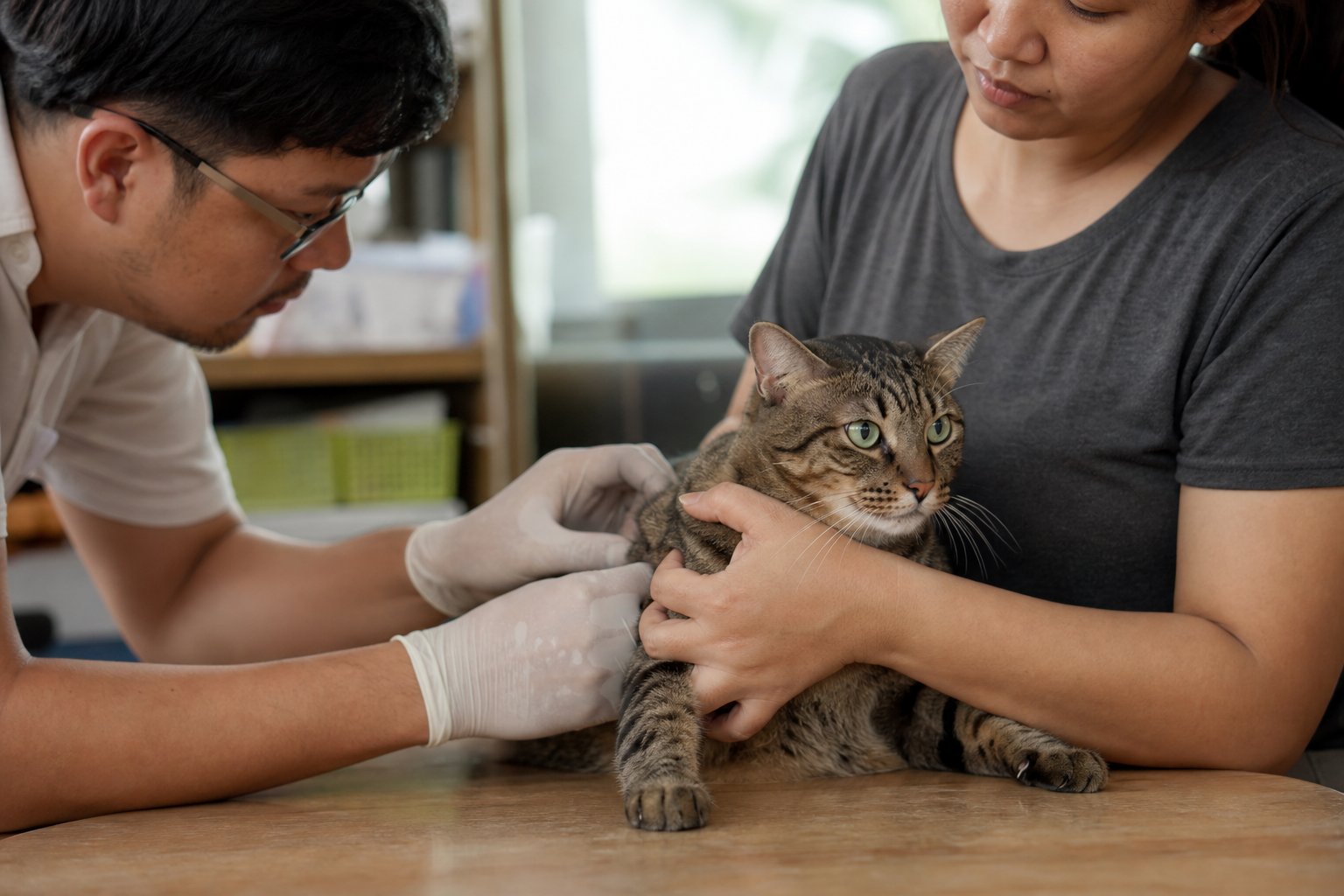
What an X-ray actually does for your cat
An X-ray, also called radiography, is a picture taken by passing a small amount of radiation through your cat's body onto a detector. Dense tissues such as bone and metal block the rays and appear white. Air appears black, and soft organs like the liver and heart show up in shades of grey. It is one of the oldest and most widely available imaging tools in veterinary practice, and most Malaysian small-animal clinics have an X-ray machine on site.
X-rays are excellent for answering specific questions: Is there a fracture? Is there a bladder stone? Is there a foreign object in the stomach? Has the heart changed shape? They are less useful for looking at soft tissue detail, which is where ultrasound usually takes over. Understanding this difference helps you have a more productive conversation with your vet.
When your vet may recommend an X-ray
Vets do not order X-rays for fun. There is usually a clear clinical reason, and the findings are expected to change how your cat is treated. Common reasons include:
- Trauma. A fall from a high-rise window, a road accident or a fight can cause fractures, dislocated joints or internal injury. X-rays map the damage.
- Limping or suspected fracture. If your cat suddenly refuses to bear weight on a leg, an X-ray can confirm or rule out a break.
- Vomiting or suspected foreign body. Cats swallow string, hair ties, toys and bones. X-rays can locate many of these, though not all.
- Urinary problems. Bladder stones and some obstructions show up well on X-rays, especially with contrast.
- Dental disease. Dental X-rays reveal problems below the gumline that cannot be seen by looking in the mouth.
- Heart and lung assessment. Chest X-rays help assess heart size and lung patterns in cats with coughing or breathing difficulty.
- Cancer staging. If a tumour is suspected, X-rays help check whether it has spread to the lungs.
- Pre-anaesthetic screening. Some vets take chest X-rays before surgery in older cats.
If your vet suggests an X-ray and you are unsure why, ask directly: "What are we looking for, and how will the result change the plan?" A good vet will welcome the question.
Why sedation is so often needed
This is the part many Malaysian cat owners find surprising. Cats are not naturally cooperative radiology patients. A cat in pain, frightened or simply curious will move, twist and refuse to hold a position. Movement produces blurry images that may need to be repeated, which means more radiation exposure and more stress.
For this reason, most vets use some form of chemical restraint. Options include:
| Approach | What it involves | Typical use |
|---|---|---|
| Manual restraint | A vet nurse holds the cat in position | Very calm cats, single limb views |
| Light sedation | Injectable or inhaled sedative to relax the cat | Most limb and chest views |
| General anaesthesia | Full unconsciousness with monitoring | Abdominal studies, dental X-rays, multiple views, fractious cats |
Sedation is not risk-free. Your vet should ask about your cat's health history, weigh the cat accurately and monitor breathing and heart rate throughout. Older cats, cats with heart disease and cats with kidney disease need extra care. If your cat has any known condition, say so before sedation is given.
How to prepare your cat
Preparation is mostly about following your vet's instructions and reducing stress.
- Confirm fasting instructions. If sedation is planned, your vet will usually ask you to withhold food for a set number of hours. Water is often allowed. Never guess; ask.
- Bring your cat in a secure carrier. A carrier that opens from the top is easier for the vet team to work with.
- Bring a list of medications. Include supplements and any recent treatments.
- Mention previous reactions. If your cat has had a bad reaction to sedation before, tell the team.
- Allow extra time. Do not schedule the appointment immediately before something important. Sedation recovery can take hours.
- Keep the car cool. In Malaysian heat, a parked car becomes dangerous quickly. Never leave your cat in the car, even briefly.
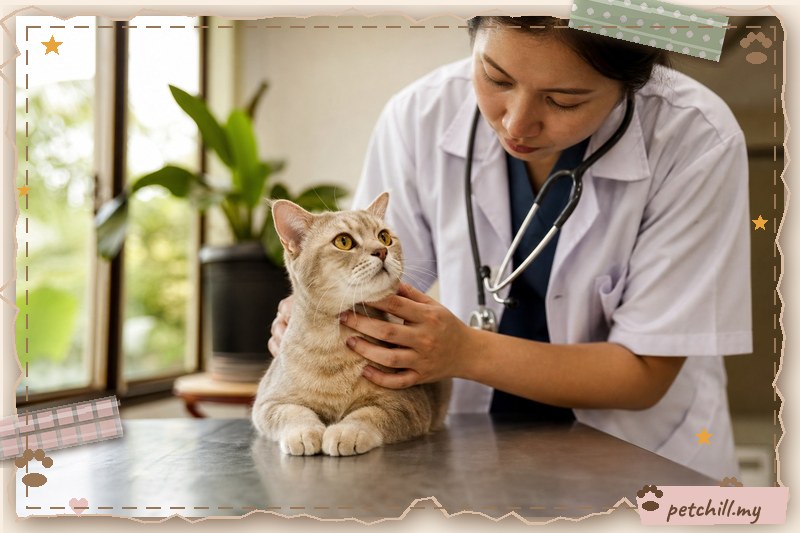
What happens during the appointment
A typical visit follows a predictable pattern. Your vet examines your cat first, then discusses the reason for imaging and the estimate. If you agree, the cat is weighed and sedated. The team positions the cat on the X-ray table, often using sandbags, foam wedges or ties to hold limbs in place. The vet or nurse steps behind a protective screen, takes the images, and checks them on screen before waking the cat.
Most studies need two views at right angles to each other, because a single view can hide a problem. Sometimes three or more views are needed. After imaging, your cat recovers in a quiet cage and is monitored until alert enough to go home.
What X-rays can and cannot show
| Structure | Seen well on X-ray? | Notes |
|---|---|---|
| Bones and joints | Yes | Fractures, arthritis, dislocation |
| Metal objects | Yes | Very clear |
| Stones in bladder or kidney | Usually | Some stones are invisible |
| Heart shape and size | Yes | Chest views |
| Lungs | Partly | Patterns visible, but ultrasound or CT may be needed |
| Intestines | Partly | Gas patterns help, but soft tissue detail is limited |
| Soft foreign bodies (string, cloth) | Often no | Ultrasound may be better |
| Pregnancy | Yes, in later stages | Not a routine use |
This table is a guide, not a rule. Your vet will explain what is visible in your cat's specific case.
Radiation safety for your cat and your family
The radiation dose from a diagnostic X-ray is low and the benefit of an accurate diagnosis usually outweighs the small risk. Veterinary staff follow standard safety practices: lead aprons, thyroid shields, gloves and distance from the beam. Owners are usually asked to wait outside the X-ray room.
If you are pregnant or think you may be, tell the clinic. You will almost certainly be asked to stay in the waiting area, which is standard practice. There is no need to handle your cat differently after an X-ray; the cat does not become radioactive.
Costs in Malaysia and what to ask
Veterinary fees in Malaysia are not standardised nationally. What you pay depends on the clinic, the city, the number of views, whether sedation or anaesthesia is used, and whether an out-of-hours emergency fee applies. Rather than quote a figure that may be wrong for your area, ask your vet for a written estimate before consenting. A useful estimate should itemise:
- Consultation and examination
- Sedation or anaesthesia, including monitoring
- The X-ray itself, per view or per study
- Any contrast agent or special procedure
- Hospitalisation or recovery time, if charged
- Follow-up review
If the estimate is unclear, ask. A reputable clinic will explain each line. It is also reasonable to ask whether the images will be shared with you digitally, which is useful if you later need a second opinion.
Common myths about cat X-rays
"X-rays are only for broken bones." Not true. They are used for chest, abdomen, dental and urinary problems too.
"My cat will be in pain afterwards." The procedure is painless. Any soreness usually comes from the underlying condition, not the X-ray.
"Sedation will harm my old cat." Sedation carries risk, but modern protocols and monitoring make it safer than many owners assume. Your vet will weigh the risk against the value of the diagnosis.
"One X-ray is enough." Usually two views at different angles are needed for a complete picture.
When to see a vet
Seek veterinary attention promptly if your cat shows any of the following:
- Sudden inability to use a leg, or obvious deformity after a fall
- Difficulty breathing, coughing or open-mouth breathing
- Repeated vomiting, especially with a known habit of chewing string or toys
- Straining to urinate, or no urine produced
- A swollen, painful abdomen
- Bleeding or swelling after trauma
- Any sudden change in behaviour or appetite that lasts more than a day
Do not wait to see whether a problem resolves on its own if your cat is in pain or distress. Early imaging often makes treatment simpler and less expensive.
Questions to ask your vet before consenting
- What are we looking for, and what will we do with the result?
- Is sedation necessary, and what protocol will you use?
- How many views do you expect?
- What is the total estimated cost, including sedation and follow-up?
- What are the risks for my cat specifically?
- Will I receive copies of the images?
- What should I watch for during recovery at home?
After the appointment
Your cat may be sleepy, unsteady or slightly grumpy for several hours after sedation. Keep them indoors in a quiet, warm room away from other pets and children. Offer water first, then a small meal once fully alert. Do not allow jumping onto high furniture until coordination returns. If your cat seems unusually slow to recover, contact the clinic.
A note on local context
In Kuala Lumpur apartments, cats that fall from balconies or open windows are a common reason for emergency X-rays, so secure your windows and balconies. In Johor terrace houses, cats that roam outdoors are more likely to be involved in road accidents or fights, which often leads to imaging for fractures and wounds. In either setting, knowing where your nearest 24-hour veterinary clinic is before an emergency happens saves valuable time.
Final thoughts
An X-ray is a routine, low-risk and often decisive tool in feline medicine. The key is not the machine but the conversation around it: why it is being done, what it can show, what it will cost, and how your cat will be kept comfortable. Ask questions, request an estimate, and follow pre-appointment instructions carefully. Your vet is your best guide for your individual cat.
This article is general information for Malaysian cat owners and does not replace veterinary advice. Always consult a licensed veterinarian about your cat's health.
Related reading
- Cat Health Guide Malaysia: Symptom Check, Red-Flag Triage & When to See a Vet
- Ultrasound for Cats in Malaysia: What It Is, When It's Needed, and What to Expect
- X-Ray for Cats Step by Step: What Malaysian Owners Should Expect
- X-Ray for Cats: What to Expect (Malaysian Owner's Guide)
- Blood Test for Cats in Malaysia: What It Checks, Costs and When You Need One
- Blood Test for Cats: What to Expect (Malaysian Owner's Guide)
- Cat Dental Pain Treatment in Malaysia: A Practical Owner's Guide
- Cat Ear Mites Treatment in Malaysia: A Complete Owner's Guide
- Cat Eye Infection Treatment in Malaysia: A Practical Owner's Guide
- Cat Hair Loss Treatment in Malaysia: A Practical Owner's Guide
- Cat Licking Wounds: Why It Happens and How to Treat It in Malaysia
- Cat Poisoning Treatment in Malaysia: What to Do, What to Expect, and How to Prevent It

