
The short answer
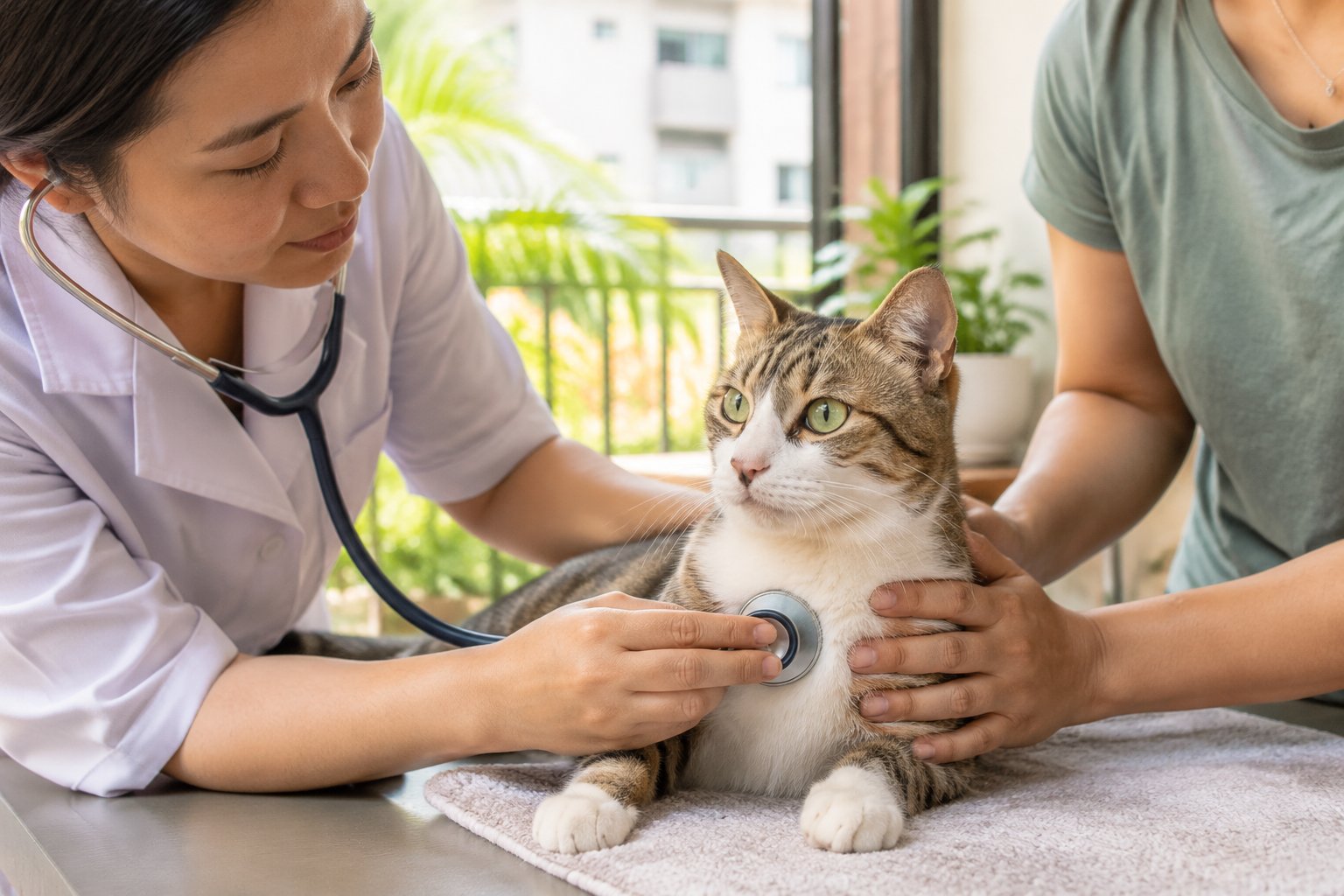
If you suspect your cat has been poisoned, the safest home action is to remove the cat from the source, keep it calm and call your vet immediately. Do not force vomiting, do not give milk, oil, salt water or human medicines, and do not wait for symptoms to appear. Home care is supportive only; most poisonings need professional assessment and treatment.
This guide explains what you can safely do while arranging veterinary care, which common household and garden items are dangerous to cats, and the warning signs that mean urgent help.
Why home treatment has limits
Cats are small, and their bodies process chemicals differently from humans and dogs. A dose that seems tiny can be serious. Some poisons cause damage over hours or days, so a cat that looks fine now may deteriorate later.
There is also no universal home antidote. The right response depends on the poison: a corrosive cleaner needs different handling from a rat bait or a plant. Giving the wrong home remedy can make things worse. For example, forcing vomiting after a corrosive substance can burn the throat again on the way up.
That is why the first step is always a phone call to your vet or an emergency animal clinic. Describe what you think was eaten, how much, and when. If you have the packaging, keep it and take a photo.
Safe first steps at home
While you arrange veterinary advice, these steps are generally safe:
- Move the cat away from the poison. Close the room, pick up spilled bait or pills, and move plants out of reach.
- Keep the cat calm and warm. Put it in a quiet, contained space such as a carrier or a small room. Stress can worsen some symptoms.
- Do not feed or water forcefully. Offer small sips of water only if the cat is fully alert and your vet agrees. Never pour water into the mouth.
- Collect information. Note the product name, active ingredient, amount possibly eaten, time of exposure, and your cat's weight if you know it.
- Save evidence. Keep vomit, packaging, chewed plant pieces or the dead pest in a sealed bag or container for the vet to identify.
- Call your vet and follow instructions. Ask whether to come in immediately and what to bring.
- Do not give human medicine. Paracetamol, ibuprofen, aspirin and antihistamines can be toxic to cats.
What never to do
- Never induce vomiting unless a vet instructs you.
- Never give milk, cooking oil, butter, salt water, raw egg or activated charcoal from a human supply without veterinary direction.
- Never give a human painkiller or sedative.
- Never try to "flush" the cat with large amounts of water.
- Never delay care because the cat seems playful or normal.
Common poisons in Malaysian homes and gardens
The list below covers frequent dangers. It is not complete, and local products vary. Always check labels and ask your vet about any specific item.
| Category | Examples | Why it is dangerous |
|---|---|---|
| Human medicines | Paracetamol, ibuprofen, aspirin, some antidepressants | Can cause liver damage, stomach ulcers or neurological signs; cats are especially sensitive to paracetamol |
| Cleaning products | Bleach, drain cleaner, toilet cleaner, disinfectant concentrates | Corrosive or irritant to mouth, throat and stomach |
| Pest control | Rat bait, snail bait, insect sprays, mothballs | Anticoagulant or neurological poisons; secondary poisoning possible if a cat eats a poisoned pest |
| Garden and plants | Lilies, oleander, castor bean, some bulbs, compost mould | Lily exposure can cause kidney injury; other plants cause stomach or heart effects |
| Car and workshop | Antifreeze, petrol, oil, battery fluid | Antifreeze can cause rapid kidney failure; hydrocarbons irritate lungs |
| Food and drink | Chocolate, coffee, alcohol, onions, garlic, grapes, xylitol | Cause heart, blood or digestive problems |
| Essential oils and incense | Tea tree, eucalyptus, citrus concentrates, liquid potpourri | Can cause drooling, wobbliness or skin irritation |
| Nicotine and cannabis | Cigarettes, e-liquids, edible products | Cause tremors, vomiting, fast or slow heart rate |
A note on plants
Many cat owners keep ornamental plants indoors. Lilies are a well-known risk, and even small exposures such as chewing leaves or drinking vase water can be serious. If you are unsure whether a plant is safe, keep it out of reach and ask your vet. In Malaysian gardens, also watch for snail bait and rat bait placed near fences or drains.
Signs of poisoning in cats
Symptoms depend on the poison, but common warning signs include:
- Vomiting or diarrhoea, sometimes with blood
- Drooling or foaming at the mouth
- Tremors, twitching or seizures
- Weakness, wobbliness or collapse
- Fast, slow or irregular breathing
- Pale, blue or yellow gums
- Dilated pupils or unusual eye movements
- Excessive thirst or urination
- Loss of appetite or hiding
- Burns or redness around the mouth
Some poisons cause delayed signs. For example, kidney damage may not show for a day or more. If you know or suspect exposure, do not wait for symptoms.
What to tell your vet
A clear history helps your vet act faster. Prepare these details:
- The product or plant name, and the active ingredient if listed
- How much may have been eaten, even an estimate
- When exposure happened
- Whether the cat has vomited, and what the vomit looked like
- Any existing health conditions or medicines
- Your cat's age and weight
- Whether other pets or children could be exposed
Bring the packaging, a photo of the plant, or the dead pest. If you cannot identify the poison, say so; your vet can still assess and treat symptoms.
Home care while you wait for the vet
Once your vet has advised you, they may suggest supportive care at home for mild cases. Follow their instructions exactly. General supportive measures can include:
- Quiet confinement. Keep the cat in a calm, warm room away from noise and other pets.
- Observation. Watch breathing, gum colour, behaviour and toilet habits. Note times.
- Small water sips. Only if the cat is alert and your vet agrees. Do not force fluids.
- No food unless advised. Some poisons require fasting; others do not. Ask first.
- Clean the coat. If a chemical is on the fur, ask your vet how to wash it safely. Use lukewarm water and mild pet shampoo only if advised, and prevent the cat from licking.
- Prevent re-exposure. Remove the source, lock cabinets, and check the garden.
A simple home safety checklist
- Medicines in a locked cabinet, not on counters
- Cleaning products in original labelled containers
- Pest bait placed where cats cannot reach, or avoided
- Lilies and unknown plants removed or hung out of reach
- Antifreeze and car fluids stored sealed and cleaned up immediately
- Bins with secure lids
- Essential oil diffusers used in rooms cats cannot enter
- Guests told not to feed the cat
When to see a vet
Seek urgent veterinary care if your cat shows any of these signs:
- Seizures, tremors or collapse
- Difficulty breathing or blue gums
- Repeated vomiting or vomiting blood
- Burns or swelling around the mouth
- Known exposure to rat bait, antifreeze, lilies or paracetamol
- Yellow gums or skin
- Not eating or drinking for more than a day after possible exposure
- Any suspicion of poisoning in a kitten, pregnant cat or cat with existing illness
If in doubt, call. It is better to be told you can monitor at home than to miss a serious exposure.
Preventing poisoning in Malaysian homes
Prevention is far easier than treatment. In a Kuala Lumpur apartment, the main risks are often indoors: human medicines on bedside tables, cleaning sprays under the sink, and lilies in decorative arrangements. In a Johor terrace house, garden risks matter more: snail bait, rat bait, antifreeze in the car porch, and plants along the fence. During the Penang rainy season, snails and rats may move closer to the house, so check bait placement and keep cats indoors where possible.
Other practical steps:
- Store food and chemicals separately.
- Never decant cleaners into drink bottles.
- Pick up dropped pills immediately.
- Check bouquets for lilies before bringing them home.
- Keep cats indoors or in secure enclosures, especially at night.
- Ask guests and domestic helpers to keep bags and medicines out of reach.
- Supervise outdoor time and check the garden after pest control.
What about activated charcoal and other kits?
Some pet first-aid kits include activated charcoal. It is not a universal treatment and can be dangerous if given incorrectly, especially if the cat is drowsy or has swallowed a corrosive. Do not use it without veterinary advice. The same applies to hydrogen peroxide, which is sometimes used to induce vomiting in dogs but is risky in cats.
A sensible home kit includes:
- Your vet's phone number and an emergency clinic number
- A carrier
- Gloves
- A notebook and pen
- Saline for wound flushing, only if advised
- A thermometer
- Spare towels
Final thoughts
Home treatment for cat poisoning is mostly about safe first steps and fast contact with a vet. Remove the source, keep the cat calm, gather information and call for advice. Avoid home remedies and human medicines. Most cats do best when assessed early, even if they seem well.
Vet disclaimer: This article is general information for Malaysian cat owners and is not a substitute for veterinary examination. If you suspect poisoning, contact your veterinarian or an emergency animal clinic immediately.
Related reading
- Cat Health Guide Malaysia: Symptom Check, Red-Flag Triage & When to See a Vet
- Cat Poisoning Treatment in Malaysia: What to Do, What to Expect, and How to Prevent It
- Paracetamol Poisoning in Cats in Malaysia: Why Even One Tablet Can Be Deadly
- Pet Poisoning at Home: Household Chemicals, Insecticides and Toxic Plants (Malaysia, Part 1)
- Signs of Poisoning in Cats in Malaysia: What to Watch For and What to Do
- Blood Test for Cats Step by Step: What Happens at the Clinic
- Cat Licking Wounds: Why It Happens and How to Treat It in Malaysia
- Chocolate Poisoning and Cats in Malaysia: What Every Owner Should Know
- Dental Pain in Cats in Malaysia: Signs, Causes and What to Do
- Dental Pain Prevention for Cats: A Practical Malaysian Guide
- Deworming Schedule for Cats: A Step-by-Step Plan for Malaysian Owners
- Deworming Schedule for Cats: What to Expect (Malaysia Guide)

