
Quick answer
Hair loss in cats is either normal shedding or alopecia, where bald patches, thinning or broken coat appear. Common causes include fleas and mites, ringworm, allergies, over-grooming from stress, and hormonal or nutritional problems. Check for itching, scabs and symmetry, groom and de-flea regularly, and see a vet if skin looks inflamed or loss spreads.
Normal shedding versus true hair loss
Every cat sheds. Hair grows in cycles, and when many follicles rest at the same time, the coat thins and then regrows. In a tropical climate like Malaysia's, many cats moult fairly steadily rather than in two sharp seasonal bursts, so a little loose hair on the sofa is expected.
True hair loss, or alopecia, looks different. The key question is simple: can you see skin? A healthy coat covers the body evenly. Alopecia shows as:
- Visible skin, especially on the belly, flanks, inner thighs, ears or around the eyes
- Thinning patches that grow larger over days or weeks
- Broken or stubby hairs, as if the coat has been clipped short
- A symmetrical pattern on both sides of the body
- Redness, scabs, crusts, dandruff or a greasy feel
- Constant licking, scratching, head shaking or rubbing against furniture
A useful trick is to part the fur in several places and look at the skin underneath. Pink, calm skin with an even coat is reassuring. Red, scabby, thickened or bald skin is a reason to act.
The main causes of hair loss in cats
External parasites
Fleas are a classic culprit. Their bites trigger itching and allergic dermatitis, and cats often over-groom in response, pulling hair out along the back and around the tail base. Flea dirt, small dark specks that turn reddish when wet on a tissue, is a clue. Ear mites cause scratching around the ears and head, sometimes with dark debris in the ear canal. Other mites can cause mange-like crusting, particularly on the face, ears and legs.
Parasites are not a sign of a dirty home. Fleas survive in cracks, bedding and carpets, and can arrive on a new pet or on your shoes. In Malaysia's warm, humid conditions, parasite pressure is year-round, so prevention matters more than one-off treatment.
Fungal infection (ringworm)
Despite the name, ringworm is a fungus, not a worm. It causes circular patches of hair loss with scaly, crusty edges, often on the head, ears and limbs. Some cats carry it with barely any signs. Ringworm can pass to other pets and to people, so it is worth confirming with a vet rather than guessing. Do not share towels or grooming tools between an affected cat and others.
Allergies
Cats can be allergic to flea saliva, environmental proteins such as pollen and dust mites, certain foods, or substances they contact. Allergic skin disease usually itches, and itching leads to scratching, licking and hair loss. Signs often include hair loss around the head and neck, scabs, and a coat that looks rough or greasy. Flea allergy dermatitis tends to concentrate on the lower back and tail base.
Over-grooming and stress
Some cats groom themselves bald. This is called psychogenic alopecia or over-grooming, and it produces a distinctive pattern: symmetrical thinning on the belly, inner thighs and flanks, with short, uniform, barbered hairs. The skin underneath often looks normal rather than inflamed.
The trigger may be emotional or physical. Stress from a new pet, a move, renovations, a new baby, or long periods alone can start the habit. Pain, such as from the bladder or joints, can also make a cat lick a particular area. Because the two look similar, a vet visit helps separate behavioural grooming from a medical cause.
Hormonal and metabolic disease
Hormonal problems are less common but important. An overactive thyroid can cause weight loss despite a good appetite, restlessness and a poor coat. Diabetes can cause increased thirst and urination, and sometimes poor skin and coat condition. These conditions need veterinary diagnosis and management, not home remedies.
Nutrition and grooming
A complete, balanced diet supports skin and coat. Cats fed unbalanced home-cooked food, or diets missing essential fatty acids, may develop a dull, dry coat and flaky skin. Poor grooming, common in older, overweight or arthritic cats, allows dead hair and oils to build up, which can lead to matting and skin irritation.
Other skin conditions
Bacterial skin infections, feline acne on the chin, and rare immune-mediated skin diseases can all cause hair loss. Some cats lose hair around the ears or temples simply through friction or repeated scratching. A vet can examine samples under a microscope to tell these apart.
Comparison table: matching signs to likely causes
| Pattern you see | Common suspects | What to note |
|---|---|---|
| Even shedding, no bald patches | Normal moult | Brush regularly; no treatment needed |
| Itchy back and tail base, flea dirt | Fleas, flea allergy | Check bedding and other pets |
| Circular scaly patches on head or limbs | Ringworm | Can spread to people and pets |
| Symmetrical bald belly and thighs, normal skin | Over-grooming, stress or pain | Watch for changes in routine |
| Red, scabby, itchy skin on face and neck | Allergy | Note season, food and contact items |
| Thin coat plus weight loss and restlessness | Thyroid or metabolic disease | Needs blood tests |
| Greasy, matted coat in an older cat | Poor grooming, arthritis | Check mobility and weight |
A practical home checklist
Before you visit a vet, gather information. This makes the appointment faster and more useful.
- Photograph the affected areas in good light, and take a new photo every few days to track change.
- Note when the hair loss started and whether it is spreading.
- Check for itching: scratching, licking, biting, head shaking, rubbing.
- Look for fleas, flea dirt, ear debris or tiny moving specks.
- Part the coat in several places and record where skin is visible.
- Note any scabs, crusts, dandruff, redness or greasiness.
- List what your cat eats, including treats and supplements.
- Note changes at home: new pet, move, renovation, new furniture, different cleaning products.
- Record weight, appetite, thirst, urination and energy levels.
- Check whether other pets or people in the home have skin issues.
Care at home: what helps and what to avoid
Grooming
Regular brushing removes loose hair and spreads natural oils. Use a soft brush suited to your cat's coat, and be gentle over any sensitive area. Long-haired cats need more frequent grooming to prevent mats, which can trap moisture and irritate skin. If your cat is painful or resists brushing, stop and have a vet check for soreness.
Parasite control
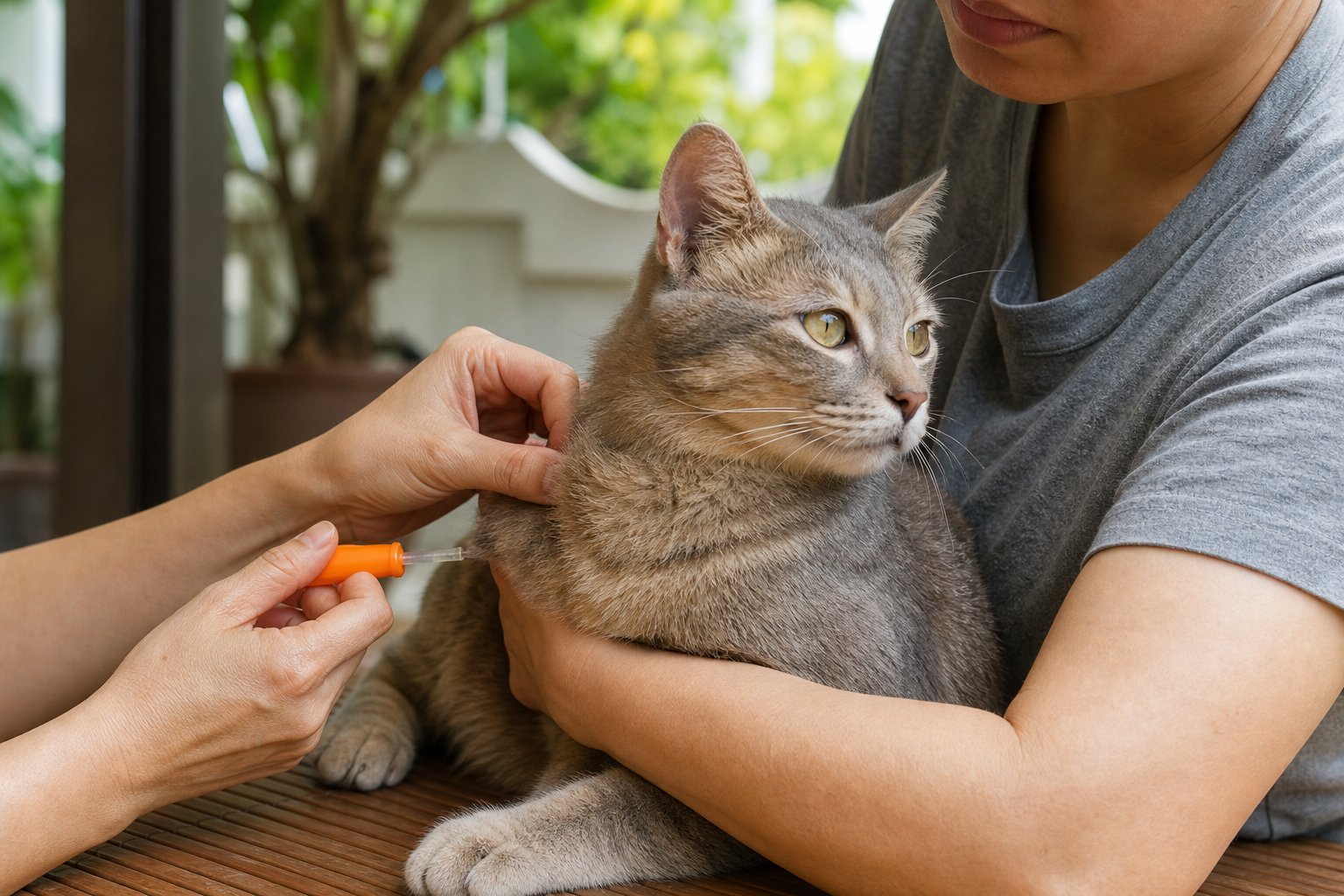
Use a flea and tick product recommended for cats, and follow the label exactly. Never use dog products on cats; some ingredients are toxic to them. Treat all pets in the household, wash bedding in hot water, and vacuum regularly. Ask your vet which product suits your cat's age, weight and health status.
Environment
Warm, humid conditions favour fungal growth, so keep bedding dry and wash it often. Reduce dust by damp-wiping surfaces. If you suspect an allergy, note when signs flare up. Avoid strong fragrances, smoke and harsh cleaning chemicals around your cat's resting areas.
Stress reduction
Provide hiding spots, vertical space such as shelves or cat trees, scratching posts, and predictable feeding and play times. If a new pet has joined the home, introduce them gradually and give each cat its own resources: food bowl, water bowl, litter tray and bed. A calm environment can reduce over-grooming.
Diet
Feed a complete and balanced cat food appropriate for your cat's life stage. If you cook for your cat, work with your vet to ensure the recipe is properly balanced. Avoid sudden diet changes; introduce new food gradually over about a week.
What to avoid
- Do not apply human creams, oils or shampoos without veterinary advice.
- Do not use dog flea products on cats.
- Do not shave your cat unless a vet recommends it for a medical reason.
- Do not assume hair loss is behavioural; rule out medical causes first.
When to see a vet
Book a veterinary appointment if you notice any of the following:
- Bald patches, broken hairs or a barbered coat
- Redness, scabs, crusts, sores or a bad smell
- Persistent itching, scratching or head shaking
- Hair loss around the ears, face or eyes
- Hair loss that spreads quickly or keeps returning
- Weight loss, weight gain, increased appetite, thirst or urination
- Lethargy, hiding, or a change in grooming habits
- Skin problems in other pets or people in the home
- A cat that seems painful when touched
Your vet may examine the skin, use a lamp to check for fungal fluorescence, take hair or skin samples, or recommend blood tests. Treatment depends entirely on the cause, so avoid starting medicated products before a diagnosis.
Living with a hair-loss cat in Malaysia
Malaysia's climate and housing shape how hair loss plays out. In a Kuala Lumpur apartment, limited outdoor access and shared corridors mean parasite control and indoor air quality matter. Dust, humidity and close neighbours can all affect a sensitive cat. In a Johor terrace house, a cat that spends time in the garden or car porch has more exposure to fleas, soil and plant material, so check paws, belly and face after outdoor time.
During the Penang rainy season, damp bedding and humid indoor air can encourage skin problems. Dry bedding, good ventilation and regular grooming help. If your cat lives mostly indoors, enrichment and routine matter for stress-related over-grooming.
Prevention habits that pay off
- Brush your cat several times a week and check the skin as you go.
- Keep parasite prevention consistent all year.
- Wash bedding regularly and dry it fully.
- Feed a complete diet and keep treats modest.
- Provide daily play and scratching opportunities.
- Keep routine vet checks, especially for older cats.
- Act early on small patches rather than waiting for them to spread.
Hair loss is a sign, not a diagnosis. With a little observation and the right veterinary input, most causes can be identified and managed, and many cats regrow a full coat once the underlying issue is treated.
This article is general information only and is not a substitute for veterinary advice. If your cat has hair loss, itching, skin lesions or other signs of illness, consult a licensed veterinarian in Malaysia.
Related reading
- Licking Wounds Prevention for Cats: How to Stop the Lick Cycle and Let Skin Heal
- Signs of Hair Loss in Cats in Malaysia: What to Look For and When to Worry
- Blood Test for Cats Step by Step: What Happens at the Clinic
- Dental Pain in Cats in Malaysia: Signs, Causes and What to Do
- Dental Pain Prevention for Cats: A Practical Malaysian Guide
- Deworming Schedule for Cats: A Step-by-Step Plan for Malaysian Owners

