
The short answer
Cat hair loss is a symptom, not a diagnosis. Treatment depends entirely on what is causing it, and the causes range from fleas and ringworm to allergies, stress and thyroid disease. In Malaysia, the warm, humid climate makes some skin problems more common and harder to clear, so a proper diagnosis matters more than a quick product purchase.
This guide walks through the likely causes, how a Malaysian vet investigates them, what treatment usually involves, and what you can safely do at home while you wait for an appointment.
Why Malaysian homes see a lot of cat hair loss
Malaysia's climate is warm and humid year-round, and that shapes feline skin disease. Humidity supports fungal growth, so ringworm and yeast overgrowth are frequent. Fleas and mites thrive in warm conditions and can persist indoors even in high-rise apartments. Air conditioning and closed windows reduce ventilation in some homes, which can worsen skin irritation and stress.
Lifestyle matters too. Many Malaysian cats live entirely indoors in apartments, which is generally safer but can lead to boredom, over-grooming and stress-related hair loss. Multi-cat households, rescue cats with unknown histories, and cats that go outdoors or visit grooming salons all carry different risks.
None of this means hair loss is inevitable. It means the investigation should be systematic rather than guesswork.
The main causes of hair loss in cats
Parasites
Fleas are the classic culprit. Some cats are allergic to flea saliva, so a single bite triggers intense itching, scabs and hair loss, especially over the lower back, tail base and hind legs. Ear mites cause scratching around the head and ears. Other mites, such as those causing notoedric mange, produce crusty, itchy lesions on the head and ears.
Fungal infections
Ringworm is a fungal skin infection, not a worm. It causes circular patches of hair loss with scaly or crusty edges, often on the head, ears and limbs, but it can appear anywhere. Some cats carry it with barely any signs. Ringworm can spread to people, so it deserves prompt veterinary attention.
Allergies
Flea allergy, food allergy and environmental allergy all cause itching, and itching leads to hair loss from scratching and licking. Environmental triggers in Malaysian homes may include dust mites, mould and pollen. Food allergy is less common but real, and it is diagnosed properly with a supervised elimination diet, not by switching brands repeatedly.
Over-grooming and stress
Cats groom to soothe themselves. Stress from a new pet, a move, a noisy household, confinement or conflict between cats can lead to excessive licking, often producing bald patches on the belly, inner thighs and forelegs. This is sometimes called psychogenic alopecia, and it is a diagnosis of exclusion, meaning physical causes must be ruled out first.
Hormonal and systemic disease
Hyperthyroidism in older cats can cause a poor, greasy coat and hair loss. Other hormonal or metabolic conditions can also affect the coat. These are less common than parasites and allergies but important in older cats or cats with other signs such as weight change or increased appetite and thirst.
Normal patterns and physical causes
Some thinning over the temples, in front of the ears, or on the belly is normal in certain cats. Friction from collars, tight harnesses or bandages can rub hair away. Poor nutrition, severe illness or rapid weight loss can also affect coat quality.
How a vet investigates hair loss
A good consultation starts with history: when the hair loss began, whether it itches, which areas are affected, whether other pets or people are affected, diet, flea control, indoor or outdoor access, and any recent changes at home.
Your vet will then examine the skin and coat under good light, often with a magnifying lens. Common tests include:
- Flea combing and skin scrapes to look for fleas, flea dirt and mites.
- Fungal culture or a Wood's lamp examination for ringworm. A lamp alone is not reliable, so culture is often needed.
- Cytology of skin surface samples to check for bacteria and yeast.
- Blood tests if hormonal or systemic disease is suspected, especially in older cats.
- Trial treatments or elimination diets when allergy is likely.
Not every cat needs every test. A sensible vet builds the investigation step by step, starting with the most likely and easiest-to-confirm causes.
What treatment looks like
| Cause | Typical treatment approach | What owners do at home |
|---|---|---|
| Fleas | Species-appropriate flea control for all pets in the home | Treat every pet, wash bedding, vacuum regularly |
| Ear or skin mites | Prescribed antiparasitic medication | Follow the schedule exactly, clean bedding |
| Ringworm | Antifungal medication, sometimes topical treatment | Clean environment, handle with gloves, monitor people for rash |
| Bacterial or yeast infection | Prescribed medicated shampoo or topical or oral treatment | Bathe only as directed, dry thoroughly |
| Food allergy | Supervised elimination diet trial | Strict diet control, no treats or table scraps during the trial |
| Environmental allergy | Trigger reduction and prescribed medication | Air quality, bedding washing, flea control, stress reduction |
| Stress over-grooming | Environmental and behavioural changes | Routine, enrichment, separate resources, reduce conflict |
| Hormonal disease | Specific veterinary treatment | Regular monitoring and follow-up blood tests |
Treatment timelines vary widely. Flea control can bring relief within days, ringworm often needs weeks of consistent treatment plus cleaning, and allergies are usually managed long term rather than cured. Ask your vet what improvement should look like and when to return.
Home care that actually helps
You can support treatment without guessing at medicine.
Improve the basics. Feed a complete, balanced diet appropriate for your cat's age and health status. Fresh water, a clean litter tray and a calm routine support general health and coat regrowth.
Control parasites consistently. Use flea and tick products recommended for your cat's weight and health status, and treat all pets in the household. Consistency matters more than occasional use.
Reduce stress. Provide vertical space, scratching posts, separate feeding and litter areas, and predictable playtime. In multi-cat homes, resource competition is a common hidden trigger.
Keep the environment clean. Wash bedding in hot water where possible, vacuum regularly, and clean grooming tools. This is especially important with ringworm.
Protect your own health. Ringworm can affect people. Wear gloves when handling lesions, wash hands after contact, and see a doctor if you develop a ring-shaped rash.
Avoid these mistakes. Do not apply human creams, steroid creams or leftover medications. Do not use dog flea products on cats. Do not shave your cat as a treatment unless your vet advises it for a specific reason. Do not start medicated shampoos without guidance, because the wrong product can irritate skin further.
Working with a Malaysian vet
Veterinary services in Malaysia are regulated, and a licensed veterinarian is the right person to diagnose and treat skin disease. Prices vary by clinic, location and the tests needed, so ask for an estimate before agreeing to a full work-up. If cost is a concern, tell your vet; they can often prioritise the most useful tests first and stage the rest.
Bring useful information to the appointment: photos of the lesions over time, a list of products you have used, your cat's diet, and notes on itching, appetite and behaviour. If you have other pets, mention them, because treating one animal while leaving others untreated often leads to recurrence.
For travel or documentation questions, official Malaysian animal health information is available through the Department of Veterinary Services. For general welfare guidance, the SPCA and the Malaysian Veterinary Council are useful reference points.
A practical checklist for owners
- Photograph the bald areas and note when you first saw them.
- Check for fleas and flea dirt with a fine comb.
- Note whether your cat scratches, licks or seems itchy.
- List all pets in the home and their parasite control.
- Record any recent changes: new pet, move, new food, new furniture.
- Book a vet visit if lesions are spreading, the skin is broken, or your cat seems unwell.
- Follow the treatment plan exactly and attend the review appointment.
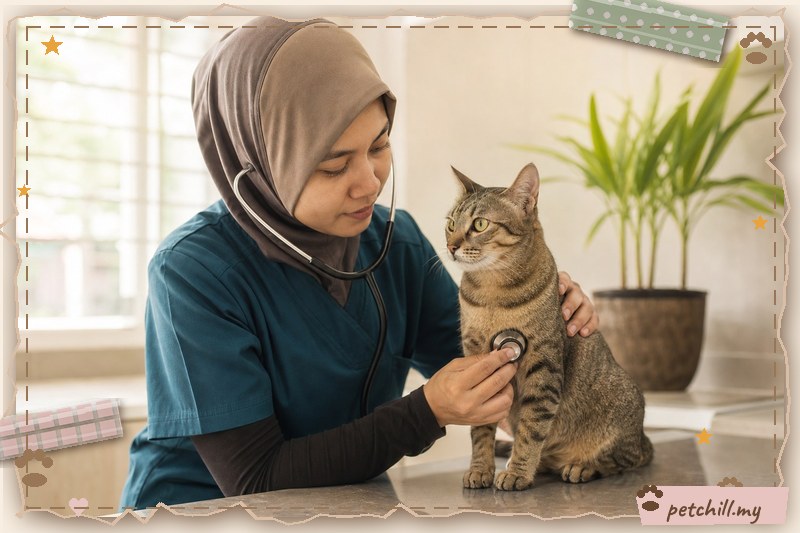
When to see a vet
Book a veterinary appointment promptly if you notice any of the following:
- Hair loss that is spreading or worsening.
- Red, broken, crusty, oozing or foul-smelling skin.
- Intense itching, scratching or licking that disturbs sleep or eating.
- Bald patches in a cat that also seems unwell, is losing weight, or is eating or drinking more than usual.
- Ringworm-like circular lesions, especially in a home with children or immunocompromised people.
- Hair loss that does not improve after reasonable home care.
- Any hair loss in a kitten, a senior cat or a cat with an existing medical condition.
Do not wait for a home remedy to work if your cat is uncomfortable. Early diagnosis usually means simpler, cheaper and more effective treatment.
Frequently asked questions
See the FAQ section above for quick answers on causes, timelines, contagion and home care.
Bottom line
Cat hair loss treatment in Malaysia is not a single product or a single visit. It is a process: identify the cause, treat it specifically, support the cat at home, and review progress with your vet. The humid climate and indoor lifestyles here create particular risks, but they are manageable with consistent parasite control, a clean environment, good nutrition and prompt veterinary care when something looks wrong.
Disclaimer: This article provides general information for cat owners in Malaysia and is not a substitute for veterinary examination, diagnosis or treatment. Always consult a licensed veterinarian about your cat's health, and never give human or leftover medications to a cat without veterinary advice.
Related reading
- Cat Health Guide Malaysia: Symptom Check, Red-Flag Triage & When to See a Vet
- Cat Ringworm Treatment in Malaysia: A Practical Owner's Guide
- Cat Skin Fungus Treatment in Malaysia: A Practical Owner's Guide
- Constipation in Cats: Causes, Care and When to See a Vet in Malaysia
- Flea Treatment for Cats Step by Step: A Practical Malaysian Guide

