
Quick answer
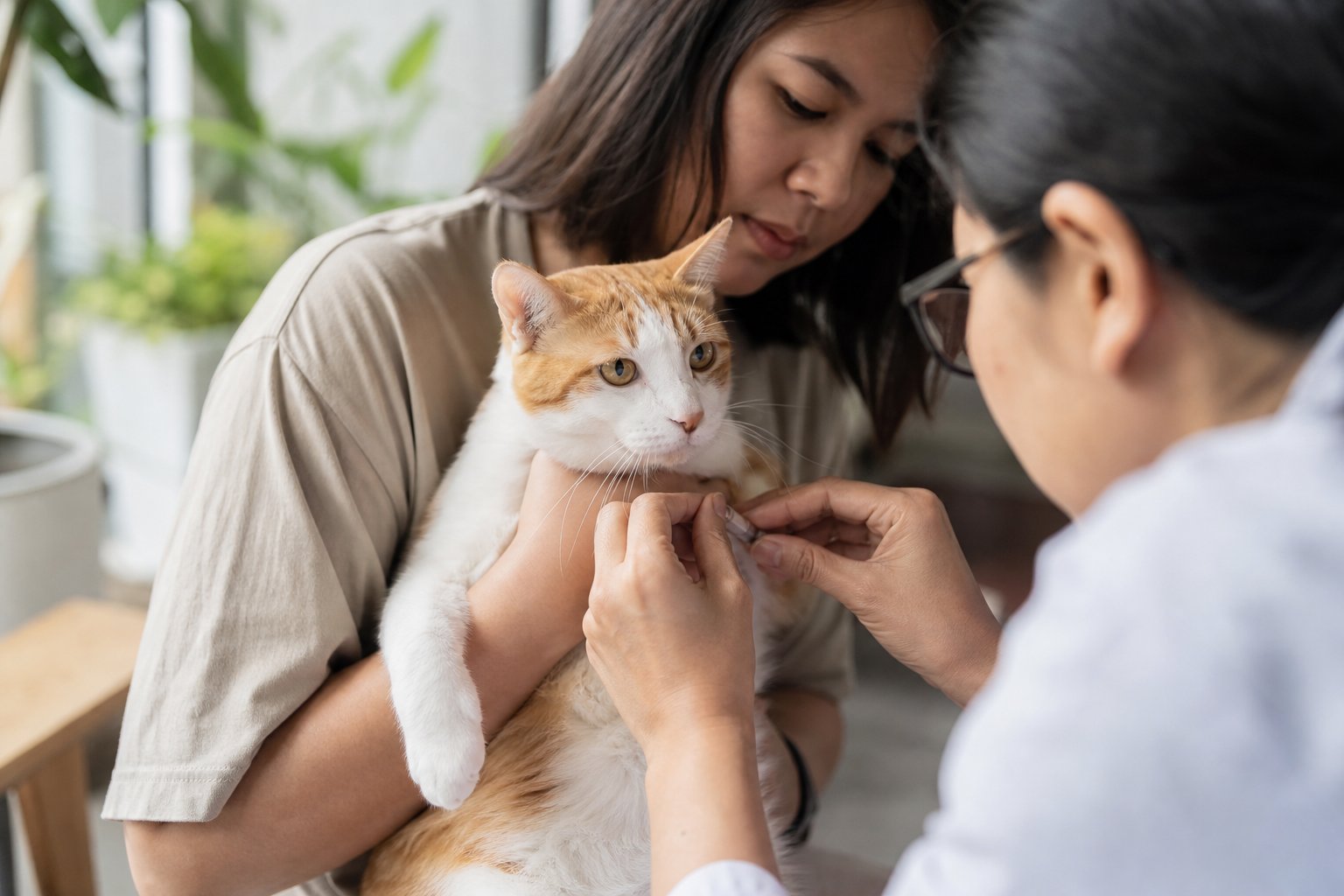
You can safely clean discharge with a warm damp cotton pad and keep your cat comfortable, but do not use human eye drops or leftover antibiotics. Most eye infections need a vet to check the cornea and prescribe the right treatment. See a vet within 24 hours if there is pain, cloudiness, or no improvement.
Why cat eye infections are tricky
Cat eyes are small, delicate, and very good at hiding serious problems. A watery eye that looks like a minor infection can be a corneal ulcer, a foreign body, or the first sign of feline herpesvirus. Some of these conditions get worse quickly if you apply the wrong drop. Others improve with simple cleaning and time.
The challenge is that many eye problems look similar in the early stages. Redness, squinting, and discharge can come from viruses, bacteria, allergies, blocked tear ducts, or injury. Home care can make your cat more comfortable and remove crusts so you can see the eye clearly, but it cannot tell you which cause you are dealing with. That is why the safest home approach is supportive care plus a plan to get a proper diagnosis if things do not settle quickly.
In Malaysia, cats live in many different environments: high-rise apartments in Kuala Lumpur, terrace houses in Johor, and older shophouses in Penang. Dust, haze, air-conditioning, and outdoor contact with other cats can all affect eye health. Knowing your cat's normal eye appearance helps you spot changes early.
Recognising an eye infection
A healthy cat eye is clear, bright, and open. The white of the eye may show a few tiny blood vessels, but it should not be uniformly red. There should be no thick discharge, and the eyelids should not be stuck together.
Common signs of an eye infection include:
- Watery or thick yellow-green discharge
- Crusting at the inner corner or on the eyelids
- Squinting, blinking more than usual, or holding the eye closed
- Redness of the white of the eye or the eyelid lining
- Swelling of the eyelids
- Pawing at the face or rubbing the eye against furniture
- Sensitivity to light
- Cloudiness or a blue-grey haze over the eye
- Sneezing and nasal discharge alongside eye signs
Some cats with eye infections also become withdrawn, eat less, or hide. These general signs matter because they suggest the cat feels unwell, not just irritated.
What you can check at home
You can look at your cat's eyes in good light without touching the eyeball. Gently lift the eyelids with clean fingers if your cat allows it. Compare both eyes. Note whether the discharge is clear, cloudy, yellow, or green. Check whether the eye looks cloudy or has a visible scratch. Do not press on the eye or use a torch directly into it.
If your cat resists, stop. Forcing the eye open can cause injury and make your cat afraid of handling.
Safe home care step by step
Home care for a cat with an eye infection focuses on cleanliness, comfort, and monitoring. It is not a substitute for veterinary diagnosis when the eye is painful or not improving.
1. Wash your hands
Wash your hands with soap and water before and after handling your cat's eyes. Some eye infections in cats are contagious to other cats, and good hygiene reduces spread. Keep separate towels and bedding for the affected cat if you have multiple cats.
2. Prepare your supplies
You will need:
- Sterile cotton pads or cotton balls
- Warm water or sterile saline
- A clean towel
- A helper if your cat is wriggly
Avoid cotton buds, tissues with lotion, and anything that sheds fibres into the eye. Do not use the same cotton pad for both eyes.
3. Clean gently
Soak a cotton pad in warm water or sterile saline and squeeze out excess. Gently wipe from the inner corner outward, away from the eye. Use a fresh pad for each wipe and each eye. If discharge is crusted, hold a warm damp pad against the closed eyelid for a few seconds to soften it, then wipe away.
Never rub the eyeball. Never use force. If the eye is swollen shut, do not pry it open; seek veterinary help.
4. Keep the area dry
After cleaning, pat the surrounding fur dry with a clean towel. Moisture trapped in the fur can cause skin irritation and make crusting worse.
5. Reduce irritants
Keep your cat indoors in a clean, dust-free room. Avoid strong fragrances, incense, cooking smoke, and air fresheners. If you use air-conditioning, keep the room comfortable but not excessively dry. In haze season, keep windows closed and use a clean air filter if available.
6. Prevent scratching
An Elizabethan collar, often called a cone, can stop your cat from pawing at the eye. This is especially useful at night or when you cannot supervise. Make sure the collar fits well and does not prevent eating or drinking.
7. Monitor closely
Check the eye at least twice a day. Note the amount and colour of discharge, whether squinting is better or worse, and whether your cat is eating and behaving normally. Take a photo each day in similar lighting so you can compare progress.
What not to do
Some home remedies do more harm than good. Avoid these:
- Human eye drops. Many contain preservatives, steroids, or decongestants that are unsuitable for cats. Steroid drops can worsen a corneal ulcer.
- Leftover antibiotics. The wrong antibiotic, or an expired one, will not cure the infection and may cause resistance.
- Homemade salt water as treatment. A mild saline rinse is fine for flushing, but strong salt solutions can burn the eye.
- Herbal or essential oil remedies. These can be toxic and irritating.
- Tea bags or milk. These are not sterile and can introduce bacteria.
- Holding the eye open by force. This can cause injury.
- Delaying vet care because the eye looks "a little better." Some ulcers worsen quickly.
Comparing common cat eye problems
The table below helps you understand why a vet check matters. It is a guide, not a diagnosis.
| Problem | Typical signs | Home care role | Vet care needed |
|---|---|---|---|
| Viral conjunctivitis | Watery discharge, sneezing, mild redness | Gentle cleaning, comfort, reduce stress | Often yes, to rule out ulcers and support recovery |
| Bacterial conjunctivitis | Thick yellow-green discharge, sticky eyelids | Cleaning, hygiene | Usually yes, for antibiotic drops |
| Corneal ulcer | Squinting, pain, cloudiness, tearing | Do not apply any drops | Yes, urgently |
| Foreign body | Sudden pawing, tearing, one eye affected | Do not attempt removal | Yes, urgently |
| Blocked tear duct | Chronic watery eye, no pain | Cleaning | Yes, for assessment |
| Allergic irritation | Redness, itching, both eyes, seasonal | Remove irritant, clean | Sometimes, if persistent |
When to see a vet
See a vet promptly if your cat shows any of these signs:
- Squinting or holding the eye closed
- Cloudiness or a blue-grey haze on the eye surface
- A visible scratch or foreign object
- Severe redness or swelling
- Thick yellow or green discharge that does not improve after 24 to 48 hours of gentle cleaning
- Both eyes affected with general illness such as not eating or lethargy
- Eye signs after a fight or injury
- A kitten with eye discharge, especially with sneezing
- Any cat that seems in pain
Kittens and senior cats deserve extra caution. Kittens can develop severe eye infections quickly, and seniors may have underlying conditions that affect healing.
If you are unsure, call your vet and describe the signs. Many Malaysian clinics are happy to advise whether you should come in. Do not wait for the weekend if the eye is painful.
Supporting recovery at home
Once a vet has examined your cat and prescribed treatment, home care continues. Follow the vet's instructions exactly. Give all medication for the full course, even if the eye looks better. Missing doses can allow bacteria to return.
Keep your cat's environment calm. Stress can slow healing, especially in cats with feline herpesvirus, which reactivates during stressful periods. Provide quiet resting places, fresh water, and easy access to food and litter.
If your cat needs eye drops, ask your vet to show you how to apply them. A common method is to hold the head gently, pull the lower eyelid down to form a small pocket, and squeeze one drop into the pocket without touching the eye. Reward your cat afterwards with a treat or gentle play.
For cats that hate handling, ask about alternative formulations such as ointments, which may be easier to apply less often. Never change the treatment plan without veterinary advice.
Preventing eye problems
Prevention is better than treatment. Regular check-ups, good nutrition, and a clean environment support eye health. Keep your cat's vaccinations up to date, as some viruses that cause eye signs are preventable. Reduce exposure to sick cats, especially in multi-cat households or boarding situations.
In Malaysia, air quality can vary. During haze periods, keep cats indoors and avoid outdoor exercise. Wash your hands after handling other animals. If your cat has long fur around the eyes, keep it trimmed or gently cleaned to prevent discharge from matting the fur.
Malaysian context
Malaysian pet owners often face practical questions about home care. In a Kuala Lumpur apartment, space may be limited, so create a quiet recovery corner away from air-conditioning vents and cooking smells. In a Johor terrace house, cats may have more access to the outdoors; check for dust, plant material, or other cats that could irritate the eyes. Penang's rainy season can increase humidity, so keep bedding dry and clean to reduce bacterial growth.
Local prices for veterinary consultations, eye drops, and medications vary. Ask your vet or a trusted pet retailer for current costs rather than relying on online figures. The same applies to over-the-counter eye washes: not all are suitable for cats.
Key takeaways
- Home care means gentle cleaning and comfort, not self-prescribing medication.
- Never use human eye drops or leftover antibiotics on a cat.
- Squinting, cloudiness, and pain require prompt veterinary attention.
- Clean with sterile saline or warm water and a fresh cotton pad for each eye.
- Follow your vet's treatment plan fully and monitor daily.
Vet disclaimer
This article provides general information and is not a substitute for veterinary examination. Eye problems can worsen quickly. Always consult a licensed veterinarian for diagnosis and treatment of your cat's eye condition.
Related reading
- Deworming Schedule for Cats: What to Expect (Malaysia Guide)
- Eye Infection in Cats in Malaysia: Causes, Signs, Treatment & Prevention
- Eye Infection Prevention for Cats: A Practical Malaysian Guide
- How to Treat Diarrhea in Cats at Home: A Practical Malaysian Guide
- How to Treat Vomiting in Cats at Home: A Practical Malaysian Guide
- Signs of Eye Infection in Cats in Malaysia: What Owners Should Look For
- Ultrasound for Cats Step by Step: What Happens, What It Costs, and How to Prepare
- Blood Test for Cats Step by Step: What Happens at the Clinic

