
PetChill Pet Encyclopedia
Cat Health

Fans and Air Conditioning for Cats in Malaysia: A Practical Comfort Guide

Malaysian homes rely on fans and air conditioning for much of the year. Cats handle heat differently from people, so the way you cool a room matters. This guide explains safe fan and aircon use, warning signs of heat stress, and practical setups for apartments and terrace houses.

Published: 2026-11-06·7 min read·Author: PetChill Editorial
Fans and Air Conditioning for Cats in Malaysia: A Practical Comfort Guide

💡 Quick Answer

Cats can share fans and air conditioning, but they need choice and a safe setup. Keep rooms around 24–27°C, avoid direct high-speed airflow on a resting cat, always provide shade and fresh water, and never leave a cat in a closed car or a sealed room without ventilation. Watch for panting, drooling or lethargy and contact a vet if these appear.

The short answer

Cats can live comfortably with fans and air conditioning in Malaysia, but the setup matters more than the appliance. The goal is a room that stays moderately cool, with moving air the cat can choose to use or avoid, plus constant access to shade and fresh water. Direct, high-speed airflow on a resting cat, sealed rooms without ventilation, and sudden temperature swings are the things to avoid. If a cat is panting, drooling or limp in the heat, treat it as urgent and call a vet.

Why cats handle heat differently from people

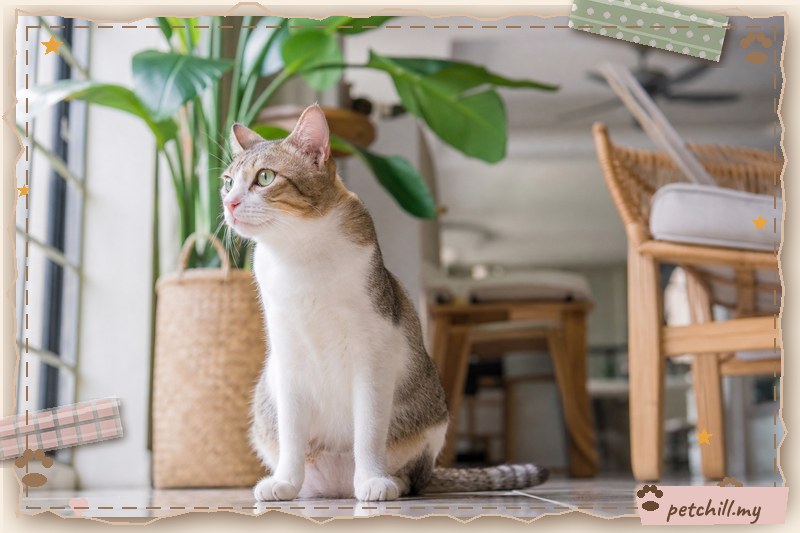
People cool down mainly by sweating, and fans help sweat evaporate. Cats sweat only through their paw pads and nose, so they rely on other methods: panting (rare and usually a warning sign), seeking cool surfaces, stretching out, and letting air move over their fur. That is why a cat may flatten itself on a tiled floor in front of a fan or stretch across a marble threshold.

A cat's coat is also a built-in insulator. It slows heat gain from the environment and traps a layer of air next to the skin. This means a thick-coated cat is not necessarily cooler after a close shave — in many cases the coat helps. What helps most is a cooler environment, good hydration, and the freedom to move between warm and cool zones.

Humidity matters too. Malaysia's air is often humid, which makes evaporative cooling less effective for animals and people alike. Air conditioning removes some moisture as it cools, which is one reason a stuffy room can feel much better with the unit on — but dry air has its own effects, covered below.
Why cats handle heat differently from people

Fans: how to use them safely

Fans are cheap to run and useful, but they are not air conditioners. A fan moves air; it does not lower the room temperature. In a hot, sealed room, a fan can simply push warm air around. Use fans together with open windows, cross-ventilation or an air conditioner.

Practical fan rules:

  • Stability first. Choose a fan with a wide base, or mount it on a wall. Cats jump, land and brush past things; a wobbling pedestal fan is a tipping hazard.
  • Guard the blades. A mesh guard protects paws and tails. If you have a kitten or a very curious cat, consider a tower fan or a caged wall fan.
  • Tuck the cord. Run cables behind furniture or use cable covers. Chewing cords is a known risk for young cats.
  • Offer an escape route. Aim the fan at a wall or ceiling for indirect airflow, or use oscillation so the cat is not pinned in a constant draught. A cat that wants to move away should be able to.
  • Avoid direct blasting on a sleeping cat. A gentle breeze is fine; a high-speed jet on one spot for hours can chill the skin and dry the eyes.
  • Never rely on a fan in a closed car or a sealed, unventilated room. Moving hot air does not make it safe.

A useful test: sit where your cat likes to rest. If the airflow feels uncomfortably strong or cold on your face and neck after a few minutes, it is probably too direct for a cat that cannot easily leave.

Air conditioning: temperature, airflow and maintenance

Air conditioning genuinely lowers temperature and humidity, which can make a Malaysian home much more comfortable during a hot spell. The main risks are overcooling, direct cold draughts, dry air, and poorly maintained units.

Setting a sensible temperature

There is no single correct number, but a practical range for a home with cats is about 24°C to 27°C. Some cats enjoy cooler spots; others seek warmth. Rather than freezing one room, aim for a moderate setting and give the cat options:

  • a cool tiled floor or a cooling mat in the air-conditioned room;
  • a warm cushion or a sunny window ledge in another room;
  • a cardboard box with a blanket, which many cats use as a retreat.

Sudden swings are worth avoiding. Going from a 32°C afternoon into an 18°C room is a big change; a moderate setting is gentler, especially for kittens, senior cats and cats with health conditions.

Direct airflow

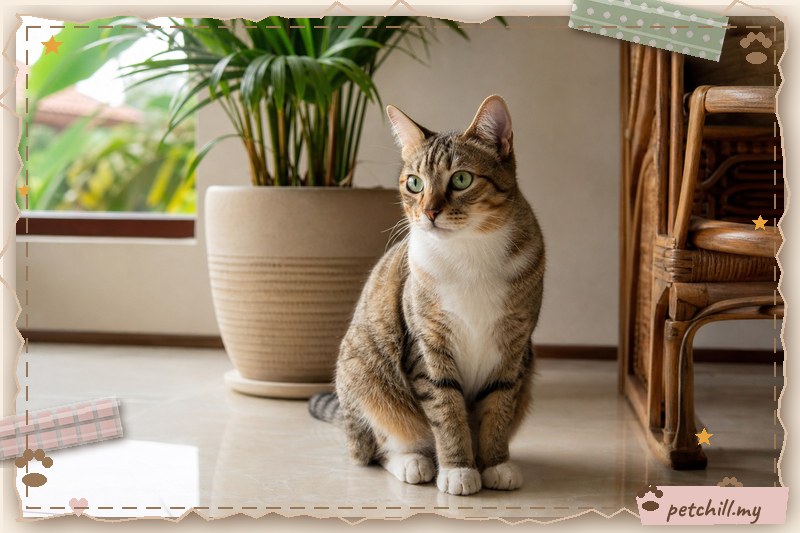
Air conditioner vents that blow straight onto a favourite chair or bed can chill a cat that stays put for hours. Adjust the louvres upward or sideways, or add a small deflector. If your cat insists on sleeping under the vent, provide a blanket so it can burrow.

Dry air and the respiratory tract

Air conditioning dries the air. Some cats develop dry eyes, a dry nose or mild airway irritation in very dry, cold rooms. Cats with feline asthma or chronic nasal disease may be more sensitive. Keep the unit's filter clean, avoid the coldest setting, and let the cat leave the room if it wants to. If your cat coughs or wheezes more in the air-conditioned room, mention it to your vet.

Maintenance matters

A dirty filter or mouldy unit blows dust and spores into the room. Service air conditioners regularly, clean filters, and check for water leaks. This is general home hygiene, and it matters more in a household with a cat that has allergies or asthma.
Air conditioning: temperature, airflow and maintenance

A comparison table for Malaysian homes

Situation Fan only Air conditioning Best combined approach
Hot, humid afternoon in a Kuala Lumpur apartment Moves air but does not lower temperature; useful with open windows Lowers temperature and humidity; can be set to 25–26°C Aircon on moderate setting plus a low oscillating fan for air movement
Night-time in a Johor terrace house Quiet and cheap; can run all night May overcool small bedrooms Fan on low, aircon timer, blanket available, door left ajar
Cat with thick coat or senior cat Helpful if the cat can choose the breeze Helpful but avoid direct vent Cool floor, shade, water, and a warm retreat in another room
Cat with asthma or nasal disease Fine if dust-free Useful but keep filters clean and avoid cold draughts Serviced aircon, moderate temperature, no smoking indoors
Power cut or unit failure Still works if there is a battery fan Unavailable Battery fan, open windows, shade, cool water, monitor closely

Heat stress: what to watch for

Cats are good at hiding discomfort, so heat problems can be subtle at first. Watch for:

  • restlessness or pacing, or the opposite — unusual lethargy;
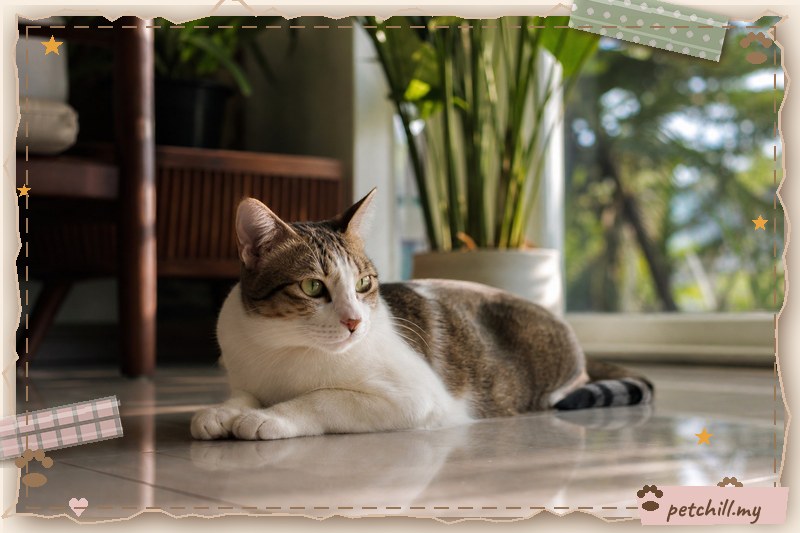
  • seeking cool surfaces, lying stretched out, or breathing faster;
  • excessive grooming or drooling;
  • open-mouth breathing or panting (uncommon in cats and always a concern);
  • warm ears and paws, or a body that feels hot to touch;
  • wobbliness, vomiting or collapse in severe cases.

If you suspect heat stress, move the cat to a shaded, ventilated area, offer cool water, and wet the paws and ears with a damp cloth. Do not use ice-cold water or plunge the cat into a bath. Contact a vet promptly, especially if the cat is panting, drooling or weak.
Heat stress: what to watch for

Room-by-room checklist

Use this as a quick audit of your home:

Living room

  • Fan guarded and stable; cords hidden.
  • Aircon vent not aimed at the cat's favourite spot.
  • Water bowl in a shaded corner, refreshed daily.
  • A cool floor area and a warm blanket both available.

Bedroom

  • Aircon set to a moderate temperature, not the coldest setting.
  • Door left slightly ajar so the cat can leave.
  • No direct draught on the bed where the cat sleeps.

Kitchen

  • Cat kept away from hot cooking areas and open windows.
  • No access to the aircon remote as a chew toy.

Balcony or corridor

  • Shade available all day; metal surfaces can become hot.
  • No trapped heat behind glass; check the cat is not shut in a hot room.

Car

  • Never leave a cat in a parked car, even with windows cracked.
  • Use a carrier and travel in the cooler part of the day.

Grooming, water and shade

Cooling is not only about appliances. Regular brushing removes loose undercoat and helps air reach the skin. Fresh water in several places encourages drinking; some cats prefer a wide bowl or a running fountain. Shade is essential — a cat that can move out of the sun and off hot tiles will regulate itself better than one confined to a single hot spot.

Avoid shaving unless a vet or professional groomer recommends it for a specific reason. For double-coated breeds, clipping can affect regrowth and sun protection.
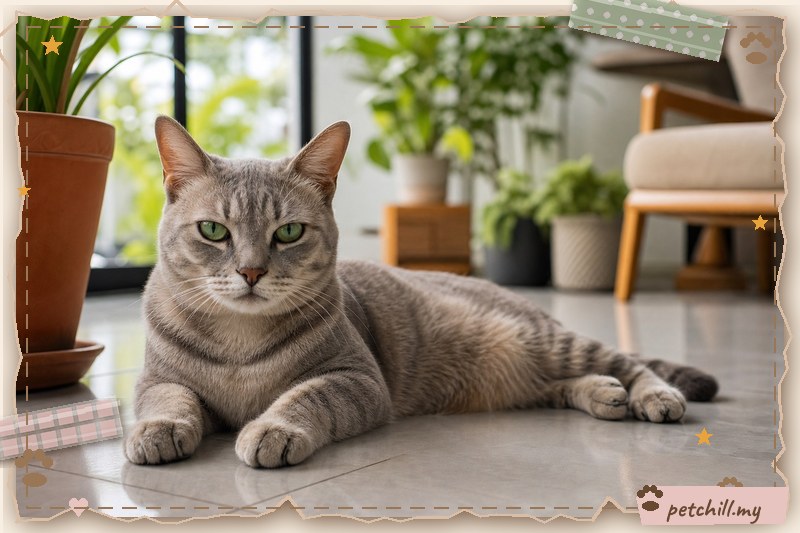
Grooming, water and shade

When to see a vet

Contact a veterinarian if your cat:

  • pants, breathes with an open mouth, or makes unusual breathing sounds;
  • drools excessively, vomits, or seems weak or wobbly in hot weather;
  • collapses or has a seizure after heat exposure;
  • stops eating or drinking, or seems lethargic for more than a day;
  • coughs or wheezes more in air-conditioned rooms;
  • has a body temperature that feels very high, or hot ears and paws with other signs.

Heat stroke is an emergency. Cool the cat gently with room-temperature water on the paws and ears, move it to a ventilated area, and call your vet or an emergency clinic immediately. Do not wait for signs to pass.

A note on Malaysian homes

Malaysian housing varies widely: high-rise apartments with sealed windows, terrace houses with courtyards, and older homes with louvred windows. In a Kuala Lumpur apartment, cross-ventilation may be limited, so air conditioning often does the heavy lifting; in a Johor terrace house, fans and open windows may be enough for much of the day. During the Penang rainy season, humidity can stay high even when it is not very hot, so airflow and dehumidifying settings can help. Adjust the setup to the room, not to a fixed rule.

Vet disclaimer

This article is general information for cat owners in Malaysia and is not a substitute for veterinary advice. Every cat is different, and cats with heart, respiratory, kidney or thyroid conditions may need specific temperature and airflow guidance. Always consult a licensed veterinarian about your cat's health.

Frequently Asked Questions

📌 Key Takeaways

  • This article covers: The short answer, Why cats handle heat differently from people, Fans: how to use them safely, Air conditioning: temperature, airflow and maintenance, A comparison table for Malaysian homes, and more
  • Jump to any section via the table of contents for the key details
  • If in doubt, consult a registered veterinarian

Explore this topic cluster

This guide belongs to a Malaysia-focused topic cluster. Read the pillar guide and related articles.

View cluster →

📚 Cat Health article index

This article is part of the Cat Health topic cluster. Explore related articles:

⭐ Pillar guide: Cat Health complete guideBlood Test for Cats in Malaysia: What It Checks, Costs and When You Need One→ ReadBlood Test for Cats Step by Step: What Happens at the Clinic→ ReadBlood Test for Cats: What to Expect (Malaysian Owner's Guide)→ ReadCat Constipation Treatment in Malaysia: A Practical Owner's Guide→ ReadCat Dental Pain Treatment in Malaysia: A Practical Owner's Guide→ ReadCat Diarrhea Treatment in Malaysia: A Practical Owner's Guide→ ReadCat Ear Mites Treatment in Malaysia: A Complete Owner's Guide→ ReadCat Eye Infection Treatment in Malaysia: A Practical Owner's Guide→ ReadCat Fleas Treatment in Malaysia: A Practical Owner's Guide→ ReadCat Hair Loss Treatment in Malaysia: A Practical Owner's Guide→ ReadCat Licking Wounds: Why It Happens and How to Treat It in Malaysia→ ReadCat Poisoning Treatment in Malaysia: What to Do, What to Expect, and How to Prevent It→ ReadCat Ringworm Treatment in Malaysia: A Practical Owner's Guide→ ReadCat Skin Fungus Treatment in Malaysia: A Practical Owner's Guide→ ReadCat Sneezing Blood: Causes, Treatment and When to See a Vet in Malaysia→ ReadCat Vomiting Treatment in Malaysia: What to Do and When to See a Vet→ ReadCat Weight Loss Treatment in Malaysia: A Practical Guide for Owners→ ReadCat Worms Treatment in Malaysia: A Practical Owner's Guide→ ReadChocolate Poisoning and Cats in Malaysia: What Every Owner Should Know→ ReadConstipation in Cats: Causes, Care and When to See a Vet in Malaysia→ ReadConstipation in Cats in Malaysia: Causes, Signs and What to Do→ ReadConstipation Prevention for Cats: A Practical Guide for Malaysian Owners→ ReadDental Pain in Cats: Causes, Signs and Care (Malaysia Guide)→ ReadDental Pain in Cats in Malaysia: Signs, Causes and What to Do→ ReadDental Pain Prevention for Cats: A Practical Malaysian Guide→ ReadDeworming Schedule for Cats in Malaysia: A Practical, Vet-Led Guide→ ReadDeworming Schedule for Cats: A Step-by-Step Plan for Malaysian Owners→ ReadDeworming Schedule for Cats: What to Expect (Malaysia Guide)→ ReadDiarrhea in Cats: Causes and Care (Malaysian Owner's Guide)→ ReadDiarrhea in Cats in Malaysia: Causes, Home Care and When to See a Vet→ ReadDiarrhea Prevention for Cats: A Practical Guide for Malaysian Owners→ ReadE-Collar Recovery for Cats in Malaysia: A Practical Guide for Owners→ ReadE-Collar Recovery for Cats Step by Step: A Practical Guide for Malaysian Owners→ ReadE-Collar Recovery for Cats: What to Expect (Malaysia Guide)→ ReadEar Mites in Cats: Causes and Care (Malaysia Guide)→ ReadEar Mites in Cats in Malaysia: Signs, Treatment and Prevention→ ReadEar Mites Prevention for Cats: A Practical Malaysian Guide→ ReadElectrical Cables and Cats in Malaysia: A Practical Safety Guide→ ReadEye Infection in Cats: Causes and Care (Malaysia Guide)→ ReadEye Infection in Cats in Malaysia: Causes, Signs, Treatment & Prevention→ ReadEye Infection Prevention for Cats: A Practical Malaysian Guide→ ReadFlea Treatment for Cats in Malaysia: A Complete Guide→ ReadFlea Treatment for Cats Step by Step: A Practical Malaysian Guide→ ReadFlea Treatment for Cats: What to Expect (Malaysia Guide)→ ReadFleas in Cats: Causes and Care (Malaysia Guide)→ ReadFleas in Cats in Malaysia: Signs, Treatment and Prevention→ ReadFleas Prevention for Cats in Malaysia: A Practical, Year-Round Plan→ ReadGiving Pills for Cats in Malaysia: A Stress-Free Step-by-Step Guide→ ReadGiving Pills for Cats Step by Step: A Calm, Practical Guide for Malaysian Owners→ ReadGiving Pills for Cats: What to Expect (Malaysian Owner's Guide)→ ReadHair Loss in Cats: Causes and Care (Malaysian Owner's Guide)→ ReadHair Loss in Cats in Malaysia: Causes, Home Checks and When to See a Vet→ ReadHair Loss Prevention for Cats: A Practical Grooming and Health Guide→ ReadHousehold Cleaning Products and Cats in Malaysia: A Safety Guide→ ReadHow to Prevent Chocolate Poisoning Around Cats: A Practical Guide for Malaysian Homes→ ReadHow to Prevent Electrical Cables Around Cats: A Practical Safety Guide for Malaysian Homes→ ReadHow to Prevent Fan and Aircond Problems Around Cats: A Malaysian Home Guide→ ReadHow to Prevent Household Cleaning Products Around Cats: A Practical Safety Guide for Malaysian Homes→ ReadHow to Prevent Lily Poisoning Around Cats: A Practical Safety Guide for Malaysian Homes→ ReadHow to Prevent Open Windows Around Cats: A Practical Safety Guide for Malaysian Homes→ ReadHow to Prevent Paracetamol Poisoning Around Cats: A Malaysian Safety Guide→ ReadHow to Prevent Plastic Bags Around Cats: A Practical Safety Guide for Malaysian Homes→ ReadHow to Treat Constipation in Cats at Home: A Practical Malaysian Guide→ ReadHow to Treat Dental Pain in Cats at Home: Safe Relief and When to See a Vet→ ReadHow to Treat Diarrhea in Cats at Home: A Practical Malaysian Guide→ ReadHow to Treat Ear Mites in Cats at Home: A Practical Malaysian Guide→ ReadHow to Treat Eye Infection in Cats at Home: Safe Steps for Malaysian Owners→ ReadHow to Treat Fleas in Cats at Home: A Practical Malaysian Guide→ ReadHow to Treat Hair Loss in Cats at Home: A Practical Malaysian Guide→ ReadHow to Treat Licking Wounds in Cats at Home: A Practical Guide for Malaysian Owners→ ReadHow to Treat Poisoning in Cats at Home: First Aid, Safe Steps and When to Rush to the Vet→ ReadHow to Treat Ringworm in Cats at Home: A Practical Guide for Malaysian Owners→ ReadHow to Treat Skin Fungus in Cats at Home: A Practical Malaysian Guide→ ReadHow to Treat Sneezing Blood in Cats at Home: Safe First Steps for Malaysian Owners→ ReadHow to Treat Vomiting in Cats at Home: A Practical Malaysian Guide→ ReadHow to Treat Weight Loss in Cats at Home: A Practical Guide for Malaysian Owners→ ReadHow to Treat Worms in Cats at Home: A Practical, Safe Guide for Malaysian Owners→ ReadLicking Wounds in Cats: Causes and Care (Malaysian Vet Guide)→ ReadLicking Wounds in Cats Malaysia: When It's Normal and When to Stop It→ ReadLicking Wounds Prevention for Cats: How to Stop the Lick Cycle and Let Skin Heal→ ReadLily Poisoning and Cats in Malaysia: Why Every Petal Is an Emergency→ ReadOpen Windows and Cats in Malaysia: How to Keep Your Cat Safe Without Locking Up the House→ ReadParacetamol Poisoning in Cats in Malaysia: Why Even One Tablet Can Be Deadly→ ReadPlastic Bags and Cats in Malaysia: Why They're Dangerous and How to Keep Your Cat Safe→ ReadPoisoning in Cats: Causes, Symptoms and Care (Malaysia Guide)→ ReadPoisoning in Cats in Malaysia: Common Toxins, Signs and What to Do→ ReadPoisoning Prevention for Cats in Malaysia: A Room-by-Room Safety Guide→ ReadRingworm in Cats: Causes, Symptoms and Care (Malaysia Guide)→ ReadRingworm in Cats in Malaysia: Signs, Treatment and Prevention→ ReadRingworm Prevention for Cats in Malaysia: A Practical, Vet-Informed Guide→ ReadSigns of Constipation in Cats in Malaysia: What to Watch For and When to Act→ ReadSigns of Dental Pain in Cats in Malaysia: What Owners Miss→ ReadSigns of Diarrhea in Cats in Malaysia: What's Normal, What's Not→ ReadSigns of Ear Mites in Cats in Malaysia: How to Spot, Treat and Prevent Them→ ReadSigns of Eye Infection in Cats in Malaysia: What Owners Should Look For→ ReadSigns of Fleas in Cats in Malaysia: How to Spot, Check and Act→ ReadSigns of Hair Loss in Cats in Malaysia: What to Look For and When to Worry→ ReadSigns of Licking Wounds in Cats Malaysia: How to Spot Problem Licking→ ReadSigns of Poisoning in Cats in Malaysia: What to Watch For and What to Do→ ReadSigns of Ringworm in Cats in Malaysia: What Owners Should Look For→ ReadSigns of Skin Fungus in Cats in Malaysia: How to Spot Ringworm Early→ ReadBlood in a Cat's Sneeze: Signs, Causes and What to Do in Malaysia→ ReadSigns of Vomiting in Cats in Malaysia: What's Normal, What's Not, and When to See a Vet→ ReadSigns of Weight Loss in Cats in Malaysia: What to Watch For and When to Worry→ ReadSigns of Worms in Cats in Malaysia: What Owners Should Look For→ ReadSkin Fungus in Cats: Causes, Signs and Care (Malaysia Guide)→ ReadSkin Fungus in Cats in Malaysia: Ringworm Signs, Treatment and Prevention→ ReadSkin Fungus Prevention for Cats: A Practical Guide for Malaysian Homes→ ReadSneezing Blood in Cats: Causes and Care (Malaysia Guide)→ ReadSneezing Blood in Cats in Malaysia: Causes, What to Do, and When to See a Vet→ ReadSneezing Blood Prevention for Cats: Causes, Care and When to Worry→ ReadSterilization for Cats in Malaysia: A Complete Guide for Owners→ ReadSterilization for Cats Step by Step: A Malaysian Owner's Guide→ ReadSterilisation for Cats: What to Expect (Malaysian Owner's Guide)→ ReadUltrasound for Cats in Malaysia: What It Is, When It's Needed, and What to Expect→ ReadUltrasound for Cats Step by Step: What Happens, What It Costs, and How to Prepare→ ReadUltrasound for Cats: What to Expect (Malaysian Owner's Guide)→ ReadVaccination Side Effects for Cats in Malaysia: What's Normal, What's Not→ ReadVaccination Side Effects for Cats: A Step-by-Step Guide for Malaysian Owners→ ReadCat Vaccination Side Effects: What Malaysian Owners Should Expect→ ReadVomiting in Cats: Causes and Care (Malaysia Guide)→ ReadVomiting in Cats in Malaysia: When It's Normal and When to Worry→ ReadVomiting Prevention for Cats: A Practical Guide for Malaysian Owners→ ReadWeight Loss in Cats: Causes and Care (Malaysian Vet Guide)→ ReadWeight Loss in Cats in Malaysia: Causes, Warning Signs and What to Do→ ReadWeight Loss Prevention for Cats: A Practical Malaysian Guide→ ReadWorms in Cats: Causes and Care (Malaysia Vet Guide)→ ReadWorms in Cats in Malaysia: A Practical Owner's Guide→ ReadWorms Prevention for Cats in Malaysia: A Complete Guide→ ReadWound Care for Cats in Malaysia: A Practical Owner's Guide→ ReadWound Care for Cats Step by Step: A Practical Malaysian Guide→ ReadWound Care for Cats: What to Expect, Step by Step→ ReadX-Ray for Cats in Malaysia: What to Expect, Costs and Safety→ ReadX-Ray for Cats Step by Step: What Malaysian Owners Should Expect→ ReadX-Ray for Cats: What to Expect (Malaysian Owner's Guide)→ ReadArthritis Pet Care in Malaysia: A Practical Guide for Cats and Dogs→ ReadCat Arthritis in Malaysia: 5 Home Signs Your Cat Is in Pain — and What to Do→ ReadEarly Signs of Chronic Disease in Cats: 7 Daily Checks and a 4-Week Record Sheet→ ReadCat Chronic Kidney Disease in Malaysia: The Daily Care Routine That Actually Slows It Down→ ReadCat Constipation in Malaysia: The 48-Hour Rule, Red Flags and What Actually Helps→ ReadCat Dehydration in Malaysia: Home Skin-Turgor Test, 7 Causes and Emergency Signs→ ReadCat Heart Disease in Malaysia: Sleep Breathing Count, HCM Early Signs and When to Rush to the Vet→ ReadCat Kidney Disease in Malaysia: Early Signs, Prevention and Everyday Care→ ReadCat Pancreatitis in Malaysia: Symptoms, fPLI Testing, Treatment and Home Recovery→ ReadCat Ringworm in Malaysia: Signs, Treatment and Home Cleaning Guide→ ReadCat Symptom Checker Malaysia: 12 Common Signs and a Green-Amber-Red Triage Table→ ReadPet Deworming in Malaysia: How Often to Worm Your Cat or Dog→ ReadPet Gut Health in Malaysia: Probiotics, Food Transitions and Stool Troubles (Part 2)→ ReadCat Gut Health: Probiotics, Antibiotics and Food Transitions Explained (Malaysia)→ ReadPet Health Malaysia 2026: Common Cat and Dog Illnesses, Prevention Care and Vet Guidance→ ReadPet Insurance in Malaysia: How to Compare Plans Before You Sign→ ReadPet Poisoning at Home: Household Chemicals, Toxic Plants and When Not to Induce Vomiting (Malaysia)→ ReadPet Poisoning at Home: Household Chemicals, Insecticides and Toxic Plants (Malaysia, Part 1)→ ReadCat Chronic Disease Early Signs in Malaysia: 7 Daily Checks and a 4-Week Log→ ReadCat Health Guide Malaysia: Symptom Check, Red-Flag Triage & When to See a Vet→ ReadCat Ringworm in Malaysia: Symptoms, Treatment and Home Cleaning Guide→ ReadGut Health, Probiotics & Food Transition Part 2: Practical Malaysia Guide→ ReadPet Health in Malaysia: A Practical Prevention Guide for Cats and Dogs→ Read

Related products at PetChill

