
Quick answer
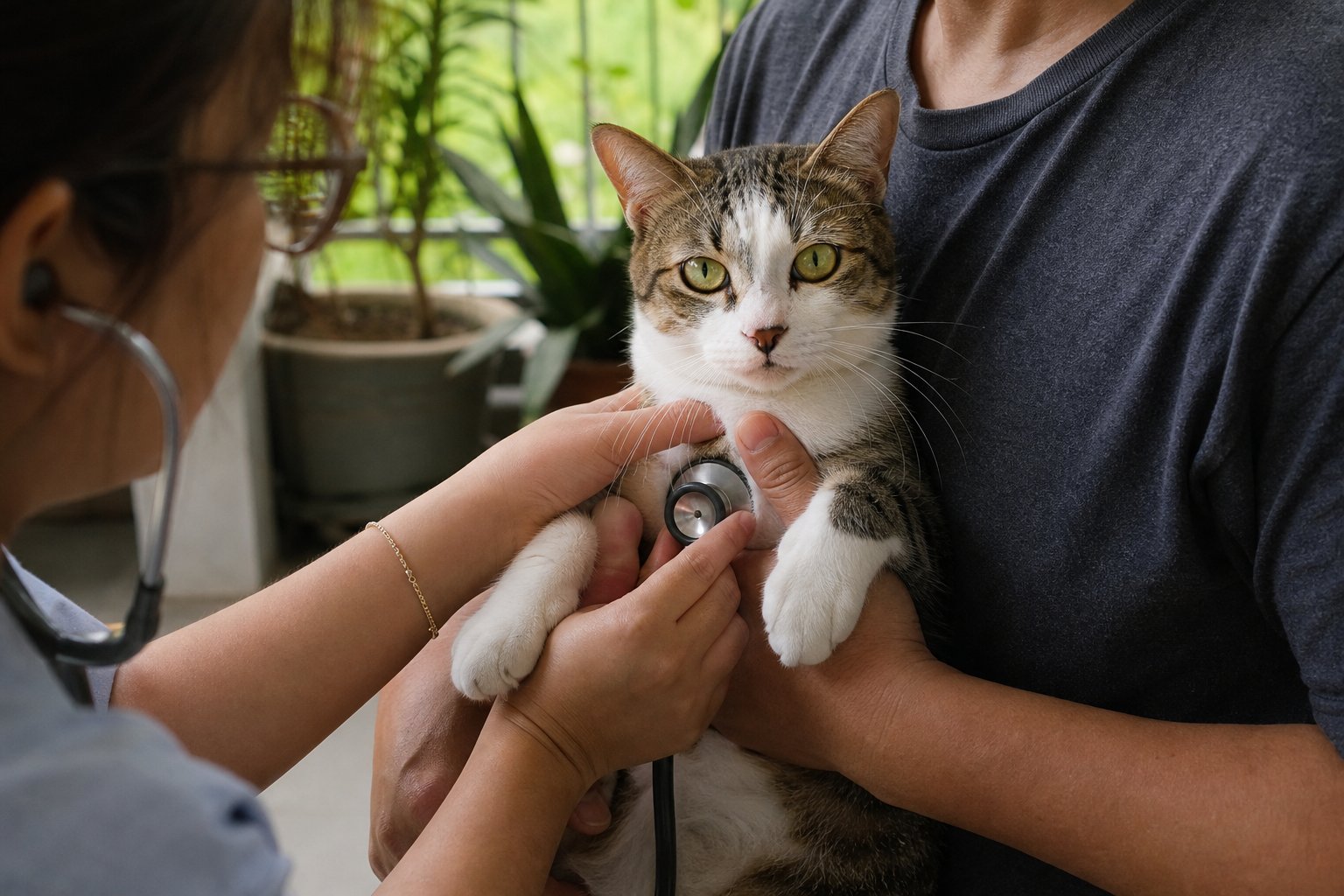
Dental pain in cats is usually caused by tooth resorption, gum disease or broken teeth. Watch for drooling, dropping food, chewing on one side, bad breath and pawing at the mouth. Book a vet visit for a proper oral exam; never use human painkillers, which are toxic to cats.
Why dental pain in cats is easy to miss
Cats are built to hide weakness. In the wild, showing pain can make an animal a target. That instinct does not disappear just because your cat lives in a Kuala Lumpur apartment or a Johor terrace house. A cat with a sore mouth may still eat, jump onto the sofa and greet you at the door. The changes are often small: a pause before chewing, a dropped kibble, a head tilt while eating.
Malaysian cat owners often notice the problem late, when the cat has already lost weight or developed a swelling on the face. The goal of this guide is to help you recognise the quieter signs earlier and to know what is safe to do at home and what needs a vet.
Dental pain is not one disease. It is a symptom with several common causes, and each cause has a different treatment. That is why a proper oral examination matters more than any home remedy.
Common causes of dental pain in cats
Tooth resorption
Tooth resorption is one of the most common dental problems in cats. The tooth structure is broken down by the cat's own cells, starting below the gumline. It can affect any tooth but often hits the premolars and molars. Early on, you may see nothing. Later, the tooth may look pink, then brown, and the crown may wear away to the gum.
Resorption is painful when it reaches the sensitive part of the tooth. Cats may chew on the other side, drool, or refuse hard food. The cause is not fully understood, and it cannot be reversed. Affected teeth usually need to be extracted or treated by a vet.
Periodontal disease
Plaque hardens into tartar, which irritates the gums. Gingivitis is the early stage: red, swollen gums that may bleed. If untreated, it progresses to periodontitis, where the tissues and bone that hold the tooth are damaged. This is painful and can lead to tooth loss.
Bad breath is the most obvious sign, but cats with sore gums may also eat more slowly or drop food. Small cats and older cats are commonly affected.
Broken teeth and trauma
Cats can break a canine tooth or a premolar by biting something hard, falling, or hitting their mouth. A broken tooth may expose the pulp, which is painful and can become infected. Look for a chipped tooth, a dark spot in the tooth, or a cat that flinches when the mouth is touched.
Stomatitis and oral inflammation
Some cats develop severe inflammation of the mouth, often called stomatitis. The gums, tongue and back of the mouth can be red and ulcerated. These cats may cry when eating, drool, and lose weight. This condition needs veterinary management and sometimes tooth extraction.
Abscesses and infections
A tooth root abscess can cause facial swelling, pain and fever. You may see a lump under the eye or on the cheek. This is not a wait-and-see problem; it needs veterinary treatment.
Signs of dental pain in cats: a checklist
Use this checklist to observe your cat over a few days. Write down what you see, because small details help your vet.
| Area | What to watch for |
|---|---|
| Eating | Dropping food, chewing on one side, eating slowly, refusing hard food, swallowing kibble whole |
| Mouth | Drooling, bad breath, red or bleeding gums, brown tartar, broken or discoloured teeth |
| Behaviour | Pawing at the mouth, rubbing the face, head shyness, flinching when touched near the cheeks |
| Grooming | Less grooming, messy coat, drooling onto the chest |
| Weight | Gradual weight loss, hiding food, eating less than usual |
| Mood | Irritability, withdrawal, sleeping more, avoiding play |
Not every cat shows every sign. A cat may show only one or two. If you notice any of these, book a vet visit rather than waiting for the cat to stop eating completely.

What you can do at home (and what not to do)
Safe at-home steps
- Look, but do not force. Gently lift the lip and check the front teeth and gums. If your cat struggles, stop. A struggling cat can scratch or bite, and you may miss the problem anyway.
- Offer soft food. If your cat seems sore, wet food or softened kibble may be easier. This is a temporary comfort measure, not a treatment.
- Keep fresh water available. Cats with mouth pain may drink less. Encourage drinking with multiple water bowls.
- Note the changes. Record what your cat eats, how it chews, and any drooling or swelling. Bring notes to the vet.
- Brush only if your cat allows it. Use a soft pet toothbrush and pet-safe toothpaste. Never use human toothpaste.
Unsafe at-home steps
- Do not give human painkillers. Paracetamol and ibuprofen are toxic to cats. Even small amounts can cause serious harm.
- Do not use human mouthwash or antiseptics. They can be swallowed and are not formulated for cats.
- Do not try to pull a tooth at home. This is dangerous and painful.
- Do not delay a vet visit because the cat is still eating. Cats often eat through pain.
When to see a vet
See a vet promptly if your cat shows any of the following:
- Stops eating or drinking for more than 24 hours
- Heavy drooling or drooling with blood
- Facial swelling, especially under the eye or on the cheek
- Cries out or flinches when eating or opening the mouth
- A broken tooth with a visible dark spot or bleeding
- Weight loss or a sudden change in eating habits
- Bad breath that does not improve with home care
A vet will examine the mouth, check for tartar, gum disease, broken teeth and resorption. Dental X-rays are often needed because much of the disease is below the gumline. Your vet may recommend cleaning under anaesthesia, extraction, or other treatment. Ask your vet about pain relief and aftercare.

How vets diagnose dental pain in cats
A dental examination in cats usually involves:
- History. Your vet will ask about eating, drooling, behaviour and any previous dental care.
- Oral exam. The vet checks the teeth, gums, tongue and back of the mouth. Some cats need light sedation for a full exam.
- Dental X-rays. These show the roots and bone, which cannot be seen with the naked eye. They are important for tooth resorption and root disease.
- Cleaning and probing. Under anaesthesia, the vet can clean the teeth, probe gum pockets and assess which teeth need treatment.
Anaesthesia carries some risk, but modern protocols are safer than in the past. Your vet will discuss blood tests and monitoring. Do not skip recommended tests just because your cat seems healthy; hidden kidney or heart issues can affect anaesthesia safety.
Treatment options for dental pain in cats
Treatment depends on the cause.
- Gingivitis and early periodontal disease: professional cleaning, polishing, and home care such as brushing and dental diets.
- Tooth resorption: extraction of affected teeth, or referral for advanced treatment if available. Many cats do well after extraction.
- Broken teeth: extraction or, in some cases, root canal treatment by a specialist. Your vet will advise what is suitable.
- Stomatitis: medical management, pain relief, and sometimes full-mouth extraction in severe cases.
- Abscess: antibiotics and drainage, plus treatment of the underlying tooth.
Pain relief is important. Your vet may prescribe cat-safe medication for a short period. Never use leftover medication from another pet or from a previous illness without asking your vet.
Preventing dental problems in Malaysian cats
Prevention is not perfect, but it reduces risk.
- Brush teeth regularly. Daily brushing is best, but even a few times a week helps. Use pet-safe toothpaste.
- Use dental diets and chews. Choose products designed for dental health. Ask your vet or pet retailer in Malaysia what is suitable for your cat.
- Schedule vet checks. A yearly oral exam is reasonable for healthy adult cats. Older cats may need more frequent checks.
- Watch for bad breath. Bad breath is not normal. It often signals gum disease or tartar.
- Manage other health issues. Diabetes and kidney disease can affect the mouth and overall health. Keep up with routine care.
Local considerations for Malaysian cat owners
Malaysia's warm, humid climate does not directly cause dental disease, but it can make some mouth infections more uncomfortable. Cats that live outdoors or in open areas may be more prone to injuries from fights or accidents. Indoor cats are not immune; dental disease is common in cats of all lifestyles.
In a Kuala Lumpur apartment, space is limited, but you can still establish a brushing routine. Keep the toothbrush and pet toothpaste near where you feed your cat, so you remember to brush after meals. In a Johor terrace house, cats may have access to a garden or car porch. Check for hard objects they might chew, such as stones or bones, which can break teeth.
During the rainy season in Penang, cats may spend more time indoors. Use that time to check the mouth and book any overdue vet visits. If your cat is due for vaccination or a general check-up, ask the vet to include an oral exam.
Costs for dental treatment vary widely in Malaysia depending on the clinic, the procedure and whether X-rays or extractions are needed. Ask your vet for an estimate before treatment. Do not compare prices from other countries; local pricing and services differ.
Comparison: common dental problems in cats
| Problem | Typical signs | Pain level | Usual treatment |
|---|---|---|---|
| Tooth resorption | Dropping food, chewing on one side, pink or brown tooth | Moderate to severe | Extraction of affected teeth |
| Gingivitis | Red gums, bad breath, mild bleeding | Mild to moderate | Cleaning, home care |
| Periodontitis | Bad breath, loose teeth, weight loss | Moderate to severe | Cleaning, possible extractions |
| Broken tooth | Chipped tooth, flinching, drooling | Moderate to severe | Extraction or root canal |
| Stomatitis | Severe drooling, crying when eating, red mouth | Severe | Medical management, possible extractions |
| Abscess | Facial swelling, fever, pain | Severe | Drainage, antibiotics, tooth treatment |
What to expect after a vet visit
Your cat may need soft food for a few days after dental treatment. Follow your vet's instructions about medication and rest. Some cats are groggy after anaesthesia; keep them indoors and away from other pets until they are steady. Check the mouth as directed, but do not poke at healing gums.
If your cat had extractions, it may take time to adjust to eating. Many cats eat better once the painful tooth is gone. Watch for swelling, bleeding or refusal to eat, and contact your vet if these occur.
Final thoughts
Dental pain in cats is common, under-recognised and treatable. The most important step is to look for the quiet signs and get a professional oral exam. Home care helps, but it cannot replace veterinary diagnosis and treatment. If you are unsure, call your vet and describe what you see. It is better to check early than to wait until your cat is in severe pain.
This article is for general information only and is not a substitute for veterinary advice. Always consult a licensed veterinarian in Malaysia for diagnosis and treatment of your cat.
Related reading
- Signs of Dental Pain in Cats in Malaysia: What Owners Miss
- Blood Test for Cats Step by Step: What Happens at the Clinic
- Dental Pain Prevention for Cats: A Practical Malaysian Guide
- Deworming Schedule for Cats: A Step-by-Step Plan for Malaysian Owners
- Deworming Schedule for Cats: What to Expect (Malaysia Guide)
- E-Collar Recovery for Cats Step by Step: A Practical Guide for Malaysian Owners
- E-Collar Recovery for Cats: What to Expect (Malaysia Guide)
- Ear Mites Prevention for Cats: A Practical Malaysian Guide
- Eye Infection in Cats: Causes and Care (Malaysia Guide)

