
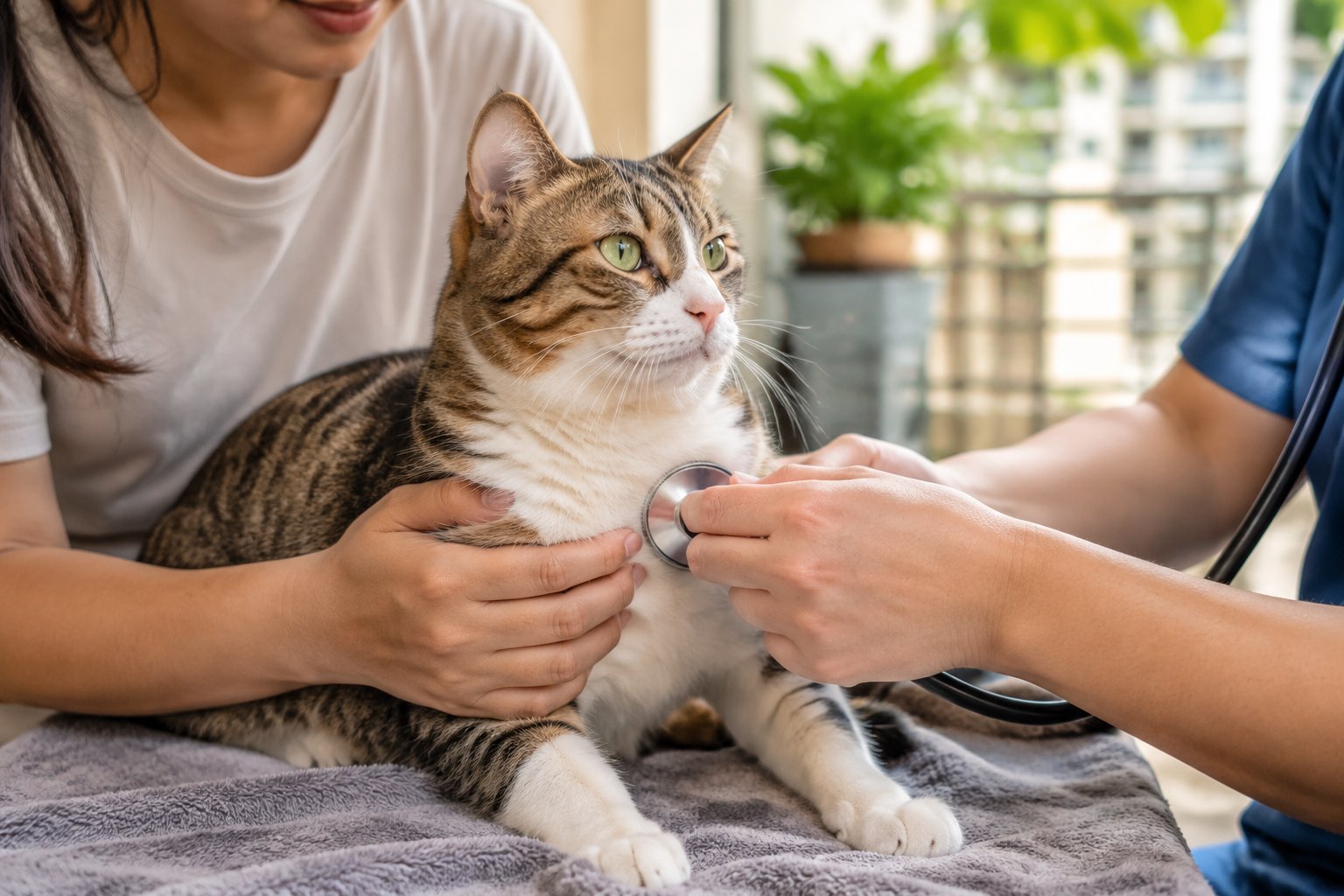
What to expect after your cat's vaccination
Vaccination is one of the simplest ways to protect your cat from serious infectious diseases. The injection itself takes seconds, but the immune response that follows can produce mild, temporary signs. Knowing what is normal helps you stay calm and spot the rare cases that need urgent attention.
Most cats experience nothing more than a quiet day. A few will sleep more, eat less or have a tender spot where the needle went in. These signs usually settle within 24 to 48 hours without treatment. Serious reactions are uncommon, but they do happen, and recognising them early matters.
This guide explains the common side effects, the warning signs, how to care for your cat at home, and when to call your vet. It is written for Malaysian cat owners living in apartments, terrace houses and landed homes, where heat, humidity and multi-cat households all affect recovery.
Common side effects and how long they last
Mild reactions are a sign the immune system is doing its job. They are not usually a reason to avoid future vaccinations. The table below summarises what most owners notice and how long it tends to last.
| Reaction | What you may see | Typical duration | What to do |
|---|---|---|---|
| Sleepiness | Cat sleeps more, is less playful, seeks quiet spots | 24 to 48 hours | Let them rest; keep the home calm |
| Sore injection site | Flinching when touched, slight stiffness, small swelling | 1 to 3 days | Avoid pressing the area; monitor size |
| Reduced appetite | Eats less or skips one meal | 24 hours | Offer small, tempting portions of usual food |
| Mild fever | Warm ears, slightly subdued, mild shivering | 24 to 48 hours | Provide water and a warm, draft-free bed |
| Small lump at injection site | Firm bump under the skin | A few weeks | Check weekly; report if growing or painful |
| Sneezing or mild nasal discharge after intranasal vaccine | Occasional sneeze, slight sniffle | 2 to 5 days | Keep cat indoors and monitor |
These signs are general and can vary between cats. A kitten having its first vaccine may be sleepier than an adult having a booster. A cat that is already anxious about car travel may seem off simply because of the trip.
Serious reactions: rare but urgent
Serious reactions are uncommon, but they require immediate veterinary attention. The most concerning is anaphylaxis, a severe allergic reaction that can develop within minutes to a few hours after vaccination. Signs include facial swelling, hives, vomiting, diarrhoea, difficulty breathing, pale gums, weakness or collapse.
Other signs that warrant a prompt call include:
- Vomiting or diarrhoea that continues beyond one episode
- Swelling that spreads beyond the injection site
- A lump that grows, becomes painful or persists for more than a few weeks
- Persistent fever or refusal to eat for more than 24 hours
- Difficulty walking, tremors or seizures
- Excessive scratching or licking at the injection site
If you see any of these, contact your vet straight away. Do not wait to see if it settles overnight. If your regular clinic is closed, call an emergency veterinary service.
Caring for your cat at home after vaccination
A little planning makes the recovery day easier. The goal is to keep your cat comfortable, hydrated and calm while the immune response settles.
Create a quiet recovery space
Choose a quiet room away from noise, visitors and other pets. Provide a soft bed, a litter tray nearby and fresh water. In a Malaysian apartment, a bedroom with the door closed and the air-conditioner on a comfortable setting works well. Avoid placing the bed directly under an air-conditioner vent or in a hot, stuffy corner.
Offer food and water
Offer small portions of your cat's usual food. Slightly warmed wet food can be more tempting. Do not introduce a new food on vaccination day, as any digestive upset would be hard to interpret. Fresh water should be available at all times. If your cat has not eaten for more than 24 hours, call your vet.
Leave the injection site alone
Check the site gently once a day. You are looking for a small, firm lump or mild redness. Do not massage, squeeze or apply ointments unless your vet advises it. Keep your cat from over-grooming the area.
Skip bathing and rough play
Wait at least 24 to 48 hours before bathing. Bathing can chill a cat and make it harder to monitor the injection site. Avoid rough play, grooming appointments and long car trips for a day or two. Gentle play and short cuddle sessions are fine.
Keep other pets calm
In multi-cat households, a vaccinated cat may smell slightly different to its companions. This can occasionally cause mild hissing or avoidance. Keep introductions calm and supervise interactions for the first day.
Vaccination day: a simple checklist
A smooth appointment reduces stress and makes side effects easier to interpret.
- Book a time when you can stay home afterwards.
- Feed a normal meal before the visit unless your vet says otherwise.
- Bring your cat in a secure carrier with a familiar blanket.
- Tell your vet about any previous reactions, allergies or ongoing medication.
- Ask which vaccines are being given and when the next dose is due.
- Note the time of vaccination so you can track any reaction.
- Keep the clinic's phone number and an emergency contact handy.
- Plan a quiet evening at home with no visitors.
Malaysia-specific considerations
Malaysia's warm, humid climate and dense urban living create a few practical points for cat owners.
Heat and hydration
A cat with a mild fever after vaccination can become dehydrated more quickly in hot weather. Make sure water bowls are fresh and placed in several spots around the home. In a Kuala Lumpur apartment that gets afternoon sun, close the curtains and keep the recovery room cool.
Rainy season and indoor time
During the rainy season, cats may be kept indoors more. This is a good time to schedule vaccination and recovery, as your cat will naturally rest more. In a Penang terrace house, keep doors and windows secure so a sleepy cat does not slip outside.
Multi-cat households
If you have several cats, vaccinate them on separate days if possible. This makes it easier to monitor each cat's appetite, energy and injection site. It also reduces the chance of a mild reaction being missed in a busy household.
Travel and boarding
If you plan to board your cat or travel across state lines, check vaccination requirements well in advance. Some boarding facilities require proof of current vaccination. Allow at least a week after vaccination before boarding so any mild reaction has settled.
Comparing mild and serious reactions
| Feature | Mild reaction | Serious reaction |
|---|---|---|
| Onset | Within hours to 1 day | Minutes to a few hours |
| Energy | Sleepy but responsive | Weak, collapse, unable to stand |
| Appetite | Slightly reduced | Refuses food and water |
| Injection site | Small lump or tenderness | Rapidly growing swelling, pain |
| Breathing | Normal | Laboured, noisy or fast |
| Face and paws | Normal | Swelling, hives, itching |
| Gut signs | None or one vomit | Repeated vomiting or diarrhoea |
| Action | Monitor at home | Call vet immediately |
When to see a vet
Contact your vet promptly if your cat shows any of the following:
- Facial swelling, hives or itching
- Difficulty breathing, noisy breathing or pale gums
- Collapse, weakness or inability to stand
- Repeated vomiting or diarrhoea
- Refusal to eat or drink for more than 24 hours
- A lump at the injection site that grows, is painful or persists beyond a few weeks
- Persistent fever or marked lethargy beyond 48 hours
- Seizures, tremors or difficulty walking
If you are unsure, call your vet for advice. It is always better to check. For severe signs such as breathing difficulty or collapse, treat it as an emergency and seek immediate care.
Frequently asked questions
How long do side effects last after a cat vaccination?
Mild reactions such as sleepiness, a sore injection site or reduced appetite usually last 24 to 48 hours. A small lump at the injection site may take a few weeks to shrink. Anything lasting longer or worsening should be checked by your vet.
Is it normal for my cat to be sleepy after vaccination?
Yes. Mild lethargy is one of the most common reactions because the immune system is responding to the vaccine. Most cats return to normal within a day or two. If your cat is still very sleepy after 48 hours, call your vet.
Can I bathe my cat after vaccination?
It is best to wait at least 24 to 48 hours. Bathing can stress a cat whose immune system is busy responding to the vaccine, and it makes it harder to spot a sore injection site. Keep your cat warm, dry and calm instead.
Should I feed my cat before or after vaccination?
Feed your cat a normal meal before the appointment unless your vet advises otherwise. After vaccination, offer small, tempting portions of their usual food. Do not force eating; a slight appetite dip for a day is common.
What is an anaphylactic reaction in cats?
Anaphylaxis is a rare, severe allergic reaction that can cause facial swelling, vomiting, difficulty breathing, pale gums or collapse. It usually happens within minutes to a few hours after vaccination and is a medical emergency. Contact your vet immediately.
Do indoor cats in Malaysia need vaccinations?
Yes. Indoor cats can still be exposed through open windows, balconies, visitors, other pets or trips to the vet. Core vaccines protect against serious diseases. Your vet can tailor a schedule based on your cat's lifestyle and risk.
Final thoughts
Vaccination is a routine part of responsible cat care. Most cats sail through with nothing more than a nap and a slightly smaller appetite. Knowing the difference between a mild reaction and a serious one lets you act quickly and confidently. Keep your vet's number saved, plan a quiet day at home, and do not hesitate to call if something feels wrong.
This article provides general information only and is not a substitute for veterinary advice. Always consult a licensed veterinarian for diagnosis and treatment specific to your cat.
Related reading
- Cat Health Guide Malaysia: Symptom Check, Red-Flag Triage & When to See a Vet
- Deworming Schedule for Cats: A Step-by-Step Plan for Malaysian Owners
- Deworming Schedule for Cats: What to Expect (Malaysia Guide)
- Diarrhea in Cats: Causes and Care (Malaysian Owner's Guide)
- Ear Mites in Cats in Malaysia: Signs, Treatment and Prevention
- Giving Pills for Cats in Malaysia: A Stress-Free Step-by-Step Guide
- Giving Pills for Cats: What to Expect (Malaysian Owner's Guide)
- How to Treat Dental Pain in Cats at Home: Safe Relief and When to See a Vet
- How to Treat Diarrhea in Cats at Home: A Practical Malaysian Guide
- How to Treat Ear Mites in Cats at Home: A Practical Malaysian Guide

