
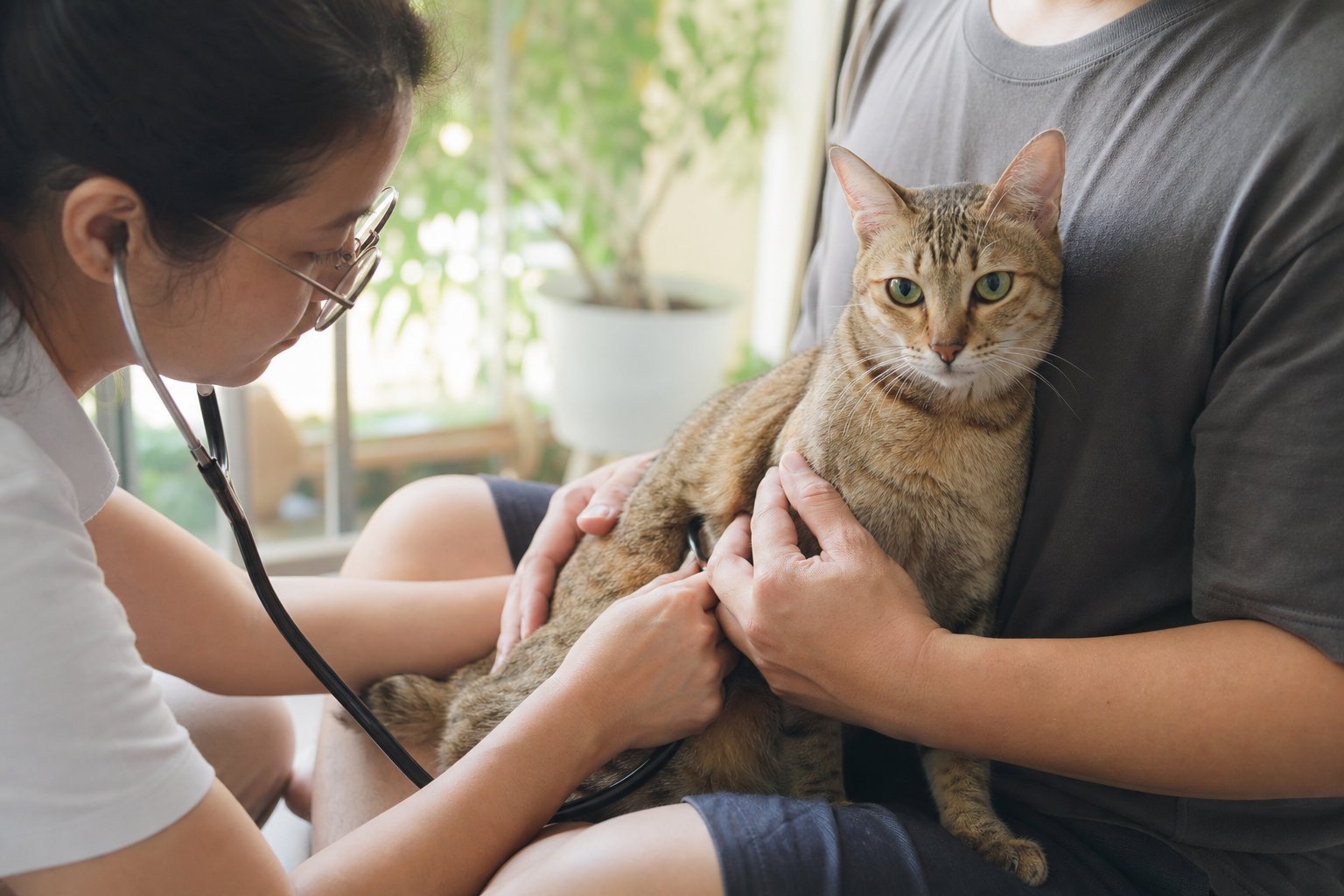
What to expect from a cat ultrasound
An ultrasound for cats is a painless, non-invasive imaging test that uses high-frequency sound waves to create pictures of internal organs. Most scans take 15–30 minutes, involve clipping a small patch of fur and applying gel, and are done with your cat awake or lightly sedated. You will usually get a verbal summary the same day, with a written report to follow. No radiation is involved, and most cats tolerate the procedure well.
This guide walks Malaysian cat owners through the whole process: why vets recommend ultrasound, how to prepare, what happens in the consult room, what the images can and cannot show, how it compares with X-rays, and what to do afterwards. It also covers practical local contexts, such as apartment living in Kuala Lumpur or the rainy season in Penang, and when to see a vet.
Why your vet may recommend an ultrasound
Ultrasound is a problem-solving tool. Vets use it when blood tests, physical examination or X-rays leave questions unanswered, or when they need to look specifically at soft tissues. Common reasons include:
- Vomiting, diarrhoea or weight loss: to check the stomach, intestines, pancreas and lymph nodes.
- Suspected bladder problems: to look for bladder stones, inflammation or wall thickening.
- Kidney or liver disease: to assess organ size, shape and texture, and to look for cysts or masses.
- Heart murmurs or breathing difficulty: a specialised cardiac ultrasound (echocardiogram) shows heart chambers, valves and fluid.
- Pregnancy checks: to confirm pregnancy and roughly estimate stage, though this is not a substitute for good general care.
- Cancer staging: to look for spread and to guide sampling of lumps.
- Guided procedures: to help a vet place a needle safely for fluid or tissue sampling.
Ultrasound is especially good for fluid: it can detect even small amounts of free fluid in the abdomen or around the heart, which X-rays may miss.
How to prepare your cat
Preparation is simple but matters. Your vet will give specific instructions; the general principles are:
- Fasting for abdominal scans. Many clinics ask for a fast of roughly 6–12 hours before an abdominal ultrasound. Food in the stomach and gas in the gut can obscure organs. Water is usually allowed. Never fast a diabetic cat or a very young kitten without direct veterinary advice.
- Bring medication and records. Tell the vet about all medicines, supplements and recent blood tests. If your cat has a chronic condition, bring the latest reports.
- Use a carrier. Even a calm cat can panic at the clinic. A secure carrier keeps your cat safe and reduces stress.
- Consider a towel or blanket. A familiar-smelling cloth can help your cat settle on the table.
- Ask about sedation beforehand. If your cat is very anxious or painful, discuss options before the day. Sedation is not routine for every scan, but it is sometimes kinder.
- Plan the day. Allow extra time for check-in, clipping and waiting. Avoid rushing.
If your cat is on medication for a heart condition or diabetes, do not skip doses unless your vet tells you to.
What happens during the scan
A typical ultrasound appointment follows a predictable pattern:
- Check-in and history. The vet or nurse asks about symptoms, appetite, litter box habits and medications.
- Physical examination. Your vet may palpate the abdomen and listen to the heart and lungs first.
- Clipping. A small patch of fur over the area of interest is clipped. This is normal and the fur grows back.
- Gel and probe. Warm gel is applied, and a small probe is moved gently across the skin. The gel improves contact and image quality.
- Positioning. Your cat may lie on its side or back, often on a soft trough or cushion. A nurse may hold gently.
- Images and measurements. The vet takes still images and may measure organs. For a heart scan, they may take several views and use Doppler to assess blood flow.
- Discussion. Many vets explain findings immediately after the scan. A written report may follow, especially for complex cases.
Most cats tolerate the procedure. Some purr, some complain, and a few need a break. If your cat becomes very stressed, the vet may pause or recommend sedation for a repeat visit.
Table: What to expect at each stage
| Stage | What happens | How long | Owner tips |
|---|---|---|---|
| Preparation at home | Fasting if advised; gather records and medication | Overnight or several hours | Confirm fasting instructions; do not withhold water unless told |
| Check-in | History, examination, consent and cost estimate | 10–20 minutes | Ask about sedation and report costs upfront |
| Clipping and gel | Small fur patch clipped; gel applied | 5 minutes | Expect some loose fur; bring a towel if you wish |
| Scanning | Probe moved over skin; images and measurements taken | 15–30 minutes | Stay calm; your cat picks up on your mood |
| Results discussion | Verbal summary; plan for tests or treatment | 10–15 minutes | Take notes or ask for a written summary |
| Aftercare | Home monitoring; watch for sedation effects | Rest of day | Provide quiet rest, water and normal food unless advised otherwise |
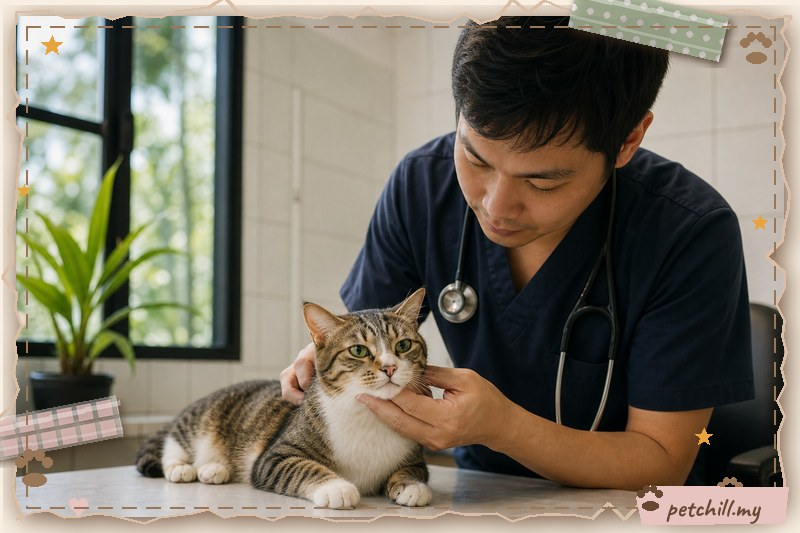
What ultrasound can and cannot show
Ultrasound is excellent for soft tissue and fluid. It can show:
- Organ size, shape and texture (liver, kidneys, spleen, bladder, uterus, pancreas, intestines).
- Fluid in the abdomen or around the heart.
- Bladder stones, sludge and wall thickening.
- Masses and enlarged lymph nodes.
- Heart chamber size, valve movement and some blood flow patterns.
- Pregnancy and some foetal structures.
It cannot:
- Confirm the type of cancer without a sample.
- Reliably assess bones or lungs filled with air (X-rays are better for those).
- Replace blood tests for organ function.
- See through gas or food well, which is why fasting matters.
- Guarantee a diagnosis. Ultrasound findings are interpreted alongside history, examination and other tests.
If your vet finds something suspicious, the next step is often a fine-needle aspirate or biopsy, frequently guided by ultrasound. This is usually quick and may need sedation or local anaesthetic.
Ultrasound vs X-ray: which is used when
Vets choose imaging based on the question. A simple comparison:
| Feature | Ultrasound | X-ray |
|---|---|---|
| Best for | Soft tissue, fluid, heart, pregnancy | Bones, lungs, gas patterns, some stones |
| Radiation | None | Low but present |
| Sedation | Often not needed; sometimes for anxious cats | Often not needed; positioning matters |
| Real-time movement | Yes | No |
| Guided sampling | Yes | Sometimes, with fluoroscopy |
| Cost | Varies by clinic and scan type | Varies by clinic and views |
| Limitations | Gas and food reduce quality; operator-dependent | Poor for soft tissue detail; overlapping structures |
Many cases use both. For example, a cat with vomiting may have X-rays to check for obstruction and an ultrasound to examine the intestines and pancreas.
Costs and practicalities in Malaysia
Ultrasound prices in Malaysia vary widely. They depend on the clinic, city, whether the scan is abdominal, cardiac or focused, whether sedation is used, and whether sampling is done. There is no single national fee, and prices change over time. Ask your vet for an estimate before booking, and clarify what is included: consultation, scan, sedation, laboratory fees and follow-up. If cost is a concern, say so early—vets can often prioritise the most useful test.
Practical tips for Malaysian owners:
- Ask who performs the scan. Some clinics have a dedicated imaging vet or a visiting specialist. Experience matters for image quality.
- Request a written report. It helps if you need a second opinion or travel with your cat.
- Check parking and traffic. A stressed cat in a hot car is not ideal. In Kuala Lumpur, allow extra time for jams and keep the carrier shaded.
- Bring a towel. Clinics are often air-conditioned; a familiar towel helps your cat settle.
- Plan for rain. In Penang's rainy season, keep the carrier dry and avoid leaving your cat in the car.
Aftercare and what to watch for
After a routine ultrasound, most cats go home the same day. If sedation was used, your cat may be sleepy for several hours. Provide a quiet, warm place, fresh water and normal food unless your vet advises otherwise. Avoid rough play and monitor for vomiting or wobbliness until fully awake.
If your cat had a guided sample, watch the site for swelling or discharge. Mild bruising can occur. Follow any specific instructions about rest or medication.
Call your vet if you notice:
- Persistent vomiting or refusal to eat.
- Marked lethargy or difficulty waking.
- Bleeding, swelling or pain at a sampling site.
- Breathing difficulty.
- Any new symptom that worries you.
When to see a vet
Seek veterinary advice promptly if your cat shows:
- Repeated vomiting or diarrhoea lasting more than a day.
- Straining to urinate, especially male cats—this can be an emergency.
- Blood in urine or faeces.
- Unexplained weight loss or loss of appetite.
- A new lump or swelling.
- Difficulty breathing or a persistent cough.
- Collapse, seizures or severe pain.
- Jaundice (yellow gums or eyes).
Ultrasound is one tool among many. Your vet will decide whether it is appropriate based on your cat's history and examination. Never delay urgent care to wait for an imaging appointment.
Local contexts and examples
- Kuala Lumpur apartment: Space is limited, so a calm carrier and a quiet corner at home after sedation matter. Ask your vet about the best time to travel to avoid peak traffic.
- Johor terrace house: If your cat roams indoors and outdoors, note any possible exposure to toxins or foreign objects; this history helps the vet interpret ultrasound findings.
- Penang rainy season: Keep the carrier dry and avoid drafts after sedation. A damp, chilled cat recovers more slowly.
These are everyday situations, not special rules. The principles of preparation and aftercare are the same everywhere.
Questions to ask your vet
Before the scan:
- Why is ultrasound recommended, and what question will it answer?
- Does my cat need to fast, and for how long?
- Will sedation be used? What are the risks?
- Who performs the scan, and how experienced are they?
- What is the estimated total cost, including consultation and follow-up?
- Will I get a written report?
After the scan:
- What did you find, and what does it mean?
- What are the next steps—monitoring, medication, sampling or repeat imaging?
- What signs should make me call you urgently?
- Do I need to change diet or medication?
Final thoughts
Ultrasound is a safe, useful and usually well-tolerated test. For Malaysian cat owners, the key is preparation: follow fasting advice, bring records, ask about sedation and cost, and plan a calm journey. Most cats recover quickly, and many owners get useful answers the same day. If your cat is unwell, do not wait—speak to your vet about whether ultrasound is right for your cat.
Disclaimer: This article is for general information only and is not a substitute for veterinary advice. Always consult a licensed veterinarian about your cat's health.
Related reading
- Blood Test for Cats: What to Expect (Malaysian Owner's Guide)
- Cat Dental Pain Treatment in Malaysia: A Practical Owner's Guide
- Cat Ear Mites Treatment in Malaysia: A Complete Owner's Guide
- Cat Eye Infection Treatment in Malaysia: A Practical Owner's Guide
- Cat Licking Wounds: Why It Happens and How to Treat It in Malaysia
- Cat Poisoning Treatment in Malaysia: What to Do, What to Expect, and How to Prevent It
- Cat Sneezing Blood: Causes, Treatment and When to See a Vet in Malaysia
- Eye Infection in Cats in Malaysia: Causes, Signs, Treatment & Prevention
- Signs of Licking Wounds in Cats Malaysia: How to Spot Problem Licking

