
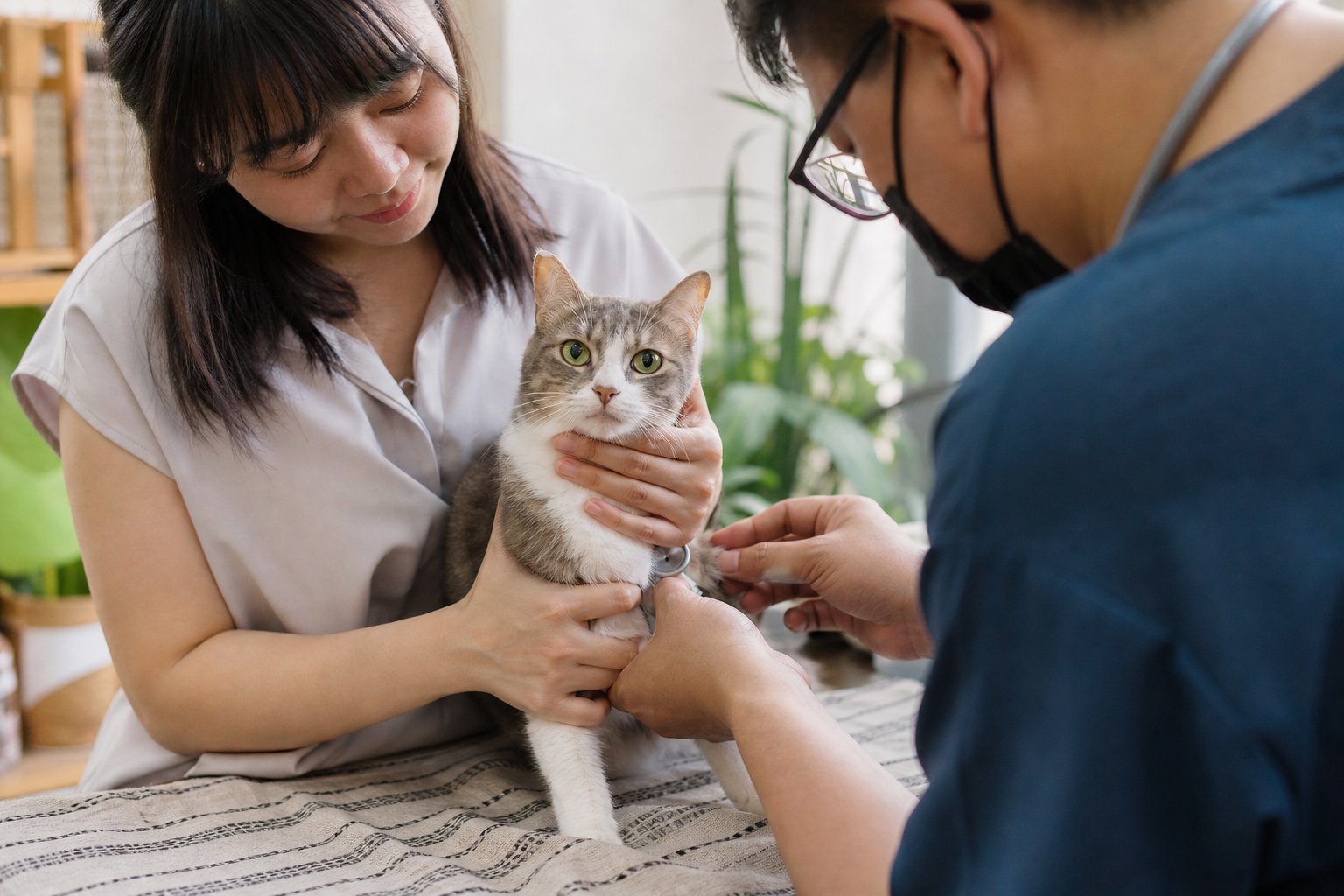
The short answer
E-collar recovery works best when you treat the cone as part of normal life, not a punishment. Fit it correctly, make food, water and litter easy to reach, check the wound and skin daily, and keep your cat quietly occupied. Most cats settle within a few days. The sections below walk you through each step, from the first hour home to the final collar-free day.
What an e-collar does and why your cat needs one
An Elizabethan collar, often called a cone or e-collar, is a physical barrier that stops your cat licking, chewing or scratching a wound, surgical site, eye treatment or skin lesion. Cats are fastidious groomers, and a rough tongue or a sharp claw can undo delicate stitches or introduce infection in minutes.
Vets use e-collars for many reasons: after spaying or neutering, after abdominal or orthopaedic surgery, for eye ulcers or after eye surgery, for ear treatments, for skin wounds and for some paw or tail injuries. The collar is not cruel; it is a temporary tool that protects healing. The goal is to make those days as comfortable as possible for both of you.
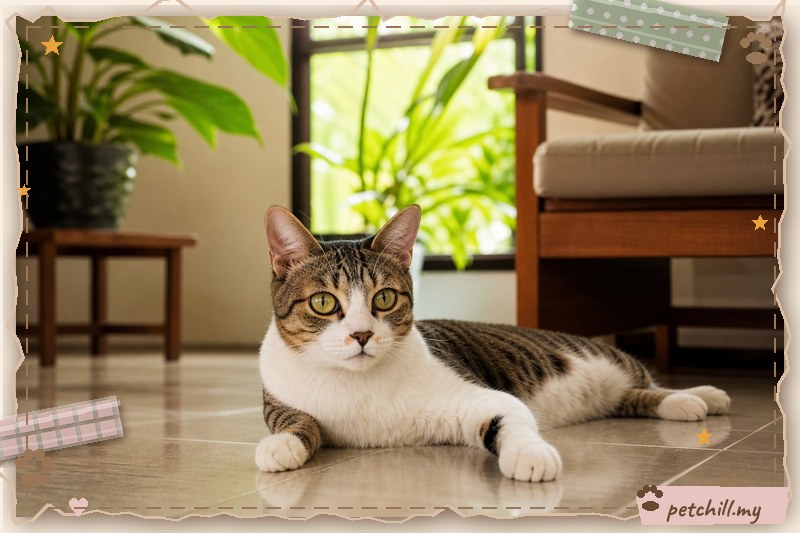
Step 1: Set up a quiet recovery room before you bring your cat home
Prepare the room before your cat returns from the clinic. A small, quiet space with a door you can close is ideal: a spare bedroom, a bathroom with a non-slip mat, or a large carrier or pen in a calm corner. Remove or block anything your cat could jump onto, including cat trees, shelves, beds and windowsills. A cone reduces peripheral vision and balance, so a cat that normally leaps onto the wardrobe may misjudge the jump and fall.
Set up the essentials within easy reach:
- A low-sided litter tray, ideally one your cat already knows.
- Food and water bowls that are shallow and wide, so the cone does not hit the sides.
- A soft bed or folded blanket on the floor.
- A non-slip mat on tiled floors, which are common in Malaysian homes.
- A water bowl kept away from the litter tray.
If you live in a Kuala Lumpur apartment, choose an interior room away from the main door and lift lobby noise. In a Johor terrace house, a quiet upstairs room with the door closed can work well, but carry your cat up and down stairs rather than letting it climb.
Step 2: Fit the collar correctly
A well-fitted collar is snug enough that your cat cannot slip a paw over the edge to reach the wound, but loose enough that you can slide one or two fingers under the neck strap. The collar should extend beyond your cat's nose so it cannot lick the wound when it turns its head. Check the fit after meals and after your cat has been moving around, because straps can loosen.
| Collar type | Best for | Watch-outs |
|---|---|---|
| Hard plastic cone | Most surgical wounds, eye and face protection | Can be noisy, may bump furniture, needs a wide bowl |
| Soft fabric or foam collar | Cats that panic with plastic, some body wounds | May not block face or paw access; check with your vet |
| Inflatable ring | Some abdominal wounds in calm cats | Not suitable for face, eye or paw wounds |
| Recovery suit or bodysuit | Body wounds in cats that tolerate clothing | Not a substitute for a cone if the vet says the face or paws must be protected |
Ask your vet which type suits your cat's specific procedure. Never swap to a less protective option without checking, especially after eye surgery or paw surgery.
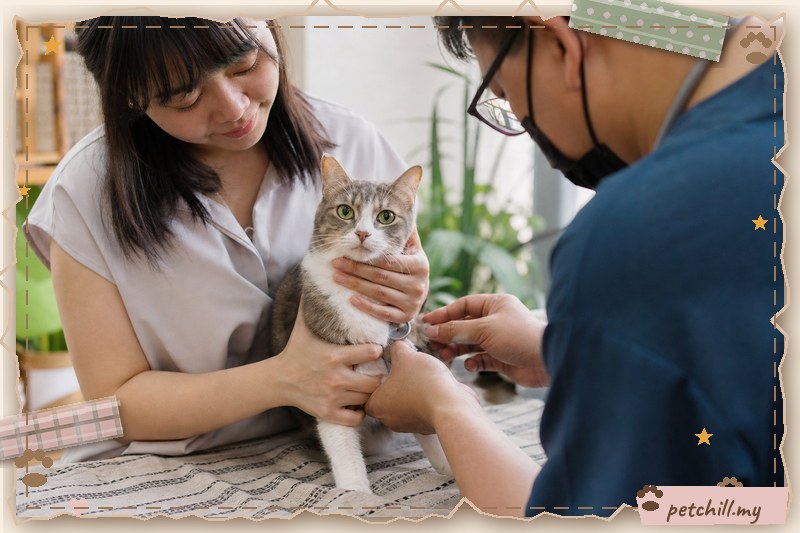
Step 3: The first 24 hours home
Your cat may be groggy from anaesthesia, unsteady on its feet, or unusually quiet or irritable. Keep the room dim and quiet. Offer a small amount of water and a little food, following your vet's instructions about when to feed after anaesthesia. Do not force food; offer it and note whether your cat eats.
Watch for these early signs:
- Breathing that is fast, noisy or laboured.
- Repeated vomiting or retching.
- A wound that is bleeding through the dressing.
- Collapse, pale gums or a body that feels cold.
- A collar that is too tight or has slipped.
If you see any of these, call your vet straight away. Otherwise, let your cat rest and check on it quietly every hour or two.
Step 4: Feeding and drinking with a cone
Many cats struggle to eat from a deep bowl because the cone hits the sides. Use a shallow, wide plate or a small saucer, and raise it on a book or a low box so your cat does not have to reach down. Some cats prefer wet food during recovery because it is easier to lick and provides moisture. Keep water in a wide, heavy bowl so it does not tip.
If your cat will not eat with the collar on, ask your vet whether you can remove it briefly under supervision. If allowed, stay with your cat, watch that it does not lick the wound, and replace the collar immediately after the meal. Never leave the collar off overnight without veterinary advice.
Cats that stop eating for more than 24 hours are at risk of serious illness, so contact your vet if your cat refuses food or seems unable to eat.
Step 5: Litter tray and toileting
A low-sided tray is easier to enter with a cone. If your cat normally uses a covered tray, remove the lid during recovery so it does not feel trapped. Keep the tray clean and in the same quiet room. Some cats need help positioning; watch that the cone does not scoop litter, and check the wound afterwards for contamination.
If your cat has not urinated within about 24 hours of coming home, or has not passed stool for more than two days, call your vet. Constipation and urinary problems can worsen quickly in cats.
Step 6: Daily wound and skin checks
Once or twice a day, gently check the wound and the skin around the collar. Look for redness, swelling, discharge, a bad smell, or stitches that have come loose. Also check behind the ears and under the chin for rubbing or sores from the collar. A soft cloth or a damp wipe can clean the collar itself, following your vet's advice about the wound.
Keep a simple daily log: appetite, water intake, urination, stool, wound appearance, and any behaviour changes. This helps your vet if something changes.
Step 7: Enrichment without jumping
Boredom is one of the biggest challenges of e-collar recovery. A bored cat may pace, cry or try to escape. Offer quiet enrichment that does not require jumping or vigorous movement:
- Food puzzles or a snuffle mat on the floor.
- Gentle wand play kept low to the ground.
- A cardboard box to sit in.
- Short, supervised grooming with a soft brush if your cat enjoys it.
- Quiet company and a warm, draft-free bed.
Avoid laser toys that encourage frantic chasing, and avoid catnip if your cat becomes overexcited. In a Penang rainy season, when outdoor smells and sounds change, keep windows screened and provide indoor interest instead of letting your cat out.
Step 8: Managing stress and sleep
Some cats vocalise, hide or become clingy with a cone on. Give your cat a safe hiding spot, such as a covered box or a carrier with the door open, and let it choose when to interact. Keep household noise down, and ask children to be calm around the recovery room. Cats sleep a lot during healing, so do not wake your cat unnecessarily.
If your cat seems very distressed, panicked or cannot settle at all, call your vet. There may be a better collar type or a pain management issue to address.
Step 9: Exercise restriction and safety
Keep your cat indoors and away from other pets that might groom or play roughly with the wound. Block stairs, balconies and open windows. If you have other cats, separate them during recovery or supervise closely, because a friendly groom from another cat can damage stitches. In a Malaysian home with multiple cats, a spare room with a baby gate or a closed door is often the simplest solution.
Step 10: The final days and collar removal
Only remove the collar when your vet says the wound has healed enough. After removal, check the skin for any irritation and watch your cat for a day or two to make sure it does not start licking the area. If your cat immediately focuses on the wound, put the collar back on and call your vet.
Comparison: common recovery setups
| Situation | Good setup | Avoid |
|---|---|---|
| Apartment with tiled floors | Quiet room, non-slip mats, low tray | Letting cat jump on furniture |
| Terrace house with stairs | Ground-floor room, door closed | Allowing stairs unsupervised |
| Multi-cat household | Separate room, supervised introductions | Free access to other cats |
| Cat that panics in plastic cone | Ask vet about soft collar or suit | Removing collar completely |
When to see a vet
Contact your vet promptly if your cat stops eating or drinking, vomits repeatedly, has difficulty breathing, seems painful or very dull, or if the wound becomes red, swollen, hot, smelly or discharges pus. Also seek help if the collar rubs the skin raw, your cat cannot urinate or pass stool, or you notice any bleeding. Do not wait to see if things improve on their own.
A final word
E-collar recovery is a short, manageable phase when you plan ahead. Set up a safe room, fit the collar well, make eating and toileting easy, check the wound daily, and keep your cat quietly entertained. If something feels wrong, call your vet rather than adjusting the collar or wound care on your own.
This article is general information only and is not a substitute for veterinary advice. Always follow your veterinarian's instructions for your cat's specific condition.
Related reading
- Cat Health Guide Malaysia: Symptom Check, Red-Flag Triage & When to See a Vet
- How to Treat Licking Wounds in Cats at Home: A Practical Guide for Malaysian Owners
- Licking Wounds in Cats Malaysia: When It's Normal and When to Stop It
- Licking Wounds Prevention for Cats: How to Stop the Lick Cycle and Let Skin Heal
- Blood Test for Cats Step by Step: What Happens at the Clinic
- Dental Pain in Cats in Malaysia: Signs, Causes and What to Do
- Dental Pain Prevention for Cats: A Practical Malaysian Guide
- Deworming Schedule for Cats: A Step-by-Step Plan for Malaysian Owners
- Deworming Schedule for Cats: What to Expect (Malaysia Guide)
- Ear Mites Prevention for Cats: A Practical Malaysian Guide

