
The short answer
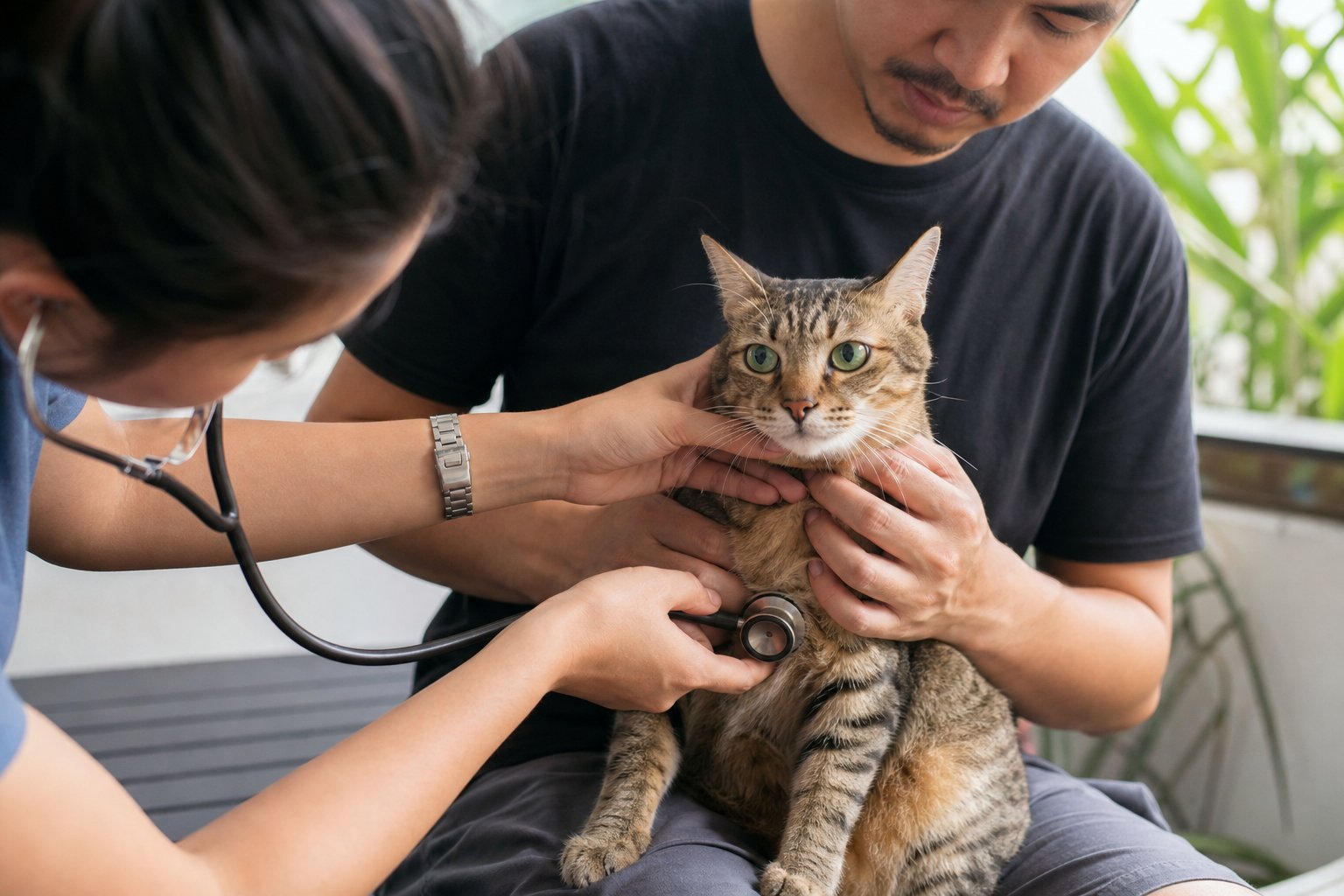
Giving a cat a pill is mostly about calm handling and good preparation. Wrap the cat lightly in a towel, tilt the head gently upward, place the pill at the back of the tongue, close the mouth, and stroke the throat until you see a swallow. Follow with a little water or a treat. If your cat fights, stop and try a different method rather than forcing.
This guide walks through preparation, three safe methods, a troubleshooting table, and the signs that mean you should call a vet instead of persevering alone.
Why pill time goes wrong
Most failed pill attempts come from three things: rushing, restraining too hard, and not checking that the pill was actually swallowed. Cats are quick to hide a tablet in the side of the cheek and spit it out minutes later. They also remember bad experiences, so a rough first attempt can make every future dose harder.
The goal is not to win a wrestling match. It is to make the experience short, predictable and as low-stress as possible. A cat that is calm enough to swallow is a cat you can medicate again tomorrow.
Before you start: a five-minute checklist
Preparation prevents most problems. Run through this list before you open the packet.
- Read the label. Confirm the dose, the time, and whether the pill must be given with food or on an empty stomach.
- Wash your hands. Some medications are absorbed through skin, especially certain hormone or chemotherapy drugs. Ask your vet if gloves are needed.
- Set up your space. Choose a quiet room with a non-slip surface. Close the door and keep other pets out.
- Have everything within reach. The pill, a towel, a syringe of plain water, and a treat or wet food reward.
- Check the pill. Do not crush or split unless your vet has confirmed it is safe. Coated and slow-release tablets must usually stay whole.
- Plan a helper. Two people make towel wrapping and pill placement much easier, especially for strong or anxious cats.
If you are nervous, practise the towel wrap once without any medicine. A dry run helps both of you.
Method 1: The towel wrap and direct pill placement
This is the standard method and works for most cats when done gently.
- Place a towel on a table or your lap. A bath towel is usually enough for an average cat.
- Wrap the cat. Fold the towel over the back and around the sides so the front paws are tucked in, leaving the head free. Do not wrap tightly around the neck or chest.
- Position the cat. Hold the cat against your body, facing away from you, or ask a helper to hold the wrapped cat steady.
- Open the mouth gently. Place your thumb and index finger at the corners of the jaw and apply light pressure. Do not pry the mouth open with force.
- Tilt the head up. A slight upward tilt helps the pill drop toward the back of the throat.
- Place the pill. Put the tablet as far back on the tongue as you can, ideally in the centre. Avoid touching the back of the throat, which can trigger gagging.
- Close the mouth and stroke the throat. Hold the mouth closed and gently stroke the throat or blow a short puff of air toward the nose to encourage swallowing.
- Check and follow up. Open the mouth briefly to confirm the pill is gone, then give a small syringe of water or a treat.
Keep the whole process under a minute if possible. A short, calm attempt is better than a long, stressful one.
Method 2: Pill pockets and food hiding
Many cats will take a pill hidden in food, which is far less stressful for everyone. The trick is to make sure the cat eats the whole portion and does not eat around the pill.
- Use a small amount of food. Give the medicated portion first, before the main meal, so your cat is hungry.
- Choose strong-smelling wet food. A soft pate or a small piece of plain cooked chicken can work well. Avoid giving a whole bowl, because the cat may leave the pill behind.
- Use a commercial pill pocket if your cat likes them. These are soft treats with a hollow centre. Squeeze the pocket closed around the tablet.
- Try a two-bite method. Give one treat without the pill, then the medicated treat, then another plain treat. Many cats swallow the middle one quickly.
- Check the bowl and the floor. Cats are experts at eating the food and leaving the tablet.
Always confirm with your vet that the medication can be taken with food. Some drugs are absorbed poorly with food, and some must be given on an empty stomach.
Method 3: Pill poppers and syringes
A pill popper is a plastic tube with a plunger that places the tablet at the back of the mouth without your fingers going near the teeth. It is useful for cats that bite or for owners who are nervous.
- Load the pill into the tip of the popper.
- Wrap the cat as in Method 1.
- Gently open the mouth and place the tip just past the teeth.
- Push the plunger to release the pill.
- Close the mouth and stroke the throat until the cat swallows.
Some vets also supply liquid medication with a syringe. For liquids, aim the syringe into the side of the mouth, between the cheek and the teeth, and give the dose slowly so the cat has time to swallow. Never squirt liquid straight down the throat, because it can go into the airway.
Comparison table: which method suits which cat?
| Method | Best for | Pros | Cons |
|---|---|---|---|
| Towel wrap and direct placement | Most cats, especially those that will not eat medicated food | Reliable, you can see the pill go in | Needs calm handling; some cats resist wrapping |
| Pill pockets or food hiding | Food-motivated cats, long courses of medication | Low stress, quick | Cat may eat around the pill; not suitable for all drugs |
| Pill popper | Cats that bite, nervous owners | Keeps fingers away from teeth | Some cats dislike the plastic tip |
| Liquid syringe | Cats that cannot take tablets | Easy to dose accurately | Some cats drool or spit; not all drugs come as liquid |
Ask your vet which option fits your cat and the specific medicine. The best method is the one you can repeat twice a day without a struggle.
Troubleshooting: when your cat refuses
| Problem | What to try |
|---|---|
| Cat spits the pill out | Check the cheek pouch, then follow with water or a treat. Try placing the pill further back next time. |
| Cat hides under the bed | Do not chase. Close the room, wait until the cat is calm, and use a towel wrap on the floor. |
| Cat struggles and scratches | Stop. Ask for a helper, use a pill popper, or ask your vet for a different form of medicine. |
| Cat vomits after the pill | Note the time and call your vet. Do not repeat the dose unless your vet tells you to. |
| Cat refuses medicated food | Try a different food, or switch to direct placement. Do not starve the cat to make it hungry. |
| You are not sure the pill went in | Do not give a second dose blindly. Call your vet for advice. |
Reducing stress before and after
A calm cat is easier to medicate. A few simple habits help.
- Keep the routine boring. Give the pill in the same quiet place at the same times.
- Do not chase. Chasing turns pill time into a game of tag and teaches the cat to hide.
- Reward immediately. A treat, a brush or a favourite toy right after the pill helps build a better association.
- Separate pill time from other handling. Do not clip nails or clean ears in the same session.
- Use pheromone sprays or wipes if your vet recommends them. These can take the edge off for anxious cats.
- Keep a log. Write down the time, the dose and whether the cat swallowed. This is useful if you need to call your vet.
In a Kuala Lumpur apartment, space is often tight, so a bathroom with the door closed can be a good neutral pill room away from the sofa and the bed. In a Johor terrace house with several cats, feed the others in another room first so your patient is not distracted or crowded.
Safety rules that matter
- Never force a struggling cat. Forcing can cause injury to the cat and to you, and it makes the next dose harder.
- Never crush or split a pill without veterinary advice. Some tablets are designed to release slowly and can be dangerous if broken.
- Do not mix medicine into a full bowl of food unless your vet says it is fine, because you cannot tell how much was eaten.
- Keep all medicines out of reach. Cats can chew through blister packs.
- Wash your hands after handling medication, especially if you are pregnant or handling hormone or chemotherapy drugs.
- Do not share medicine between pets. A dose for one cat is not a dose for another.
When to see a vet
Contact your vet if any of the following happen:
- Your cat vomits soon after taking the pill, or shows drooling, trembling or weakness.
- Your cat has a reaction such as swelling, difficulty breathing, or a rash.
- You cannot give the medicine at all for more than a day, or you are unsure whether a dose was swallowed.
- Your cat stops eating, becomes lethargic, or hides after medication.
- Your cat has a pre-existing condition such as kidney disease, diabetes or heart disease and you are unsure about the medicine.
Do not wait for a scheduled appointment if you see signs of an allergic reaction or severe distress. Call your vet or an emergency clinic straight away.
A note for Malaysian cat owners
Local prices for medicines, pill pockets and pill poppers vary, so ask your vet or a trusted pet retailer for a quote rather than relying on online figures. Malaysia's tropical humidity also means tablets can soften or clump, so store them in a cool, dry place as directed on the label. If you travel between states, keep the medication in its original packaging with the prescription label.
For general pet care guidance, you can refer to the Department of Veterinary Services Malaysia and SPCA Selangor. Your own vet remains the best source of advice for your cat's specific medicine.
Final checklist
- Read the label and confirm the dose.
- Set up a quiet space and gather your towel, water and treat.
- Choose the method that suits your cat.
- Stay calm, keep it short, and check that the pill was swallowed.
- Reward your cat and log the dose.
- Call your vet if anything seems wrong.
With a little practice, most cats accept pill time as a boring part of the day. If yours does not, ask for help early rather than turning it into a daily battle.
This article is general information only and is not a substitute for veterinary advice. Always follow your vet's instructions for your cat's medication, and contact a veterinarian if you have concerns about your cat's health.
Related reading
- Cat Health Guide Malaysia: Symptom Check, Red-Flag Triage & When to See a Vet
- Cat Eye Infection Treatment in Malaysia: A Practical Owner's Guide
- Cat Vomiting Treatment in Malaysia: What to Do and When to See a Vet
- Diarrhea in Cats in Malaysia: Causes, Home Care and When to See a Vet
- Ear Mites in Cats: Causes and Care (Malaysia Guide)
- Eye Infection in Cats in Malaysia: Causes, Signs, Treatment & Prevention
- Flea Treatment for Cats in Malaysia: A Complete Guide
- Flea Treatment for Cats: What to Expect (Malaysia Guide)
- Fleas in Cats: Causes and Care (Malaysia Guide)
- Giving Pills for Cats in Malaysia: A Stress-Free Step-by-Step Guide
- Giving Pills for Cats: What to Expect (Malaysian Owner's Guide)
- Household Cleaning Products and Cats in Malaysia: A Safety Guide

