
The short answer
Most small scratches on a cat heal well with gentle cleaning and a quiet, indoor recovery. Anything deep, bleeding steadily, a bite, a puncture, an abscess, or a wound near the eyes, mouth, chest or belly needs a vet. Never reach for alcohol, hydrogen peroxide or iodine — they damage tissue and delay healing.
Why cat wounds deserve respect
Cats are small, covered in fur, and very good at hiding pain. A wound that looks like a thin scratch on the surface can be a deep pocket underneath. Cat mouths carry a heavy bacterial load, so a bite that barely breaks the skin can seed infection that swells into an abscess several days later.
Outdoor and semi-outdoor cats in Malaysia face a particular mix of risks: territorial fights, fences and gates, sharp garden edges, road traffic, and hot humid weather that favours bacterial growth. Indoor cats are not immune either — falls from windows, tussles with housemates, and household sharp edges all cause wounds.
Your job as an owner is not to become a surgeon. It is to triage correctly, do no harm, and get professional help at the right moment.

Step 1: Assess the wound safely
Before you touch anything, settle your cat. Wrap her in a towel with only the head out if she is stressed, or have a second person hold her gently. A frightened cat can bite hard, and a bite to your hand is a medical matter for you too.
Work through this checklist:
- Where is it? Face, eyes, mouth, chest, belly, joints and the tail base are all higher-risk sites.
- How deep? A scratch that barely marks the skin is different from a flap, a hole, or a wound that gapes open.
- Is it bleeding? Oozing is manageable; steady or spurting bleeding is an emergency.
- Is there swelling or a lump? A soft, warm lump under a small scab often means an abscess forming.
- Is your cat well in herself? Lethargy, hiding, refusing food, or a warm body suggests she is already unwell.
- When did it happen? Fresh wounds can be cleaned; older wounds with crusting and discharge need a vet.
If any answer worries you, stop and call your vet. It is always cheaper and kinder to have a wound checked early than to treat a spreading infection later.
Step 2: Control bleeding
For active bleeding, apply firm, direct pressure with a clean cloth or gauze for at least five minutes without lifting to peek. If blood soaks through, add another layer on top rather than removing the first.
If bleeding does not slow after ten minutes of steady pressure, or if the wound is on a limb and the cat cannot use it, go to a vet immediately. Keep the cat warm and calm during transport, and phone ahead so the clinic can prepare.
Do not use a tourniquet. Do not pour powder or flour into the wound.

Step 3: Clean a minor wound
For a small, superficial scratch that has stopped bleeding:
- Wash your hands, or wear disposable gloves.
- Flush the wound gently with lukewarm saline (saline for wound irrigation, or cooled boiled water with a pinch of salt) using a syringe or a clean squeeze bottle.
- Let the water run over the wound rather than scrubbing it.
- Pat the surrounding fur dry with clean gauze.
- Trim long fur around the wound only if it is easy and safe — never tug at matted fur stuck in a wound.
- Leave the wound open to the air unless your vet advises otherwise.
Avoid cotton wool, which leaves fibres in the wound. Avoid human antiseptics. If you want to use a pet-safe wound product, ask your vet which one suits your cat, because products and availability vary locally.
What never to put on a cat wound
| Product | Why it is a problem |
|---|---|
| Alcohol, surgical spirit | Stings severely, damages tissue, delays healing |
| Hydrogen peroxide | Destroys healthy cells and granulation tissue |
| Iodine and povidone-iodine | Can be absorbed and irritate or harm tissue, especially on large areas |
| Human antibiotic creams | Often licked off; some ingredients are unsuitable for cats |
| Essential oils and herbal rubs | Many are toxic to cats, including tea tree and eucalyptus |
| Talcum powder, flour, coffee grounds | Trap bacteria and debris in the wound |
Plain lukewarm saline is the safest home option. Anything stronger should come from your vet.

Step 4: Monitor healing day by day
A clean minor wound should look a little better each day. Check it once or twice daily, ideally in good light. Note the size, colour, smell and your cat's appetite and energy.
Healthy healing looks like: edges drawing together, a thin scab, mild pinkness at the margin, no smell, and a cat who eats and behaves normally.
Worrying signs include:
- Increasing redness or a red streak spreading from the wound
- Swelling, heat or a new lump
- Yellow, green or grey discharge, or pus
- A bad or sweet smell
- Pain when the area is touched, or your cat guarding it
- Your cat licking obsessively at one spot
- Loss of appetite, hiding, fever or lethargy
If you see any of these, book a vet visit rather than waiting another day.
Abscesses: the classic cat wound problem
An abscess is a pocket of pus sealed under the skin. It usually starts as a bite or puncture, which closes over within hours and traps bacteria inside. Over three to seven days the area swells, becomes warm and painful, and may burst on its own, releasing thick discharge.
Abscesses are common on the face, cheeks, tail base, rump and legs — the places cats bite each other. A cat with an abscess may be quiet, off her food, or flinch when picked up.
Do not squeeze or lance an abscess at home. A vet will usually clean and drain it, sometimes place a drain, and prescribe antibiotics and pain relief. Warm compresses may be advised to help it drain, but only under veterinary direction.

Cat bites and scratches: why they matter
Cat bites are puncture wounds. The surface hole is tiny, but bacteria are pushed deep into tissue where they multiply away from air. This is why bites so often abscess and why vets treat them more seriously than the visible damage suggests.
Scratches from claws are usually more superficial but still carry bacteria from soil, litter and skin. Cat scratch disease is a bacterial infection that can affect people, particularly children and immunocompromised adults, so wash your own scratches promptly with soap and water.
If your cat has been in a fight, assume a bite until proven otherwise, even if you can only find one small scab.
When to see a vet
Go to a vet promptly, or seek emergency care, if any of the following apply:
- Bleeding that does not stop after ten minutes of pressure
- A wound that is deep, gaping, or exposes muscle, fat or bone
- Any bite wound, especially from another cat or a dog
- A wound on the face, eye, eyelid, mouth, ear, chest, belly, paw pad or tail base
- A swollen, warm or painful lump, or any suspected abscess
- Signs of infection: pus, bad smell, spreading redness, fever, lethargy, not eating
- Your cat is not using a limb, or the limb is swollen
- A wound caused by a road accident, fall from height, or unknown trauma — internal injury is possible even if the skin looks fine
- A wound that is not improving after three to four days
- Any wound on a very young, elderly, pregnant or unwell cat
For trauma, keep your cat confined, minimise handling, and transport her in a secure carrier. Phone the clinic on the way so they can prepare.
What a vet visit usually involves
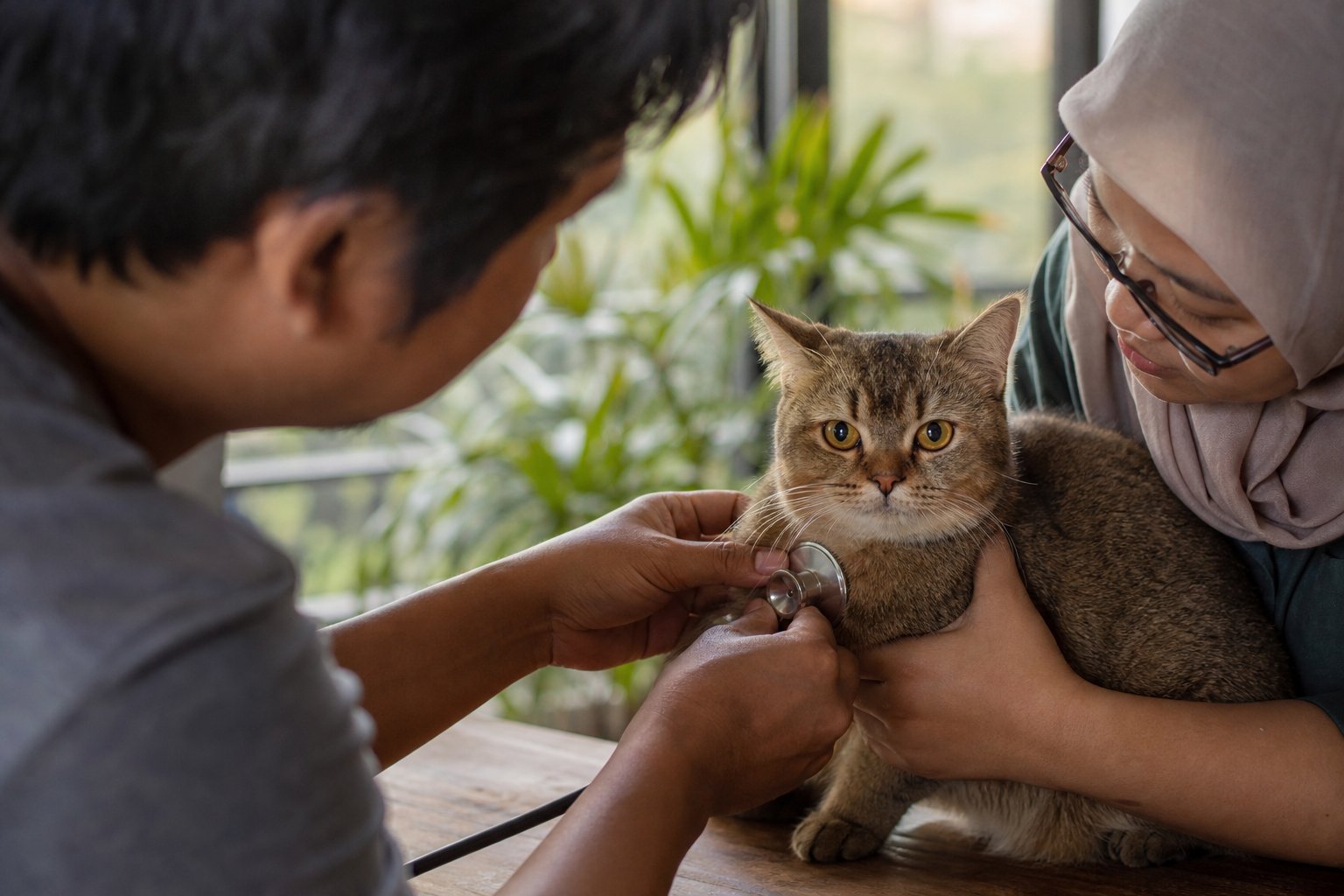
Your vet will examine the whole cat, not just the wound. Depending on findings, they may clip fur, flush and clean the wound, remove dead tissue, place a drain, close certain wounds with sutures, and prescribe antibiotics, anti-inflammatories and pain relief. Some wounds need a bandage or a protective collar to stop licking.
Costs vary widely by clinic, city and complexity, so ask for an estimate before treatment begins. Malaysian prices differ between general practices, emergency hospitals and specialist centres, and are not comparable to overseas figures you may see online.
Keeping your cat from making it worse
Cats lick wounds — it is instinct. Some licking cleans, but excessive licking reopens wounds, removes scabs and introduces mouth bacteria.
Practical measures:
- Use a soft cone or a recovery suit if your vet recommends it
- Keep your cat indoors and away from other cats while healing
- Provide quiet, warm bedding away from draughts and damp
- Distract with gentle play, food puzzles and company
- Check the wound at set times rather than constantly, to reduce stress
A simple home first-aid kit for cats
Keep a small box ready so you are not searching during a crisis:
- Saline sachets or a bottle for wound flushing
- Sterile gauze swabs and a roll of conforming bandage
- A clean towel for restraint and warmth
- Disposable gloves
- A syringe without a needle for flushing
- A secure carrier kept accessible
- Your vet's phone number and the nearest emergency clinic's details
- A tick remover and a digital thermometer, if you are comfortable using them
Do not stock human antiseptics for cat wounds. If in doubt, flush with saline and call your vet.
Local contexts to keep in mind
Kuala Lumpur apartment: A cat living in a high-rise may seem safe, but open windows and unsecured balconies are a real fall risk, and shared corridors can bring unexpected contact with other cats. If your apartment cat comes home with a scab after slipping out, treat it as a possible bite and have it checked.
Penang rainy season: Damp, humid weather helps bacteria thrive, and wounds that stay wet heal more slowly. Dry wounds gently after cleaning, keep bedding dry, and check outdoor cats more often during the wet months.
Prevention beats treatment
- Neuter your cat — most fighting is territorial and hormone-driven
- Keep cats indoors or in a secure enclosure
- Screen windows and balconies
- Supervise introductions between cats in the same home
- Keep sharp tools, fishing line and garden netting out of reach
- Check your cat's coat and skin weekly with your hands
Bottom line
Clean minor scratches with lukewarm saline, keep your cat indoors, and watch closely for two weeks. Treat every bite as a vet matter, never use human antiseptics, and act fast on swelling, pus, pain or a cat who stops eating. Early veterinary care is simpler, kinder and usually less expensive than treating an established infection.
This article is general information for cat owners and does not replace examination by a licensed veterinarian. If you are unsure about a wound, contact your vet.
Related reading
- Cat Health Guide Malaysia: Symptom Check, Red-Flag Triage & When to See a Vet
- Cat Licking Wounds: Why It Happens and How to Treat It in Malaysia
- Licking Wounds in Cats: Causes and Care (Malaysian Vet Guide)
- Signs of Licking Wounds in Cats Malaysia: How to Spot Problem Licking
- Wound Care for Cats Step by Step: A Practical Malaysian Guide
- Blood Test for Cats in Malaysia: What It Checks, Costs and When You Need One
- Blood Test for Cats: What to Expect (Malaysian Owner's Guide)
- Cat Dental Pain Treatment in Malaysia: A Practical Owner's Guide
- Cat Ear Mites Treatment in Malaysia: A Complete Owner's Guide
- Cat Eye Infection Treatment in Malaysia: A Practical Owner's Guide
- Cat Hair Loss Treatment in Malaysia: A Practical Owner's Guide
- Cat Poisoning Treatment in Malaysia: What to Do, What to Expect, and How to Prevent It

