
Quick answer
Fleas in cats are treated with a cat-safe flea product recommended by your vet, combined with thorough cleaning of bedding, floors and soft furnishings. Treat every pet in the household, repeat on schedule, and see a vet if your cat is very young, pregnant, unwell, or scratching itself raw.
Why fleas are a year-round problem in Malaysia
In temperate countries, flea numbers often peak in warmer months and drop in winter. Malaysia does not really have that break. Warm temperatures and high humidity most of the year mean flea eggs hatch quickly and larvae develop readily in sheltered spots indoors. A flea problem that starts in January can still be going in December if nothing is done about it.
That has two practical consequences for cat owners here:
- Prevention should be continuous, not seasonal. Many Malaysian cat owners use flea prevention all year rather than only in certain months.
- The home matters as much as the cat. Most of a flea infestation is not on your cat. Eggs, larvae and pupae sit in carpets, bedding, sofa cushions, floor cracks and shaded outdoor areas. Killing fleas on the cat alone often leads to reinfestation within weeks.
Fleas are also a year-round nuisance in apartments and terrace houses alike, because the environment they need — warmth, humidity, organic debris and a host — is easy to find indoors.
How to tell whether your cat actually has fleas
Cats are fastidious groomers, so you may never see a live flea. Instead, look for the signs below.
Signs to check for
| Sign | What it looks like |
|---|---|
| Flea dirt | Small dark specks like pepper in the coat, especially near the tail base, neck and belly |
| Live fleas | Small brown insects, fast-moving, often seen when you part the fur |
| Itching and scratching | Frequent scratching, biting at the tail base, over-grooming |
| Skin changes | Redness, small scabs, hair loss, crusty patches |
| Restlessness | Agitation, disturbed sleep, twitching skin |
| Pale gums (severe cases) | Possible sign of anaemia, especially in kittens |
The wet-paper test
Comb your cat with a fine-toothed flea comb over a sheet of white paper. Collect the dark specks and press them onto damp white tissue. If the specks dissolve into a reddish-brown stain, that is digested blood — flea dirt. Ordinary dirt stays grey or brown.
When it is not fleas
Itching can also come from mites, ringworm, food allergy, environmental allergy or bacterial skin infection. If you cannot find flea dirt and your cat is still itchy, a vet check is worthwhile, because the treatment for each of these is different.
What fleas do to cats beyond itching
Fleas are not just a nuisance. They can cause:
- Flea allergy dermatitis (FAD). Some cats are allergic to flea saliva. A single bite can trigger intense itching, hair loss and skin damage over the back and tail base. These cats need strict flea control, not just occasional treatment.
- Anaemia. Heavy infestations can drain enough blood to make kittens or weak cats dangerously anaemic. Pale gums and lethargy are warning signs.
- Tapeworms. Fleas carry tapeworm larvae. If your cat swallows a flea while grooming, it can develop tapeworm. Flea control is therefore part of worm control.
- Secondary skin infections. Constant scratching breaks the skin and lets bacteria in.
- Stress and poor sleep. Itchy cats are uncomfortable cats, and chronic itch affects wellbeing.
Choosing a flea treatment for your cat
There is no single best product for every cat. The right choice depends on your cat's age, weight, health status, lifestyle and how many pets you have.
Main treatment types
| Type | How it works | Practical notes |
|---|---|---|
| Spot-on | Applied to skin at the back of the neck | Easy for most owners; do not bathe immediately before or after unless the label allows |
| Oral tablet | Given by mouth, kills fleas after they bite | Useful for cats that swim or are bathed often; some cats are difficult to tablet |
| Flea collar | Slow-release product around the neck | Effectiveness varies; fit must be safe and breakaway |
| Spray | Applied over the coat | More handling; check suitability for kittens and seniors |
| Injectable or vet-administered | Given by a vet | Reserved for specific situations; discuss with your vet |
Safety rules that matter
- Never use dog flea products on cats. Some dog products contain permethrin, which is highly toxic to cats and can cause tremors, seizures and death.
- Check the label for cat suitability and weight range. A kitten is not a small adult cat.
- Do not stack products. Using a spot-on plus a collar plus a spray can overdose your cat.
- Ask before treating pregnant, nursing or very young cats. Product labels vary and some are not licensed for these groups.
- Treat all cats and dogs in the home. Fleas move between pets.
- Do not rely on garlic, essential oils or home remedies. Some essential oils are toxic to cats, and there is no reliable evidence that these approaches control fleas.
Prices for flea products vary widely in Malaysia depending on brand, pack size and whether you buy from a clinic or a pet shop. Ask your vet or retailer for current pricing rather than assuming a fixed cost.
Treating the home properly
Environmental control is where most flea plans succeed or fail. Fleas in the environment exist at different life stages, and the pupae in particular are resistant to many treatments.
A practical cleaning routine
- Wash bedding weekly in hot water. Cat beds, blankets, cushion covers and your own bedding if your cat sleeps there.
- Vacuum thoroughly and often. Focus on carpets, rugs, sofa seams, under furniture, skirting boards and floor cracks. Vacuuming removes eggs and larvae and can stimulate pupae to hatch.
- Discard the vacuum bag or empty the canister outside after each session.
- Steam clean or shampoo carpets if you have a heavy infestation.
- Keep the home dry. Flea larvae prefer damp, shaded conditions. Fix leaks and improve ventilation.
- Repeat weekly for at least four weeks. This covers the hatching of new fleas from the environment.
- Consider professional pest control for severe indoor infestations, and tell the operator you have cats so they use a cat-safe approach.
Outdoor areas
If your cat goes outside, or you have a garden, keep grass short, remove leaf litter and discourage stray cats from sheltering under the house or in sheds. Fleas can survive in shaded, humid outdoor spots.
Fleas in Malaysian homes: two common situations
A Kuala Lumpur apartment with an indoor cat. High-rise living does not protect against fleas. Fleas can arrive on shoes, bags, parcels or visiting pets. In an apartment, the infestation is usually concentrated in a small number of places — the cat bed, the sofa, the bedroom rug — which makes targeted cleaning easier. Vacuum those areas twice weekly and wash the cat bed in hot water. Keep the cat's flea prevention on schedule even though it never goes outside.
A Johor terrace house with a garden and two cats. With more floor area, soft furnishings and shaded outdoor corners, fleas have more places to hide. Treat both cats, wash bedding weekly, vacuum the sofa and rugs, and check the car porch and garden store for stray cats or damp leaf litter. If one cat is itchy and the other is not, still treat both — fleas move between them.
Preventing fleas from coming back
Prevention is cheaper and easier than repeated treatment.
- Keep all pets on a year-round flea prevention plan recommended by your vet.
- Set reminders for reapplication dates, especially for spot-on products.
- Check your cat weekly with a flea comb, particularly if it scratches.
- Groom and inspect after outdoor trips or visits from other pets.
- Wash bedding regularly even when there is no active problem.
- Keep the home dry and well ventilated.
- Ask about flea control when you board your cat or use a groomer.
- Treat tapeworm risk seriously. If your cat has had fleas, ask your vet whether worming is needed.
Common mistakes owners make
- Treating the cat but not the home, then wondering why fleas return.
- Using a dog product because it was cheaper or already in the cupboard.
- Stopping treatment too early because no fleas are visible.
- Bathing the cat immediately after applying a spot-on, which can reduce effectiveness.
- Treating only the itchy cat and not the other pets.
- Assuming an indoor cat cannot get fleas.
- Relying on natural remedies that do not work and delaying effective treatment.
When to see a vet
Contact a vet promptly if your cat:
- Is a kitten, pregnant, nursing or elderly, and you need flea treatment advice
- Has severe itching, broken skin, scabs or hair loss
- Has pale gums, weakness or lethargy
- Has been exposed to a dog flea product, especially one containing permethrin
- Is not improving after correct treatment
- Has visible tapeworm segments around the tail or in the stool
- Has a flea infestation that keeps returning despite home cleaning
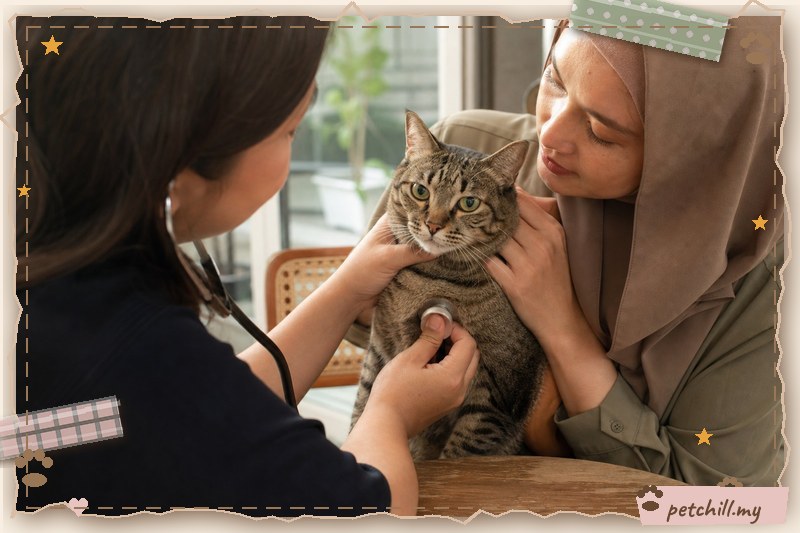
A vet can confirm the diagnosis, rule out other skin conditions, prescribe appropriate treatment and advise on a prevention plan for your household.
Frequently asked questions
See the FAQ section above for quick answers on spotting fleas, indoor cats, product safety, timelines, home treatment and health risks.
Vet disclaimer
This article is general information for Malaysian cat owners and is not a substitute for veterinary advice. Flea products differ in safety and suitability, and some are dangerous for kittens, pregnant cats or cats with health conditions. Always read the label and consult a licensed veterinarian before starting or changing flea treatment.
Related reading
- Cat Fleas Treatment in Malaysia: A Practical Owner's Guide
- Diarrhea Prevention for Cats: A Practical Guide for Malaysian Owners
- Flea Treatment for Cats: What to Expect (Malaysia Guide)
- Fleas Prevention for Cats in Malaysia: A Practical, Year-Round Plan
- How to Treat Fleas in Cats at Home: A Practical Malaysian Guide
- Signs of Fleas in Cats in Malaysia: How to Spot, Check and Act
- Cat Constipation Treatment in Malaysia: A Practical Owner's Guide
- Cat Diarrhea Treatment in Malaysia: A Practical Owner's Guide

