
PetChill Pet Encyclopedia
Cat Health

Signs of Ringworm in Cats in Malaysia: What Owners Should Look For

Ringworm in cats is a fungal skin infection, not a worm. Learn the signs Malaysian cat owners should watch for, how vets diagnose it, and how to treat and clean up safely.

Published: 2026-11-06·8 min read·Author: PetChill Editorial
Signs of Ringworm in Cats in Malaysia: What Owners Should Look For

Quick answer

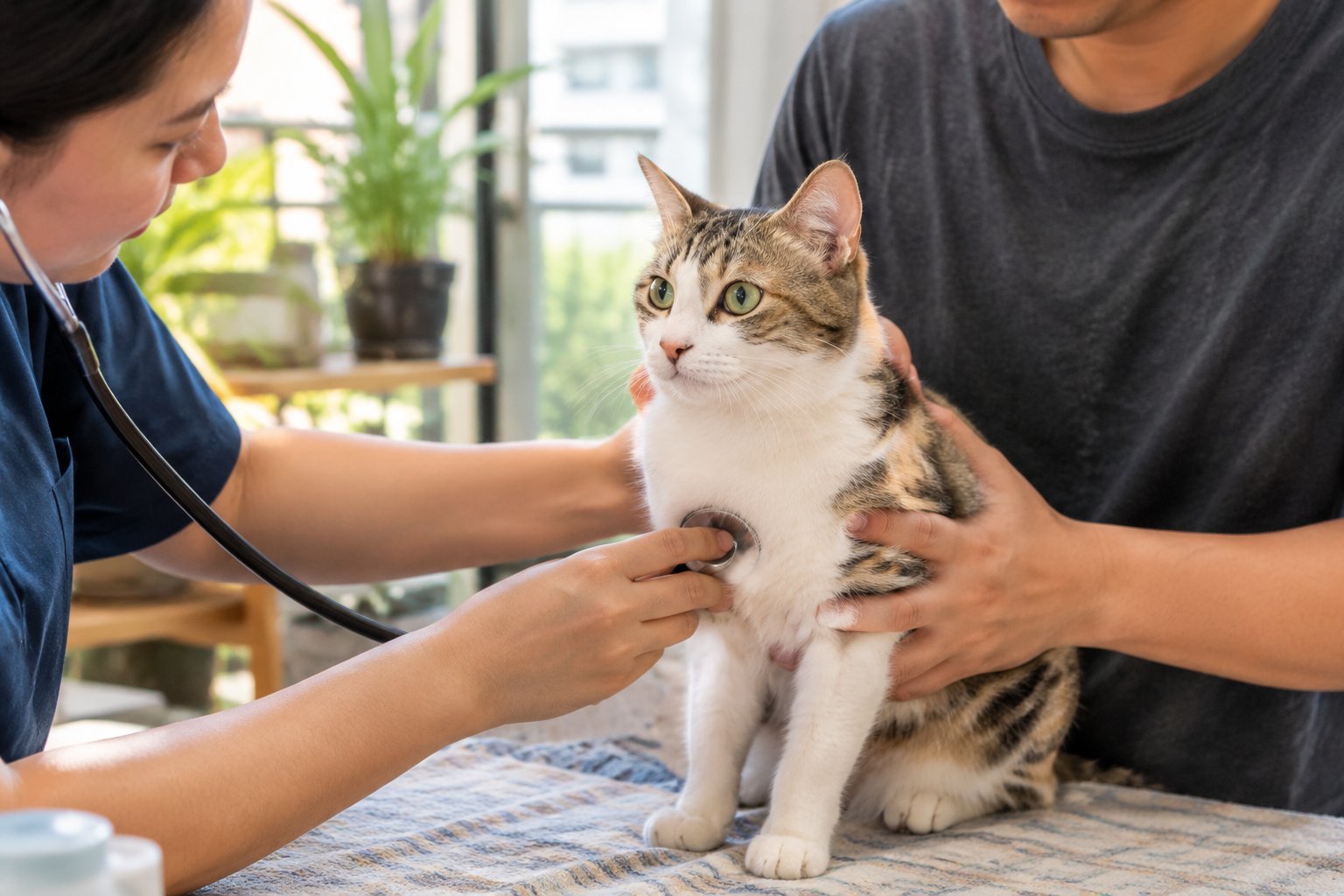
Ringworm in cats is a fungal skin infection, not a worm. The classic signs are circular bald patches with scaly, crusty or red edges, broken hairs, and dull or patchy coat, most often on the head, ears, paws and tail. Some cats are very itchy; others barely seem bothered. Because ringworm looks like many other skin problems, a vet should confirm it before you start any treatment.

What ringworm actually is

Ringworm is the everyday name for dermatophytosis, an infection caused by fungi called dermatophytes. These fungi live in the dead, keratin-rich layers of skin, hair and claws. They do not burrow into the body like a worm, which is why the name is misleading.

In cats, the most common cause worldwide is Microsporum canis. Other dermatophytes such as Trichophyton mentagrophytes also occur. The fungus feeds on keratin in hair shafts and skin, which is why infected hairs become brittle and break, leaving bald patches.

The infection is contagious to other animals and to people. That matters in a Malaysian household where cats, dogs and children often share close space.
What ringworm actually is

Why Malaysia's climate matters

Fungal skin problems are common in warm, humid countries. Malaysia's year-round heat and high humidity, plus frequent rain, create conditions where fungal spores survive longer in the environment and where skin stays damp.

Practical implications for cat owners:

  • Damp coats. A cat that gets wet in the rain, or that lives in a humid apartment with poor ventilation, may stay damp for hours. Drying your cat gently with a towel after a soaking helps.
  • Spores in the home. Ringworm spores can persist in the environment for a long time, especially in humid conditions. Cleaning is part of treatment, not an optional extra.
  • Crowded or multi-cat homes. Shelters, rescue foster homes and households with several cats see more ringworm because close contact spreads spores easily.
  • Kittens and seniors. Young kittens, elderly cats and cats with weakened immunity are more likely to develop visible signs.

The main signs of ringworm in cats

Circular bald patches

The most recognisable sign is a round or oval area of hair loss, often with a scaly or crusty rim. The centre may look clearer while the edge looks red or flaky. Patches can be small at first and grow.

Broken, stubby hairs

Infected hairs break off near the skin, leaving a patch that looks shaved or stubbly rather than completely smooth. This is a useful clue for vets examining the coat.

Scaly, crusty or red skin

Under the bald patch, the skin may be dry, flaky, thickened or slightly inflamed. Some cats develop small scabs or a greyish, powdery look.

Itching, or no itching at all

Itchiness varies widely. Some cats scratch and groom excessively; others show almost no discomfort. Do not rule out ringworm just because your cat is not itchy.

Common locations

Ringworm patches often appear on the head, ears, muzzle, paws, tail and legs, but they can occur anywhere. In long-haired cats, patches may be hidden under the coat and only noticed as a dull, patchy or scruffy coat.

Nail and nail bed involvement

Sometimes the claws become rough, brittle or misshapen, and the skin around the nail bed looks inflamed. Nail involvement can be stubborn to treat.

Widespread infection in some cats

Kittens, long-haired cats and immunocompromised cats may develop many patches or generalised scaling rather than a single neat ring. Persian and other long-haired breeds are often over-represented in ringworm cases.

What ringworm is often confused with

Look-alike condition What it can look like How it differs
Flea allergy dermatitis Itchy, crusty skin, often near the tail base Usually very itchy; may see fleas or flea dirt
Mange (mites) Scaly, crusty ears or face, itching Microscopy finds mites; responds to antiparasitics
Bacterial skin infection Redness, pustules, oozing Often needs antibiotics; may occur alongside ringworm
Food or environmental allergy Itchy face, ears, paws; recurrent Usually symmetrical and seasonal or diet-related
Stress-related over-grooming Bald patches, often on belly or flanks Hair loss pattern differs; skin usually not scaly
Endocrine disease Symmetrical hair loss, dull coat More common in older cats; needs blood tests

Because these conditions overlap, a visual guess is unreliable. A vet can test for ringworm and check for other problems at the same time.
The main signs of ringworm in cats

How vets diagnose ringworm

A vet may use several methods together:

  1. Wood's lamp examination. Some Microsporum canis strains fluoresce apple-green under ultraviolet light. A positive glow is helpful, but a negative lamp does not rule ringworm out.
  2. Microscopy. Hair plucks or skin scrapings are examined for fungal spores and hyphae.
  3. Fungal culture. Hair and scale samples are cultured to confirm the fungus and identify the species. This is the most reliable test, though results take time.
  4. PCR testing. Some laboratories offer molecular testing, which can give faster answers.

Your vet may also check for fleas, mites and bacterial infection, because mixed infections are common.

How ringworm spreads

Ringworm spreads through direct contact with an infected animal and through contaminated objects: bedding, brushes, towels, cat trees, carriers, clothing and furniture. Spores are shed with infected hairs and skin flakes, and they can survive in the environment for months.

People can catch ringworm from cats. In people, it often appears as an itchy, ring-shaped rash on the arms, hands, face or trunk. Children, older adults and anyone with a weakened immune system may be more susceptible. If you develop a rash, see a doctor and mention that your cat has [ringworm.
How ringworm spreads

Treatment: what to expect

Treatment](/articles/cat-ringworm-treatment-malaysia "mylink") usually combines medicine given by mouth with topical therapy and environmental cleaning. Your vet will decide what is appropriate for your cat.

  • Oral antifungal medication. This is often the backbone of treatment for confirmed ringworm. It requires a veterinary prescription and monitoring.
  • Topical treatment. Medicated shampoos, rinses or creams may be prescribed. Some vets recommend whole-body rinses or dips for widespread infection.
  • Clipping. Long-haired cats may benefit from professional clipping to remove infected hair and make treatment easier.
  • Treating other pets. Other cats and dogs in the home may need examination or testing.
  • Repeat testing. Treatment usually continues until repeat tests are negative, not just until the skin looks normal.

Do not use human antifungal creams on your cat without veterinary advice. Some products are not safe if licked, and some human preparations are not formulated for cats.

Cleaning the home: a practical checklist

Environmental cleaning is a major part of stopping reinfection. Spores are tough, so focus on removing hair and debris first.

  • Wash bedding, blankets and soft toys in hot water where fabric allows.
  • Vacuum floors, sofas, cat trees and car seats, then dispose of the vacuum bag or empty the canister outside.
  • Wipe hard surfaces with a suitable disinfectant; ask your vet which products are effective against fungal spores and safe around cats.
  • Replace or disinfect brushes, combs and grooming tools.
  • Clean food and water bowls and litter trays regularly.
  • Wash your hands after handling your cat and before eating.
  • Keep infected cats separated from other pets where practical until your vet advises otherwise.
  • Wash your own clothes and bedding if your cat sleeps with you.

In humid Malaysian homes, pay attention to damp corners, carpets and fabric furniture. Good ventilation and sunlight help fabrics dry thoroughly.
Cleaning the home: a practical checklist

Living with a ringworm cat in a Malaysian home

Kuala Lumpur apartment. In a high-rise unit with limited sunlight and air-conditioning, soft furnishings and carpets can stay damp. Keep the cat's bedding washable, air rooms regularly, and dry the coat after a bath or a rainy walk in a carrier. A spare room or bathroom can serve as a temporary isolation space if your vet recommends separation.

Johor terrace house. With a garden or car porch, cats may roam outdoors and pick up fungal spores from soil or other animals. Keep an indoor cat's area clean, check the coat weekly, and wash hands after gardening or handling outdoor cats before touching your own.

Penang rainy season. During heavy rain, cats that go outside may come home wet. Towel-dry them, keep bedding dry, and check ears, paws and tail for new patches. If you foster rescue kittens, isolate newcomers until a vet has checked them.

Preventing ringworm

  • Check new cats and kittens with a vet before introducing them to resident pets.
  • Quarantine foster animals where possible.
  • Keep grooming tools clean and avoid sharing brushes between cats.
  • Maintain good nutrition and general health, since immunity affects susceptibility.
  • Reduce overcrowding and stress in multi-cat homes.
  • Wash hands after handling animals, especially before meals.

When to see a vet

See a vet if you notice any of the following:

  • A new bald patch, especially one with a scaly or crusty rim
  • Broken or stubby hairs, or a patchy, dull coat
  • Persistent scratching, over-grooming or skin redness
  • Crusty or misshapen claws
  • Patches that spread or multiply
  • A kitten with hair loss or poor growth
  • A cat that lives with children, elderly people or immunocompromised family members
  • A person in the household with a ring-shaped rash

Do not wait for a patch to clear on its own. Ringworm can spread to other pets and people, and early treatment is simpler than managing a household outbreak.

Frequently asked questions

Is ringworm in cats a worm?

No. Ringworm is a fungal infection of the skin, hair and nails, not a parasite. The name comes from the ring-shaped rash it often causes. It is caused by dermatophyte fungi and is treated with antifungal medicine, not dewormers.

Can I catch ringworm from my cat?

Yes. Ringworm is zoonotic, meaning it can spread from cats to people. People usually develop itchy, ring-shaped patches on the arms, hands or body. See a doctor if you notice a rash, and wash your hands after handling your cat.

How does a vet confirm ringworm in a cat?

Vets use a Wood's lamp, which makes some ringworm types glow, plus skin scrapings or hair samples examined under a microscope. A fungal culture is the most reliable test. Because ringworm mimics other skin diseases, testing matters before starting treatment.

How long does ringworm treatment take?

Treatment usually runs for several weeks, often four to eight, and sometimes longer. It continues until tests are negative, not just until the skin looks better. Stopping early is a common reason for relapse. Your vet will set the schedule for your cat.

Should I shave my long-haired cat with ringworm?

Sometimes. Vets may recommend clipping long-haired cats, especially with widespread infection, because it removes infected hair and makes topical treatment and cleaning easier. Do not shave at home without advice, as clipper burns and nicks can worsen skin problems.

Do I need to treat other pets in the house?

Often yes. Other cats and dogs in the home can carry ringworm without obvious signs. Your vet may recommend examining or testing them and treating any that are positive, to prevent reinfection of the treated cat.

Vet disclaimer

This article is general information for Malaysian cat owners and is not a diagnosis. Ringworm can look like many other skin conditions, and treatment decisions depend on your cat's age, health and test results. Always consult a licensed veterinarian for diagnosis and treatment, and see a doctor if a person in the household develops a skin rash.

Frequently Asked Questions

📌 Key Takeaways

  • This article covers: Quick answer, What ringworm actually is, Why Malaysia's climate matters, The main signs of ringworm in cats, How vets diagnose ringworm, and more
  • Jump to any section via the table of contents for the key details
  • If in doubt, consult a registered veterinarian

Explore this topic cluster

This guide belongs to a Malaysia-focused topic cluster. Read the pillar guide and related articles.

View cluster →

📚 Cat Health article index

This article is part of the Cat Health topic cluster. Explore related articles:

⭐ Pillar guide: Cat Health complete guideBlood Test for Cats in Malaysia: What It Checks, Costs and When You Need One→ ReadBlood Test for Cats Step by Step: What Happens at the Clinic→ ReadBlood Test for Cats: What to Expect (Malaysian Owner's Guide)→ ReadCat Constipation Treatment in Malaysia: A Practical Owner's Guide→ ReadCat Dental Pain Treatment in Malaysia: A Practical Owner's Guide→ ReadCat Diarrhea Treatment in Malaysia: A Practical Owner's Guide→ ReadCat Ear Mites Treatment in Malaysia: A Complete Owner's Guide→ ReadCat Eye Infection Treatment in Malaysia: A Practical Owner's Guide→ ReadCat Fleas Treatment in Malaysia: A Practical Owner's Guide→ ReadCat Hair Loss Treatment in Malaysia: A Practical Owner's Guide→ ReadCat Licking Wounds: Why It Happens and How to Treat It in Malaysia→ ReadCat Poisoning Treatment in Malaysia: What to Do, What to Expect, and How to Prevent It→ ReadCat Ringworm Treatment in Malaysia: A Practical Owner's Guide→ ReadCat Skin Fungus Treatment in Malaysia: A Practical Owner's Guide→ ReadCat Sneezing Blood: Causes, Treatment and When to See a Vet in Malaysia→ ReadCat Vomiting Treatment in Malaysia: What to Do and When to See a Vet→ ReadCat Weight Loss Treatment in Malaysia: A Practical Guide for Owners→ ReadCat Worms Treatment in Malaysia: A Practical Owner's Guide→ ReadChocolate Poisoning and Cats in Malaysia: What Every Owner Should Know→ ReadConstipation in Cats: Causes, Care and When to See a Vet in Malaysia→ ReadConstipation in Cats in Malaysia: Causes, Signs and What to Do→ ReadConstipation Prevention for Cats: A Practical Guide for Malaysian Owners→ ReadDental Pain in Cats: Causes, Signs and Care (Malaysia Guide)→ ReadDental Pain in Cats in Malaysia: Signs, Causes and What to Do→ ReadDental Pain Prevention for Cats: A Practical Malaysian Guide→ ReadDeworming Schedule for Cats in Malaysia: A Practical, Vet-Led Guide→ ReadDeworming Schedule for Cats: A Step-by-Step Plan for Malaysian Owners→ ReadDeworming Schedule for Cats: What to Expect (Malaysia Guide)→ ReadDiarrhea in Cats: Causes and Care (Malaysian Owner's Guide)→ ReadDiarrhea in Cats in Malaysia: Causes, Home Care and When to See a Vet→ ReadDiarrhea Prevention for Cats: A Practical Guide for Malaysian Owners→ ReadE-Collar Recovery for Cats in Malaysia: A Practical Guide for Owners→ ReadE-Collar Recovery for Cats Step by Step: A Practical Guide for Malaysian Owners→ ReadE-Collar Recovery for Cats: What to Expect (Malaysia Guide)→ ReadEar Mites in Cats: Causes and Care (Malaysia Guide)→ ReadEar Mites in Cats in Malaysia: Signs, Treatment and Prevention→ ReadEar Mites Prevention for Cats: A Practical Malaysian Guide→ ReadElectrical Cables and Cats in Malaysia: A Practical Safety Guide→ ReadEye Infection in Cats: Causes and Care (Malaysia Guide)→ ReadEye Infection in Cats in Malaysia: Causes, Signs, Treatment & Prevention→ ReadEye Infection Prevention for Cats: A Practical Malaysian Guide→ ReadFans and Air Conditioning for Cats in Malaysia: A Practical Comfort Guide→ ReadFlea Treatment for Cats in Malaysia: A Complete Guide→ ReadFlea Treatment for Cats Step by Step: A Practical Malaysian Guide→ ReadFlea Treatment for Cats: What to Expect (Malaysia Guide)→ ReadFleas in Cats: Causes and Care (Malaysia Guide)→ ReadFleas in Cats in Malaysia: Signs, Treatment and Prevention→ ReadFleas Prevention for Cats in Malaysia: A Practical, Year-Round Plan→ ReadGiving Pills for Cats in Malaysia: A Stress-Free Step-by-Step Guide→ ReadGiving Pills for Cats Step by Step: A Calm, Practical Guide for Malaysian Owners→ ReadGiving Pills for Cats: What to Expect (Malaysian Owner's Guide)→ ReadHair Loss in Cats: Causes and Care (Malaysian Owner's Guide)→ ReadHair Loss in Cats in Malaysia: Causes, Home Checks and When to See a Vet→ ReadHair Loss Prevention for Cats: A Practical Grooming and Health Guide→ ReadHousehold Cleaning Products and Cats in Malaysia: A Safety Guide→ ReadHow to Prevent Chocolate Poisoning Around Cats: A Practical Guide for Malaysian Homes→ ReadHow to Prevent Electrical Cables Around Cats: A Practical Safety Guide for Malaysian Homes→ ReadHow to Prevent Fan and Aircond Problems Around Cats: A Malaysian Home Guide→ ReadHow to Prevent Household Cleaning Products Around Cats: A Practical Safety Guide for Malaysian Homes→ ReadHow to Prevent Lily Poisoning Around Cats: A Practical Safety Guide for Malaysian Homes→ ReadHow to Prevent Open Windows Around Cats: A Practical Safety Guide for Malaysian Homes→ ReadHow to Prevent Paracetamol Poisoning Around Cats: A Malaysian Safety Guide→ ReadHow to Prevent Plastic Bags Around Cats: A Practical Safety Guide for Malaysian Homes→ ReadHow to Treat Constipation in Cats at Home: A Practical Malaysian Guide→ ReadHow to Treat Dental Pain in Cats at Home: Safe Relief and When to See a Vet→ ReadHow to Treat Diarrhea in Cats at Home: A Practical Malaysian Guide→ ReadHow to Treat Ear Mites in Cats at Home: A Practical Malaysian Guide→ ReadHow to Treat Eye Infection in Cats at Home: Safe Steps for Malaysian Owners→ ReadHow to Treat Fleas in Cats at Home: A Practical Malaysian Guide→ ReadHow to Treat Hair Loss in Cats at Home: A Practical Malaysian Guide→ ReadHow to Treat Licking Wounds in Cats at Home: A Practical Guide for Malaysian Owners→ ReadHow to Treat Poisoning in Cats at Home: First Aid, Safe Steps and When to Rush to the Vet→ ReadHow to Treat Ringworm in Cats at Home: A Practical Guide for Malaysian Owners→ ReadHow to Treat Skin Fungus in Cats at Home: A Practical Malaysian Guide→ ReadHow to Treat Sneezing Blood in Cats at Home: Safe First Steps for Malaysian Owners→ ReadHow to Treat Vomiting in Cats at Home: A Practical Malaysian Guide→ ReadHow to Treat Weight Loss in Cats at Home: A Practical Guide for Malaysian Owners→ ReadHow to Treat Worms in Cats at Home: A Practical, Safe Guide for Malaysian Owners→ ReadLicking Wounds in Cats: Causes and Care (Malaysian Vet Guide)→ ReadLicking Wounds in Cats Malaysia: When It's Normal and When to Stop It→ ReadLicking Wounds Prevention for Cats: How to Stop the Lick Cycle and Let Skin Heal→ ReadLily Poisoning and Cats in Malaysia: Why Every Petal Is an Emergency→ ReadOpen Windows and Cats in Malaysia: How to Keep Your Cat Safe Without Locking Up the House→ ReadParacetamol Poisoning in Cats in Malaysia: Why Even One Tablet Can Be Deadly→ ReadPlastic Bags and Cats in Malaysia: Why They're Dangerous and How to Keep Your Cat Safe→ ReadPoisoning in Cats: Causes, Symptoms and Care (Malaysia Guide)→ ReadPoisoning in Cats in Malaysia: Common Toxins, Signs and What to Do→ ReadPoisoning Prevention for Cats in Malaysia: A Room-by-Room Safety Guide→ ReadRingworm in Cats: Causes, Symptoms and Care (Malaysia Guide)→ ReadRingworm in Cats in Malaysia: Signs, Treatment and Prevention→ ReadRingworm Prevention for Cats in Malaysia: A Practical, Vet-Informed Guide→ ReadSigns of Constipation in Cats in Malaysia: What to Watch For and When to Act→ ReadSigns of Dental Pain in Cats in Malaysia: What Owners Miss→ ReadSigns of Diarrhea in Cats in Malaysia: What's Normal, What's Not→ ReadSigns of Ear Mites in Cats in Malaysia: How to Spot, Treat and Prevent Them→ ReadSigns of Eye Infection in Cats in Malaysia: What Owners Should Look For→ ReadSigns of Fleas in Cats in Malaysia: How to Spot, Check and Act→ ReadSigns of Hair Loss in Cats in Malaysia: What to Look For and When to Worry→ ReadSigns of Licking Wounds in Cats Malaysia: How to Spot Problem Licking→ ReadSigns of Poisoning in Cats in Malaysia: What to Watch For and What to Do→ ReadSigns of Skin Fungus in Cats in Malaysia: How to Spot Ringworm Early→ ReadBlood in a Cat's Sneeze: Signs, Causes and What to Do in Malaysia→ ReadSigns of Vomiting in Cats in Malaysia: What's Normal, What's Not, and When to See a Vet→ ReadSigns of Weight Loss in Cats in Malaysia: What to Watch For and When to Worry→ ReadSigns of Worms in Cats in Malaysia: What Owners Should Look For→ ReadSkin Fungus in Cats: Causes, Signs and Care (Malaysia Guide)→ ReadSkin Fungus in Cats in Malaysia: Ringworm Signs, Treatment and Prevention→ ReadSkin Fungus Prevention for Cats: A Practical Guide for Malaysian Homes→ ReadSneezing Blood in Cats: Causes and Care (Malaysia Guide)→ ReadSneezing Blood in Cats in Malaysia: Causes, What to Do, and When to See a Vet→ ReadSneezing Blood Prevention for Cats: Causes, Care and When to Worry→ ReadSterilization for Cats in Malaysia: A Complete Guide for Owners→ ReadSterilization for Cats Step by Step: A Malaysian Owner's Guide→ ReadSterilisation for Cats: What to Expect (Malaysian Owner's Guide)→ ReadUltrasound for Cats in Malaysia: What It Is, When It's Needed, and What to Expect→ ReadUltrasound for Cats Step by Step: What Happens, What It Costs, and How to Prepare→ ReadUltrasound for Cats: What to Expect (Malaysian Owner's Guide)→ ReadVaccination Side Effects for Cats in Malaysia: What's Normal, What's Not→ ReadVaccination Side Effects for Cats: A Step-by-Step Guide for Malaysian Owners→ ReadCat Vaccination Side Effects: What Malaysian Owners Should Expect→ ReadVomiting in Cats: Causes and Care (Malaysia Guide)→ ReadVomiting in Cats in Malaysia: When It's Normal and When to Worry→ ReadVomiting Prevention for Cats: A Practical Guide for Malaysian Owners→ ReadWeight Loss in Cats: Causes and Care (Malaysian Vet Guide)→ ReadWeight Loss in Cats in Malaysia: Causes, Warning Signs and What to Do→ ReadWeight Loss Prevention for Cats: A Practical Malaysian Guide→ ReadWorms in Cats: Causes and Care (Malaysia Vet Guide)→ ReadWorms in Cats in Malaysia: A Practical Owner's Guide→ ReadWorms Prevention for Cats in Malaysia: A Complete Guide→ ReadWound Care for Cats in Malaysia: A Practical Owner's Guide→ ReadWound Care for Cats Step by Step: A Practical Malaysian Guide→ ReadWound Care for Cats: What to Expect, Step by Step→ ReadX-Ray for Cats in Malaysia: What to Expect, Costs and Safety→ ReadX-Ray for Cats Step by Step: What Malaysian Owners Should Expect→ ReadX-Ray for Cats: What to Expect (Malaysian Owner's Guide)→ ReadArthritis Pet Care in Malaysia: A Practical Guide for Cats and Dogs→ ReadCat Arthritis in Malaysia: 5 Home Signs Your Cat Is in Pain — and What to Do→ ReadEarly Signs of Chronic Disease in Cats: 7 Daily Checks and a 4-Week Record Sheet→ ReadCat Chronic Kidney Disease in Malaysia: The Daily Care Routine That Actually Slows It Down→ ReadCat Constipation in Malaysia: The 48-Hour Rule, Red Flags and What Actually Helps→ ReadCat Dehydration in Malaysia: Home Skin-Turgor Test, 7 Causes and Emergency Signs→ ReadCat Heart Disease in Malaysia: Sleep Breathing Count, HCM Early Signs and When to Rush to the Vet→ ReadCat Kidney Disease in Malaysia: Early Signs, Prevention and Everyday Care→ ReadCat Pancreatitis in Malaysia: Symptoms, fPLI Testing, Treatment and Home Recovery→ ReadCat Ringworm in Malaysia: Signs, Treatment and Home Cleaning Guide→ ReadCat Symptom Checker Malaysia: 12 Common Signs and a Green-Amber-Red Triage Table→ ReadPet Deworming in Malaysia: How Often to Worm Your Cat or Dog→ ReadPet Gut Health in Malaysia: Probiotics, Food Transitions and Stool Troubles (Part 2)→ ReadCat Gut Health: Probiotics, Antibiotics and Food Transitions Explained (Malaysia)→ ReadPet Health Malaysia 2026: Common Cat and Dog Illnesses, Prevention Care and Vet Guidance→ ReadPet Insurance in Malaysia: How to Compare Plans Before You Sign→ ReadPet Poisoning at Home: Household Chemicals, Toxic Plants and When Not to Induce Vomiting (Malaysia)→ ReadPet Poisoning at Home: Household Chemicals, Insecticides and Toxic Plants (Malaysia, Part 1)→ ReadCat Chronic Disease Early Signs in Malaysia: 7 Daily Checks and a 4-Week Log→ ReadCat Health Guide Malaysia: Symptom Check, Red-Flag Triage & When to See a Vet→ ReadCat Ringworm in Malaysia: Symptoms, Treatment and Home Cleaning Guide→ ReadGut Health, Probiotics & Food Transition Part 2: Practical Malaysia Guide→ ReadPet Health in Malaysia: A Practical Prevention Guide for Cats and Dogs→ Read

Related products at PetChill

