
Quick answer
Sudden aggression in a normally calm cat is a warning sign, not a personality change. In most cases the cat is reacting to pain, illness, fear, stress or a threat it cannot escape. The safe plan is: separate the cat without punishment, remove the trigger, book a vet check, then use gradual behaviour modification and home changes. If a bite breaks skin or a child is at risk, treat it as urgent.
What sudden aggression looks like
Aggression is a label for a group of behaviours. A cat may hiss, flatten its ears, swat, scratch, bite, chase another pet, guard a doorway or attack when touched. Sudden means the behaviour is new or much more intense than usual.
Owners often describe a cat that was affectionate for months and then exploded. Look for the pattern: does it happen at the vet, when a visitor arrives, at feeding time, when another cat walks past the window, or when you touch a certain part of the body? The pattern is the clue.
Common forms
- Fear aggression: hissing, hiding, swatting when cornered.
- Pain-related aggression: reacting when picked up, touched or groomed.
- Redirected aggression: the cat sees an outdoor cat or hears a noise, cannot reach it, and attacks the nearest person or pet.
- Territorial aggression: guarding a room, doorway, litter area or food bowl.
- Play aggression: stalking and biting hands or ankles, common in young cats with too little play.
- Petting-induced aggression: biting after a certain amount of stroking.
- Maternal aggression: a mother cat protecting kittens.
First steps: safety before training
Do not try to train a cat mid-attack. Safety comes first.
- Stop the interaction. Freeze, avoid eye contact, and back away slowly. Do not scream or hit.
- Separate calmly. If safe, close a door between the cat and the trigger. Use a thick blanket or a board as a barrier if needed.
- Give the cat an escape route. Open a door to a quiet room with a litter tray, water and a hiding box.
- Do not corner the cat. Cornering increases fear and bites.
- Clean wounds. Wash any scratch or bite with soap and running water, then seek medical advice for the person.
- Note the trigger. Write down time, place, what happened before and who was present.
If a cat is actively attacking and cannot be contained, call a vet or animal welfare organisation for advice. Do not chase the cat around the house.
Medical causes to rule out first
A sudden change in behaviour deserves a vet check. Pain and illness lower a cat's tolerance and can make gentle handling feel threatening.
| Possible medical issue | What the owner may notice |
|---|---|
| Dental pain or mouth ulcers | Drooling, dropping food, bad breath, resisting face touches |
| Arthritis or back pain | Reluctance to jump, stiffness, biting when picked up |
| Ear infection | Head shaking, scratching ears, sensitivity around the head |
| Hyperthyroidism | Restlessness, weight loss despite appetite, irritability |
| Vision or hearing loss | Startling easily, aggression when approached from a blind side |
| Skin parasites or allergies | Constant scratching, irritability, poor sleep |
| Urinary or abdominal pain | Hiding, litter box changes, pain when touched |
| Neurological problems | Confusion, staring, unusual posture, seizures |
Tell your vet exactly what you observed, including the first episode, any changes in food, litter, household members or routine, and whether the cat goes outdoors. A video of the behaviour is useful because cats often behave differently in the clinic.
Why cats become aggressive suddenly
Fear and lack of escape
Cats are both predator and prey. When they feel trapped, they choose fight over flight. A visitor, a vacuum cleaner, a new baby or a closed door can be enough.
Redirected aggression
This is one of the most common causes of shocking attacks. A cat sees another cat through the window, becomes highly aroused, and cannot reach the target. If you touch the cat or walk past, the aggression lands on you. The cat is not being spiteful; its arousal system is already switched on.
Pain and illness
A cat with dental disease or arthritis may tolerate touch for months and then snap. Older cats are especially good at hiding pain.
Territory and household change
A new pet, a renovation, a move, a new furniture arrangement or a change in work schedule can unsettle a cat. In small apartments, territory is limited, so conflict is more likely.
Overstimulation
Some cats become aggressive after a few minutes of petting. Watch for a twitching tail, skin ripples, flattened ears or a tense body. Stop before the bite.
Play needs
Young cats need hunting-style play. Without it, they stalk ankles and hands. This is normal feline behaviour that needs an outlet, not punishment.
Maternal and sexual hormones
Mother cats protect kittens. Unneutered cats may show more territorial and mating-related aggression. Discuss neutering with your vet.
What a Malaysian vet visit may involve
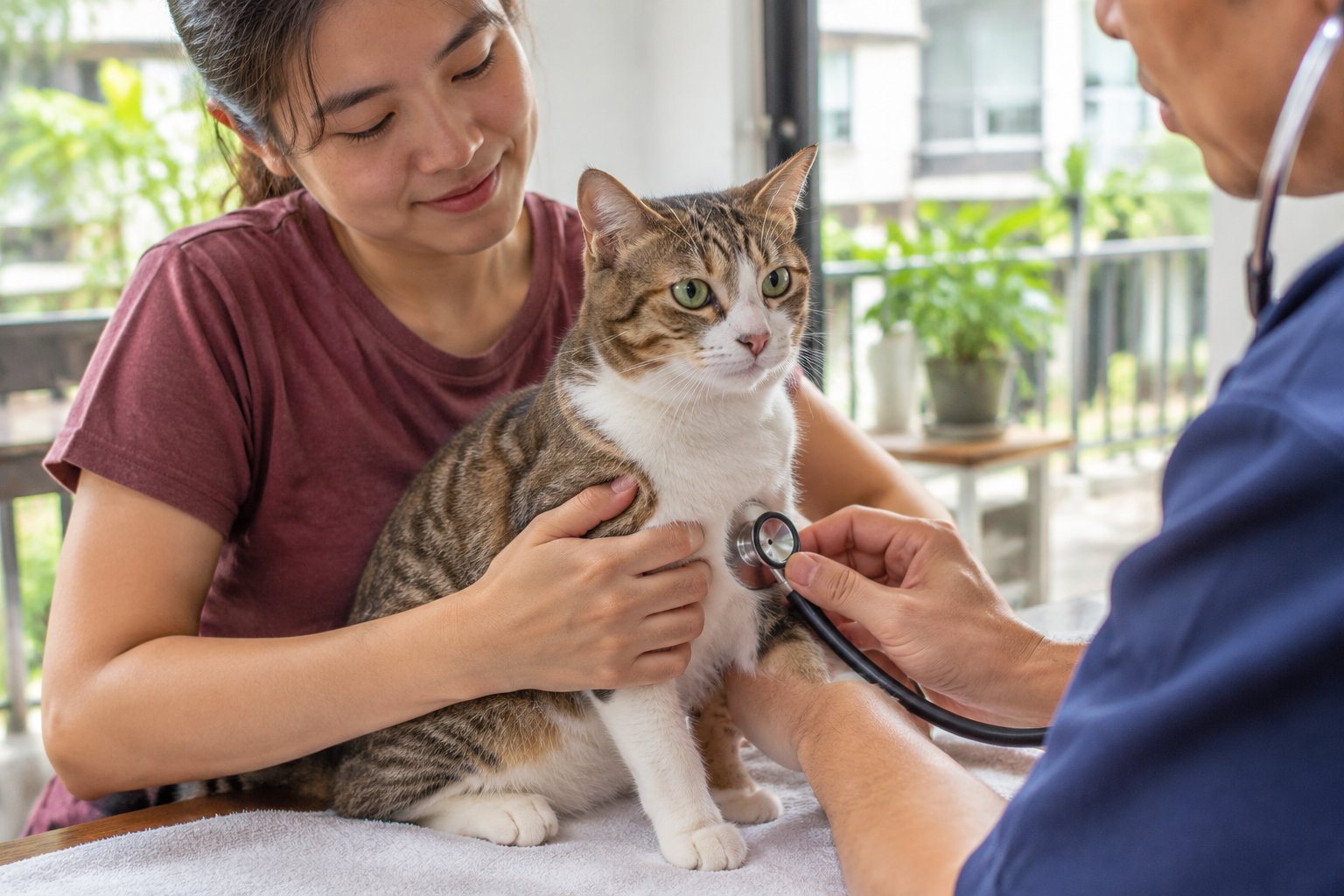
A vet will take a history, examine the cat gently, and may suggest tests such as blood work, dental checks or imaging. In Malaysia, clinics vary in equipment and services, so ask what is available. Costs vary widely by clinic, city and tests needed, so request an estimate before agreeing to procedures.
Bring the cat in a secure carrier with a familiar blanket. Covering the carrier can reduce stress. If the cat is too aggressive to handle, tell the clinic in advance so they can prepare a quiet room or advise on safe transport.
Behaviour modification at home
Once medical causes are treated or ruled out, behaviour work can begin. The goal is to reduce fear and give the cat control.
1. Build a safe base
Give the cat a quiet room with food, water, litter, scratching posts and hiding places. Let the cat choose when to come out. Do not drag it out for cuddles.
2. Identify and avoid triggers
Keep a simple log. If the trigger is the window, block the view with frosted film or a curtain. If it is a visitor, put the cat in a separate room before the guest arrives.
3. Use gradual introductions
For a new pet, keep them separated at first. Swap bedding so they learn each other's scent. Then allow brief, calm viewings through a cracked door or baby gate. Reward calm behaviour with treats. Move at the cat's pace.
4. Reward calm, never punish
Punishment, shouting or spraying water increases fear and can worsen aggression. Instead, reward the behaviour you want. If the cat looks at a trigger and stays calm, give a treat.
5. Provide predatory play
Use a wand toy to mimic hunting. Let the cat stalk, chase and catch. End with a small meal or treat. Two short sessions a day are often more useful than one long session.
6. Respect petting limits
Keep strokes short and stop before the tail starts twitching. Let the cat initiate contact.
7. Enrich the environment
Add vertical space, scratching posts, puzzle feeders and hiding spots. In a flat, window perches and shelves can greatly increase usable territory.
8. Manage the litter area
Provide one tray per cat plus one extra, in quiet places. Dirty or contested trays cause stress.
9. Use pheromone products
Synthetic feline pheromone diffusers or sprays may help some cats feel calmer. They are not a cure, but they can support a broader plan. Ask your vet or pet retailer what is available locally.
10. Keep routines predictable
Feed at similar times, keep play regular, and avoid sudden changes. Predictability lowers anxiety.
Comparison: what to do in different situations
| Situation | Immediate action | Follow-up |
|---|---|---|
| Cat attacks after seeing an outdoor cat | Separate and block the view | Use window film, create a distraction zone, reward calm |
| Cat bites when picked up | Stop picking up, check for pain | Vet exam, use a carrier or towel for handling |
| New kitten and resident cat fight | Separate, do not let them fight it out | Slow scent and sight introductions over days or weeks |
| Cat attacks hands during play | Stop moving hands, use a toy instead | Scheduled play sessions, avoid hand play |
| Cat guards a doorway | Do not force past, use another route | Behaviour plan with a qualified behaviourist |
| Cat becomes aggressive at the vet | Tell clinic in advance, cover carrier | Ask about quiet appointments or pre-visit medication advice |
When to see a vet
Book a vet visit promptly if sudden aggression is accompanied by any of these signs:
- Not eating or drinking
- Hiding more than usual
- Weight loss
- Drooling or bad breath
- Limping or reluctance to jump
- Changes in litter box use
- Confusion, staring or seizures
- Aggression that starts after a fall or accident
- A bite or scratch that breaks a person's skin
Seek urgent veterinary help if the cat is injuring itself, cannot be handled safely, or if a person has been badly bitten. Human bite wounds can become infected and need medical attention.
Prevention and long-term management
Sudden aggression is often preventable once the trigger is known. Keep a behaviour diary, maintain routine vet checks, provide enough play and territory, and introduce changes slowly. If aggression continues despite medical treatment and home changes, ask your vet for a referral to a qualified feline behaviourist. In Malaysia, services vary by state, so ask your vet for local recommendations rather than relying on unverified online claims.
Vet disclaimer
This article is general information for Malaysian cat owners and is not a substitute for veterinary examination, diagnosis or treatment. Sudden behaviour changes can signal medical illness. Always consult a licensed veterinarian about your cat's health and behaviour, and seek urgent care for injuries or bites.
Related reading
- Cat Health Guide Malaysia: Symptom Check, Red-Flag Triage & When to See a Vet
- Licking Wounds in Cats Malaysia: When It's Normal and When to Stop It
- Sudden Aggression in Cats in Malaysia: Why Your Cat Turned on You and What to Do
- Sudden Aggression Prevention for Cats: A Practical Guide for Malaysian Owners
- Trembling Prevention for Cats: Why It Happens and How to Reduce the Risk
- Arthritis in Cats: Causes and Care (Malaysia Guide)
- Blood Test for Cats Step by Step: What Happens at the Clinic

