
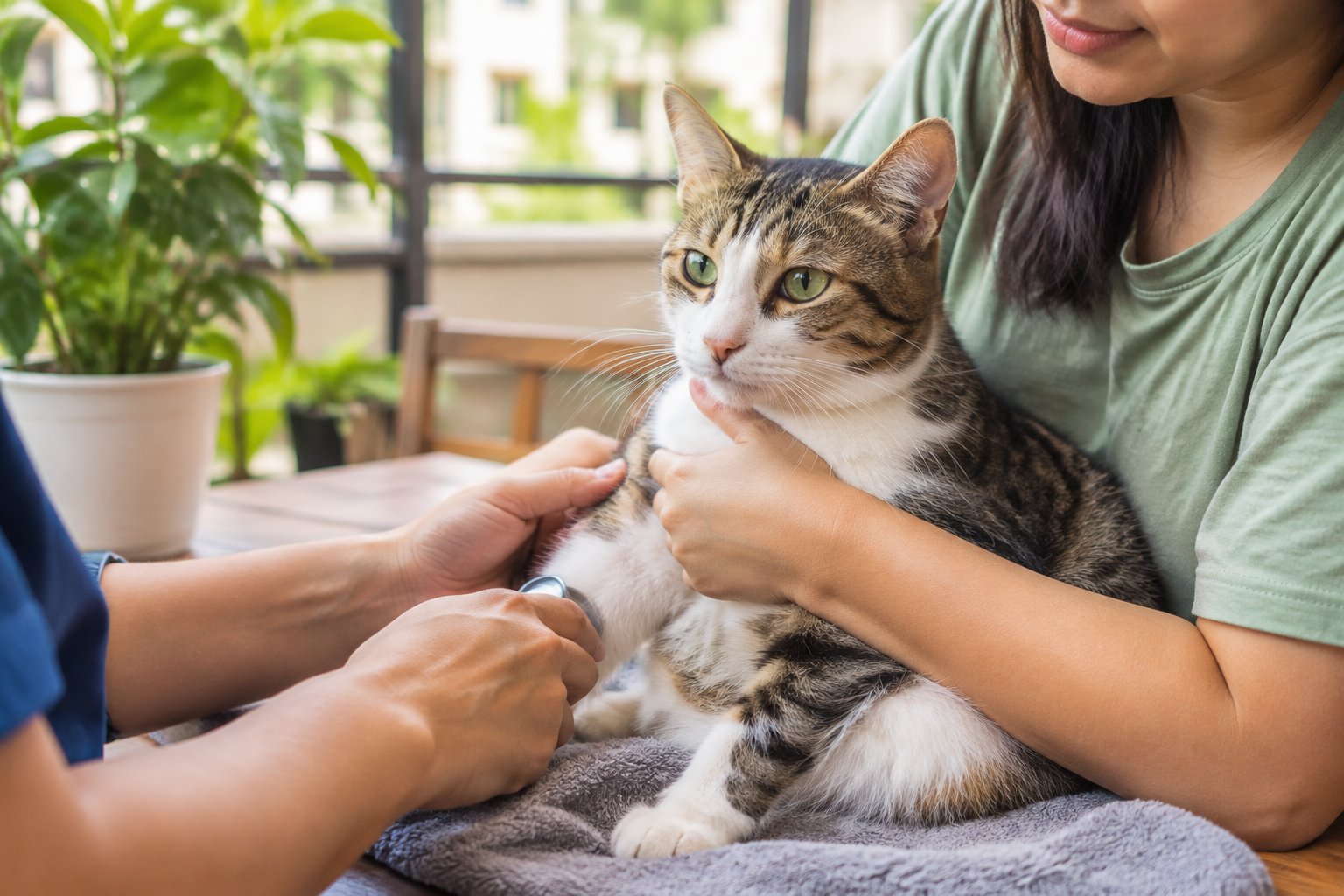
Heatstroke prevention for cats: the short answer
Preventing heatstroke in cats comes down to three things: shade, water, and airflow. In Malaysia's hot and humid climate, a cat can overheat even indoors if a room is stuffy or a cat is confined in a carrier or car. Never leave a cat in a parked vehicle, keep fresh water available at all times, and know the early signs—heavy panting, drooling, and weakness—so you can act fast. If you suspect heatstroke, cool the cat with room-temperature water and contact a vet immediately.
Why Malaysian heat and humidity are risky for cats
Cats evolved as desert animals, but that does not make them heatproof. They rely on panting and small amounts of sweating through their paw pads to lose heat. When the air is already humid, panting is less effective because moisture does not evaporate as quickly from the airways. That means a cat can struggle to cool down even when the thermometer does not look extreme.
Several factors make some cats more vulnerable:
- Flat-faced breeds such as Persians and Exotic Shorthairs have narrower airways, making panting less efficient.
- Long-haired cats carry more insulation and may overheat faster during active play.
- Kittens, senior cats, and overweight cats have a harder time regulating body temperature.
- Cats with heart or respiratory disease are at higher risk and should be monitored closely.
- Cats kept in small cages, carriers, or unventilated rooms cannot move to a cooler spot.
In Malaysia, the risk is not only midday sun. A stuffy apartment with closed windows, a parked car, or a balcony with no shade can become dangerously hot. Humidity can make a 30°C afternoon feel much worse for a cat that cannot escape the heat.
Everyday prevention checklist for Malaysian homes
Use this checklist as a daily routine, especially during hot spells or haze season when windows may be closed.
| Area | What to do | Why it helps |
|---|---|---|
| Water | Provide at least two bowls of fresh water in different rooms; refill daily | Cats often drink more when water is easily accessible |
| Shade | Keep curtains or blinds partly closed during the hottest hours; provide a shaded corner | Gives the cat a cooler place to rest |
| Airflow | Use fans or air-conditioning, but ensure the cat can move away from direct airflow | Moving air helps evaporate heat |
| Confinement | Never leave a cat in a car, carrier, or small room without ventilation | Small spaces heat up quickly |
| Grooming | Brush long-haired cats regularly to remove loose fur | Reduces matting and helps the coat function |
| Play | Schedule active play in the early morning or evening | Avoids exertion during peak heat |
| Windows | Ensure windows have secure screens if opened | Allows airflow without escape risk |
| Cooling spots | Offer a cool tile floor, a damp towel, or a shallow water dish for paw dipping | Cats can choose to cool themselves |
Water tips that actually work
Many cats are picky drinkers. Try these practical ideas:
- Place water bowls away from food and litter trays.
- Use wide, shallow bowls so whiskers do not touch the sides.
- Add a few ice cubes to a bowl—some cats enjoy playing with them, but do not rely on ice for cooling a cat that is already overheating.
- Offer wet food, which contains moisture, especially if your cat rarely drinks.
- Consider a pet water fountain if your cat prefers running water, but clean it regularly.
Shade and airflow in apartments and terrace houses
In a Kuala Lumpur apartment, afternoon sun can heat a balcony or a room with large windows. Keep blinds drawn on the sunny side and use a fan to circulate air. In a Johor terrace house, the upstairs rooms may become stuffy; open windows on opposite sides for cross-ventilation if safe, or use air-conditioning in one room as a cool retreat.
Do not assume a cat will always move to a cooler spot. Some cats sleep deeply in a warm patch of sun. Check on them, especially senior cats and flat-faced breeds.
Grooming and coat care: what helps and what does not
A cat's coat is designed to insulate against both cold and heat. Shaving a cat is rarely necessary for heat prevention and can lead to sunburn, skin irritation, and abnormal coat regrowth. Instead:
- Brush your cat regularly, especially long-haired breeds, to remove loose undercoat.
- Check for mats behind the ears, under the legs, and around the tail base; mats trap heat and moisture.
- Bathe only if your cat tolerates it, using a pet-safe shampoo, and dry thoroughly.
- Never apply human sunscreen or cooling gels to a cat without veterinary advice.
If your cat has a thick coat and seems uncomfortable, ask your vet whether a sanitary trim or professional grooming is appropriate. Do not shave down to the skin without guidance.
Exercise and play: timing matters
Cats can overheat during intense play, especially in a warm room. Follow these habits:
- Play in the cooler parts of the day—early morning or after sunset.
- Keep play sessions short and offer water breaks.
- Avoid chasing games that leave the cat panting heavily.
- If your cat is panting during play, stop and let it rest in a cool area.
- For indoor cats, provide vertical space and hiding spots so they can retreat.
Puzzle feeders and food-dispensing toys can provide mental stimulation without intense physical exertion during hot afternoons.
Travel and confinement: cars, carriers, and cages
Heatstroke prevention is especially important during travel. A parked car can become an oven within minutes, even on a cloudy day. Never leave a cat in a car, even with windows cracked. If you must transport a cat:
- Use a well-ventilated carrier.
- Place a towel or shade cover over the carrier, but do not block airflow.
- Keep the car air-conditioned.
- Bring water and a small bowl.
- Plan appointments for cooler times of day.
- Never leave the cat unattended in the vehicle.
At home, avoid keeping a cat in a small cage or carrier for long periods in a warm room. If confinement is medically necessary, place the cage in a shaded, ventilated area and monitor the cat's breathing.
Early warning signs of heatstroke in cats
Recognising heatstroke early can save a cat's life. Signs include:
- Heavy or open-mouth panting
- Excessive drooling
- Restlessness or pacing
- Bright red gums or tongue
- Warm ears and paws
- Weakness or wobbliness
- Vomiting or diarrhoea
- Confusion or staring
- Collapse or seizures
Not every cat will show all signs. A cat that is unusually quiet, hiding, or breathing fast after being in a hot room should be checked. Flat-faced cats may show distress with less obvious panting because their airways are narrow.
What to do if you suspect heatstroke
Act quickly and calmly. Heatstroke is an emergency.
- Move the cat to a shaded, ventilated, or air-conditioned area.
- Wet the coat with room-temperature water, focusing on the paws, belly, armpits, and groin. Do not use ice-cold water, which can constrict blood vessels and trap heat.
- Increase airflow with a fan, but do not aim it directly at the cat's face.
- Offer small sips of water if the cat is conscious and can swallow. Do not force water into the mouth.
- Do not cover the cat with a towel; this can trap heat.
- Contact a vet immediately and prepare to transport the cat. Continue cooling on the way if safe.
- Do not give human medication such as aspirin or paracetamol; these can be toxic to cats.
Even if the cat seems to recover, heatstroke can cause delayed organ damage. A vet should assess the cat.
When to see a vet
Seek veterinary care immediately if your cat:
- Collapses, has a seizure, or becomes unresponsive
- Has difficulty breathing or noisy breathing
- Vomits repeatedly or has bloody diarrhoea
- Does not improve within a few minutes of cooling
- Is a flat-faced breed, senior, overweight, or has a known heart condition and shows any signs of heat stress
- Was confined in a car or hot room for any length of time
Do not wait to see if the cat will "snap out of it." Heatstroke can progress rapidly. Call your vet clinic ahead so they can prepare for your arrival.
Cooling products and home setup: what is worth it
You do not need expensive equipment to prevent heatstroke. Simple items work well:
- Multiple water bowls in different rooms.
- A fan or air-conditioner in the main living area.
- Cooling mats designed for pets—some cats use them, but never force a cat onto one.
- A damp towel on a tiled floor for the cat to lie on.
- Window screens to allow safe airflow.
- A shaded balcony or secure outdoor enclosure with water and shade.
Avoid leaving a cat on a balcony with no shade or water, even for a short time. Metal and concrete surfaces can become hot enough to burn paw pads.
Special considerations for Malaysian homes
Malaysian homes vary widely. Here are two common scenarios:
- Kuala Lumpur apartment: The living room may be cool with air-conditioning, but a closed bedroom can become stuffy. Keep doors open or use a fan to circulate air. If your cat likes to sit on the balcony, provide a shaded area and a water bowl, and never leave it out there unattended in direct sun.
- Johor terrace house: Upstairs rooms can trap heat. Consider keeping a fan running in the cat's favourite room and checking the temperature with a simple thermometer. During rainy season, humidity can rise even when it feels cooler, so ensure ventilation is not blocked by closed windows.
If you use air-conditioning, set it to a comfortable temperature and provide a blanket or hiding spot. Cats can become chilled in very cold rooms, especially kittens and seniors.
Myths about cats and heat
- "Cats always know what is best for them." Cats can overheat while sleeping in a sunny spot. Supervision helps.
- "Cats do not need water if they eat wet food." Wet food helps, but fresh water should always be available.
- "Shaving keeps cats cool." The coat insulates; shaving can cause more harm than good.
- "Panting is normal in cats." Occasional panting after intense play may occur, but frequent or prolonged panting is a warning sign.
- "A fan is enough in a closed room." A fan moves air but does not lower temperature; in a hot, sealed room, it may just circulate warm air.
A simple daily heat-safety routine
Use this routine during hot months:
- Morning: Refill water bowls, check shade, and plan play before 10 a.m.
- Midday: Keep curtains drawn on sunny sides; check that the cat has a cool resting spot.
- Afternoon: Avoid active play; offer wet food or a water fountain.
- Evening: Resume play after sunset; check water bowls again.
- Before bed: Ensure the cat has access to a ventilated room and fresh water overnight.
Final thoughts
Heatstroke prevention for cats is mostly about common sense and daily habits. Provide shade, water, and airflow; avoid confinement in hot spaces; and learn the early signs. If you suspect heatstroke, cool the cat with room-temperature water and contact a vet right away. Malaysian pet owners should ask their local vet for advice tailored to their cat's breed, age, and health status, especially if the cat has heart or breathing problems.
This article is for general information only and is not a substitute for veterinary advice. If you are concerned about your cat's health, consult a licensed veterinarian.
Related reading
- Cat Health Guide Malaysia: Symptom Check, Red-Flag Triage & When to See a Vet
- Cat Fever Treatment in Malaysia: What to Do When Your Cat Is Hot
- Cat Heatstroke Treatment in Malaysia: First Aid, Vet Care & Prevention
- Cat Pale Gums Treatment in Malaysia: What to Do When Your Cat's Gums Turn White
- Cat Poisoning Treatment in Malaysia: What to Do, What to Expect, and How to Prevent It
- Cat Seizures Treatment in Malaysia: What to Do, Causes & Vet Care
- Cat Trembling Treatment in Malaysia: Causes, Home Care and When to See a Vet
- Fans and Air Conditioning for Cats in Malaysia: A Practical Comfort Guide
- Heatstroke in Cats: Causes, Signs and Care (Malaysia Guide)
- Heatstroke in Cats in Malaysia: Signs, First Aid & Prevention
- How to Prevent Paracetamol Poisoning Around Cats: A Malaysian Safety Guide
- How to Treat Heatstroke in Cats at Home: First Aid, Cooling Steps and When to Get Help

