
Answer first
Excessive urination in cats is often preventable. Feed wet food, keep fresh water available, scoop litter daily, provide enough boxes, reduce stress, maintain a healthy weight and book regular vet checks. These steps support bladder and kidney health, but any sudden change in urination needs veterinary attention.
What counts as excessive urination in cats?
Excessive urination, sometimes called polyuria, means your cat passes more urine than usual, more often, or in larger amounts. It is different from inappropriate urination, where a cat urinates outside the litter box but may produce a normal amount. Both can happen together.
Watch for these signs:
- Larger clumps in the litter box or a box that needs changing more often.
- Your cat visits the box more frequently, sometimes passing only small amounts.
- Drinking more water than usual.
- Urinating outside the box, on beds, floors or laundry.
- Straining, crying or licking the genital area after urinating.
- Blood in the urine or a strong smell.
Some changes are subtle. A cat that used to produce two or three clumps a day may suddenly produce many small clumps or one very large clump. Keep an eye on the box during daily scooping, because litter habits are one of the best early warning systems you have.
Why prevention matters
Urinary and kidney problems are common in cats, and they can be painful and costly to manage. Prevention does not guarantee that a cat will never become ill, but it lowers risk and helps you notice problems earlier. Early detection often means simpler treatment and a better outcome.
Prevention focuses on the factors owners can control: hydration, diet, litter box management, stress, weight and regular veterinary checks. Some causes, such as congenital conditions, cannot be prevented, but good care still supports overall health.
Build a hydration habit
Cats evolved as desert hunters and often have a weak thirst drive. Many cats live on dry food alone and drink little, which can concentrate urine and irritate the bladder. Improving water intake is one of the most practical prevention steps.
Practical hydration tips
- Offer wet food daily. Even a few spoonfuls of complete wet food add moisture.
- Place several water bowls around the home, away from food and litter boxes.
- Try a cat water fountain if your cat prefers running water.
- Refresh water at least twice a day and wash bowls regularly.
- Add a little warm water to dry food if your cat accepts it.
- Keep water bowls wide and shallow so whiskers do not touch the sides.
In warm Malaysian weather, water evaporates faster and cats may drink more. Check bowls more often during hot spells and make sure a cat home alone during the day has access to cool, fresh water.
Choose the right diet
Diet affects urine concentration and bladder health. A complete and balanced cat food is essential. Wet food is generally helpful because of its water content, but dry food can still be part of a healthy diet if your cat drinks well.
Some cats benefit from diets formulated for urinary health, but these should be chosen with veterinary advice, especially if your cat has a history of stones, crystals or kidney disease. Avoid sudden diet changes; transition over seven to ten days to prevent stomach upset.
| Diet factor | Why it matters | Practical step |
|---|---|---|
| Water content | Supports urine dilution | Include wet food daily |
| Protein quality | Supports muscle and overall health | Choose a complete food with named meat |
| Mineral balance | Helps manage stone risk | Ask a vet before using urinary diets |
| Portion control | Prevents obesity | Measure portions and avoid free-feeding |
| Feeding routine | Reduces stress and binge eating | Feed at set times if possible |
Litter box hygiene and setup
A clean, well-placed litter box reduces stress and litter box avoidance. Scoop at least once a day, ideally twice. Wash the box weekly with mild soap and water, and avoid strong-smelling cleaners that can irritate a cat's airways.
The box checklist
- One box per cat plus one extra.
- Boxes placed in quiet, accessible spots on each floor of the home.
- Boxes away from food, water and noisy appliances.
- Box large enough for your cat to turn around comfortably.
- Litter depth of about five to eight centimetres, depending on your cat's preference.
- Avoid covered boxes if your cat seems reluctant; some cats dislike the enclosed smell.
- Keep the same litter type where possible; sudden changes can cause avoidance.
In a Kuala Lumpur apartment, space can be tight. A second box in a bathroom or balcony corner may be more practical than one large box in a busy hallway. In a Johor terrace house, place boxes away from the kitchen and car porch so your cat has a calm toilet area.
Manage stress
Stress is a well-recognised trigger for urinary flare-ups and litter box avoidance in cats. Cats are sensitive to changes in routine, household noise and conflict between pets.
Common stressors include:
- Moving house or renovating.
- A new baby, pet or housemate.
- Loud visitors, thunder or fireworks.
- Changes in feeding times or litter type.
- Being bullied by another cat in the home.
Stress reduction strategies
- Keep a predictable routine for meals, play and quiet time.
- Provide hiding spots, high shelves and scratching posts.
- Use separate feeding stations for each cat.
- Introduce new pets slowly and with scent swapping.
- Use calming pheromone diffusers if your vet recommends them.
- Give your cat safe space away from visitors.
During festive seasons in Malaysia, such as Hari Raya or Chinese New Year, households can become busy and noisy. Set up a quiet room with water, food, litter and a bed so your cat can retreat.
Maintain a healthy weight
Obesity increases the risk of several health problems and can make it harder for cats to groom and use the litter box comfortably. Overweight cats may also be less active and drink less.
Weigh your cat regularly, measure food portions and encourage daily play. Puzzle feeders and short play sessions with a wand toy can help. If your cat needs to lose weight, ask your vet for a safe plan rather than cutting food suddenly.
Regular veterinary checks
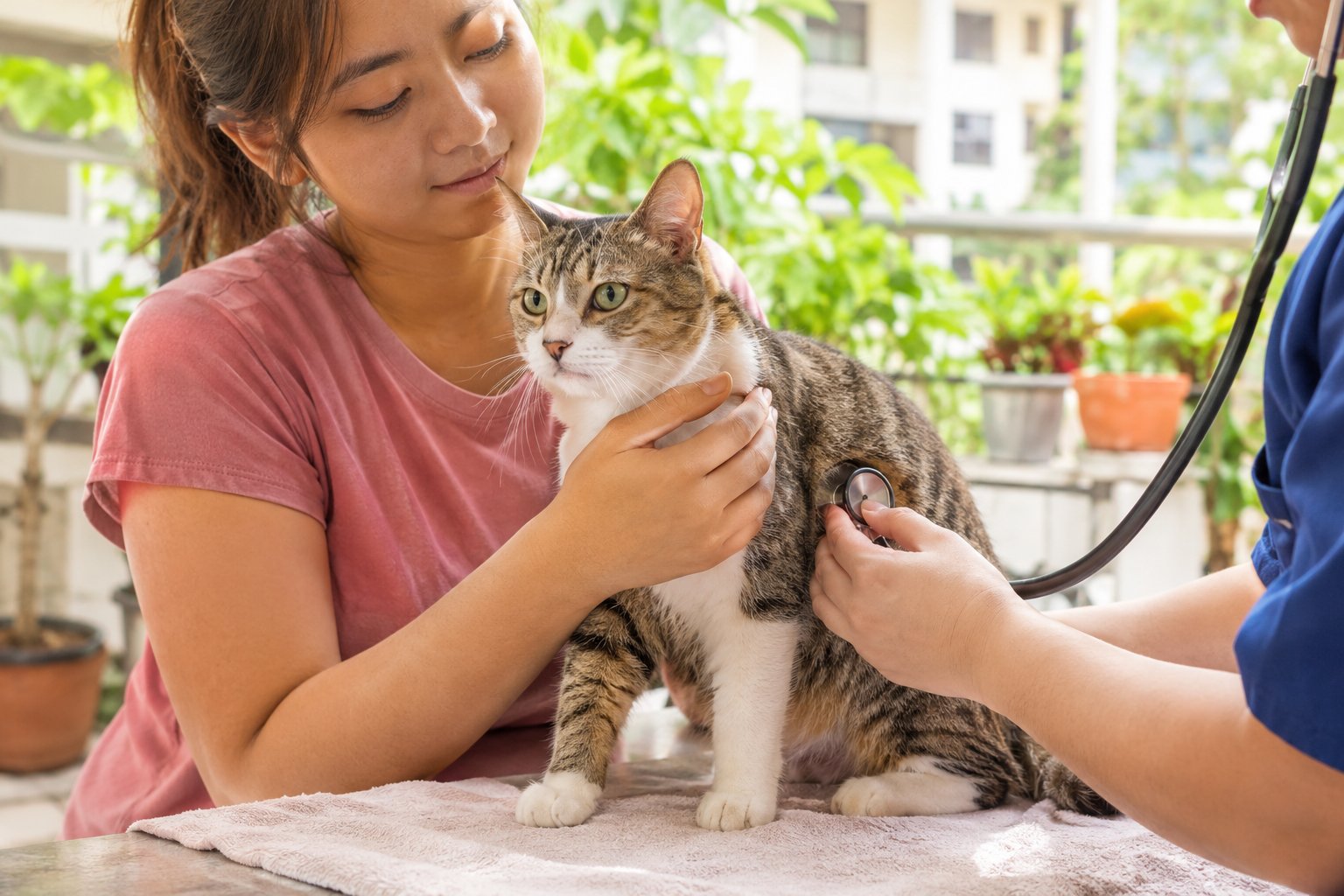
Routine vet visits help catch urinary and kidney problems early. A vet may check your cat's weight, urine and blood values, especially as cats get older. Senior cats benefit from more frequent checks.
Bring a fresh urine sample if your vet asks for one. In Malaysia, your vet can advise on how to collect a sample at home using non-absorbent litter or a clean container. Do not delay a vet visit if your cat is straining or cannot pass urine.
Know the common causes
Excessive urination can have many causes. Prevention helps reduce some risks, but it does not replace diagnosis.
| Cause | Typical clues | Prevention focus |
|---|---|---|
| Urinary tract infection | Frequent small urinations, straining, blood | Hygiene, hydration, vet checks |
| Feline idiopathic cystitis | Stress-related flare-ups, pain, blood | Stress reduction, hydration, enrichment |
| Bladder stones or crystals | Straining, blood, small amounts | Diet, water intake, vet advice |
| Kidney disease | Increased drinking and urination, weight loss | Regular senior checks, hydration |
| Diabetes mellitus | Increased thirst and urination, appetite changes | Weight control, vet checks |
| Hyperthyroidism | Increased appetite, weight loss, restlessness | Senior screening |
| Behavioural or box aversion | Urinating outside box, normal volume | Clean boxes, enough boxes, stress reduction |
When to see a vet
See a vet promptly if your cat:
- Strains to urinate or cries in the litter box.
- Cannot pass urine at all. This is an emergency, especially in male cats.
- Has blood in the urine.
- Starts urinating outside the box suddenly.
- Drinks much more than usual.
- Loses weight despite a good appetite.
- Vomits, seems lethargic or stops eating.
Do not wait to see if it settles. Urinary blockages can become life-threatening quickly. If you are unsure, call your vet for advice.
A simple prevention routine
Use this weekly checklist to keep prevention on track:
- Scoop litter daily and wash the box weekly.
- Refresh water bowls twice daily.
- Serve wet food at least once a day.
- Weigh your cat monthly or check body condition.
- Play with your cat daily for ten to fifteen minutes.
- Check for changes in litter clump size or frequency.
- Book vet checks at least once a year, more often for senior cats.
Malaysia-specific considerations
Malaysia's warm, humid climate means water bowls can spoil faster and litter can smell stronger. Clean more often than you might in a cooler country. Air-conditioned rooms can also dry out a cat's coat and reduce spontaneous drinking, so keep water available in every room your cat uses.
In high-rise apartments, cats may have less space to roam. Provide vertical space with shelves and cat trees, and keep litter boxes away from busy doorways. In landed homes, watch for cats drinking from ponds or drains, which is not a substitute for clean water and may expose them to illness.
Vet disclaimer
This article is for general information only and is not a substitute for veterinary advice. Always consult a licensed veterinarian for diagnosis and treatment of your cat's health condition.
Related reading
- Cat Dehydration Treatment in Malaysia: Signs, Home Care and When to See a Vet
- Dehydration in Cats: Causes, Warning Signs and How to Care for a Thirsty Cat
- Excessive Thirst in Cats: Causes and Care (Malaysian Owner's Guide)
- How to Treat Constipation in Cats at Home: A Practical Malaysian Guide
- How to Treat Dehydration in Cats at Home: A Practical Malaysian Guide
- How to Treat Excessive Thirst in Cats at Home: A Practical Guide for Malaysian Owners
- Arthritis in Cats: Causes and Care (Malaysia Guide)

