
Why Bad Breath Matters
Bad breath (halitosis) in cats is more than just an unpleasant smell—it's often the first sign of dental disease. Studies show that by age three, most cats have some form of periodontal disease. In Malaysia, where cats are popular pets in apartments and landed homes alike, dental care is frequently overlooked. This guide explains how to prevent bad breath through simple, effective routines that suit Malaysian lifestyles.
The Common Causes of Cat Bad Breath
Before you can prevent bad breath, it helps to understand what causes it. The most common culprits include:
- Plaque and tartar buildup: Food particles and bacteria form plaque on teeth. If not removed, plaque hardens into tartar, which irritates gums and causes odour.
- Gingivitis and periodontitis: Inflammation of the gums (gingivitis) and the structures supporting the teeth (periodontitis) lead to bad breath and tooth loss.
- Diet: Soft, sugary foods can contribute to plaque. Some cats on poor-quality diets develop halitosis.
- Medical conditions: Kidney disease, diabetes, and oral ulcers can cause distinctive breath odours. These require veterinary attention.
- Foreign objects: Sometimes a piece of food or a toy gets stuck between teeth, causing infection and odour.
Daily Brushing: The Gold Standard
Brushing your cat's teeth is the most effective way to prevent bad breath. It removes plaque before it hardens into tartar. Here's how to start:
- Choose the right tools: Use a soft-bristled cat toothbrush or a finger brush. Never use human toothpaste—it contains fluoride and detergents that are toxic to cats. Instead, use pet-safe enzymatic toothpaste in flavours like chicken or malt.
- Start slowly: Let your cat lick the toothpaste from your finger first. Then gently rub your finger along the gums. Gradually introduce the brush over several days.
- Focus on the outside surfaces: The outer surfaces of the teeth (facing the cheeks) are where plaque accumulates most. Lift the lip gently and brush in small circles.
- Be consistent: Aim for daily brushing. If daily is not possible, brush at least 3–4 times a week. Consistency matters more than duration.
- Reward your cat: Offer praise or a treat after each session to create a positive association.
In Malaysia's humid climate, bacteria thrive, so regular brushing is especially important. Many cat owners in Kuala Lumpur apartments find that a finger brush is easier to use in small spaces.
Diet and Dental Health
What your cat eats plays a big role in oral health. Here's how to choose food that helps prevent bad breath:
- Dry food vs. wet food: Dry kibble can help scrape plaque off teeth, but not all dry foods are created equal. Look for dental diets that have been clinically proven to reduce plaque and tartar. These often have larger kibble size and a special fibrous texture. Wet food, while hydrating, tends to stick to teeth more. If you feed wet food, brushing becomes even more critical.
- Dental diets: Several commercial dental diets are available in Malaysia. They are formulated to provide mechanical cleaning action as the cat chews. Check for the Veterinary Oral Health Council (VOHC) seal, which indicates the product has been tested and proven effective.
- Avoid sugary treats: Human foods like ice cream or sweet biscuits can promote plaque. Stick to cat-safe treats.
- Fresh water: Encourage drinking to help wash away food particles. Some cats prefer running water, so a pet fountain can help.
Dental Treats and Chews
Dental treats can be a helpful adjunct to brushing, but they are not a replacement. Look for treats that carry the VOHC seal for plaque and tartar control. These treats are designed to have a texture that scrubs teeth as the cat chews. However, they can be high in calories, so adjust your cat's main meal accordingly to prevent obesity. In Malaysia, you can find VOHC-accepted dental treats at major pet retailers and online. Always supervise your cat when giving any chew to prevent choking.
Other Home Care Options
Besides brushing and diet, there are additional products that can help:
- Dental wipes: These are soft wipes you rub over your cat's teeth and gums. They are less effective than brushing but can be a good starting point for cats that resist brushes.
- Water additives: Some products can be added to drinking water to reduce bacteria. However, effectiveness varies, and some cats may refuse to drink the water. Always choose pet-safe products.
- Dental gels and sprays: These can be applied directly to the teeth and gums. They often contain enzymes that help break down plaque. They are not as effective as brushing but can supplement your routine.
- Chew toys: Some cats enjoy chewing on dental toys, which can help massage gums and remove soft plaque. Choose toys that are appropriate for your cat's size and chewing style.
Regular Veterinary Check-ups
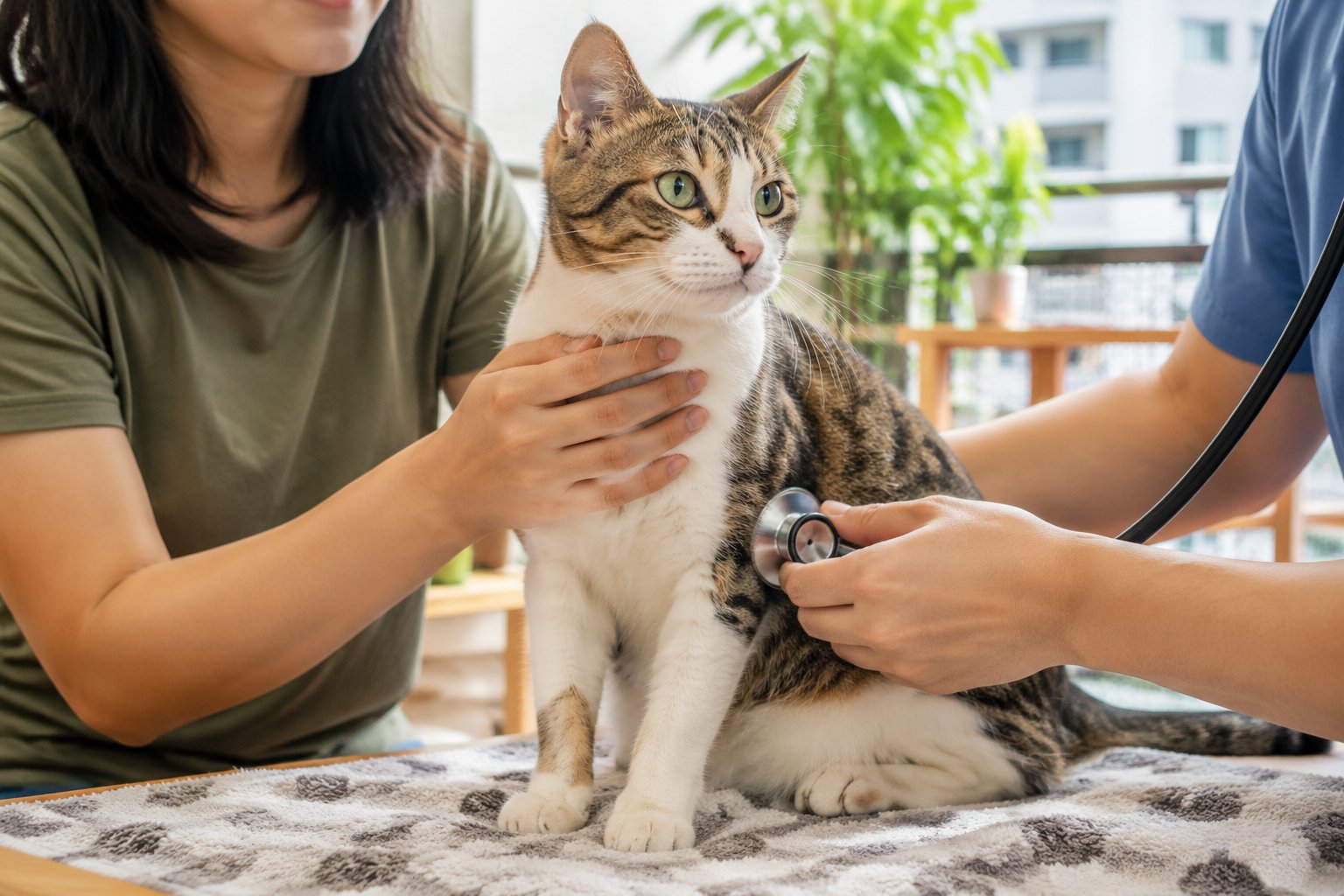
Even with excellent home care, cats need professional dental check-ups. Your vet can detect early signs of dental disease and remove tartar that home care cannot reach. In Malaysia, many veterinary clinics offer dental scaling and polishing under anaesthesia. The frequency depends on your cat's individual needs, but annual check-ups are a good starting point. During the exam, the vet will also check for other causes of bad breath, such as kidney disease or oral masses.
When to See a Vet
Bad breath that persists despite home care warrants a veterinary visit. Also seek professional advice if you notice:
- Drooling or dropping food
- Difficulty eating or chewing on one side
- Red, swollen, or bleeding gums
- Loose teeth or tooth loss
- Weight loss or decreased appetite
- Facial swelling
- Behavioural changes such as irritability or hiding
These signs may indicate advanced dental disease or other serious conditions. Early intervention can save your cat pain and prevent tooth loss.
Creating a Prevention Routine for Malaysian Cats
Malaysian cat owners face unique challenges: humidity, limited space in apartments, and busy lifestyles. Here's a sample routine that works:
- Morning: Brush your cat's teeth after breakfast. Use a finger brush and enzymatic toothpaste. Reward with a small dental treat.
- Evening: Provide a dental chew or toy for supervised play. Check water bowl and refresh with clean water.
- Weekly: Inspect your cat's mouth for redness or tartar buildup. Use dental wipes on days you can't brush.
- Monthly: Weigh your cat to monitor for weight changes. Adjust food portions if needed.
- Annually: Schedule a veterinary dental check-up. Discuss professional cleaning if recommended.
For cats in Johor terrace houses with access to outdoor areas, be mindful of what they might chew on outside. Avoid letting them gnaw on sticks or bones that can fracture teeth.
Comparison of Prevention Methods
| Method | Effectiveness | Ease of Use | Frequency | Notes |
|---|---|---|---|---|
| Brushing | High | Moderate | Daily | Gold standard; requires training |
| Dental diet | Moderate | High | Daily | Choose VOHC-accepted products |
| Dental treats | Low to Moderate | High | Daily | Watch calorie intake |
| Water additives | Low | High | Daily | May not be accepted by all cats |
| Dental wipes | Low to Moderate | Moderate | Daily or as needed | Good for cats that resist brushing |
| Professional cleaning | High | Low (vet procedure) | As needed | Requires anaesthesia |
Common Myths About Cat Bad Breath
- Myth: Bad breath is normal in cats. Fact: Bad breath is a sign of an underlying problem and should not be ignored.
- Myth: Dry food alone cleans teeth. Fact: Most dry foods are too small and crumbly to effectively clean teeth. Special dental diets are needed.
- Myth: Cats don't need dental care because they don't get cavities. Fact: Cats rarely get cavities, but they are prone to periodontal disease, which is more common and serious.
- Myth: Home remedies like coconut oil cure bad breath. Fact: While some natural products may have mild antibacterial properties, they cannot replace proper dental care.
The Role of Genetics and Breed
Some cat breeds are more prone to dental issues. For example, Siamese and Persian cats may have higher rates of periodontal disease. If you own a predisposed breed, be extra vigilant with prevention. In Malaysia, popular breeds include the local moggy, Persian, and Maine Coon. Regardless of breed, all cats benefit from a good dental routine.
Managing Stress During Dental Care
Cats can be stressed by handling, especially in multi-cat households. To make dental care easier:
- Start when your cat is relaxed, perhaps after a meal.
- Use positive reinforcement: treats, praise, and play.
- Keep sessions short—aim for 30 seconds initially.
- If your cat becomes agitated, stop and try again later.
- Consider using pheromone sprays or calming music to create a calm environment.
The Importance of Starting Early
Kittens can be introduced to tooth brushing as early as 8–12 weeks. Start by letting them lick toothpaste off your finger, then gradually introduce the brush. Early positive experiences make lifelong dental care easier. If you adopt an adult cat, be patient—it's never too late to start.
Conclusion
Preventing bad breath in cats is achievable with a consistent home care routine and regular veterinary check-ups. Brushing daily, feeding a dental-friendly diet, and using vet-approved products can significantly reduce plaque and tartar. Remember that bad breath is often a sign of dental disease, so don't ignore it. By taking proactive steps, you can keep your cat's mouth healthy and their breath fresh, ensuring a happier, healthier life.
Disclaimer: This article is for informational purposes only and does not replace professional veterinary advice. Always consult your veterinarian for diagnosis and treatment of your cat's health issues.
Related reading
- Cat Health Guide Malaysia: Symptom Check, Red-Flag Triage & When to See a Vet
- Breathing Difficulty Prevention for Cats: A Practical Malaysian Guide
- Constipation Prevention for Cats: A Practical Guide for Malaysian Owners
- Pale Gums in Cats: Prevention, Early Warning Signs and What Malaysian Owners Should Do
- Ringworm Prevention for Cats in Malaysia: A Practical, Vet-Informed Guide
- Sneezing Blood Prevention for Cats: Causes, Care and When to Worry
- Sneezing Prevention for Cats in Malaysia: A Practical Guide

