
What constricted pupils in cats actually mean
Constricted pupils (the medical term is miosis) mean the black centre of the eye has become smaller than usual. In cats, the pupil is normally a vertical slit in bright light and a rounder shape in dim light. When both pupils stay tiny even in normal room lighting, or when only one pupil is small, something is affecting the muscles or nerves of the eye, the brain, or the whole body.
The most important thing to understand is that miosis is a symptom, not a diagnosis. You cannot treat it at home in the sense of giving a cure. What you can do at home is keep your cat safe, remove any obvious cause, gather useful information for your vet, and recognise when the situation is an emergency.
This guide is written for Malaysian cat owners in apartments, terrace houses and landed homes. It covers safe at-home steps, what never to do, how to monitor your cat, and when to seek veterinary care.
First, decide whether this is an emergency
Before doing anything else, look at the whole cat, not just the eyes. Constricted pupils with any of the following signs mean you should contact a veterinarian urgently:
- Vomiting, diarrhoea or drooling
- Muscle twitching, tremors or seizures
- Wobbliness, weakness or inability to walk
- Difficulty breathing
- Collapse or extreme lethargy
- One pupil small and the other normal or large (unequal pupils)
- Eye pain: squinting, pawing at the face, redness or cloudy eye
- Recent exposure to insecticides, human medicines, toxic plants or dog flea products
If any of these are present, skip the home remedies and call your vet or an emergency animal clinic. In Malaysia, veterinary clinics in major cities such as Kuala Lumpur, Penang and Johor Bahru generally operate during business hours, and some offer after-hours emergency services. Ask your regular vet for their emergency contact before you need it.
If your cat is bright, eating, drinking, walking normally and has no other signs, you can monitor at home for a short period while you investigate possible causes.
Safe at-home steps you can take
1. Adjust the lighting and observe properly
Pupils change with light. Take your cat into a normally lit room, not direct sunlight, and watch the pupils for a minute. Then dim the lights and see whether the pupils enlarge. A normal pupil should respond to light changes. If both pupils remain pinpoint in dim light, that is abnormal and worth noting.
Use your phone torch briefly from the side to check the pupillary light reflex, but do not shine it directly into the eye for long. Note whether the pupil shrinks further when light hits it and enlarges when the light moves away.
2. Remove possible toxins from the environment
Scan your home for common culprits:
- Insect sprays, ant powders and mosquito coils
- Flea and tick products, especially those labelled for dogs
- Slug pellets and garden chemicals
- Human medicines left on tables or in bags
- Toxic plants such as lilies, oleander and some ornamental plants
- Essential oils and diffusers
- Cleaning products, especially concentrated ones
If you suspect your cat walked through a sprayed area or had contact with a product, wash the area with mild soap and water if it is on the fur or paws, and prevent grooming by using an Elizabethan collar if you have one. Do not induce vomiting unless a vet tells you to.
3. Keep the cat calm and contained
Stress can worsen many conditions. Put your cat in a quiet room with fresh water, a litter tray and a familiar blanket. Avoid handling the eyes excessively. If you have other pets, separate them so the affected cat is not groomed or disturbed.
4. Record what you see
Write down:
- When you first noticed the small pupils
- Whether one or both eyes are affected
- Any possible exposure to chemicals, plants or medicines
- Other signs such as appetite, drinking, urination, vomiting, behaviour changes
- Photos or a short video of the eyes in different lighting
This information helps your vet enormously, especially if the pupils look normal by the time you arrive.
5. Offer water and food only if the cat is alert
Do not force-feed. If your cat is alert and swallowing normally, offer small amounts of water and its usual food. If it is dull, vomiting or unable to swallow, withhold food and water and seek veterinary care.
What you must never do at home
- Never use human eye drops. Some drops contain ingredients that can be dangerous to cats or mask serious disease.
- Never give human painkillers. Paracetamol and ibuprofen are toxic to cats.
- Never use dog flea or tick products on cats. Many contain permethrin or similar insecticides that can cause severe poisoning in cats, including tremors, drooling and pinpoint pupils.
- Never induce vomiting unless instructed by a vet.
- Never try to treat unequal pupils at home. This can indicate serious neurological or eye disease.
- Never delay care because you want to 'wait and see' when other signs are present.
Common causes of constricted pupils in cats
Understanding causes helps you give your vet a better history. The table below summarises common categories.
| Cause category | Examples | Typical clues |
|---|---|---|
| Normal physiology | Bright light, sleep | Pupils enlarge in dim light; cat is otherwise normal |
| Poisoning | Organophosphate/carbamate insecticides, permethrin flea products, some plants, certain human medicines | Drooling, vomiting, tremors, weakness, recent exposure |
| Pain | Eye pain, abdominal pain | Squinting, hiding, reduced appetite, reluctance to move |
| Eye disease | Uveitis, corneal injury, glaucoma (early) | Redness, cloudiness, tearing, pawing at eye |
| Neurological problems | Horner's syndrome, brain disease | Unequal pupils, drooping eyelid, head tilt, wobbliness |
| Systemic illness | Severe dehydration, certain metabolic problems | Lethargy, poor appetite, weight loss |
| Drug effect | Some prescribed eye drops or sedatives | Recent medication or procedure |
This is not a complete list. Only a veterinarian can diagnose the cause after examination.
How to monitor your cat at home
Monitoring is not the same as treating. Use a simple checklist twice a day and write down changes.
Home monitoring checklist
- Are both pupils the same size?
- Do pupils enlarge in dim light?
- Is the cat eating and drinking normally?
- Any vomiting, diarrhoea or drooling?
- Any wobbliness, tremors or seizures?
- Is the cat squinting, pawing at the face or avoiding light?
- Is behaviour normal (grooming, litter use, interaction)?
- Any possible exposure to toxins since last check?
If any new sign appears, contact your vet. Do not wait for the next scheduled check.
When to see a vet
See a vet promptly if:
- Pupils remain constricted in normal or dim light
- Only one pupil is constricted
- There is eye redness, cloudiness, squinting or discharge
- Your cat is lethargic, off food or hiding more than usual
- You suspect exposure to any toxin
- Your cat has a head tilt, drooping eyelid or balance problems
- The pupils changed after starting a new medication
Seek emergency care immediately if there is vomiting, drooling, tremors, seizures, difficulty breathing, collapse or severe weakness. In Malaysia, call your regular clinic first; if they are closed, ask for their after-hours advice or contact an emergency animal hospital if one is available in your area.
Practical examples for Malaysian homes
Kuala Lumpur apartment: A cat living in a high-rise may be exposed to insect sprays used in common areas or on balconies. If the cat's pupils become pinpoint after a pest control session, remove it from the area, ventilate the room, wash paws and fur if contaminated, and call your vet. Keep the cat indoors and away from treated surfaces.
Johor terrace house: Cats with outdoor access may encounter garden chemicals, toxic plants or stray cats. If you notice small pupils plus drooling or wobbliness after the cat has been in the garden, treat it as possible poisoning and seek veterinary care. Bring a photo of any plant or product you suspect.
Penang rainy season: Damp weather can bring out snails and slugs, and some owners use slug pellets. These are toxic to cats. Store them securely and never use them in areas your cat can access.
How vets investigate constricted pupils
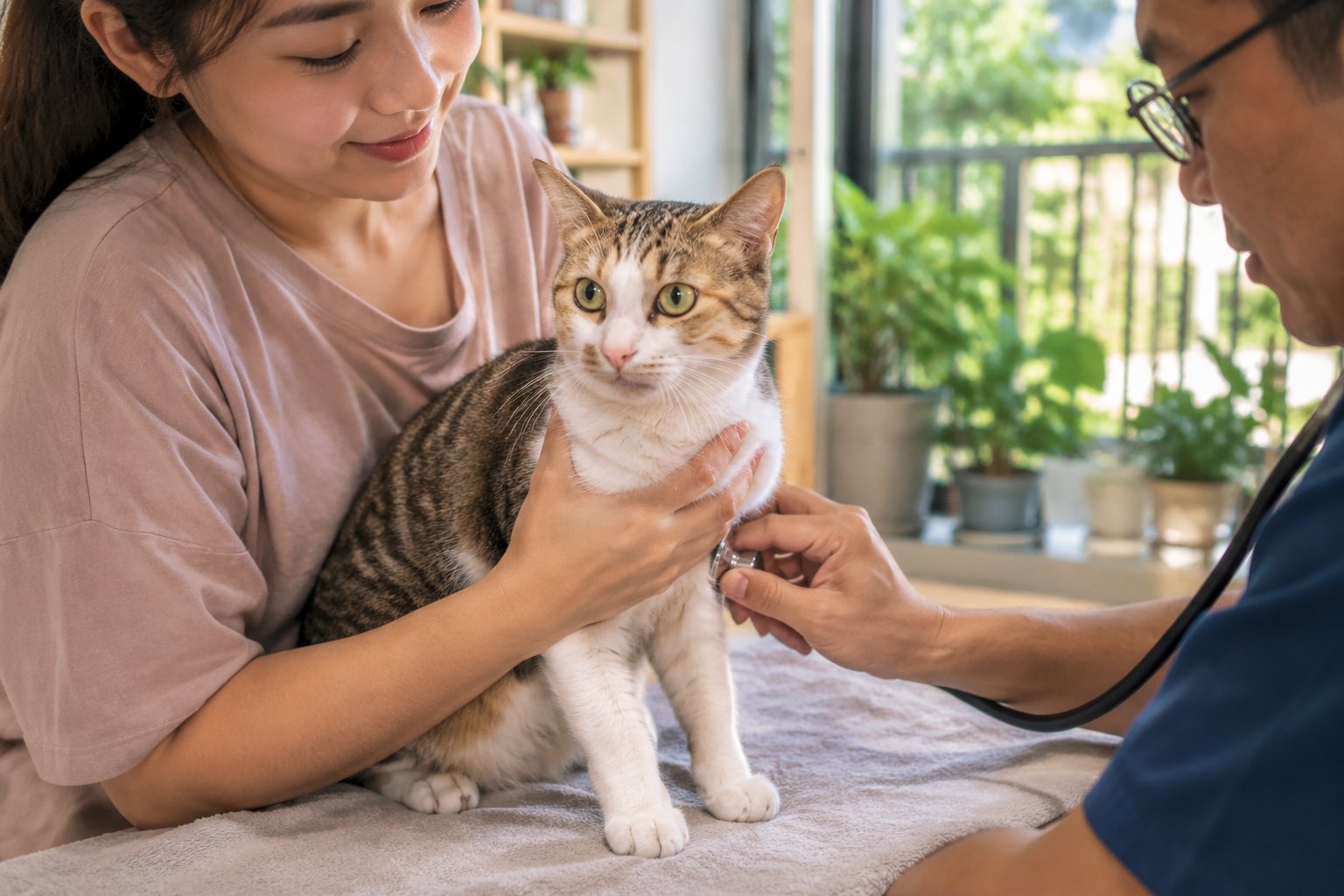
A vet will usually start with a full history and physical examination. They may check the pupillary light reflex, examine the eyes with an ophthalmoscope, and look for other neurological signs. Depending on findings, they may recommend blood tests, blood pressure measurement or referral to an eye specialist. Treatment depends entirely on the cause: removing the toxin, treating pain, managing eye inflammation, or addressing an underlying disease.
You cannot replicate this at home. Your role is to observe, protect and transport safely.
Transporting your cat to the vet safely
Use a secure carrier with a familiar blanket. Do not let the cat loose in the car. If poisoning is suspected, bring the product container or a photo of the plant. Keep the car ventilated and avoid direct sunlight on the carrier. If your cat is having seizures, do not handle the mouth and keep the carrier stable.
Prevention is the best home treatment
- Store all chemicals, medicines and flea products out of reach
- Never use dog flea products on cats
- Read labels before using any spray in the home
- Keep toxic plants out of reach or remove them
- Use cat-safe pest control and consult your vet
- Schedule regular check-ups
Bottom line
Constricted pupils in cats are a sign that needs investigation, not a condition you can cure at home. Safe home care means reducing exposure, keeping the cat calm, monitoring closely and knowing when to get help. If in doubt, call your vet. It is always better to have a cat checked than to wait for serious signs to appear.
This article is for general information only and is not a substitute for veterinary advice. Always consult a licensed veterinarian for diagnosis and treatment of your cat.
Related reading
- Cat Poisoning Treatment in Malaysia: What to Do, What to Expect, and How to Prevent It
- How to Treat Poisoning in Cats at Home: First Aid, Safe Steps and When to Rush to the Vet
- Paracetamol Poisoning in Cats in Malaysia: Why Even One Tablet Can Be Deadly
- Anemia in Cats: Causes, Signs and Care (Malaysia Guide)
- Anemia in Cats in Malaysia: Signs, Causes, and What to Do
- Anemia Prevention for Cats: A Practical Guide for Malaysian Owners
- Arthritis in Cats: Causes and Care (Malaysia Guide)

