
The short answer
If your cat is straining in the litter box and producing little or no urine, assume a urinary blockage and go to a vet now. This is one of the few cat problems where hours genuinely matter. A blocked cat cannot empty its bladder, waste backs up, and the heart can fail. Treatment is straightforward in a clinic and almost impossible at home.
This guide walks through what a blockage is, how to recognise it, what a vet will do, what to ask about costs in Malaysia, and how to reduce the chance of it happening again.
What a urinary blockage actually is
A cat's bladder collects urine from the kidneys. Urine leaves through a narrow tube called the urethra. In a blockage, something stops urine leaving — crystals, a soft plug of mucus and cells, a bladder stone, or swelling from inflammation. The bladder keeps filling but cannot drain.
Male cats are far more vulnerable because their urethra is longer and narrower, especially at the tip. Neutered males are commonly affected. Females can block too, usually from a stone, but it is less common.
The medical term you will hear is FLUTD — feline lower urinary tract disease. It is an umbrella term covering cystitis (bladder inflammation), stones, plugs and urethral obstruction. A blockage is the emergency end of that spectrum.
Why it is dangerous: retained urine sends potassium and other waste products back into the blood. High potassium affects the heart rhythm. The bladder stretches and can, in extreme cases, rupture. Add dehydration and pain, and a cat can go from uncomfortable to critical within a day.
Warning signs: what to watch for
| Sign | What it looks like | Urgency |
|---|---|---|
| Straining in the box | Squatting for minutes, little or nothing comes out | Emergency |
| Frequent tiny urinations | Many small spots, small drops | Emergency if paired with straining |
| Crying while urinating | Loud meowing in the box | Emergency |
| Licking the genital area | Constant grooming of the back end | Urgent |
| Restlessness, pacing | Cannot settle, in and out of the box | Emergency |
| Vomiting, hiding, weakness | Late-stage signs | Critical |
| Blood in urine | Pink tinge on litter or bedding | Urgent |
| No urine at all for hours | Dry litter, no output | Critical |
A useful home check: if your cat has been in and out of the litter box repeatedly and the litter is dry or nearly dry, treat it as a blockage until a vet says otherwise. Do not press on the belly to "check" — a full bladder is painful and fragile.
Some cats show only vague signs at first: eating less, hiding under the bed, seeming grumpy. In a male cat with a history of urinary issues, any change in litter box behaviour deserves a call to the clinic.
What happens at the vet
1. Triage and examination
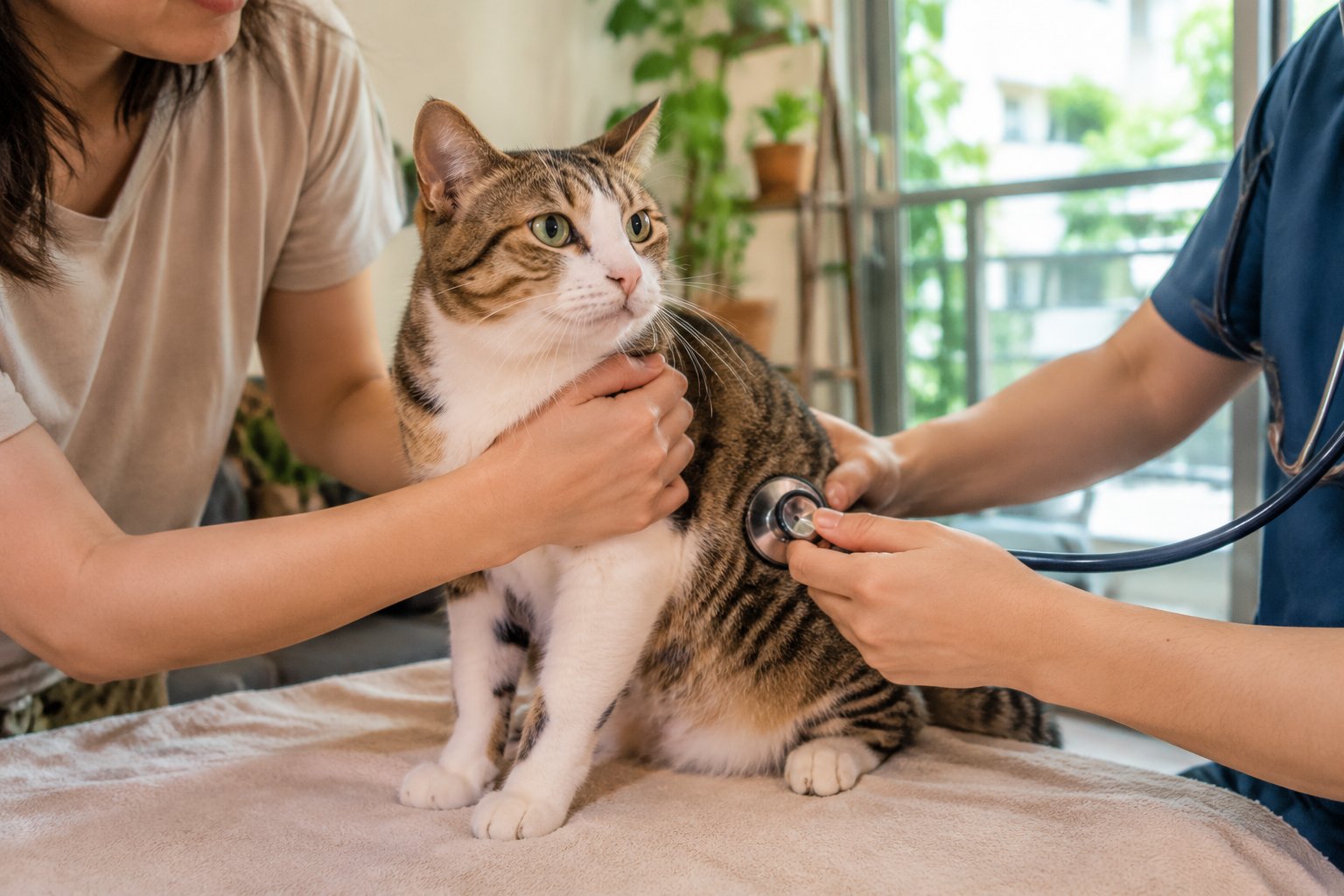
Tell the receptionist on the phone that you suspect a blockage. Most clinics will move a blocked cat ahead of routine appointments. The vet will feel the abdomen for a firm, painful bladder, check gum colour, heart rate and hydration, and ask when the cat last passed urine.
2. Stabilisation
A blocked cat is often dehydrated and may have dangerous potassium levels. The vet usually starts intravenous fluids and pain relief before or during unblocking. Blood tests check kidney values, electrolytes and overall condition. Some clinics also run a urine test and imaging — X-ray or ultrasound — to look for stones.
3. Catheterisation
The core treatment. Under sedation or anaesthesia, the vet passes a sterile urinary catheter through the urethra into the bladder and drains the urine. This relieves pressure immediately. The catheter is often left in place for a period, connected to a closed collection system, so the bladder can be flushed and monitored.
4. Monitoring
While the catheter is in, the team watches urine output, colour, heart rhythm and blood values. Some cats need a repeat blood test to confirm potassium and kidney values are normalising.
5. Removal and observation
When the cat is stable and passing urine, the catheter comes out. The vet watches to confirm the cat can urinate on its own. Some cats re-block within hours, which is why a hospital stay is common.
6. Surgery in some cases
If the cat blocks repeatedly, or has a stone that will not pass, surgery may be needed. Options include removing stones from the bladder or, in recurrent male cases, a procedure that widens the urethral opening (perineal urethrostomy). This is a specialist decision, not a first step.
What it costs in Malaysia
There is no fixed national price. What you pay depends on the clinic, the city, whether it is after hours, how many days the cat stays, and which tests and imaging are needed. Emergency and overnight care costs more than a daytime visit.
Rather than quote a number that may be wrong, ask for a written estimate covering:
- Consultation and emergency fee
- Sedation or anaesthesia
- Catheter placement and the catheter itself
- Intravenous fluids and hospitalisation per day
- Blood tests, urine tests, X-ray or ultrasound
- Medication to take home
- A recheck visit
Ask specifically what happens if the cat re-blocks during the stay, and whether that is charged separately. If cost is a barrier, say so early — some clinics will discuss a staged plan. Pet insurance, if you have it, usually needs a claim form and itemised bill, so ask for both.
Home care after discharge
Your cat comes home on medication, often including pain relief and sometimes a urinary relaxant. Follow the dose exactly and finish the course.
Practical checklist for the first week:
- Use a litter box with non-clumping, low-dust litter so you can see urine output clearly.
- Count urine clumps or spots daily. Note size and number.
- Keep the box in a quiet, easy-to-reach spot — not next to a noisy washing machine.
- Provide at least one box per cat plus one spare.
- Offer fresh water in several places, plus a fountain if your cat likes running water.
- Feed the prescribed diet only, and do not mix in treats unless the vet approves.
- Keep a simple log: time, amount, any straining, any blood.
- Book the recheck even if the cat seems fine.
Watch for the return of straining, crying, small frequent urinations or hiding. Re-blockage is a real risk in the first days and weeks.
Preventing a repeat episode
The single biggest lever is water. Dilute urine and a bladder that flushes regularly are less likely to form crystals and plugs.
| Change | Why it helps | How to start |
|---|---|---|
| Wet food | Adds water to the diet | Mix a spoonful into current food, increase slowly |
| Water fountains | Encourages drinking | Place away from food bowl |
| Multiple water bowls | More chances to drink | Refresh twice daily |
| Prescription urinary diet | Alters urine pH and mineral levels | Only on vet advice |
| Weight control | Obesity raises risk | Measure portions, no free feeding |
| Stress reduction | Stress triggers cystitis | Routine, hiding spots, pheromone diffusers |
| Clean boxes | Dirty boxes cause retention | Scoop daily, wash weekly |
Stress deserves more attention than it usually gets. Cats are territorial and routine-driven. A new pet, a move, building work, or a crowded multi-cat home can all trigger bladder inflammation. In a small Kuala Lumpur apartment, for example, a single litter box in a busy hallway is a common stress point — adding a second box in a quiet room and a high perch can make a real difference. In a Johor terrace house with several cats, feeding stations spread across different rooms reduce competition at the bowl.
Diet matters too. Many vets recommend a prescription urinary diet after a blockage, at least for a period. These diets are formulated to control mineral levels and urine pH. Do not switch to a supermarket "urinary health" product without asking, and never mix prescription and regular food, as that can undo the diet's effect.
When to see a vet
Go immediately — do not wait for morning — if your cat:
- Strains in the litter box with little or no urine
- Cries out while urinating
- Has a hard, painful belly
- Is vomiting, weak, wobbly or hiding
- Has not produced urine for many hours
- Is a male cat showing any urinary signs at all
Call the clinic first if you can, so they can prepare, but do not delay going in. If your usual vet is closed, find an emergency clinic. A blocked cat that is still walking around is still an emergency.
For less urgent signs — blood in urine, frequent small urinations but still passing urine, or a cat that seems uncomfortable — book a same-day or next-day appointment. Do not wait a week.
Questions to ask your vet
Bring this list to the appointment:
- Was this a true blockage or inflammation?
- What tests were done, and what did they show?
- Is there a stone or crystals, and do they need removing?
- What diet do you recommend, and for how long?
- What is the recheck schedule?
- What signs mean I should come straight back?
- What is the total estimated cost, including the recheck?
- Is surgery something we should consider if this happens again?
A note on Malaysian conditions
Malaysia's heat and humidity mean cats can become dehydrated faster than owners expect, especially outdoor or semi-outdoor cats. A cat that lives on a balcony or in a car porch may drink less than you think. During the hot months, check water bowls more often and consider adding wet food to boost moisture intake.
Rainy season brings its own issues: cats may stay indoors more, litter boxes get used more heavily, and stress can rise in multi-cat homes. Scoop more often during wet spells and watch for changes in box habits.
Also remember that many Malaysian households have more than one cat. A blocked cat may be missed if the litter box is shared and nobody is counting output. If you have several cats, consider a brief period of separate boxes or a camera near the box so you can see who is producing what.
The bottom line
A urinary blockage is not a wait-and-see problem. Recognise the signs, call ahead, and get to a vet. Treatment is well understood and often successful when it is prompt. After recovery, the real work begins: water, diet, stress control and regular rechecks. Do that, and you give your cat the best chance of avoiding a second emergency.
This article is general information for Malaysian cat owners and is not a substitute for veterinary advice. Always consult a licensed veterinarian about your cat's health, diagnosis and treatment.
Related reading
- Cat Health Guide Malaysia: Symptom Check, Red-Flag Triage & When to See a Vet
- Breathing Difficulty Prevention for Cats: A Practical Malaysian Guide
- Cat Breathing Difficulty Treatment in Malaysia: What to Do and What to Expect
- Cat Hair Loss Treatment in Malaysia: A Practical Owner's Guide
- Cat Ringworm Treatment in Malaysia: A Practical Owner's Guide
- Cat Skin Fungus Treatment in Malaysia: A Practical Owner's Guide
- Cat Swollen Belly Treatment in Malaysia: Causes, Home Care and When to See a Vet
- Constipation in Cats: Causes, Care and When to See a Vet in Malaysia
- Dehydration in Cats in Malaysia: Signs, Causes and How to Help
- Dehydration Prevention for Cats: A Practical Guide for Malaysian Owners

