
Quick answer
Most cat sneezing is caused by viral upper respiratory infections, dust, smoke or dental problems. Keep the cat hydrated, humidify the air, wipe nasal discharge and avoid antibiotics unless a vet confirms a bacterial infection. See a vet if sneezing lasts over a week, or if there is fever, appetite loss, breathing difficulty or blood.
Why cats sneeze, and what it usually means
A sneeze is a reflex that clears the nasal passages. When a cat sneezes occasionally, it is often nothing more than a bit of dust, a stray hair or a strong smell. When sneezing becomes frequent, comes in bursts, or is paired with discharge, squinting, fever or a change in appetite, it usually points to something that needs attention.
In Malaysian homes, the common triggers fall into a few groups:
- Viral upper respiratory infection (feline herpesvirus or calicivirus). This is the most common cause of persistent sneezing in cats, especially in multi-cat households, shelters and rescued kittens. It often comes with eye discharge, mouth ulcers, fever and reduced appetite.
- Environmental irritants. Household dust, mosquito coil smoke, cooking fumes, incense, aerosol sprays, perfume and strong cleaning products can all irritate a cat's nose. Cats kept in apartments with poor ventilation are more exposed.
- Dental disease. Root infections of the upper teeth can drain into the nasal cavity and cause sneezing, often with bad breath and one-sided discharge.
- Foreign bodies. A blade of grass, a seed or a small insect can lodge in the nose, causing violent, sudden sneezing, often with pawing at the face.
- Nasal polyps or tumours. Less common, but more likely in older cats with long-standing one-sided sneezing or nosebleeds.
- Allergies. True feline allergies do exist, though they are diagnosed less often than infections and irritants.
Knowing which group your cat fits into changes the treatment plan. A kitten from a rescue with eye discharge and fever is a very different case from a healthy adult cat that sneezes after you sweep the house.
What you can safely do at home
Home care supports recovery and comfort. It does not replace a diagnosis when signs are serious, but it makes a real difference for mild cases.
1. Keep the nose clear. Gently wipe discharge with a soft, damp cloth or a saline-moistened cotton pad. Use a separate corner for each nostril and throw the cloth away. Do not push cotton buds into the nostril.
2. Add gentle humidity. A cool-mist humidifier in the room, or ten to fifteen minutes in a steamy bathroom while you shower, can loosen thick mucus. Never leave a cat unattended near hot water, boiling kettles or essential oil diffusers, since many essential oils are toxic to cats.
3. Encourage drinking. Dehydration thickens mucus and makes cats feel worse. Offer fresh water in several places, add a little warm water to wet food, or offer low-salt broth. Avoid milk, which many cats cannot digest well.
4. Keep the air clean. Stop using mosquito coils and aerosol air fresheners in rooms the cat uses. Vacuum with a HEPA filter if possible, wash bedding weekly, and keep the litter box away from sleeping areas. In a Kuala Lumpur apartment with limited airflow, opening windows for cross-ventilation during cooler hours helps more than you might expect.
5. Warm, smelly food. Cats with a blocked nose lose their appetite because they cannot smell food. Slightly warmed wet food, or a small amount of tuna water, can tempt them back to eating. If a cat refuses food for more than 24 hours, that is a vet visit.
6. Reduce stress. Stress suppresses immunity and can reactivate feline herpesvirus. Keep routines stable, provide quiet hiding spots, and separate a sick cat from boisterous pets.
7. Never give human medication. Paracetamol, ibuprofen, aspirin, pseudoephedrine and most antihistamines are dangerous or fatal to cats. Do not use human eye or nose drops either.
What a vet may prescribe
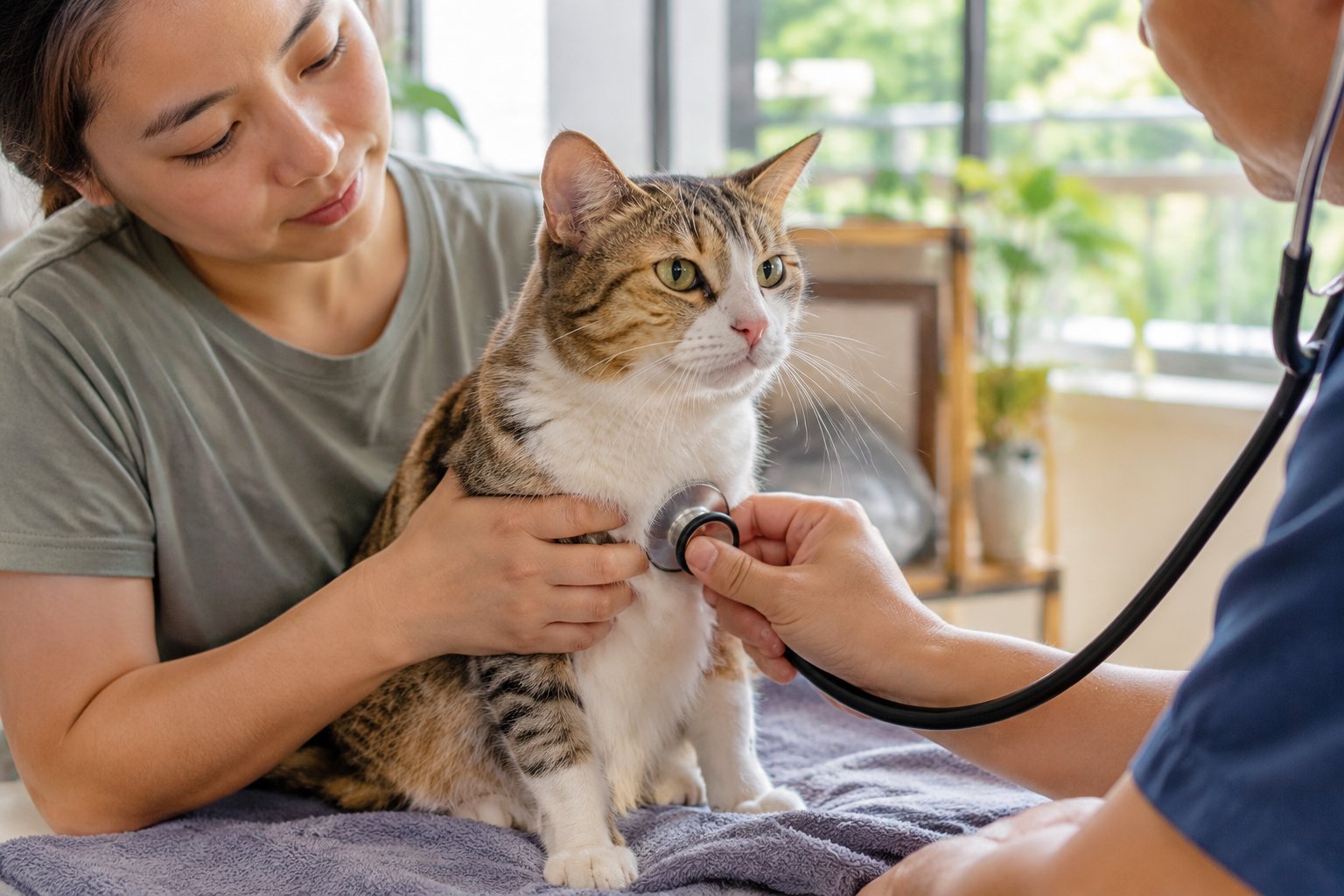
Treatment depends on the cause. A vet will examine the cat, check temperature, look at the eyes and mouth, and sometimes take swabs or X-rays.
| Cause | Typical vet approach | Notes for owners |
|---|---|---|
| Viral upper respiratory infection | Supportive care, hydration, nutrition, sometimes antiviral eye drops for herpesvirus | Antibiotics do not kill viruses; they are used only if a secondary bacterial infection is suspected |
| Secondary bacterial infection | Antibiotics chosen by the vet | Finish the full course; never use leftover antibiotics from another pet |
| Nasal foreign body | Removal under sedation or anaesthesia | Sudden violent sneezing after outdoor access is a clue |
| Dental root infection | Dental X-rays, extraction or root treatment | Bad breath plus one-sided discharge is a warning sign |
| Allergies or irritants | Remove the trigger, sometimes medication | Keep a diary of when sneezing worsens |
| Nasal polyp or tumour | Imaging, biopsy, specialist referral | More likely in older cats with one-sided signs |
Some vets use nebulisation with saline to soothe the airways, and appetite stimulants or fluid therapy for cats that stop eating. These are clinical decisions, not home remedies.
Antibiotics: the most common mistake
Many owners ask for antibiotics the moment a cat sneezes. In most cases this is the wrong move. Feline herpesvirus and calicivirus cause the majority of sneezing cases, and antibiotics have no effect on viruses. Unnecessary antibiotics disturb gut bacteria, encourage resistance and can cause diarrhoea.
Antibiotics become reasonable when a vet suspects a bacterial component, for example thick yellow-green discharge that persists, fever, or a cat that was improving and then worsened. Even then, the choice of drug and duration should come from the vet who examined the cat.
How to tell mild from serious
Use this checklist to decide how urgently to act.
Mild, monitor at home:
- Occasional sneezing, normal appetite, normal energy
- Clear, watery discharge
- No fever, no breathing difficulty
- Cat still grooming and playing
Book a vet appointment within a day or two:
- Sneezing for more than a week
- Thick or coloured nasal discharge
- Eye discharge, squinting or redness
- Reduced appetite but still eating something
- Bad breath or drooling
- Recent contact with a sick cat
Seek urgent or emergency care:
- Open-mouth breathing, gasping or blue gums
- No food or water for 24 hours
- Blood from the nose
- Swelling on the face or one-sided nosebleed
- High fever, collapse or seizures
- A kitten or senior cat with any of the above
When to see a vet
See a vet if sneezing lasts longer than a week, if discharge becomes thick or coloured, if the cat stops eating, or if breathing looks laboured. Kittens, senior cats, pregnant cats and cats with chronic illness decline faster, so lower your threshold for those groups. Any cat with open-mouth breathing, blood from the nose, facial swelling or a swollen eye needs same-day care. If you are unsure, call a Malaysian veterinary clinic and describe the signs; most will advise whether to come in immediately.
Preventing sneezing problems
- Vaccinate. Core vaccines reduce the severity of herpesvirus and calicivirus, though they do not fully prevent infection. Keep boosters current.
- Quarantine new cats. A new cat or kitten should be separated for at least two weeks and checked by a vet before mixing.
- Clean shared items. Wash bowls daily and bedding weekly, and disinfect litter tools.
- Reduce irritants. Skip mosquito coils and aerosol sprays in cat areas, and ventilate rooms well.
- Dental care. Brush teeth if your cat tolerates it, and ask your vet about dental checks from around age three.
- Manage stress. Stable routines and enough resources (bowls, litter boxes, resting spots) reduce herpesvirus flare-ups.
A note on Malaysian conditions
Malaysia's warm, humid climate supports mould growth in poorly ventilated apartments, and haze season can irritate sensitive noses. Cats in high-rise units with closed windows may be exposed to cooking fumes and cleaning chemicals for long periods. In landed homes in Johor or Penang, outdoor access raises the risk of foreign bodies and contact with neighbourhood cats. Local prices for consultations, medicines and dental work vary between clinics and states, so ask your vet for an estimate rather than relying on online figures.
Frequently asked questions
Can I give my cat human cold medicine for sneezing? No. Human decongestants, paracetamol and antihistamines can be toxic or fatal to cats. Never give human medication unless a veterinarian prescribes it specifically for your cat's weight and condition.
How long does cat sneezing usually last? Mild sneezing from dust or a mild viral infection often settles within five to ten days. Sneezing that persists beyond a week, worsens, or comes with discharge, fever or appetite loss needs veterinary assessment.
Does my sneezing cat need antibiotics? Usually not at first. Most feline sneezing is viral, and antibiotics do not kill viruses. Vets prescribe antibiotics only when secondary bacterial infection is suspected, based on discharge colour, fever and examination findings.
Is cat flu contagious to other cats in my home? Yes. Feline herpesvirus and calicivirus spread easily through sneeze droplets, shared bowls and bedding. Isolate the sneezing cat, wash hands between cats, and disinfect bowls and litter tools.
Can I use a humidifier or steam to help my sneezing cat? Yes, gentle humidity can loosen nasal mucus. Run a cool-mist humidifier in the room, or let the cat sit in a steamy bathroom for ten to fifteen minutes. Never leave the cat unattended near hot water or essential oil diffusers.
When is cat sneezing an emergency? Treat it as urgent if the cat is open-mouth breathing, gasping, has blue gums, bloody nasal discharge, a swollen face, or stops eating and drinking for more than 24 hours. These signs need same-day veterinary care.
Vet disclaimer
This article is general information for Malaysian cat owners and is not a substitute for veterinary examination, diagnosis or prescription. Signs can overlap between mild and serious conditions, and only a licensed veterinarian who has examined your cat can advise on treatment. If your cat is unwell, contact a veterinary clinic promptly.
Related reading
- Coughing in Cats in Malaysia: Causes, When to Worry & What to Do
- How to Treat Sneezing in Cats at Home: A Practical Malaysian Guide
- Cat Constipation Treatment in Malaysia: A Practical Owner's Guide
- Cat Constricted Pupils Treatment in Malaysia: What to Do When Your Cat's Eyes Look Pinpoint
- Cat Coughing Treatment in Malaysia: Causes, Home Care & When to See a Vet
- Cat Diabetes Treatment in Malaysia: A Practical Owner's Guide
- Cat Diarrhea Treatment in Malaysia: A Practical Owner's Guide
- Cat Eye Infection Treatment in Malaysia: A Practical Owner's Guide
- Cat Fleas Treatment in Malaysia: A Practical Owner's Guide
- Cat Itching Treatment in Malaysia: A Practical Guide for Itchy Cats

