
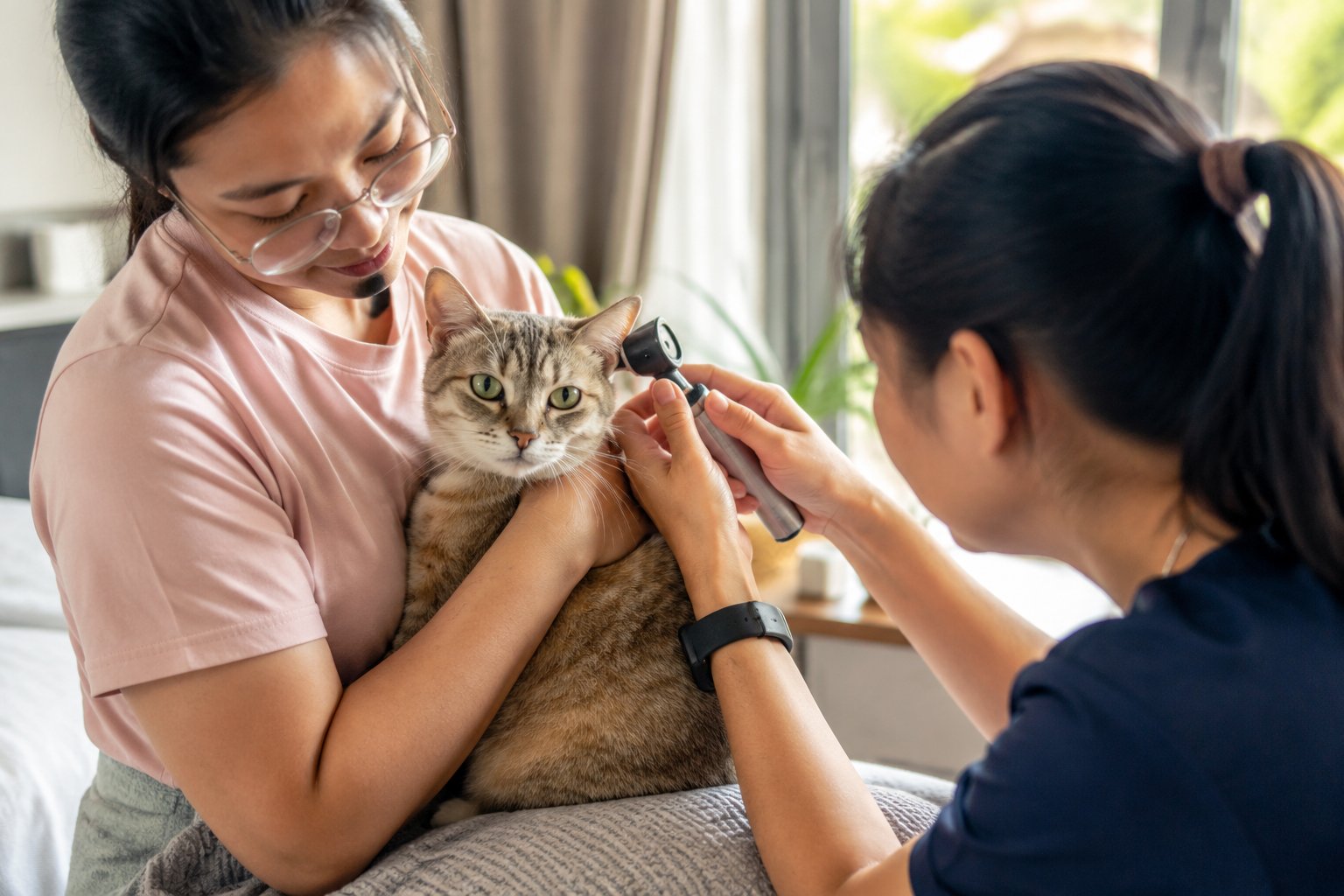
Quick answer
Occasional sneezing in cats is usually harmless and often caused by dust, pollen, strong smells or a mild upper respiratory infection. See a Malaysian vet if sneezing is frequent, lasts more than a few days, or comes with nasal discharge, fever, eye discharge, loss of appetite or breathing difficulty.
Why cats sneeze
A sneeze is a reflex that clears the nose. When something irritates the lining of a cat's nasal passages, the body forces air out to remove it. That something can be as simple as a speck of dust or as serious as an infection.
Cats are also sensitive to smells. Aerosol sprays, strong perfume, cigarette smoke, incense and cooking fumes can all trigger sneezing. In Malaysia, haze season and high humidity can make some cats sneeze more often, especially flat-faced breeds such as Persians and Exotic Shorthairs that have shorter airways.
Sneezing is not a disease on its own. It is a sign. The key is to look at what comes with it: how often it happens, whether there is discharge, and whether your cat is otherwise well.
Common causes of sneezing in cats
1. Environmental irritants
Dust, pollen, mould spores, cat litter dust, household cleaning sprays, air fresheners, mosquito coils and cigarette smoke are common triggers. Cats kept indoors in apartments can still react to dust from carpets, curtains and air-conditioning filters.
2. Upper respiratory infections (cat flu)
Feline herpesvirus (FHV-1) and feline calicivirus (FCV) are the two most common causes of infectious sneezing in cats. Together they are often called cat flu. Signs include sneezing, runny nose, watery eyes, fever, lethargy and reduced appetite. Some cats recover but carry the virus and sneeze again during stress.
Bordetella bronchiseptica and Chlamydia felis can also cause sneezing and discharge. These are more common in multi-cat households, shelters and catteries.
3. Dental disease
A tooth root abscess or severe gum disease can cause nasal discharge and sneezing, especially if the infection reaches the nasal cavity. Cats with bad breath, drooling or difficulty eating should have their mouth checked.
4. Foreign objects
A blade of grass, a seed, a piece of string or a small insect can get stuck in the nose. This usually causes sudden, violent sneezing, often with pawing at the face or a bloody discharge from one nostril.
5. Nasal polyps or tumours
Less common, especially in older cats. Signs include chronic sneezing from one side, noisy breathing and sometimes facial swelling. These need veterinary investigation.
6. Allergies
Cats can be allergic to pollen, dust mites, mould or certain foods. Allergic sneezing often comes with itchy skin, ear problems or watery eyes.
How to tell a harmless sneeze from a warning sign
Use this table as a quick guide. It is not a diagnosis, but it helps you decide how urgently to act.
| Sign | Usually mild | See a vet soon | Emergency |
|---|---|---|---|
| Sneezing frequency | A few sneezes a day, then stops | Several times an hour for more than 2 days | Continuous, cannot rest |
| Nasal discharge | None or clear and occasional | Thick yellow or green discharge | Bloody discharge from one nostril |
| Eyes | Normal or slightly watery | Discharge, squinting, redness | Swollen eye, cannot open |
| Appetite | Normal | Eating less but still eating | Not eating for 24 hours |
| Breathing | Normal | Slightly noisy but calm | Open-mouth breathing, gasping, blue gums |
| Energy | Normal | Quieter than usual | Collapsed or weak |
| Fever | None | Warm ears, shivering | High fever with lethargy |
If you are unsure, call your vet. It is better to ask than to wait.
Cat flu in Malaysia: what to expect
Cat flu is common in Malaysia because many cats live in multi-cat households, and the viruses spread easily through sneezing, shared bowls and close contact. Kittens, senior cats and unvaccinated cats are most at risk.
Mild cases often improve within 7 to 14 days with supportive care. Some cats need longer. A vet may prescribe antibiotics only if there is a secondary bacterial infection; antibiotics do not kill viruses. Antiviral eye drops or oral medication may be used in some cases.
Some cats become carriers of feline herpesvirus. They may sneeze or have watery eyes again during stressful events such as moving house, a new pet, or boarding. Keeping stress low and maintaining good nutrition helps.
Vaccination against FHV-1 and FCV is part of routine cat care in Malaysia. It does not always prevent infection, but it reduces severity. Ask your vet about the right schedule for your cat.
Home care for a sneezing cat
If your cat is otherwise well, eating and breathing normally, you can try these steps.
- Reduce irritants. Stop using air fresheners, incense, mosquito coils and strong sprays near your cat. Vacuum often and wash bedding in hot water. Change air-conditioning filters regularly.
- Keep the nose clean. Gently wipe discharge with a soft, damp cloth. Use a separate cloth for each eye to avoid spreading infection.
- Encourage eating. Warm wet food slightly to increase smell, which helps a congested cat eat. Offer strong-smelling foods such as sardines in water or warmed chicken broth with no salt or onion.
- Keep water available. Hydration helps thin mucus. Some cats prefer a running water fountain.
- Use a humidifier or steam. A short session in a steamy bathroom (not hot, and never leave your cat unattended) can help loosen mucus. Make sure the room is not too hot.
- Isolate if needed. If you have other cats, keep the sneezing cat in a separate room with its own bowls and litter box until a vet says it is safe.
- Rest and warmth. Provide a quiet, warm bed away from draughts.
Do not give human cold medicine, antihistamines, decongestants or painkillers unless your vet prescribes them. Many are toxic to cats. Do not use essential oils around cats either; some, such as tea tree oil, are poisonous.
When to see a vet
See a Malaysian vet if your cat has any of the following:
- Sneezing that lasts more than a few days or gets worse
- Thick yellow or green nasal discharge
- Eye discharge, squinting or redness
- Loss of appetite or weight loss
- Fever, lethargy or hiding
- Bad breath or drooling
- Sneezing from one nostril only, especially with blood
- No improvement after 48 to 72 hours of home care
Go to an emergency vet immediately if your cat is open-mouth breathing, gasping, has blue or pale gums, is collapsed, has a seizure, or has not eaten for more than 24 hours. Breathing difficulty in cats is always urgent.
What the vet may do
Your vet will ask about your cat's history, vaccination status, indoor or outdoor access, and other pets. They will examine the nose, mouth, eyes, ears and lungs. Depending on findings, they may:
- Take a swab of nasal or eye discharge for testing
- Check for dental disease
- Recommend blood tests
- Use imaging such as X-rays if a foreign object or polyp is suspected
- Prescribe antibiotics, antivirals, eye drops or supportive care
Tell your vet about any medicines or supplements your cat is taking, and mention if you have used human medicine.
Prevention tips for Malaysian cat owners
- Keep vaccinations up to date.
- Clean food and water bowls daily and litter boxes regularly.
- Avoid smoking indoors and limit strong smells.
- Wash hands after handling a sick cat.
- Keep new cats separate for a short period before introducing them.
- Maintain a healthy weight and good nutrition.
- Reduce stress where possible, especially for carrier cats.
Local examples
In a Kuala Lumpur apartment, a cat may sneeze more during haze season or when the air-conditioner filter is dirty. Cleaning the filter and using a air purifier can help.
In a Johor terrace house, a cat that goes outside may sneeze after sniffing plants or dust. Check for foreign objects and keep the cat indoors during haze.
Vet disclaimer
This article is for general information only and is not a substitute for veterinary advice. Every cat is different. If your cat is unwell, contact a licensed veterinarian in Malaysia for a proper examination and treatment plan.
Related reading
- Cat Eye Infection Treatment in Malaysia: A Practical Owner's Guide
- Cat Hair Loss Treatment in Malaysia: A Practical Owner's Guide
- Cat Ringworm Treatment in Malaysia: A Practical Owner's Guide
- Cat Skin Fungus Treatment in Malaysia: A Practical Owner's Guide
- Cat Sneezing Treatment in Malaysia: What to Do and When to Worry
- Cat Swollen Belly Treatment in Malaysia: Causes, Home Care and When to See a Vet
- Cat Urinary Blockage Treatment in Malaysia: What to Do, Step by Step
- Constipation in Cats: Causes, Care and When to See a Vet in Malaysia

