
Quick answer
A swollen belly in cats is a sign, not a disease. It can be harmless fat or pregnancy, or it can mean gas, constipation, fluid (ascites), organ disease, FIP or tumours. Sudden swelling, pain, fast breathing, vomiting or lethargy needs a vet urgently. Never press hard on the belly or try to drain it at home.
Why a cat's belly swells
A cat's abdomen can enlarge for four broad reasons: what is inside the gut, what is inside the organs, what is free in the belly cavity, and what is stored in fat. Vets think in these layers because each points to different tests and treatments.
- Gut contents: gas, faeces, food, foreign objects, worms.
- Organ enlargement: liver, spleen, kidneys, uterus, lymph nodes.
- Free fluid or air: ascites, blood, pus, urine, free air.
- Body wall and fat: obesity, pregnancy, hernias, masses in the abdominal wall.
A cat that is simply overweight has a soft, even belly and fat over the ribs. A cat with fluid often has a tight, rounded belly, may breathe faster, and may feel uncomfortable when lifted. These are clues, not proof. Only a vet can tell them apart safely.
Common causes and what they look like
| Cause | Typical clues | Urgency |
|---|---|---|
| Obesity | Soft even fat, weight gain, ribs hard to feel | Routine |
| Pregnancy | Firm pear shape, enlarged nipples, known mating | Routine |
| Gas or diet upset | Mild bloating, wind, soft stool | Monitor 24 hours |
| Constipation | Straining, hard stool, small appetite | Vet if over 24–48 hours |
| Worms (kittens) | Pot belly, poor growth, dull coat | Vet soon |
| Foreign object | Vomiting, pain, no stool, sudden onset | Emergency |
| Ascites (fluid) | Tight belly, fast breathing, weight loss | Urgent |
| FIP (wet form) | Fluid, fever, lethargy, poor appetite | Urgent |
| Liver or kidney disease | Weight loss, jaundice, thirst, vomiting | Urgent |
| Tumour or mass | Firm lump, slow weight loss, older cat | Vet soon |
| Hernia | Soft lump near navel or groin | Vet soon |
| Pyometra (womb infection) | Unspayed female, discharge, thirst, lethargy | Emergency |
Fat, not fluid
Obesity is common in indoor cats. A fat cat has a rounded belly that hangs slightly, but the belly is soft and the cat is otherwise well. You should still be able to feel the ribs under a thin fat layer. If your cat has gained weight but is eating normally and active, portion control and play can help. Ask your vet for a body condition score.
Pregnancy
An unspayed female that has been outside can be pregnant. The belly becomes firmer and pear-shaped over about nine weeks. Nipples enlarge and may turn pink. Pregnancy is not an emergency, but a vet check confirms it and rules out false pregnancy or pyometra.
Gas and diet
Some cats swallow air when they eat fast, or get gas from a sudden diet change. The belly may feel tight but soft, and the cat passes wind or has soft stool. Slow feeders and a gradual diet transition often help. Persistent gas with weight loss is not normal.
Constipation
Constipation is a very common cause of a firm, uncomfortable belly. Cats may strain in the litter box, produce small hard stools, or stop passing stool. Long-haired cats and older cats are at higher risk. A vet may recommend fluids, laxatives or a high-fibre diet. Never give human laxatives without advice.
Worms
Kittens with heavy roundworm burdens often have a pot-bellied look, poor growth and a dull coat. Deworming is simple, but a vet should confirm the cause and set a schedule. Adult cats can also carry worms without a swollen belly.
Foreign objects
Cats swallow string, hair ties, toys and bones. A foreign object can block the gut, causing a painful, swollen belly, vomiting and no stool. This is an emergency. Do not wait to see if it passes.
Fluid (ascites)
Ascites is free fluid in the abdominal cavity. The belly looks tight and rounded, and the cat may breathe faster because the fluid presses on the diaphragm. Causes include liver disease, heart failure, kidney disease, FIP, cancer and low protein. A vet confirms fluid with ultrasound or a small sterile sample. Home draining is never safe.
FIP
Feline infectious peritonitis is a serious disease caused by a coronavirus. The wet form causes fluid build-up in the abdomen or chest. Signs include fever, lethargy, poor appetite and a swollen belly. Early vet diagnosis matters because treatment options have improved. Do not assume a swollen belly is FIP, and do not assume it is not.
Organ disease
Liver disease, kidney disease and heart disease can all cause fluid or organ enlargement. Signs may include weight loss, jaundice, increased thirst, vomiting or weakness. Blood tests and imaging help your vet find the cause.
Tumours and masses
Older cats can develop tumours in the spleen, liver, intestines or lymph nodes. A firm lump, slow weight loss or a belly that feels uneven should be checked. Not every mass is cancer, but early assessment gives more options.
Hernias
An umbilical or inguinal hernia can look like a soft lump under the skin. Some are harmless; others can trap intestine and become emergencies. A vet can tell whether it needs surgery.
Pyometra
An unspayed female with a womb infection can have a swollen, painful belly, discharge, thirst and lethargy. This is a life-threatening emergency. Spaying prevents it.
How vets tell the difference
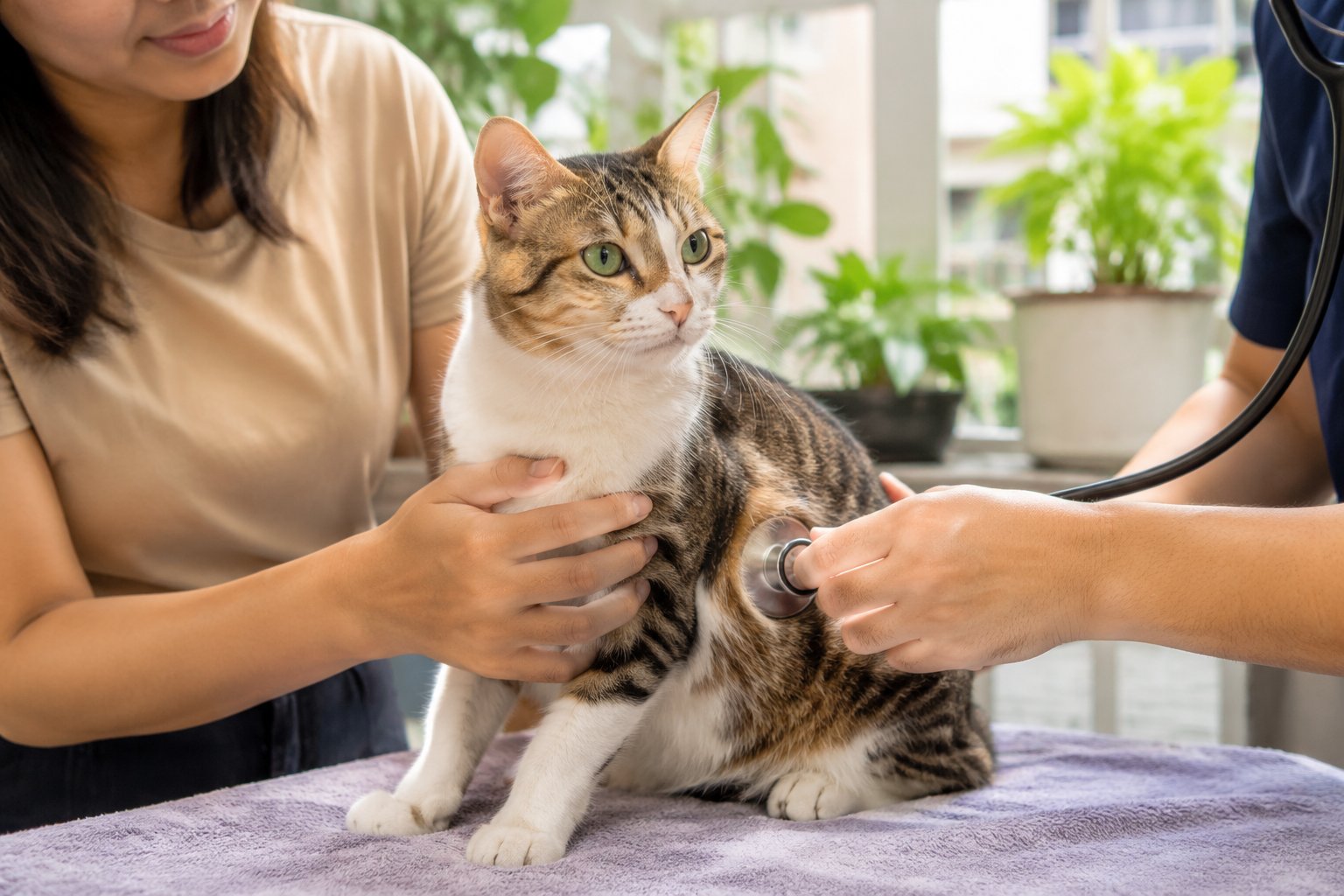
A vet will start with history and a hands-on exam. They will ask about appetite, litter box habits, vomiting, weight change, mating history and diet. They will feel the belly gently, check gums, listen to the heart and lungs, and take the temperature.
Tests may include:
- X-rays: show gas, stool, foreign objects, pregnancy and some masses.
- Ultrasound: shows fluid, organ texture, masses and pregnancy.
- Blood tests: check liver, kidney, protein, infection and hormones.
- Urine tests: check kidney and bladder health.
- Fluid sample: a small sterile sample can identify infection, cancer cells or FIP.
- **Faecal test:** checks for worms and parasites.
You do not need to know which test is right. Your vet will choose based on your cat's age, signs and exam findings. In Malaysia, costs vary by clinic and city, so ask for an estimate before tests.
Home care while you wait
Home care supports your cat but does not replace diagnosis. Keep the following safe steps in mind:
- Do not press or squeeze the belly. You could rupture a mass or cause pain.
- Do not drain fluid. This is a sterile vet procedure.
- Do not give human medicines. Paracetamol and ibuprofen are toxic to cats.
- Offer water. Dehydration makes everything worse.
- Offer small, bland meals if your vet agrees. Do not force food.
- Keep a litter box diary. Note stool size, straining and urine output.
- Weigh your cat if you can, and note changes.
- Reduce stress. A quiet room, soft bedding and easy access to food and litter help.
- Watch breathing. Fast or open-mouth breathing is an emergency.
- Call your vet if swelling grows or new signs appear.
Feeding and weight
If the cause is obesity, gradual weight loss is safer than crash dieting. Cats can develop liver disease if they stop eating suddenly. Ask your vet for a target weight and a safe plan. Avoid free-feeding dry food if you cannot measure portions.
Litter box care
Constipation and blockages show up in the litter box. Use a box large enough for your cat, scoop daily, and note any straining. In a Kuala Lumpur apartment, a covered box in a humid bathroom can trap odour and discourage use; place it in a well-ventilated spot.
Prevention and daily checks
Not every cause is preventable, but good routine care lowers risk:
- Weight control: measure food and encourage play.
- Deworming: follow your vet's schedule, especially for kittens and outdoor cats.
- Spaying: prevents pyometra and pregnancy.
- Safe toys: avoid string, hair ties and small parts.
- Fresh water: helps kidney and bladder health.
- Regular vet checks: senior cats benefit from yearly or twice-yearly exams.
- Parasite control: fleas and ticks can carry disease.
- Vaccination: discuss core vaccines with your vet.
A monthly at-home check helps: weigh your cat, run your hands gently over the belly, and note appetite and litter box habits. In a Johor terrace house, cats may roam more, so watch for pregnancy, fights and swallowed prey.
When to see a vet
See a vet the same day if you notice any of these:
- Sudden or rapidly growing belly swelling.
- A belly that is painful to touch.
- Fast breathing, open-mouth breathing or panting.
- Vomiting, especially repeated vomiting.
- No stool for more than 24–48 hours, or straining with no result.
- Loss of appetite or weight loss.
- Lethargy, hiding or weakness.
- Pale or yellow gums.
- Discharge from the vulva in an unspayed female.
- A firm lump or uneven belly.
Do not wait for a swollen belly to "go away" if your cat is unwell. Early diagnosis gives more treatment options, especially for fluid, FIP and organ disease.
Living with a cat that has a swollen belly
A swollen belly can be a short-term problem or a long-term condition. If your cat is diagnosed with fluid or organ disease, your vet may recommend medication, diet changes and regular monitoring. Keep a simple log of weight, appetite, breathing and litter box habits. Bring it to each visit.
In Malaysia's hot and humid climate, cats can dehydrate quickly. Always provide fresh water and shade. If your cat is on medication, store it correctly and follow the label. Ask your vet before adding supplements.
Finally, do not compare your cat's belly to photos online. A photo cannot tell fat from fluid. A hands-on vet exam is the only reliable way to know.
Vet disclaimer
This article is general information for Malaysian cat owners and is not a substitute for veterinary advice. Every cat is different. If your cat has a swollen belly or any worrying sign, contact a licensed veterinarian for an examination and diagnosis.

