
What is anemia in cats?
Anemia in cats is not a disease in itself but a sign of an underlying problem. It means your cat has fewer red blood cells or less haemoglobin than normal, which reduces the blood's ability to carry oxygen around the body. Without enough oxygen, organs and tissues struggle to function properly, leading to the signs we associate with anemia.
Red blood cells are made in the bone marrow and circulate for about 70 to 80 days in cats. They are constantly being replaced. Anemia occurs when there is blood loss, increased destruction of red blood cells, or decreased production. Each of these pathways has different causes, and identifying which one is affecting your cat is key to treatment.
In Malaysia, cats face particular risks such as flea infestations, tick-borne diseases, and certain infections that can lead to anemia. Understanding the signs helps you act quickly.
Recognising the signs: what to look for
The signs of anemia can be subtle at first and are often mistaken for normal ageing or laziness. Because cats are good at hiding illness, you may not notice anything until the anemia is moderate to severe. The most reliable sign is pale gums, but there are many others.
Pale gums and mucous membranes
Healthy cat gums are a nice pink colour. If they look pale pink, white, or greyish, that is a red flag. You can also check the inside of the eyelids and the skin inside the ears. Gums are usually the easiest to see. Gently lift your cat's lip and look at the gum above the teeth. Do this when your cat is relaxed, perhaps after a meal. If you are unsure what normal looks like, ask your vet to show you at your next visit.
Lethargy and weakness
An anemic cat may sleep more, seem less interested in play, or tire quickly. You might notice your cat is reluctant to jump onto furniture or climb stairs. In severe cases, weakness can lead to collapse. In a multi-cat household, it can be hard to tell which cat is affected, so watch for changes in individual behaviour.
Rapid breathing and heart rate
When there are fewer red blood cells, the heart and lungs work harder to deliver oxygen. Your cat may breathe faster even at rest, and you might see the chest heaving. The heart rate can also increase. If you notice your cat panting or breathing with its mouth open (which is unusual for cats), seek veterinary help immediately.
Loss of appetite and weight loss
Anemia can make cats feel unwell and reduce their appetite. Over time, this can lead to weight loss. Some cats may also develop a dull coat or seem generally depressed. If your cat stops eating for more than 24 hours, see a vet.
Jaundice (yellowing of the skin and eyes)
Jaundice occurs when bilirubin, a yellow pigment from the breakdown of red blood cells, builds up in the body. It can happen with certain types of anemia, especially when red blood cells are being destroyed (haemolytic anemia). You may notice a yellow tinge to the gums, the whites of the eyes, or the skin inside the ears. Jaundice is always a serious sign and requires prompt veterinary attention.
Other signs
Some cats may develop a fast heart rate (tachycardia), a heart murmur, or fluid accumulation in the abdomen or chest. In severe cases, cats may collapse or have seizures. Pica, where cats eat non-food items like litter or dirt, has been reported in some anemic cats, though it is not specific to anemia.
Common causes of anemia in cats
Understanding the cause helps you and your vet choose the right treatment. Causes are broadly grouped into three categories: blood loss, increased destruction, and decreased production.
Blood loss
This is the most common cause of anemia in cats. It can be acute (sudden) or chronic (ongoing). Acute blood loss might result from trauma, surgery, or a bleeding disorder. Chronic blood loss is often due to parasites such as fleas and ticks, or internal bleeding from ulcers or tumours. In Malaysia, heavy flea infestations are a frequent culprit, especially in cats that go outdoors or live in multi-cat households.
Increased destruction (haemolytic anemia)
This occurs when red blood cells are destroyed faster than they can be replaced. Causes include immune-mediated diseases, infections (such as Mycoplasma haemofelis, a blood parasite transmitted by fleas), toxins (like onions, garlic, or certain medications), and genetic conditions. In some cases, the cause is never found.
Decreased production
When the bone marrow fails to produce enough red blood cells, anemia results. This can happen with chronic kidney disease (the kidneys produce erythropoietin, a hormone that stimulates red blood cell production), certain cancers, viral infections (feline leukemia virus, feline immunodeficiency virus), and nutritional deficiencies (iron, vitamin B12, folate).
How veterinarians diagnose anemia
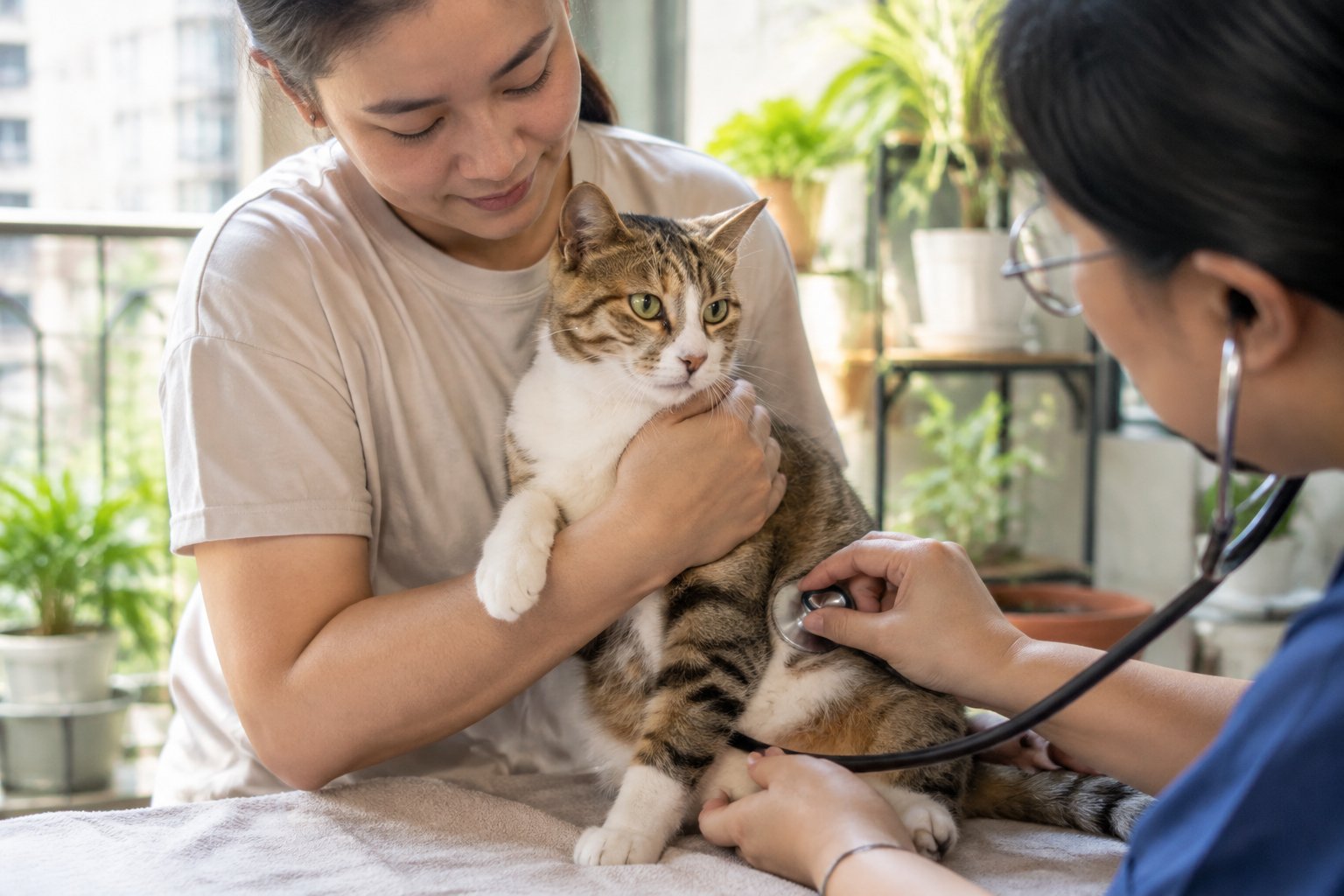
If you bring your cat to the vet with suspected anemia, the first step is a physical examination, including checking the gums and other mucous membranes. Your vet will also listen to the heart and lungs and feel the abdomen.
Blood tests are essential. A complete blood count (CBC) measures the number of red blood cells, haemoglobin, and other blood components. It also includes a packed cell volume (PCV) or haematocrit, which is the percentage of blood made up of red blood cells. Normal PCV in cats is roughly 30–45%, but reference ranges vary by laboratory. A PCV below the normal range indicates anemia.
Your vet may also look at a blood smear under a microscope to assess the shape and size of red blood cells, which can hint at the cause. For example, small pale cells might suggest iron deficiency, while large immature cells might indicate increased production in response to anemia.
Additional tests may include a reticulocyte count (to see if the bone marrow is responding), biochemistry profile (to check organ function), urine tests, and tests for infectious diseases such as FeLV, FIV, and Mycoplasma. In some cases, a bone marrow biopsy is needed.
Treatment and management
Treatment depends entirely on the underlying cause. If blood loss is due to fleas, parasite control is essential. If an infection is present, antibiotics or other specific treatments are needed. Immune-mediated anemia may require immunosuppressive drugs. Severe anemia might require a blood transfusion, which is only available at some veterinary practices.
Supportive care includes ensuring your cat eats and drinks, providing a quiet, stress-free environment, and avoiding strenuous activity. Your vet may recommend iron supplements or other nutrients if a deficiency is diagnosed, but never give human supplements without veterinary advice.
In Malaysia, access to advanced diagnostics and blood transfusions varies. Your vet may refer you to a specialist centre if needed. Costs for tests and treatments vary widely, so ask your vet for an estimate before proceeding.
Home monitoring and prevention
While you cannot prevent all causes of anemia, you can reduce the risk. Keep up with flea and tick control, as these parasites are common in Malaysia's warm, humid climate. Use veterinary-approved products and follow the instructions carefully. Regular deworming is also important.
Feed a balanced diet and avoid giving human foods that are toxic to cats, such as onions and garlic. Keep your cat indoors or in a secure enclosure to reduce exposure to trauma and infectious diseases. Regular veterinary check-ups, at least once a year, can help catch problems early.
At home, you can monitor your cat's gums weekly. Get to know what normal looks like. Also watch for changes in appetite, activity, and breathing. If you notice any signs of anemia, contact your vet.
When to see a vet
You should see a vet promptly if you notice any of the following:
- Pale, white, or grey gums
- Laboured or rapid breathing
- Collapse or extreme weakness
- Jaundice (yellow gums, eyes, or skin)
- Loss of appetite for more than 24 hours
- Vomiting or diarrhoea that persists
- Blood in the stool or urine
- Sudden reluctance to move or jump
These signs can indicate severe anemia or another serious condition. Do not wait to see if your cat improves on its own. Early intervention can be life-saving.
Comparison table: signs of anemia vs. normal behaviour
| Sign | Normal | Possible Anemia |
|---|---|---|
| Gum colour | Pink | Pale pink, white, or grey |
| Activity level | Active, curious | Lethargic, sleeps more, weak |
| Breathing | Quiet, regular | Fast, laboured, or open-mouth |
| Appetite | Normal | Reduced or absent |
| Weight | Stable | Unexplained weight loss |
| Eyes | Clear, white | Yellow tinge |
| Heart rate | Normal | Fast, sometimes murmur |
Frequently asked questions
What are the first signs of anemia in cats? Pale gums are often the first noticeable sign. You may also see lethargy, weakness, reduced appetite, and faster breathing. Some cats become withdrawn or hide. Regular gum checks at home help you spot changes early.
How can I check my cat for anemia at home? Gently lift your cat's lip and look at the gums. Healthy gums are pink; anemic gums look pale pink to white. Press the gum lightly and see how quickly colour returns—slow return can indicate poor circulation. This is a screening aid, not a diagnosis.
Can anemia in cats be cured? Anemia itself is managed by treating the underlying cause. Many causes, such as flea infestations or dietary deficiencies, are treatable. Others, like chronic kidney disease or certain cancers, may require long-term management. Your vet will determine the cause and outlook.
Is anemia in cats contagious to other cats? Anemia is not contagious, but some underlying causes can be. For example, feline leukemia virus (FeLV) and feline immunodeficiency virus (FIV) can spread between cats. Mycoplasma haemofelis, a blood parasite, can also be transmitted by fleas. Keep infected cats separate and control parasites.
What should I feed a cat with anemia? Feed a balanced, high-quality diet appropriate for your cat's life stage. If a deficiency is diagnosed, your vet may recommend specific supplements or a prescription diet. Do not give iron supplements without veterinary guidance, as overdose can be harmful.
When should I take my anemic cat to the vet? Take your cat to the vet immediately if you notice pale gums, laboured breathing, collapse, or jaundice. These signs can indicate severe anemia or a life-threatening condition. Early veterinary assessment improves outcomes.
Vet disclaimer
This article is for general information only and is not a substitute for professional veterinary advice. Always consult a licensed veterinarian for diagnosis and treatment of your cat's condition.
Related reading
- Anemia in Cats: Causes, Signs and Care (Malaysia Guide)
- Anemia in Cats in Malaysia: Signs, Causes, and What to Do
- Anemia Prevention for Cats: A Practical Guide for Malaysian Owners
- Blood Test for Cats: What to Expect (Malaysian Owner's Guide)
- Cat Anemia Treatment in Malaysia: A Practical Owner's Guide
- Cat Dental Pain Treatment in Malaysia: A Practical Owner's Guide
- Cat Ear Mites Treatment in Malaysia: A Complete Owner's Guide

