
Quick answer
Constricted pupils in cats are often normal in bright light. They become a health concern when they stay small in dim conditions, when one pupil is smaller than the other, or when your cat shows other signs such as squinting, pain, vomiting, wobbliness or lethargy. In those cases, a vet visit is needed to rule out eye disease, nerve problems, toxins or brain conditions.
What constricted pupils mean in cats
The pupil is the black opening in the centre of the eye. It widens and narrows to control how much light reaches the retina. In cats, the pupil can become a narrow slit in bright light and a large round shape in the dark. This is controlled by muscles in the iris and by nerves that connect the eye to the brain.
Vets use the term miosis for abnormally small pupils. True miosis is different from the normal narrowing you see in sunlight. A pupil that remains tiny in a dim room, or that does not react properly to light, is more suspicious.
Pupil size is only one clue. A vet will look at both eyes, test the pupil light reflex, check eye movement and facial sensation, and examine the rest of the body. This is why home observation helps, but cannot replace a proper examination.
Normal reasons a cat's pupils look small
Before worrying, consider whether the environment explains it.
- Bright light. Outdoors at midday, or under strong indoor lighting, a cat's pupils naturally narrow.
- Close focus. Cats' pupils can constrict when they focus on something near, such as a toy or food.
- Rest or drowsiness. Pupil size changes with arousal. A sleepy cat may have narrower pupils than an alert, playful cat.
- Age and individual variation. Some cats naturally show more slit-like pupils than others.
- Recent eye drops. If your cat has had certain eye drops at the vet, pupil size can change for a while. Ask your vet what to expect.
A useful home check is to compare both eyes in the same lighting. Look at your cat in normal room light, then in a dimmer room. If both pupils widen in dim light and look equal, that is reassuring. If they stay pinpoint, or one stays small while the other widens, note it and call your vet.
Medical causes of constricted pupils
1. Pain
Pain can affect pupil size through the nervous system. Some cats with abdominal pain, eye pain or severe discomfort develop small pupils. Pain is not diagnosed by pupil size alone. Look for a combination of signs:
- hiding or withdrawing
- reduced appetite
- squinting or holding an eye closed
- tense abdomen when touched
- changed grooming
- reluctance to jump or move
- unusual irritability
If your cat seems painful, do not wait for the pupil to return to normal. Pain relief for cats must come from a vet, because human painkillers can be toxic to cats.
2. Eye disease
Conditions inside the eye can cause the pupil to constrict or to react abnormally. Examples include inflammation inside the eye (uveitis), corneal injury, glaucoma in some stages, and lens problems. Eye disease often comes with other signs:
- redness
- cloudiness
- discharge
- squinting or tearing
- rubbing the face
- sensitivity to light
- a visible change in eye shape or size
Eye problems can worsen quickly. A cat with a painful eye should be seen promptly, especially if the pupil is small and the eye looks cloudy or red.
3. Nerve problems and Horner's syndrome
Horner's syndrome is a nerve disorder that can cause a small pupil on the affected side, a drooping upper eyelid, and the third eyelid to rise. The affected eye may look sunken. Causes include ear disease, neck or chest injury, certain tumours, and sometimes no cause is found.
Horner's syndrome is not a disease itself; it is a sign. A vet will examine the ears, neck, chest and nervous system to look for the underlying reason. If your cat has one small pupil plus a droopy eyelid or a visible third eyelid, book a vet visit.
4. Toxins and medications
Some poisons and drugs cause small pupils. Organophosphate and carbamate insecticides are well-known examples. These chemicals can be present in some garden products and in certain flea or tick treatments, especially if a product meant for dogs is used on a cat or if a cat licks a treated surface.
Other possible causes include certain prescription medicines and plants or chemicals that affect the nervous system. Signs of poisoning can include:
- drooling
- vomiting
- diarrhoea
- trembling or muscle twitching
- weakness
- small pupils
- difficulty breathing
- seizures
If you suspect poisoning, contact a vet immediately. Bring the product container or a photo of the label. Do not induce vomiting unless a vet tells you to.
5. Brain and neurological conditions
Pupil size is controlled by nerves that run between the eye and the brain. Head trauma, brain inflammation, tumours, strokes and other neurological problems can change pupil size. These cases usually come with other signs:
- wobbliness or circling
- head tilt
- seizures
- behaviour change
- weakness on one side
- altered consciousness
- unequal pupils
Neurological signs are serious. Seek veterinary care urgently, especially after a fall, road accident or suspected head injury.
6. Metabolic and general illness
Sometimes pupil changes appear alongside a general illness. A vet may recommend blood tests or other checks to look at organ function and overall health. This is especially relevant if your cat is older, has lost weight, or has a long-term condition.
Comparison table: what different pupil patterns can suggest
| What you see | Possible meaning | Urgency |
|---|---|---|
| Both pupils small in bright light, normal in dim light | Normal light response | Reassure; monitor |
| Both pupils stay pinpoint in dim light | Toxin, drug effect, pain, neurological issue | See a vet promptly |
| One pupil small, other normal or large | Eye disease, Horner's syndrome, nerve or brain problem | Same-day vet visit |
| Small pupil with cloudy or red eye | Eye inflammation or injury | Prompt vet visit |
| Small pupils with drooling, trembling or vomiting | Possible poisoning | Emergency |
| Small pupils with wobbliness, seizures or collapse | Neurological emergency | Emergency |
| Pupils do not react to light | Retina, nerve or brain problem | Emergency |
Home checks you can do safely
You can gather useful information before calling your vet. Keep it gentle and stop if your cat becomes stressed.
- Compare both eyes in the same light. Look at your cat in normal room light. Are the pupils equal?
- Dim the room. Turn off bright lights or move to a shaded area. Do both pupils widen?
- Watch the eyes, not just the pupils. Note redness, cloudiness, discharge, squinting or a raised third eyelid.
- Check general behaviour. Is your cat eating, drinking, grooming, walking and jumping normally?
- Look for pain signs. Hiding, a tense belly, reluctance to move or unusual aggression can indicate pain.
- Note possible exposures. New flea products, garden sprays, human medicines, plants or cleaning chemicals.
- Record a short video. A phone video of your cat walking and reacting can help your vet, especially for neurological signs.
Do not use a strong torch to test the pupils yourself. Do not put any human eye drops or medicines into your cat's eyes.
What to expect at the vet
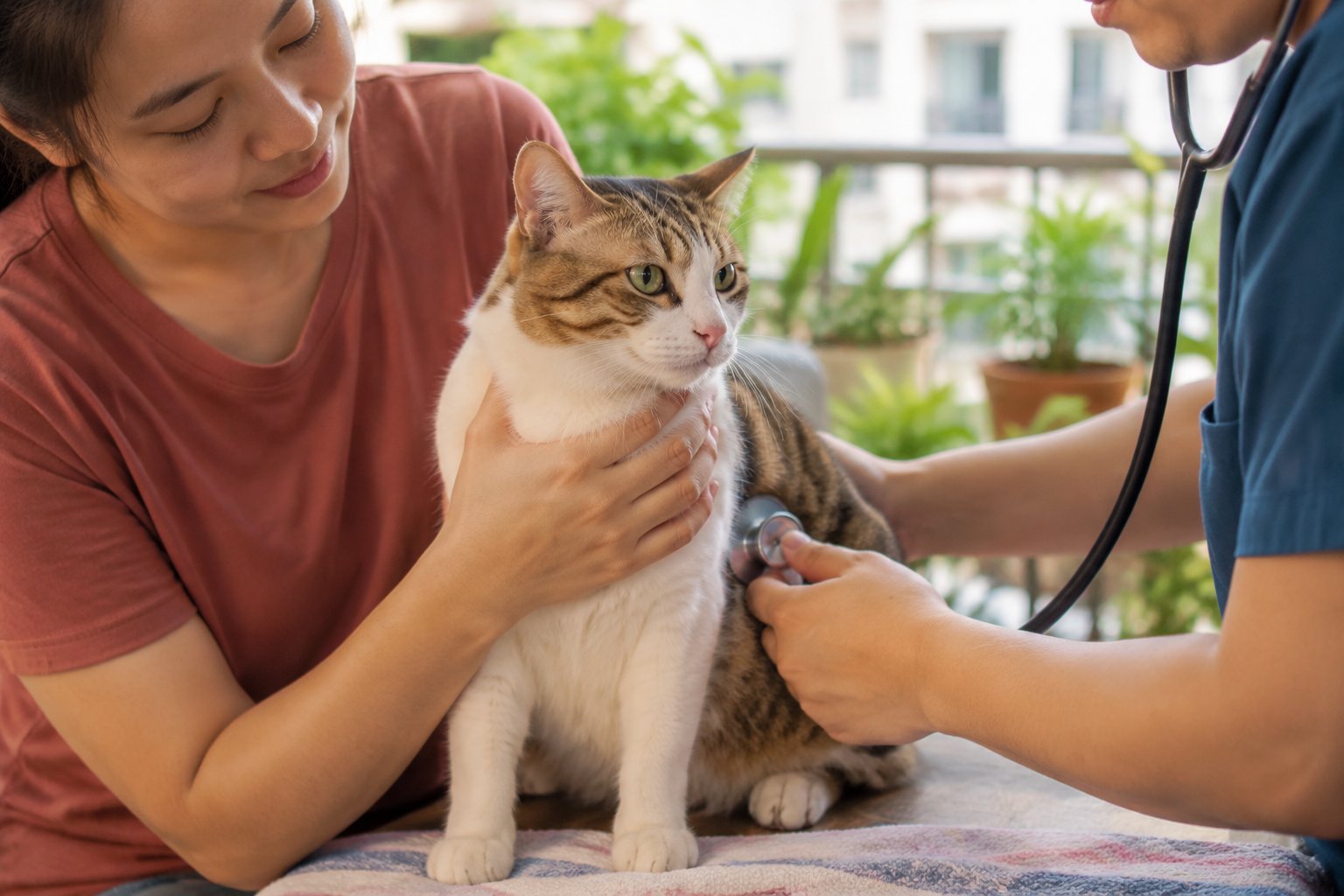
A vet will usually start with a full history: when you noticed the small pupils, whether both eyes are affected, and any other signs. They will examine the eyes with proper equipment and check the pupil light reflex. They may also examine the ears, mouth, neck and nervous system.
Depending on findings, tests might include:
- a detailed eye examination
- blood tests
- blood pressure measurement
- imaging such as X-rays or ultrasound
- referral to a specialist for eye or neurological assessment
Treatment depends entirely on the cause. For example, poisoning needs specific management, eye inflammation needs eye treatment, and Horner's syndrome needs a search for the underlying problem. Never give your cat medication left over from another pet or from a human prescription.
Caring for a cat with pupil changes at home
Once your vet has assessed your cat, home care may include:
- giving prescribed medication exactly as directed
- keeping your cat indoors in a quiet, safe space
- preventing rubbing or scratching of a painful eye, using a cone if advised
- monitoring appetite, drinking, urination and behaviour
- keeping a simple daily log of pupil size and other signs
- avoiding bright light if your vet advises it
- keeping follow-up appointments
If your cat is on eye drops, ask your vet to show you how to apply them safely. Never share eye drops between pets.
When to see a vet
See a vet promptly if:
- pupils stay small in dim light
- one pupil is smaller than the other
- your cat squints, rubs an eye or has eye discharge
- there is cloudiness, redness or swelling of the eye
- your cat seems painful or is hiding more than usual
- appetite or behaviour has changed
Seek emergency care if:
- your cat is weak, collapsing or cannot stand
- there is vomiting, drooling, trembling or seizures
- breathing is fast, noisy or laboured
- pupils are pinpoint after possible exposure to insecticides or medication
- there is sudden blindness or a pupil that does not react to light
- there has been a head injury or road accident
Prevention and practical tips for Malaysian homes
- Store chemicals safely. Keep garden sprays, insecticides, cleaning products and human medicines out of reach.
- Use cat-safe parasite products. Ask your vet before using any flea or tick product, and never apply a dog product to a cat.
- Check labels. Some household products contain organophosphates or other chemicals that can affect cats.
- Supervise outdoor time. Cats that roam can be exposed to toxins, trauma and fights.
- Keep routines stable. Sudden changes in appetite or behaviour are easier to spot when you know your cat's normal.
- Book regular check-ups. Older cats benefit from routine health checks, including eye and blood pressure assessment where appropriate.
Bottom line
Constricted pupils in cats are common and often normal in bright light. The key questions are whether the pupils widen in dim light, whether both eyes are equal, and whether your cat has other signs of illness. If anything seems off, a vet examination is the safest way to find the cause and protect your cat's vision and health.
This article is general information only and is not a substitute for veterinary advice. If your cat has constricted pupils or any worrying signs, consult a licensed veterinarian.
Related reading
- Cat Constipation Treatment in Malaysia: A Practical Owner's Guide
- Cat Diabetes Treatment in Malaysia: A Practical Owner's Guide
- Cat Diarrhea Treatment in Malaysia: A Practical Owner's Guide
- Cat Fleas Treatment in Malaysia: A Practical Owner's Guide
- Cat Itching Treatment in Malaysia: A Practical Guide for Itchy Cats

