
Start with the basics
A swollen belly in a cat can be a harmless result of a big meal or gas, but it can also be an early sign of worms, constipation, obesity, fluid build-up or organ disease. Prevention is mostly about good daily habits: measured meals, parasite control, healthy weight, slow diet changes and regular body checks. This guide explains the common causes and the practical steps Malaysian owners can take to reduce the risk, and it tells you when a vet visit is needed.
What a swollen belly can mean
A cat's abdomen can look bigger for many reasons. Some are simple and temporary, while others need medical attention. Understanding the difference helps you decide what to do.
Common causes include:
- Overeating or eating very fast, which traps air and stretches the stomach.
- Gas from a sudden diet change or food that does not suit the cat.
- Intestinal worms, especially in kittens and outdoor cats.
- Constipation, where hard stool builds up in the colon.
- Obesity, where fat is stored around the belly.
- Fluid in the abdomen, which can be linked to heart, liver or kidney disease.
- Organ enlargement or tumours, which are less common but serious.
- Pregnancy, which is a normal reason for a bigger belly in an unspayed female.
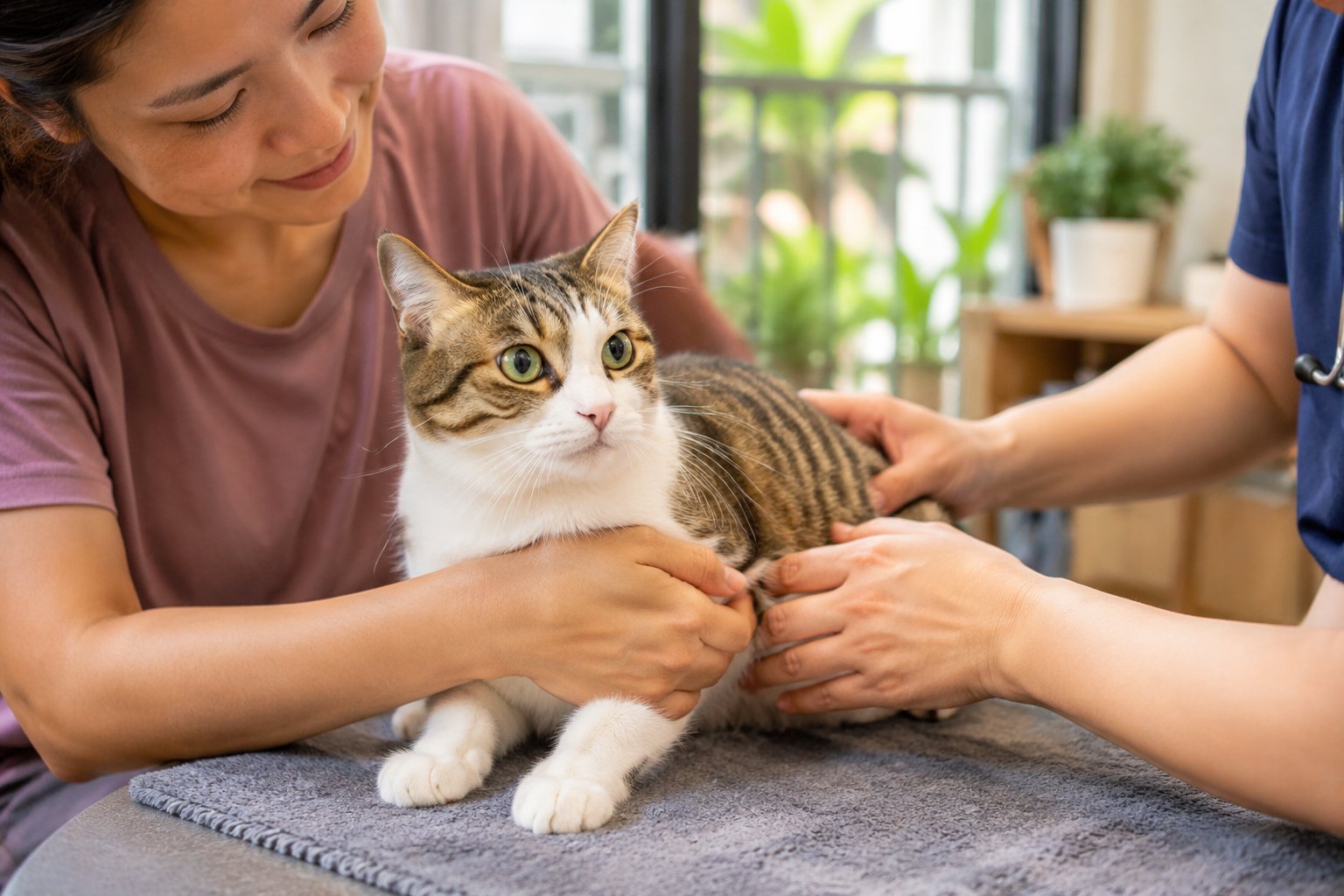
Because these causes look similar from the outside, you cannot diagnose the problem by sight alone. A vet can feel the abdomen, check the cat's body condition and run tests if needed.
Feed measured meals, not free-feeding
One of the simplest ways to prevent a swollen belly is to control how much your cat eats. Free-feeding, where dry food is left out all day, makes it easy for a cat to overeat, especially in a multi-cat home where one cat may eat more than its share.
Practical steps:
- Weigh the daily portion with a kitchen scale or use the measuring cup that comes with the food. Follow the feeding guide on the pack as a starting point, then adjust based on your cat's body condition.
- Split the daily ration into two or three meals. Smaller meals are easier on the stomach and reduce the chance of a cat gulping air.
- Use a slow feeder or a puzzle feeder for cats that eat very fast. These make the cat work for food and slow down eating.
- Keep food away from other pets so you know your cat is eating its own portion.
- Avoid giving table scraps regularly, as these add extra calories and can upset the stomach.
If you have several cats, feed them in separate rooms or use microchip feeders so each cat gets the right amount.
Change food gradually
A sudden switch to a new food is a common cause of gas, loose stool and a bloated-looking belly. Cats have sensitive digestive systems, and the gut bacteria need time to adjust.
A safe transition usually looks like this:
| Day | Old food | New food |
|---|---|---|
| 1–3 | 75% | 25% |
| 4–6 | 50% | 50% |
| 7–9 | 25% | 75% |
| 10 onward | 0% | 100% |
Go slower if your cat has a sensitive stomach. If diarrhoea or vomiting continues after a slow transition, ask your vet whether the food is suitable.
Control worms and parasites
Intestinal worms are a well-known cause of a pot-bellied look, particularly in kittens. Roundworms and tapeworms can live in the gut, and a heavy burden can make the belly look round while the rest of the body stays thin.
Prevention tips:
- Follow a deworming schedule recommended by your vet. The right frequency depends on whether your cat goes outdoors, hunts, or lives with other animals.
- Use a product labelled for cats and dose by body weight. Never use dog dewormers on cats, as some ingredients can be toxic.
- Control fleas, because fleas can carry tapeworm larvae. Keep up with flea prevention as advised by your vet.
- Clean the litter box daily and wash your hands after handling soil, raw meat or the litter box.
- Keep cats indoors where possible, or supervise outdoor time, to reduce exposure to infected soil and prey.
In Malaysia, warm and humid conditions mean parasites can be active year-round, so a regular schedule matters more than a seasonal one.
Keep your cat at a healthy weight
Obesity is one of the most common reasons for a big belly in cats. Extra fat is often stored around the abdomen, and an overweight cat may look round even when it is not bloated.
You can check body condition at home:
- Ribs: you should be able to feel the ribs easily under a thin layer of fat.
- Waist: looking from above, there should be a slight waist behind the ribs.
- Belly: looking from the side, the belly should tuck up slightly towards the hind legs.
If you cannot feel the ribs or see a waist, your cat may be overweight. Ask your vet to confirm and to help you set a safe weight-loss plan. Never put a cat on a strict crash diet without veterinary advice, as rapid weight loss can cause serious liver problems.
Watch for constipation
Constipation can cause a hard, swollen belly and straining in the litter box. It is more common in older cats, cats that do not drink enough water, and cats fed a dry-only diet.
To reduce the risk:
- Provide fresh water in several places and consider a water fountain.
- Feed wet food as part of the diet, as it adds moisture.
- Keep the litter box clean so cats are not put off using it.
- Encourage play and movement, which helps the gut move.
- Ask your vet about fibre if your cat has a history of hard stools.
If your cat strains without producing stool, or has not passed stool for more than a day or two, see a vet.
Daily and weekly checks
A few minutes of checking each week can help you spot a problem early.
Daily checks:
- Is your cat eating and drinking normally?
- Is the litter box output normal in amount and appearance?
- Is your cat active and comfortable?
Weekly checks:
- Weigh your cat on a baby scale or pet scale, or weigh yourself holding the cat and subtract your own weight.
- Run your hands gently along the belly to feel for hardness, pain or sudden changes.
- Look at the shape from above and from the side.
- Check for vomiting, diarrhoea or a dull coat.
Write down the weight and any changes. A trend is more useful than a single number.
A simple prevention checklist
| Area | What to do | How often |
|---|---|---|
| Feeding | Measure portions, split into 2–3 meals | Every day |
| Food changes | Mix old and new food over 7–10 days | When changing diet |
| Deworming | Follow vet-recommended schedule | As advised |
| Flea control | Use cat-safe product | As advised |
| Weight | Weigh and check body condition | Weekly |
| Water | Fresh water in several bowls | Daily |
| Litter box | Scoop and clean | Daily |
| Vet check | General health check | At least yearly, more often for seniors |
Malaysian home contexts
Kuala Lumpur apartment: In a high-rise apartment, space is limited and cats may get less exercise. Set aside time each day for play with a wand toy or laser pointer, and use vertical space such as cat trees and shelves. Measure meals carefully, because a bored indoor cat may eat out of habit. Keep the litter box away from food and water, and scoop it daily in a small flat.
Johor terrace house: A terrace house may have a garden or car porch where cats can pick up worms from soil or prey. If your cat goes outside, keep up with deworming and flea control, and check the belly regularly. Keep rubbish bins closed and avoid leaving food out, as this can attract stray cats and increase the chance of fights and parasite spread.
Penang rainy season: During heavy rain, cats may stay indoors more and drink less, which can contribute to constipation. Make sure water bowls are available in several rooms and consider adding wet food. Damp conditions can also make flea problems worse, so check the coat and skin regularly.
When to see a vet
See a vet promptly if you notice any of the following:
- The belly is painful when touched, or your cat flinches or cries.
- The belly is hard or suddenly much larger.
- Your cat stops eating or drinking.
- Vomiting or diarrhoea lasts more than a day or two.
- Your cat is losing weight while the belly stays big.
- Breathing is fast or laboured.
- Your cat seems weak, hides, or is less active than usual.
- A kitten has a big belly and is not gaining weight.
- Your cat strains in the litter box without passing stool.
These signs can point to fluid, organ disease, a blockage or other serious problems. Early checks give your vet more options.
Vet disclaimer
This article is general information for cat owners in Malaysia and is not a substitute for veterinary advice. Every cat is different, and a swollen belly can have many causes. Always consult a licensed veterinarian for diagnosis and treatment, and follow their advice on diet, deworming and weight management.
Related reading
- Diarrhea Prevention for Cats: A Practical Guide for Malaysian Owners
- Hair Loss Prevention for Cats: A Practical Grooming and Health Guide
- How to Treat Constipation in Cats at Home: A Practical Malaysian Guide
- Itching Prevention for Cats: A Practical Guide for Malaysian Owners
- Vomiting in Cats: Causes and Care (Malaysia Guide)
- Anemia Prevention for Cats: A Practical Guide for Malaysian Owners

