
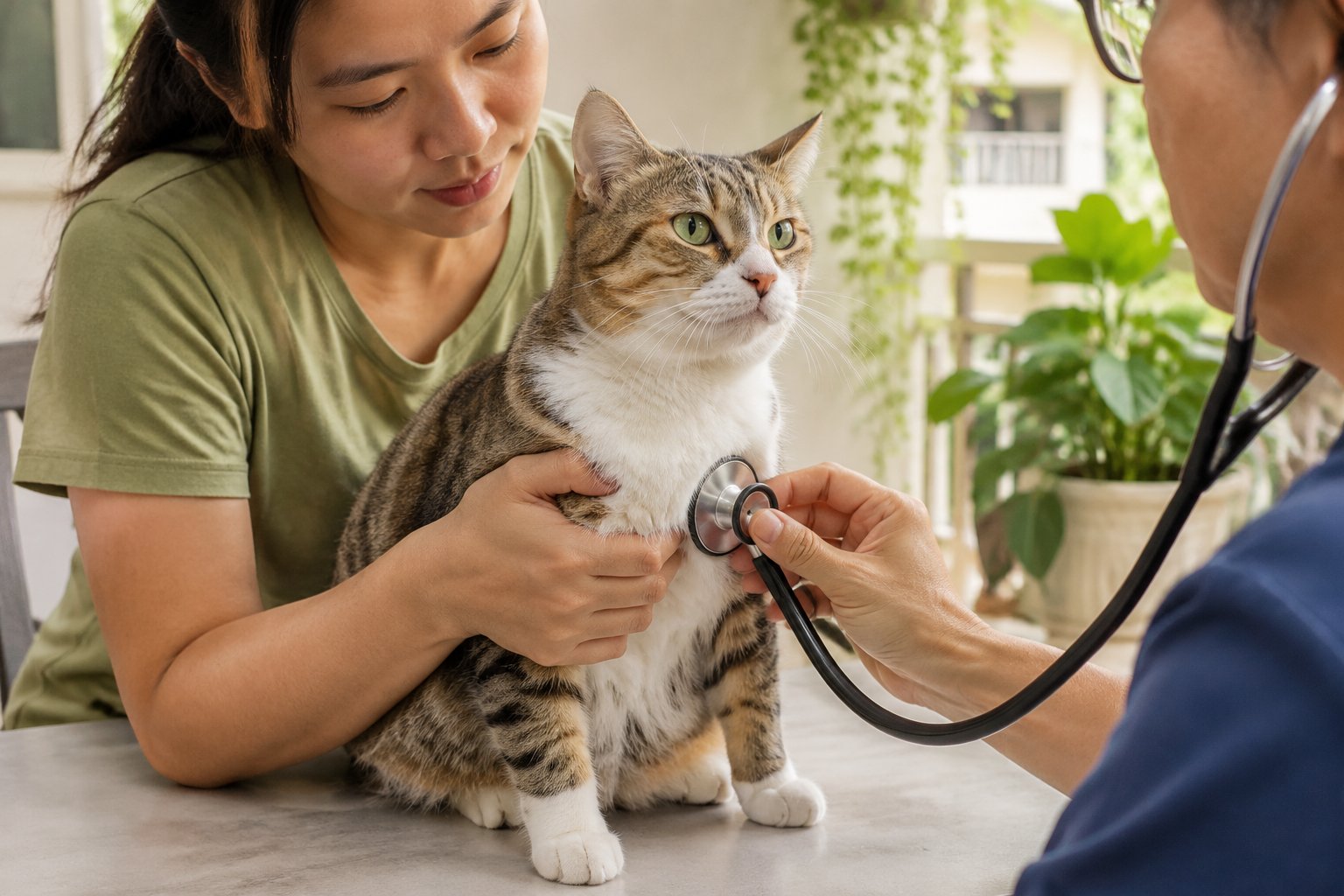
Start here: what dehydration really means in cats
Dehydration is not a disease on its own. It is a deficit of body water that happens when a cat loses more fluid than it takes in — through vomiting, diarrhoea, fever, heat, reduced drinking, or an underlying illness such as kidney disease, diabetes or hyperthyroidism. That distinction matters because at-home care can support mild, early fluid loss, but it cannot fix the cause.
A useful rule: home care is for cats that are still bright, still eating, and only mildly dry. A cat that is dull, hiding, vomiting or refusing water needs a vet, not a bowl of broth. If you are unsure, err on the side of a phone call to your clinic.
This guide covers how to check hydration at home, safe ways to encourage drinking, what to avoid, and the red flags that mean you should stop and get help.
How to check your cat's hydration at home
You can do a basic hydration check in under a minute. None of these tests is perfect, and they are less reliable in overweight cats, very young kittens and very old cats, but they give you a starting point.
1. Gum check. Lift the lip gently and look at the gums. Moist, slick gums are normal. Tacky or sticky gums suggest dehydration. Very dry gums are a red flag. Gums should also be pink, not pale, white, blue or bright red.
2. Skin tent test. Gently pinch a small fold of skin at the scruff or between the shoulder blades and release it. In a well-hydrated cat it snaps back immediately. In a dehydrated cat it returns slowly or stays tented. Note that older cats and very thin cats naturally have less elastic skin, so this test can mislead.
3. Eye position. Sunken eyes can indicate significant dehydration. Compare with how your cat normally looks.
4. Capillary refill. Press gently on the gum until it blanches, then release. The colour should return within about two seconds. Slower refill can suggest poor circulation and warrants urgent veterinary attention.
5. General behaviour. Is your cat alert, interested in food, grooming? A dehydrated cat often becomes quiet, hides, stops grooming, and loses appetite.
6. Litter tray and urine. Small amounts of dark, concentrated urine suggest reduced water intake. No urine at all, especially in a male cat, is an emergency because of urinary blockage risk.
| Check | Normal | Concerning |
|---|---|---|
| Gums | Moist, pink | Tacky, dry, pale or red |
| Skin tent | Snaps back fast | Returns slowly or stays up |
| Eyes | Normal position | Sunken |
| Capillary refill | Under ~2 seconds | Slower than 2 seconds |
| Behaviour | Alert, eating | Lethargic, hiding, off food |
| Urine | Regular, normal colour | Very little, dark, or none |
If you see two or more concerning signs, treat it as a vet matter rather than a home-care matter.
Safe at-home steps to encourage drinking
For a cat that is only mildly dry and otherwise well, the goal is to increase voluntary water intake without stress. Cats are notoriously fussy about water, and stress itself reduces drinking, so gentle and gradual is better than forceful.
Offer fresh water in several places. Put bowls in quiet spots away from the litter tray and food. Some cats prefer a bowl away from their food because of natural prey-and-water separation instincts. Wash bowls daily — cats often refuse water that smells of old food or plastic.
Try different bowl materials and shapes. Ceramic, glass and stainless steel are common preferences. Some cats dislike deep bowls that press on their whiskers; a wide, shallow bowl can help. A running water fountain encourages some cats to drink more, but not all — and fountains need regular cleaning.
Add water to food. Wet food already contains a lot of moisture. You can add a spoonful of warm water to wet food or to rehydrated dry food. Warm (not hot) food is more aromatic and often more appealing.
Offer a low-sodium broth. Plain, unsalted chicken broth with no onion, garlic, or seasoning can tempt a cat to lap. Onion and garlic are toxic to cats, so check ingredients carefully. Do not use stock cubes, which are high in salt.
Try ice cubes or a splash of water in the bowl. Some cats enjoy lapping at a slight swirl or a floating ice cube. This is harmless and can increase interest.
Keep water cool and clean. In Malaysia's heat, water warms quickly. Refresh bowls more often and place them out of direct sun. A cat that is hot may drink more if the water is cool and fresh.
Reduce stress. If you have multiple cats, provide separate water stations. A cat being guarded away from the bowl by another cat may not drink enough. Feeding and watering in separate rooms can help.
Do not force water down the throat. Small amounts into the cheek pouch with a syringe are sometimes used for alert cats, but never squirt water straight back — it can be inhaled into the lungs. Forcing large volumes can also cause water intoxication, which is dangerous.
What not to do at home
Some well-meaning home remedies do more harm than good.
- Do not give human electrolyte or sports drinks. They often contain sugar, sweeteners and sodium levels that are wrong for cats.
- Do not give milk. Many adult cats are lactose intolerant, and milk can cause diarrhoea, worsening fluid loss.
- Do not use salty broths or stock cubes. High sodium is harmful, especially for cats with heart or kidney disease.
- Do not give subcutaneous fluids without veterinary training. Fluid volume, type and frequency depend on the cat's weight, kidney function and heart health. Giving too much or the wrong fluid can be dangerous.
- Do not delay vet care to "wait and see" if your cat is unwell. Dehydration in a sick cat can worsen quickly.
- Do not use human rehydration sachets unless your vet approves. Formulations vary and some are unsuitable for cats.
Home care vs vet care: a simple comparison
| Situation | Home care appropriate? | What to do |
|---|---|---|
| Cat is bright, eating, mildly tacky gums | Yes, with monitoring | Offer water in multiple spots, wet food, low-sodium broth; recheck in a few hours |
| Cat is quiet, off food, drinking less | Borderline | Call your vet for advice; monitor closely |
| Cat is vomiting or has diarrhoea | No | Vet visit; fluid loss can be rapid |
| Cat is lethargic, weak, sunken eyes | No | Urgent vet care |
| Male cat straining to urinate or no urine | No | Emergency — possible blockage |
| Kitten, senior, or cat with kidney disease | No, unless vet advises | These cats dehydrate fast; seek advice early |
Special cases: kittens, seniors and cats with chronic illness
Kittens have a high body water turnover and dehydrate very quickly. A kitten with diarrhoea or refusing food can become critical within hours. Do not rely on home care for a lethargic kitten.
Senior cats often have reduced thirst sensation and underlying kidney disease. They may drink more than usual yet still be dehydrated because their kidneys cannot concentrate urine. If your older cat is drinking a lot and losing weight, that is a vet visit, not a water-bowl problem.
Cats with kidney disease, diabetes or hyperthyroidism need a veterinary plan. Home care can support them, but fluid therapy and monitoring are medical decisions. Never adjust fluids or medications without your vet.
Overweight cats can be harder to assess because extra fat affects the skin tent test. Look at gums, behaviour and urine instead.
Preventing dehydration day to day
Prevention is easier than treatment. In Malaysia's hot and humid climate, cats can lose water through panting and heat, especially if they are long-haired or live in a flat without air conditioning.
- Always provide fresh water in more than one place.
- Feed at least some wet food daily if your cat accepts it.
- Wash bowls daily and refresh water more often in hot weather.
- Provide shade and cool resting spots; never leave a cat in a car or a hot room.
- Watch water intake and litter output; changes are early warning signs.
- Keep up with veterinary check-ups, especially for older cats.
When to see a vet
Seek veterinary care promptly if your cat:
- Refuses food and water for more than 12–24 hours.
- Vomits repeatedly or has diarrhoea.
- Is lethargic, weak, or unable to stand.
- Has very dry or tacky gums, sunken eyes, or slow skin tent.
- Is a male cat straining to urinate or producing no urine.
- Is a kitten, senior, or has a known chronic illness.
- Breathes rapidly or seems painful.
- Does not improve after a few hours of gentle home care.
Your vet can assess hydration properly, run blood tests if needed, and give fluids by the appropriate route. Local prices for consultations, blood tests and fluid therapy vary, so ask your clinic directly rather than relying on online figures.
Vet disclaimer
This article is general information for Malaysian cat owners and is not a substitute for veterinary examination, diagnosis or treatment. Hydration status and fluid therapy decisions require a licensed veterinarian who can assess your individual cat. If you are worried about your cat, contact your vet or an emergency animal clinic.
Related reading
- Cat Health Guide Malaysia: Symptom Check, Red-Flag Triage & When to See a Vet
- Breathing Difficulty in Cats in Malaysia: Signs, Causes and What to Do
- Cat Dehydration Treatment in Malaysia: Signs, Home Care and When to See a Vet
- Excessive Thirst in Cats: Causes and Care (Malaysian Owner's Guide)
- Excessive Urination in Cats: Prevention Guide for Malaysian Owners
- Heatstroke in Cats: Causes, Signs and Care (Malaysia Guide)
- Heatstroke in Cats in Malaysia: Signs, First Aid & Prevention
- How to Treat Constipation in Cats at Home: A Practical Malaysian Guide
- How to Treat Coughing in Cats at Home: A Practical Guide for Malaysian Owners
- How to Treat Excessive Thirst in Cats at Home: A Practical Guide for Malaysian Owners

