
Quick answer
Sudden aggression in cats is rarely about being naughty. It is usually fear, pain, stress or a territorial problem. Prevention means reading early warning signs, giving cats control over their space, keeping routines steady, and ruling out medical causes with a vet. Punishment makes it worse; calm management and early help work better.
Why cats suddenly become aggressive
Cats are good at hiding discomfort. When they finally react, it can look sudden to us but was building for a while. Common causes include:
- Fear and anxiety from loud noises, visitors, building works, or a new pet.
- Pain or illness such as dental disease, arthritis, urinary problems or thyroid issues.
- Redirected aggression when a cat sees another cat outside the window but attacks the cat or person nearby.
- Territorial stress in multi-cat homes where resources are shared or too close together.
- Overstimulation from too much petting, especially near the tail base or belly.
- Play aggression when hands or feet are used as toys.
- Sudden changes like a move, new baby, renovation, or a family member returning after a long absence.
Understanding the trigger is the first prevention step. Without it, training is guesswork.
Early warning signs to watch
Prevention starts with spotting stress before a bite or swipe. Watch for:
- Ears flattening or turning sideways
- Tail twitching, lashing or puffing up
- Dilated pupils
- Hissing, growling or low yowling
- Crouching low or freezing
- Sudden grooming or lip licking
- Hiding more than usual
- Avoiding certain rooms or people
- Changes in appetite or litter box habits
If you see these signs, stop what you are doing and give the cat space. Do not pick it up to comfort it. Let it retreat.
Prevention at home: a room-by-room checklist
Use this checklist to reduce stress and lower the chance of sudden aggression.
| Area | What to provide | Why it helps |
|---|---|---|
| Resting spots | High shelves, cat trees, covered beds | Gives cats safe escape routes and vertical territory |
| Food and water | Separate bowls for each cat, away from litter | Reduces competition and guarding |
| Litter boxes | One per cat plus one spare, in different locations | Prevents litter box stress and avoidance |
| Scratching | Vertical and horizontal scratchers near resting areas | Redirects energy and marks territory safely |
| Play | Short daily sessions with wand toys | Burns energy and reduces play aggression |
| Hiding | Boxes, tunnels, quiet rooms | Lets cats retreat when overwhelmed |
| Windows | Curtains or blinds to block outside cats | Reduces redirected aggression |
| Pheromones | Diffusers or sprays if helpful | Can support calm in some cats |
In a Kuala Lumpur apartment, vertical space matters more because floor area is limited. Use wall shelves and window perches so cats can separate without fighting. In a Johor terrace house, watch for neighbourhood cats coming to the gate or window; block visual access if your cat reacts.
Multi-cat household prevention
Many sudden fights happen between cats that usually get along. Prevention focuses on resources and reintroduction.
- Separate resources. Feed cats in different rooms or at opposite ends of a room. Use separate water bowls and litter boxes.
- Create routes. Make sure a cat can move from one room to another without passing another cat at close range.
- Scent swap. Rub a cloth on one cat and let the other smell it, then swap. Do this daily during tense periods.
- Supervise reintroductions. Start with short sessions separated by a baby gate or cracked door. Reward calm behaviour with treats.
- Avoid punishment. Shouting or spraying water increases fear and can make fights worse.
- Check for bullying. One cat may guard doorways, litter boxes or food. If so, rearrange the home so the bullied cat has multiple exits.
If fights draw blood, cause hiding or stop a cat from eating, separate them fully and seek vet advice. A qualified behaviour professional can help with a structured plan.
Play and handling to prevent bites
Play aggression is common in young cats. Prevention is simple:
- Never use hands or feet as toys, even as kittens.
- Use wand toys and put them away after play.
- End play with a small treat or meal so the cat can cool down.
- Avoid petting a cat that is wound up or twitching its tail.
- Teach children to let the cat come to them and to stop touching if the tail starts swishing.
For handling, approach from the side, not above. Support the chest and hindquarters. If a cat struggles, put it down gently. Forcing restraint can turn fear into aggression.
Environment and routine
Cats thrive on predictability. Keep meal times, play times and litter cleaning consistent. During festive seasons or renovations, set up a quiet room with food, water, litter and a familiar blanket. Use white noise or a radio at low volume to mask sudden sounds.
In Malaysia, rainy season thunderstorms can trigger fear. Close windows, draw curtains and provide a covered hiding spot. If your cat reacts to thunder, speak to your vet about a behaviour plan; do not medicate without veterinary advice.
Medical causes to rule out
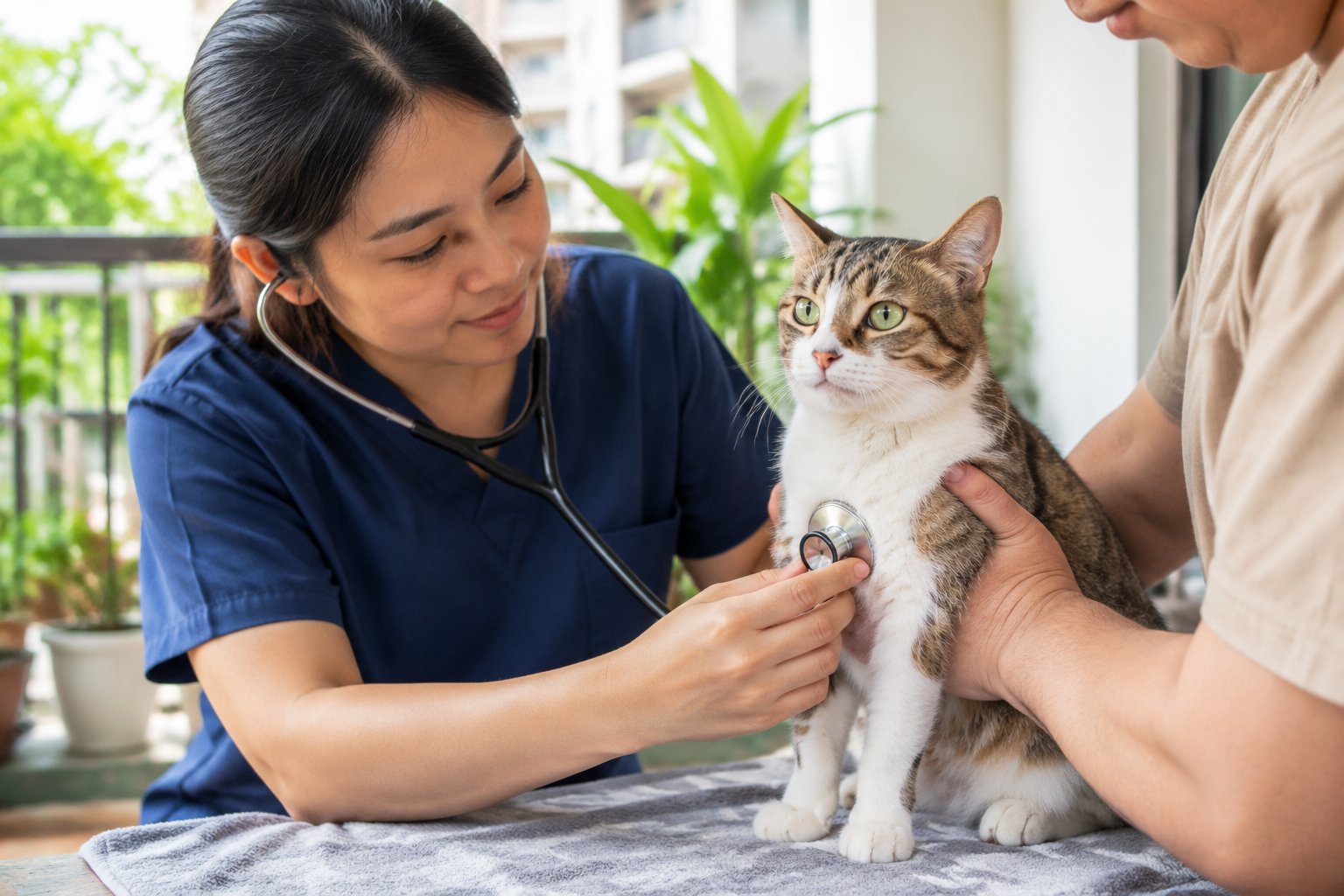
Before starting a behaviour plan, book a vet check. Pain is a common hidden cause of irritability. Tell your vet:
- When the aggression started
- What happens just before it
- Whether the cat is eating, drinking and using the litter box normally
- Whether the cat reacts when touched in a specific area
- Any vomiting, diarrhoea, weight change or increased thirst
Your vet may examine the mouth, joints, abdomen and skin. They may recommend blood tests or urine tests. If pain or illness is found, treating it can reduce aggression quickly. Do not assume it is purely behavioural until health is checked.
When to see a vet
See a vet promptly if:
- Aggression is sudden and new
- Your cat injures you, another person or another pet
- Aggression comes with hiding, not eating, limping or litter box changes
- Your cat reacts when picked up or touched in one area
- A normally friendly cat becomes withdrawn or irritable
- You are unsure whether pain is involved
If your cat is injured or there is a fight with bleeding, contact a vet immediately. For behaviour concerns, ask your vet whether a qualified behaviour professional is available. Avoid unqualified trainers who use punishment methods.
A simple prevention plan for Malaysian homes
- Book a vet check to rule out pain and illness.
- Map the triggers. Note time, place, people and what happened before each episode.
- Add resources. One litter box per cat plus one, separate feeding stations, and multiple resting spots.
- Create escape routes. High shelves, cat trees and open doors so no cat is cornered.
- Block outside cats. Use blinds or frosted film on windows if your cat reacts to neighbourhood cats.
- Play daily. Two short wand-toy sessions can reduce pent-up energy.
- Reward calm. Treats and praise when cats rest near each other without tension.
- Avoid punishment. Never hit, shout or spray water.
- Keep routines steady. Feed and play at similar times each day.
- Review progress. If no improvement in a few weeks, seek professional help.
What not to do
- Do not punish after an attack; cats do not connect punishment to past behaviour.
- Do not force cats to "sort it out"; this can cause injury and lasting fear.
- Do not pick up an aroused cat; wait for it to calm.
- Do not use your hands to break up a fight; use a barrier, cushion or loud noise from a distance.
- Do not stop medication or start supplements without vet advice.
Vet disclaimer
This article is general information for Malaysian cat owners and is not a substitute for veterinary advice. Every cat is different. If your cat shows sudden aggression, injury or signs of illness, consult a licensed veterinarian. Do not delay care for a cat that is not eating, is injured, or is in distress.

