
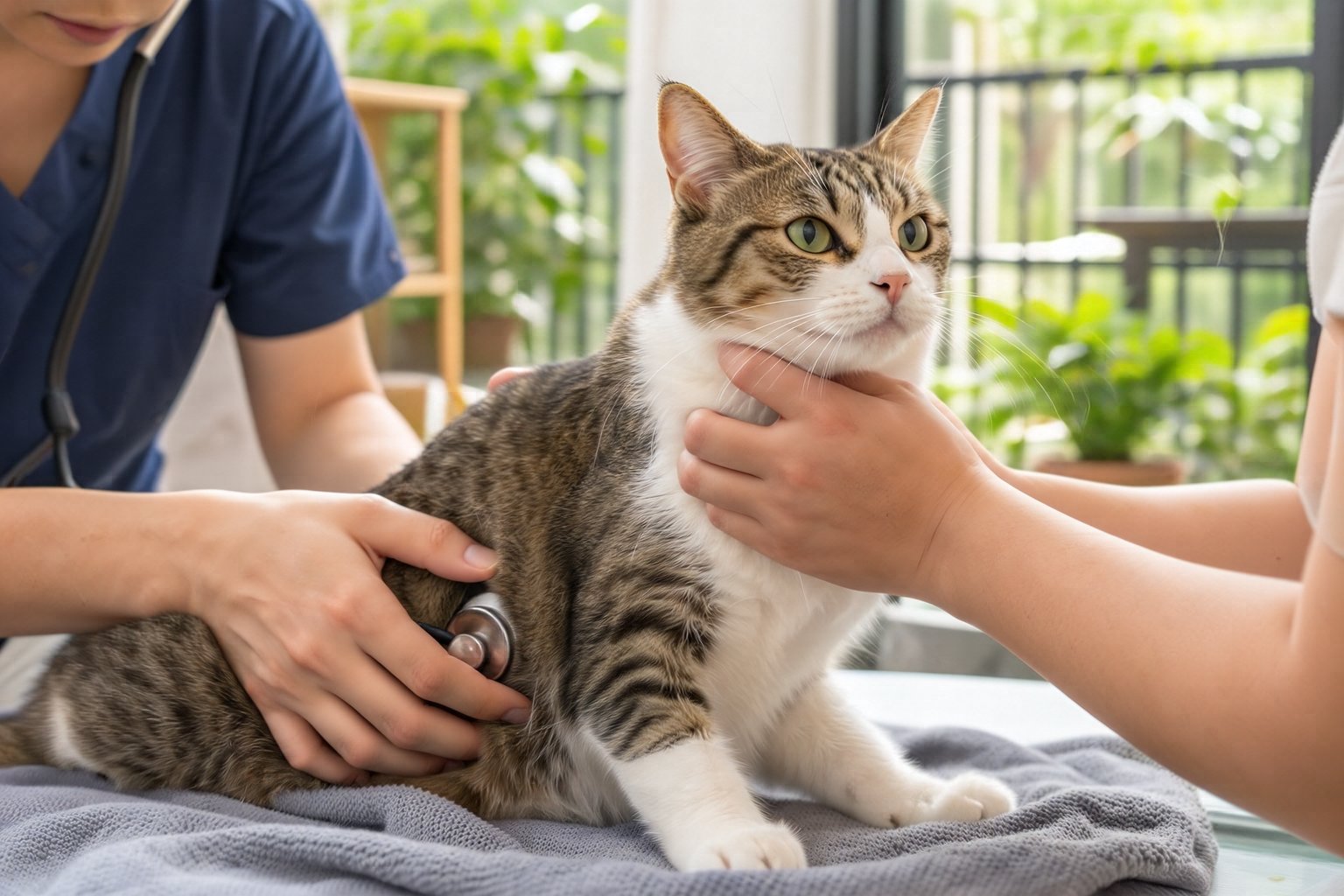
The short answer
A cat that suddenly drinks far more than usual is usually showing polydipsia — the medical term for excessive thirst. In most cases it is not a quirk of personality but a signal that something is off: kidney disease, diabetes, an overactive thyroid, a urinary tract problem, or simple dehydration from heat and dry food. The practical move is to measure how much your cat actually drinks over 24 hours, note any other changes, and book a vet visit if the increase is sudden, persistent, or paired with symptoms like weight loss or larger urine clumps.
How much water is normal for a cat?
A useful rule of thumb is 40-60 ml of water per kilogram of body weight per day, counting moisture from food as well as what your cat laps from the bowl. That means a 4 kg cat takes in roughly 160-240 ml daily.
Several things shift that number legitimately:
- Dry food diets — kibble contains around 10% moisture, so dry-fed cats drink noticeably more than wet-fed cats.
- Wet or raw food — these can be 70-80% water, so a wet-fed cat may drink very little and still be well hydrated.
- Weather — in Malaysia's hot, humid climate, cats lose more water through panting and evaporation, and drinking rises.
- Activity and stress — playful cats and stressed cats both drink more.
- Nursing queens — lactating mothers can drink several times the normal amount.
- Medications — steroids, diuretics and some other drugs increase thirst.
A cat is generally considered polydipsic when intake exceeds about 100 ml per kg per day, but the more useful signal for owners is a clear change from that individual cat's normal pattern.
| Cat weight | Typical daily intake (40-60 ml/kg) | Worth investigating above |
|---|---|---|
| 3 kg | 120-180 ml | ~300 ml |
| 4 kg | 160-240 ml | ~400 ml |
| 5 kg | 200-300 ml | ~500 ml |
| 6 kg | 240-360 ml | ~600 ml |
These are guides, not diagnoses. A cat on dry food in a hot apartment may sit at the top of the range and be perfectly healthy; a wet-fed cat drinking 300 ml is more suspicious.
The main causes of excessive thirst in cats
1. Chronic kidney disease (CKD)
The kidneys filter waste and concentrate urine. When kidney tissue is damaged, the cat cannot concentrate urine well, so it loses more water in urine and drinks to compensate. CKD is common in older cats and often develops slowly. Early signs can be easy to miss: bigger urine clumps, drinking more, gradual weight loss, a dull coat, and sometimes vomiting or reduced appetite later on. Because cats hide illness well, many are diagnosed only when bloodwork is done for another reason.
2. Diabetes mellitus
When the body cannot use glucose properly, sugar spills into the urine and drags water with it. The result is excessive urination and thirst, often with a ravenous appetite and weight loss despite eating well. Diabetic cats may also develop weakness in the back legs. Diabetes is manageable, and early diagnosis makes stabilisation easier, so increased drinking plus a big appetite is a pattern worth checking quickly.
3. Hyperthyroidism
An overactive thyroid speeds up metabolism. Cats burn energy fast, so they eat more, lose weight, and often drink and urinate more. Many become restless or vocal, and some develop a scruffy coat. Hyperthyroidism is treatable, and it is one of the classic reasons a senior cat starts emptying the water bowl.
4. Urinary tract and bladder problems
Cystitis, bladder stones, and urinary blockages can all change drinking and urination habits. A male cat straining to urinate with little or no urine produced is an emergency — a urethral blockage can become fatal within a day. Any cat that visits the litter box frequently, cries while urinating, or produces blood-tinged urine needs prompt veterinary attention.
5. Dehydration from heat, vomiting or diarrhoea
Malaysia's climate makes dehydration easy. A cat with vomiting, diarrhoea, fever or reduced appetite loses fluid and may drink more to catch up. Very young, very old and unwell cats dehydrate fastest. Skin tenting, tacky gums and lethargy are warning signs.
6. Other causes
Less common causes include liver disease, electrolyte imbalances (such as high calcium), hormonal conditions like Cushing's disease, pyometra (infected uterus in unspayed females), certain medications, and psychogenic polydipsia — a behavioural excessive drinking pattern that is diagnosed only after medical causes are ruled out.
Signs to watch for alongside the thirst
Thirst rarely travels alone. Note any of these and bring the list to your vet:
- Larger or more frequent urine clumps; accidents outside the box
- Weight loss despite a good or increased appetite
- Reduced appetite, vomiting or diarrhoea
- Dull coat, poor grooming, or bad breath
- Weakness, wobbliness in the back legs, or unusual vocalising
- Straining to urinate, crying in the litter box, or blood in urine
- Lethargy, hiding, or changes in social behaviour
- Increased appetite with weight loss
How to measure your cat's drinking at home
You cannot judge intake by eyeballing a bowl. Try this simple method:
- Use a measuring jug. Fill the bowl with a known amount, e.g. 300 ml, at the same time each day.
- Top up and record. At the next check, measure what you add to refill it. Add that to any water left over to estimate daily intake.
- Account for all sources. Multiple bowls, running taps, water features, and wet food all count.
- Track for 3-5 days. A pattern is more useful than a single reading.
- Record urine clumps too. Count or roughly weigh clumps in the litter tray; bigger, more numerous clumps support the story.
- Note the diet. Dry versus wet food changes the expected intake dramatically.
Bring your notes to the appointment. Vets often ask about water intake and urine output, and owners who have numbers get more out of the consultation.
What your vet will likely do
Expect a structured work-up rather than a single test:
- History and physical exam — weight, hydration, thyroid palpation, dental check, abdominal palpation.
- Urine test — checks concentration, glucose, protein, blood, crystals and infection. A fresh sample is valuable; ask the clinic how they prefer you to collect it.
- Blood tests — kidney values, glucose, thyroid hormone, electrolytes, liver enzymes and blood count.
- Blood pressure — high blood pressure often accompanies kidney disease and hyperthyroidism.
- Imaging — ultrasound or X-rays if stones, blockages or organ changes are suspected.
Treatment depends entirely on the diagnosis: kidney support diets and hydration strategies for CKD, insulin and monitoring for diabetes, medication or other options for hyperthyroidism, and urgent unblocking for a blocked bladder.
Caring for a cat that drinks a lot
Whatever the cause, good day-to-day care helps:
- Never restrict water. Keep bowls full and clean, and refresh them daily.
- Offer multiple water stations in different rooms, away from food and litter.
- Try a water fountain. Many cats prefer running water, and it encourages intake.
- Consider wet food. It supports hydration and urinary health; ask your vet whether a prescription diet is needed.
- Keep the litter tray clean so you can monitor urine output accurately.
- Watch weight. Weigh monthly on a baby scale or at the clinic.
- Manage heat. Provide shade, cool floors and airflow during hot spells.
- Stick to the treatment plan. Missed insulin doses or skipped medication quickly show up as thirst and urination changes.
- Book regular senior checks. From around seven years old, annual or twice-yearly bloodwork catches problems earlier.
When to see a vet
Book a vet visit promptly if your cat drinks noticeably more than usual for more than a day or two, or if thirst appears alongside weight loss, increased appetite, bigger urine clumps, vomiting, diarrhoea, dull coat or lethargy.
Go immediately — treat as an emergency — if your cat:
- Strains to urinate with little or no urine produced, especially a male cat
- Cries out while urinating or has blood in the urine
- Is vomiting repeatedly, collapsed, weak or breathing oddly
- Stops eating or drinking entirely
- Shows sudden confusion, seizures or severe lethargy
Do not wait to see whether it settles. In cats, a blocked bladder or severe dehydration can deteriorate within hours.
Practical Malaysian contexts
- Kuala Lumpur apartment: A cat on dry food in a high-rise with air-conditioning may drink less indoors but more on hot afternoons. Multiple small water bowls and a fountain help, and a monthly weight check on a kitchen scale is easy in a small flat.
- Johor terrace house: An outdoor-access cat in a warm, humid compound may drink from drains, puddles or garden containers. Keep fresh water available, and if your cat starts drinking far more, note whether the source is the bowl or elsewhere — contaminated outdoor water can cause illness too.
Prevention and early detection
You cannot prevent every cause of excessive thirst, but you can catch problems earlier:
- Know your cat's normal drinking and litter habits
- Feed a balanced diet suited to age and health status
- Keep cats indoors or supervised to reduce accidents and exposure
- Maintain regular vaccinations and parasite control
- Arrange senior bloodwork from around seven years of age
- Ask your vet about blood pressure checks for older cats
The bottom line
Excessive thirst in cats is a symptom, not a diagnosis. Measure it, note the accompanying signs, keep water freely available, and let a vet investigate with urine and blood tests. Most causes are manageable when caught early, and the earlier the work-up, the more options you and your vet have.
This article is general information for cat owners and is not a substitute for veterinary examination, diagnosis or treatment. Always consult a licensed veterinarian about your cat's health.

