
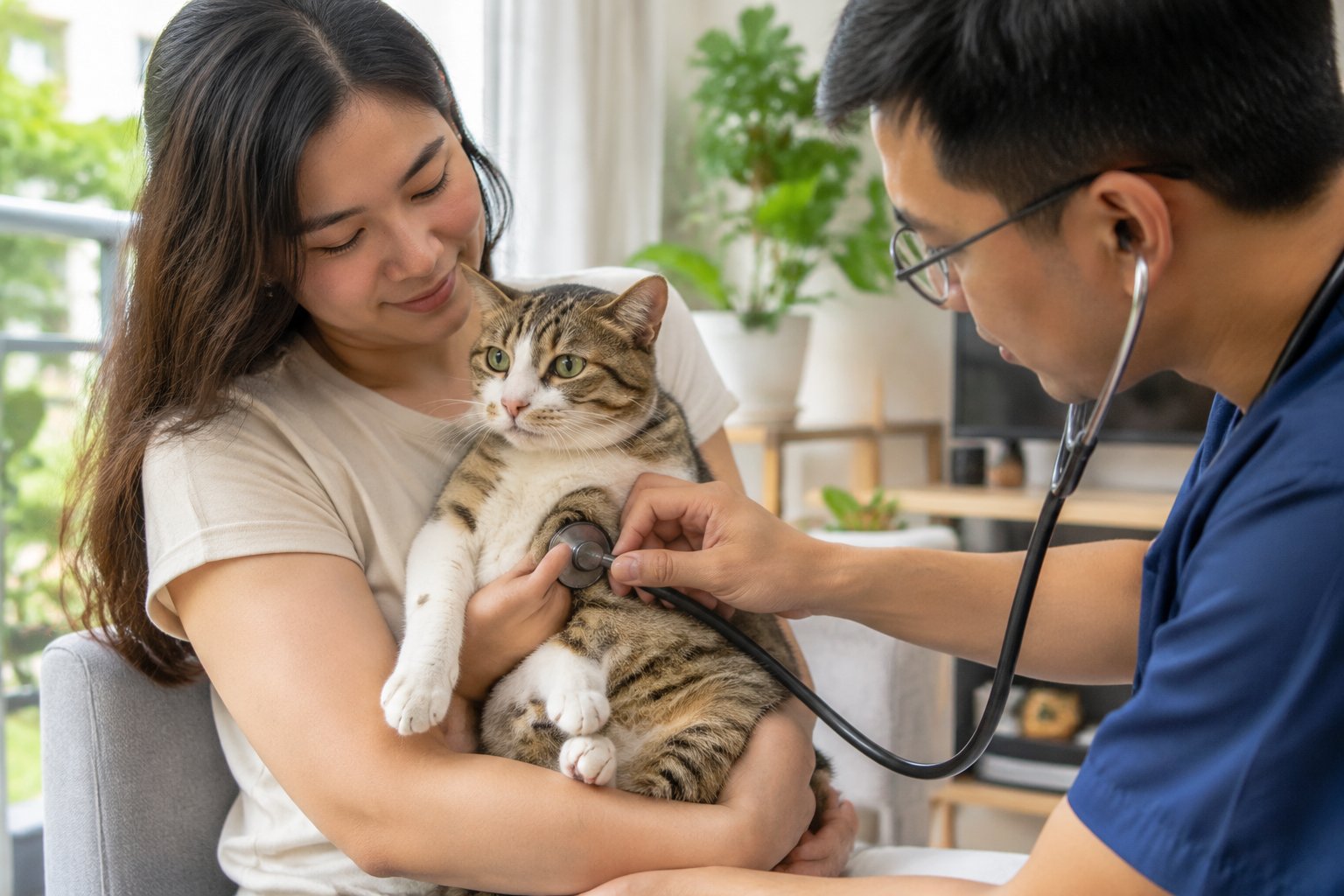
Start with a vet diagnosis, not a guess
Cat obesity is a medical diagnosis, not a cosmetic judgement. A cat is generally considered overweight when it is 10–20% above its ideal weight and obese when it is more than 20% above. Because ideal weight varies with breed and frame, the number on the scale is only part of the picture. Vets use body condition scoring (BCS), a hands-on assessment of ribs, waist and belly. In a healthy cat you can feel the ribs easily under a thin fat layer and see a waist behind the ribs. In an obese cat the ribs are hard to feel, there is no waist, and the belly is rounded or sags.
Before any diet, a veterinarian should rule out medical causes and check for conditions that obesity worsens, such as diabetes, arthritis and heart strain. This is also the moment to set a realistic target weight and a safe rate of loss. In Malaysia, where many cats live indoors in apartments, the vet may also ask about feeding routines, treat habits and whether other pets or family members are feeding the cat.
Why obesity matters for Malaysian cats
Obesity is not just about appearance. Excess fat is metabolically active tissue that increases the risk of insulin resistance and diabetes, worsens joint stress, makes grooming and movement harder, and can complicate anaesthesia and surgery. Overweight cats are also more likely to develop skin fold problems and heat intolerance.
Indoor lifestyles are a major factor. A cat that lives in a Kuala Lumpur apartment may get very little natural activity compared with a free-roaming cat. Add free-feeding of dry food, frequent treats and long naps, and weight gain is easy. The good news is that obesity is treatable, and most cats can reach a healthier weight with a structured plan.
How vets assess and plan treatment
A weight-loss plan has four parts: a target weight, a daily calorie allowance, a feeding method, and a monitoring schedule. Your vet will estimate ideal weight from BCS and breed history, then calculate calories. A common starting point for weight loss is around 60–70% of the calories needed to maintain the current weight, but this must be individualised. Cats with other illnesses, senior cats and growing cats need different calculations.
The plan should be written down. Ask for the target weight, the daily gram amount of food, the number of meals, and the recheck date. If your vet recommends a therapeutic weight-loss diet, follow the label and the vet's portion rather than guessing.
| Step | What happens | What you should ask |
|---|---|---|
| Assessment | Body condition score, weight, health check | What is my cat's BCS and target weight? |
| Calorie plan | Daily allowance based on target weight | How many grams per day, and how many meals? |
| Food choice | Current food, portioned, or therapeutic diet | Do I need a prescription diet or a complete adult food? |
| Monitoring | Regular weigh-ins and rechecks | How often should I weigh and when is the next visit? |
| Adjustment | Portion changes if loss is too fast or slow | What rate is safe for my cat? |
Set a safe rate of weight loss
Slow and steady is the rule. A safe target is roughly 0.5–1% of body weight per week for most cats, and slower for very obese cats. Rapid weight loss in cats is dangerous because fat mobilisation can overwhelm the liver and cause hepatic lipidosis, a potentially fatal condition. Never put a cat on a crash diet or a very low-calorie diet without veterinary supervision.
Weigh your cat weekly on the same scale, ideally a baby scale or a vet clinic scale. Keep a simple log. If your cat is losing too fast, the vet may increase the portion slightly. If nothing is changing after a few weeks, the plan needs review, not a drastic cut.
Feeding strategies that work in real homes
Measure by weight, not by cup
Cups and scoops vary, and a heaped scoop can add a lot of calories. Use a kitchen scale and measure in grams. Split the daily allowance into at least two or three meals. If you have multiple cats, feed separately or use microchip feeders so the overweight cat cannot eat the others' food.
Choose the right food with your vet
There is no single best food for every cat. Options include a therapeutic weight-loss diet, a portion-controlled complete adult food, or a higher-moisture wet food. Wet food can help because it is lower in calories per volume and provides water, but it must still be measured. Avoid simply cutting a normal food in half for months, because that can shortchange essential nutrients.
Treats and human food
Treats should be a small part of the daily calories, often no more than about 10%. Break treats into tiny pieces, use single-ingredient treats, or use part of the daily food as rewards. Avoid human foods such as bread, cheese and fried snacks. In Malaysian homes, table scraps and shared rice are common culprits, so involve everyone in the household.
Puzzle feeders and slow feeding
Puzzle feeders and slow-feed bowls extend mealtime and add mental activity. They are especially useful for indoor cats that eat quickly out of boredom. Start simple so the cat does not get frustrated.
Exercise for indoor cats
Activity burns calories and supports joint health and mood. For cats in apartments or terrace houses, structured play is the main tool. Try two short sessions a day with a wand toy, moving it like prey and letting the cat stalk, pounce and catch. Rotate toys to keep interest. Cat trees, shelves and window perches encourage climbing and watching. Food puzzles and hiding small portions around the home add movement.
Be realistic. A cat that is very obese may tire quickly and have joint pain. Start with short sessions and build up. If your cat is reluctant to move, ask your vet whether pain relief or a joint assessment is needed.
A sample weekly routine
| Day | Morning | Evening | Extra |
|---|---|---|---|
| Monday | Measured breakfast, 10-min wand play | Measured dinner, puzzle feeder | Weigh-in |
| Tuesday | Breakfast, window perch time | Dinner, 10-min play | Hide a few kibbles |
| Wednesday | Breakfast, slow feeder | Dinner, 10-min play | Brush and check body |
| Thursday | Breakfast, 10-min play | Dinner, puzzle feeder | Log weight |
| Friday | Breakfast, window perch time | Dinner, 10-min play | Family treat check |
| Saturday | Breakfast, 15-min play | Dinner, 10-min play | Vet recheck if due |
| Sunday | Breakfast, puzzle feeder | Dinner, 10-min play | Plan next week |
This is an example, not a prescription. Your vet's calorie plan and portion sizes take priority.
Common mistakes and how to avoid them
- Free-feeding dry food. It makes calories impossible to track. Measure meals instead.
- Cutting food too fast. Rapid loss can cause liver disease. Follow the vet's rate.
- Forgetting treats and scraps. These can undo a whole day's deficit. Count them.
- Feeding all cats together. The overweight cat may eat more than its share. Separate feeding or use microchip feeders.
- No monitoring. Without weekly weights, you cannot tell whether the plan is working.
- Giving up too early. Weight loss takes months. Small, steady changes are normal.
When to see a vet
See a vet before starting any weight-loss plan, and at the scheduled rechecks. Seek urgent veterinary care if an overweight cat stops eating or eats very little for more than a day, because this can trigger hepatic lipidosis. Also see a vet if your cat is losing weight very fast, is vomiting, has diarrhoea, seems weak, or has trouble breathing. If your cat is suddenly less active or lame, joint pain or another illness may be involved. In Malaysia, your veterinarian can also advise on parasite control and general health checks that affect appetite and activity.
A realistic timeline
Most cats need months, not weeks, to reach a healthier weight. A cat that needs to lose 2 kg at 0.5% of body weight per week may take many months. Plateaus are common and are a reason to review the plan, not to panic. Celebrate small wins: easier jumping, better grooming, more play. Keep the vet involved, and adjust the plan as body condition improves.
Final thoughts
Treating cat obesity is a partnership between you and your vet. The core steps are simple: get a proper assessment, set a target weight, measure food by weight, choose an appropriate diet, add daily activity, and monitor progress. Avoid crash diets and unproven supplements. With patience and consistency, most overweight cats can become healthier and more comfortable.
This article is general information and not a substitute for veterinary advice. Always consult a licensed veterinarian in Malaysia about your cat's weight and health.
Related reading
- Anemia in Cats in Malaysia: Signs, Causes, and What to Do
- Blood Test for Cats: What to Expect (Malaysian Owner's Guide)
- Cat Anemia Treatment in Malaysia: A Practical Owner's Guide
- Early Signs of Chronic Disease in Cats: 7 Daily Checks and a 4-Week Record Sheet
- Cat Chronic Kidney Disease in Malaysia: The Daily Care Routine That Actually Slows It Down
- Cat Coughing Treatment in Malaysia: Causes, Home Care & When to See a Vet
- Cat Dehydration Treatment in Malaysia: Signs, Home Care and When to See a Vet
- Cat Dental Pain Treatment in Malaysia: A Practical Owner's Guide
- Cat Ear Mites Treatment in Malaysia: A Complete Owner's Guide

