
Quick answer
Breathing difficulty in cats is a medical emergency until proven otherwise. If your cat is open-mouth breathing, gasping, or has blue gums, see a vet immediately. Causes range from asthma and heart disease to infections and trauma. Home care can support recovery but never replaces urgent veterinary treatment.
What is breathing difficulty in cats?
Breathing difficulty (dyspnoea) means your cat is working harder than normal to get air. It can be sudden or gradual. Cats are experts at hiding illness, so by the time you notice laboured breathing, the problem may already be serious. Normal resting breathing rate for a cat is 20–30 breaths per minute. Anything consistently above 30, especially with effort, is a warning sign.
Breathing problems can affect the upper airway (nose, throat, trachea) or the lower airway and lungs. They can also be caused by conditions outside the lungs, such as heart disease, chest fluid, or anaemia. Understanding the type helps your vet choose the right treatment.
Common causes of breathing difficulty in cats
Upper airway problems
- Nasal congestion from cat flu (feline herpesvirus or calicivirus) or allergies.
- Polyps or tumours in the nose or throat.
- Laryngeal paralysis – rare but possible.
- Brachycephalic syndrome – flat-faced breeds like Persians have narrowed nostrils and elongated soft palates.
Lower airway and lung problems
- Feline asthma – an allergic reaction causing airway inflammation and bronchospasm. Common in Malaysia, where dust and humidity can trigger flare-ups.
- Pneumonia – bacterial or viral infection of the lungs.
- Pleural effusion – fluid around the lungs, often from heart failure or infection.
- Pulmonary oedema – fluid in the lungs, usually due to heart disease.
- Lungworm – parasites that can cause coughing and breathing difficulty.
Heart disease
- Hypertrophic cardiomyopathy (HCM) – the most common heart disease in cats, causing fluid build-up and breathing difficulty.
- Congestive heart failure – leads to fluid in the chest or lungs.
Trauma and other causes
- Road traffic accidents – chest injuries, diaphragmatic hernia.
- Anaemia – severe anaemia reduces oxygen delivery, causing rapid breathing.
- Obesity – excess weight puts pressure on the diaphragm.
- Toxins – certain plants, chemicals, or human medications.
Recognising the signs: what to look for
Cats with breathing difficulty may show:
- Rapid breathing at rest (over 30 breaths per minute).
- Open-mouth breathing (a serious sign in cats).
- Abdominal effort – the belly moves more than the chest.
- Noisy breathing – wheezing, crackles, or snoring sounds.
- Blue, pale, or grey gums and tongue.
- Coughing, especially at night or after exercise.
- Restlessness, inability to lie down comfortably, or hiding.
- Reduced appetite and lethargy.
How to count breaths: Watch your cat while sleeping or resting. Count the number of times the chest rises in 15 seconds, then multiply by 4. Do this daily if your cat has a known heart or lung condition.
First aid for a cat in respiratory distress
- Stay calm – your cat picks up on your stress.
- Minimise handling – do not force your cat into a carrier if it causes panic. Use a towel to gently wrap if needed.
- Keep the environment cool and quiet – turn off fans or air-conditioning if it blows directly on the cat.
- Do not give any medication – human drugs can be toxic.
- Transport to the nearest vet immediately – call ahead so they can prepare.
If your cat is gasping and you cannot get to a vet immediately, keep it in a well-ventilated area and avoid any pressure on the chest.
Diagnosis: what your vet will do
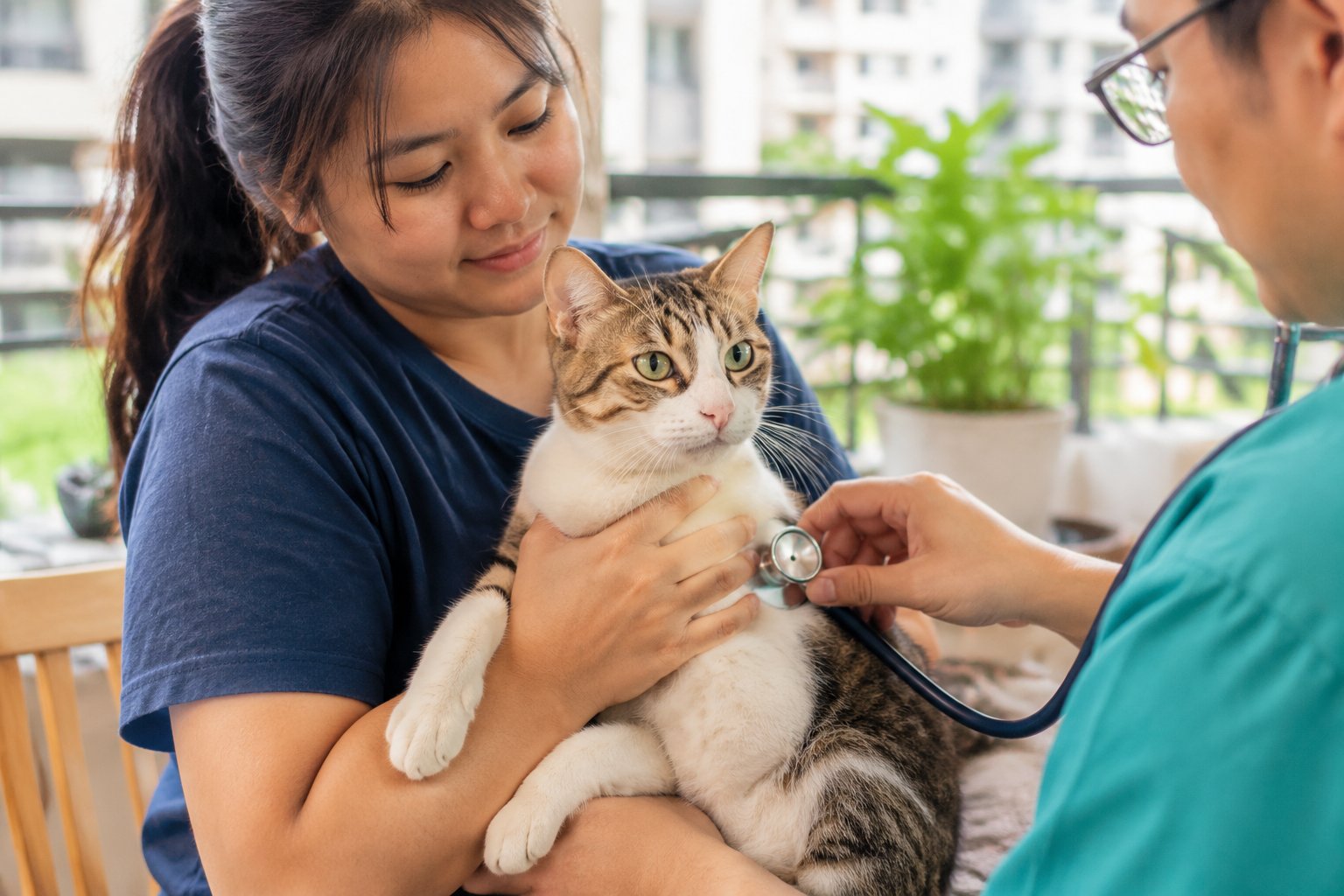
Your vet will start with a physical exam, listening to the heart and lungs. They may check gum colour and breathing rate. Further tests may include:
- X-rays to look at the lungs and heart shape.
- Ultrasound to assess heart function and fluid.
- Blood tests to check for infection, anaemia, or organ function.
- Airway sampling (tracheal wash) in some cases.
These tests help determine whether the cause is heart, lung, or airway related. In Malaysia, your vet may also ask about travel history and parasite prevention.
Treatment options
Treatment depends on the cause:
- Asthma: corticosteroids (oral or inhaled), bronchodilators, and environmental control.
- Heart failure: diuretics to remove fluid, heart medications, and oxygen therapy.
- Infection: antibiotics or antivirals, plus supportive care.
- Pleural effusion: thoracocentesis (draining fluid) for immediate relief.
- Trauma: surgery or stabilisation.
Hospitalisation with oxygen may be needed. Your vet will discuss the best plan for your cat.
Home care for a cat with breathing difficulty
Once your cat is stable, home care focuses on reducing triggers and supporting recovery.
Environment
- Avoid smoke: cigarette smoke, incense, and cooking fumes irritate airways.
- Use low-dust litter: clumping clay litters can be dusty; consider pellet or paper-based litter.
- Control humidity: in Malaysian humidity, use dehumidifiers or air-conditioning to keep rooms dry, but avoid direct cold drafts.
- Reduce stress: provide quiet hiding spots and avoid unnecessary handling.
Diet and weight
- Maintain a healthy weight: obesity worsens breathing. Ask your vet for a weight management plan.
- Feed a balanced diet: some heart conditions benefit from taurine supplementation, but only under vet guidance.
Medication
- Give medications as prescribed: do not skip doses.
- Learn to use inhalers: for asthma, a spacer (like AeroKat) can help deliver medication effectively.
- Keep a diary: note breathing rate, coughing episodes, and appetite to share with your vet.
Monitoring
- Count resting breaths daily.
- Watch for changes: increased effort, reluctance to move, or hiding.
- Have an emergency plan: know the nearest 24-hour vet clinic.
When to see a vet
See a vet immediately if your cat:
- Breathes with its mouth open.
- Has blue, pale, or grey gums.
- Is gasping or making choking sounds.
- Collapses or is unable to stand.
- Has a breathing rate over 40 at rest.
- Shows severe abdominal effort.
Do not wait for a scheduled appointment. Breathing difficulty can deteriorate rapidly.
Prevention and long-term management
- Regular vet check-ups: especially for senior cats or breeds prone to heart disease.
- Parasite control: prevent lungworm and heartworm.
- Vaccination: reduces risk of respiratory infections.
- Avoid allergens: keep the home dust-free and use air purifiers if needed.
- Genetic screening: for breeds like Maine Coons and Ragdolls prone to HCM.
Comparison table: common causes at a glance
| Cause | Typical signs | Urgency |
|---|---|---|
| Feline asthma | Wheezing, coughing, open-mouth breathing | Emergency if severe |
| Heart failure | Rapid breathing, lethargy, fluid build-up | Emergency |
| Cat flu | Sneezing, nasal discharge, fever | Urgent if breathing affected |
| Trauma | Pain, wounds, difficulty breathing | Emergency |
| Obesity | Reduced exercise tolerance, panting | Manage with vet |
Malaysian context
In Malaysia, hot and humid weather can exacerbate breathing issues in flat-faced cats. Air-conditioning and fans are common, but direct cold air can trigger asthma. Urban apartments in Kuala Lumpur often have poor ventilation, so keep windows open when safe. In Johor terrace houses, cats may roam outdoors and be exposed to trauma or toxins. Penang's rainy season can lead to dampness and mould, which may irritate airways. Always consult a local vet for advice tailored to your cat.
Frequently asked questions
Q: What should I do if my cat is breathing with its mouth open? A: Open-mouth breathing in cats is a red flag. Keep your cat calm and confined, avoid stress, and take it to a vet immediately. Do not attempt home remedies or wait to see if it improves.
Q: Can breathing difficulty in cats be cured? A: It depends on the cause. Some conditions like asthma are manageable with medication, while others like heart failure require ongoing care. Early veterinary treatment improves the outcome.
Q: How can I tell if my cat is having trouble breathing? A: Signs include rapid breathing, open-mouth breathing, abdominal effort, blue or pale gums, coughing, wheezing, and restlessness. Count breaths per minute: over 30 at rest is concerning.
Q: Is it normal for cats to pant after playing? A: Cats rarely pant unless very hot or stressed. Panting after mild play or at rest is not normal and should be checked by a vet, especially if it happens often.
Q: What home care can I give a cat with breathing problems? A: Keep the environment calm, avoid smoke and strong scents, use a low-dust litter, and follow your vet's treatment plan. Do not give human medications. Home care supports but does not replace veterinary care.
Q: Are certain cat breeds more prone to breathing issues? A: Yes, flat-faced breeds like Persians and Exotics are more prone to upper airway problems. Other breeds may have genetic heart conditions. Regular vet checks help early detection.
Vet disclaimer
This article is for informational purposes only and does not replace professional veterinary advice. Always consult a licensed veterinarian for diagnosis and treatment of your cat's condition.
Related reading
- Cat Dehydration in Malaysia: Home Skin-Turgor Test, 7 Causes and Emergency Signs
- Constipation in Cats in Malaysia: Causes, Signs and What to Do
- Dental Pain in Cats: Causes, Signs and Care (Malaysia Guide)
- Urinary Blockage in Cats: Causes, Warning Signs and Care
- Vomiting in Cats in Malaysia: When It's Normal and When to Worry

