
Quick answer
Pale gums in cats are a clinical sign, not a disease. They usually indicate that less blood — or fewer red blood cells — is reaching the gums. The most common causes are anaemia, shock, internal bleeding, dehydration and poor circulation. Check the gum colour and capillary refill time, then arrange a vet visit. If your cat is weak, collapsed, breathing fast or has white or blue gums, treat it as an emergency.
What healthy cat gums look like
A healthy cat's gums are bubblegum pink and moist. They should feel slick, not tacky. The gum line above the upper canine tooth is the easiest place to check.
A simple home test is the capillary refill time (CRT). Press gently on the gum until it turns white, release, and count how long it takes to turn pink again. Under two seconds is normal. Two to three seconds is borderline. Over three seconds is a warning sign of poor circulation or shock.
Gum colour is a rough guide, not a diagnosis. Lighting matters — fluorescent light can make pink look washed out. Check in natural daylight if possible, and compare with a photo of your cat's normal gums if you have one.
Gum colour chart
| Gum colour | What it may suggest | Urgency |
|---|---|---|
| Bubblegum pink | Normal | Routine |
| Pale pink | Mild anaemia, dehydration, early shock | See a vet within 24 hours |
| White | Severe anaemia, heavy bleeding, shock | Emergency |
| Blue or grey | Low oxygen, heart or lung problem | Emergency |
| Yellow | Jaundice, liver or red blood cell breakdown | Urgent |
| Bright red | Fever, infection, inflammation, toxin | Urgent |
| Purple spots | Bleeding under the skin, clotting problem | Emergency |
Common causes of pale gums in cats
Anaemia
Anaemia means too few red blood cells or too little haemoglobin. It is one of the most common reasons for pale gums. In cats, anaemia can develop slowly, so owners may notice lethargy and weight loss before the gums look obviously pale.
Causes of anaemia include blood loss (fleas, ticks, wounds, internal bleeding), red blood cell destruction (immune-mediated disease, toxins), and reduced production (kidney disease, chronic illness, bone marrow disease). Feline leukaemia virus (FeLV) and feline immunodeficiency virus (FIV) can also affect blood cell production. Your vet may recommend testing for these viruses.
Shock and poor circulation
Shock means the body is not delivering enough blood to organs. It can follow trauma, severe infection, allergic reaction, heatstroke or heavy bleeding. Gums become pale and cold, and CRT is prolonged. Shock is always an emergency.
Internal bleeding
Bleeding inside the body — from trauma, a bleeding tumour, or a clotting disorder — can cause pale gums without any visible blood. Signs include weakness, a swollen abdomen, and collapse. Rodenticide poisoning is a known cause of bleeding disorders in cats that hunt or scavenge.
Dehydration
Dehydration reduces blood volume. Gums may look pale and feel tacky. It often follows vomiting, diarrhoea, fever or not eating. Cats with kidney disease or diabetes can become dehydrated quickly.
Parasites
Heavy flea or tick burdens can cause anaemia, especially in kittens. Some ticks carry diseases that affect blood cells. Regular parasite control is important, particularly for cats that go outdoors.
Dental and gum disease
Gum disease itself usually causes red, swollen gums, not pale ones. But chronic dental disease can contribute to poor appetite and general ill health. If your cat has pale gums plus bad breath or drooling, ask your vet to check the mouth as part of the examination.
Other causes
Kidney disease, liver disease, certain cancers, toxins and immune-mediated conditions can all affect blood health. Some cats with chronic illness develop mild pallor that fluctuates. A vet can run blood tests to narrow down the cause.
How to check your cat's gums at home
- Choose a calm moment. Wrap your cat gently in a towel if needed.
- Lift the upper lip with one finger.
- Look at the gum above the upper canine tooth.
- Note the colour and whether the gums are moist or tacky.
- Press gently for one second, release, and count until colour returns.
- Write down what you see and when — this helps your vet.
Do not force your cat's mouth open or press hard. If your cat resists, stop and let your vet check.
Signs to record
- Gum colour: pink, pale, white, blue, yellow or red
- CRT in seconds
- Whether gums are moist or tacky
- Any bleeding, bruising or spots
- Appetite, water intake, urine and stool changes
- Breathing rate and effort
When to see a vet
See a vet promptly if you notice pale gums, especially with any of these signs:
- Weakness, collapse or inability to stand
- Fast or laboured breathing
- White, blue or grey gums
- Bleeding from the nose, mouth, rectum or a wound
- Bruising or purple spots on the gums or skin
- Vomiting, diarrhoea or not eating for more than a day
- Yellow gums or eyes
- A swollen abdomen
- Known or suspected toxin exposure
If you are unsure, call your vet and describe what you see. Many clinics will advise you to come in immediately if gums are white or blue.
What to expect at the vet
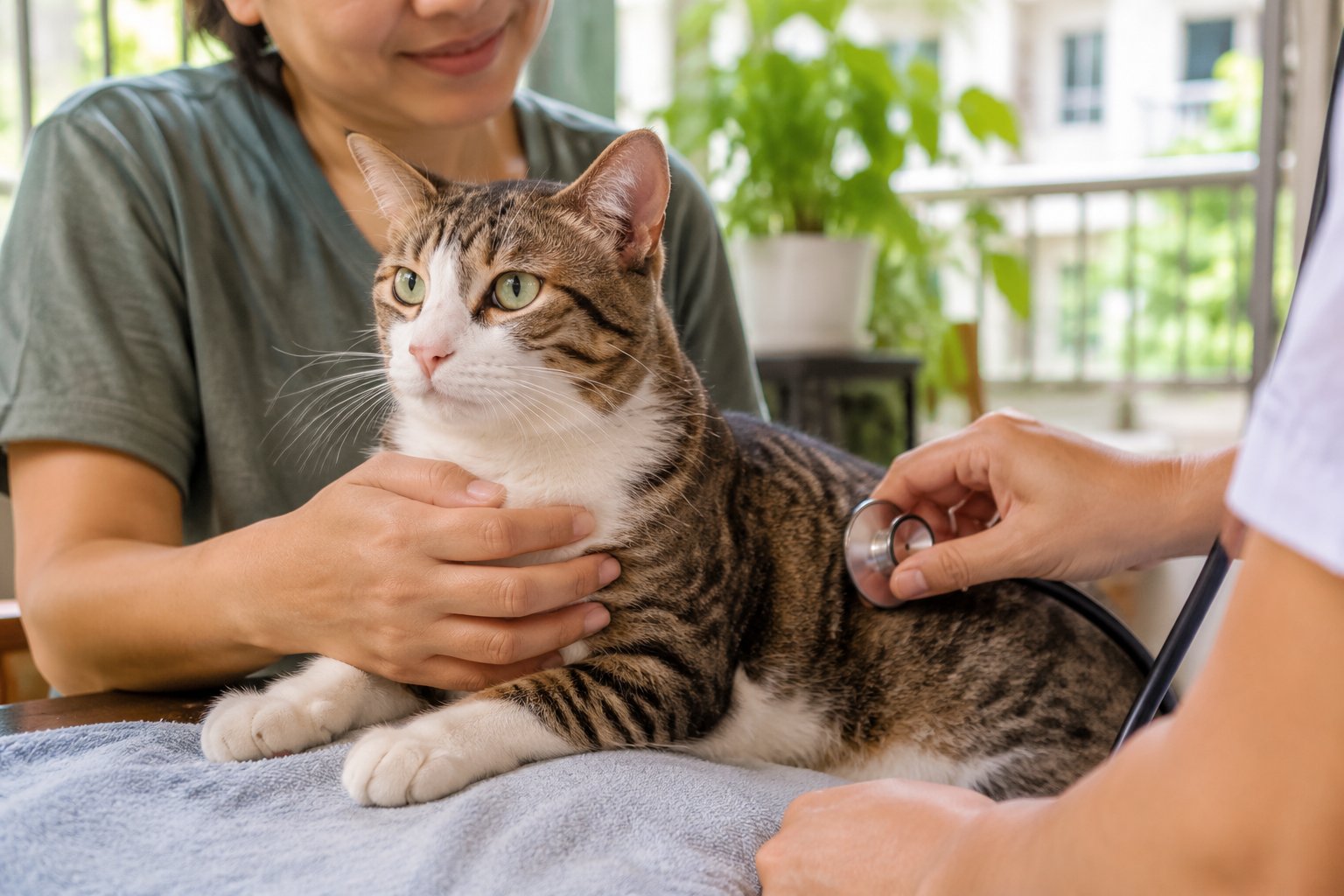
Your vet will start with a physical examination: gum colour, CRT, heart rate, breathing, temperature and hydration. They may press the abdomen to check for pain or swelling.
Common tests include:
- Complete blood count (CBC) to check red cells, white cells and platelets
- Blood chemistry to assess kidney, liver and electrolyte status
- Urinalysis
- FeLV/FIV testing
- Clotting tests if bleeding is suspected
- Imaging (X-ray or ultrasound) if internal bleeding or a mass is suspected
Treatment depends on the cause. Anaemia may need iron supplements, parasite control, immune-suppressing drugs or, in severe cases, a blood transfusion. Shock needs fluids and emergency stabilisation. Dehydration is treated with fluids. Bleeding disorders may need vitamin K or other specific therapy.
Caring for a cat with pale gums at home
Home care supports veterinary treatment — it does not replace it.
- Keep your cat warm and calm during transport.
- Offer water, but do not force it.
- Feed small, frequent meals if your cat is eating.
- Keep a daily log of gum colour, appetite and energy.
- Give all medication exactly as prescribed.
- Keep up parasite control as advised by your vet.
- Avoid self-prescribing supplements or human medicines.
If your cat is not eating, ask your vet about suitable recovery diets. Never give human iron tablets or painkillers without veterinary advice — some are toxic to cats.
Prevention and monitoring
Not all causes of pale gums are preventable, but you can reduce risk:
- Use vet-recommended flea and tick control year-round.
- Keep vaccinations up to date, including FeLV if your cat is at risk.
- Schedule regular wellness checks, especially for senior cats.
- Maintain dental care — brushing or dental treats if your cat tolerates them.
- Keep cats indoors or in secure enclosures to reduce trauma and toxin exposure.
- Store rodenticides, human medicines and household chemicals safely.
- Watch for changes in appetite, weight and energy.
For cats with chronic conditions such as kidney disease, ask your vet how often to monitor bloodwork.
Malaysian context
Malaysia's warm, humid climate means fleas and ticks can be active year-round, so parasite control should be consistent. In a Kuala Lumpur apartment, a cat may have limited outdoor access, but parasites can still arrive on clothing or via other pets. In a Johor terrace house with a garden, cats may roam and encounter ticks, rodents or toxins. Penang's rainy season can bring more standing water and outdoor hazards. Whatever your setup, check gums as part of a monthly home check and raise any changes with your vet.
Related reading
- How to Treat Anemia in Cats at Home: What You Can Safely Do (and What You Can't)
- How to Treat Dehydration in Cats at Home: A Practical Malaysian Guide
- How to Treat Poisoning in Cats at Home: First Aid, Safe Steps and When to Rush to the Vet
- How to Treat Urinary Blockage in Cats at Home: What You Can and Cannot Do
- Arthritis in Cats: Causes and Care (Malaysia Guide)