
What cat coughing treatment in Malaysia really involves
Coughing in cats is often misunderstood. Many owners assume every cough is a hairball, but cats cough for several different reasons, and the right treatment depends entirely on the cause. In Malaysia, where many cats live indoors in apartments and terrace houses, coughing can be linked to dust, air-conditioning, mosquito-borne heartworm, infections, asthma or swallowed foreign objects. This guide explains what coughing looks like, what you can safely do at home, and when a vet visit is essential. It does not replace a veterinary examination, but it will help you describe the problem clearly and avoid common mistakes.
First, is it coughing or something else?
Cats cough by contracting the chest and abdomen, often with the neck stretched forward. The sound may be dry and hacking or wet and productive. It is different from:
- Sneezing: a sudden burst of air through the nose, common with upper respiratory infections.
- Hairball retching: rhythmic heaving that may end with a tubular mass of hair.
- Vomiting: abdominal contractions that bring up food or fluid.
- Reverse sneezing: a snorting, gasping episode that is usually brief.
Video the episode on your phone. A short clip of the cough is one of the most useful things you can bring to a Malaysian vet, because cats often stop coughing the moment they enter the clinic.
Common causes of coughing in cats
Hairballs
Hairballs form when swallowed fur accumulates in the stomach. Cats may retch and cough up a cylindrical hair mass. Occasional hairballs can be normal, especially in long-haired cats, but frequent hairball-like episodes can be a sign of underlying gut disease or over-grooming due to stress or skin problems.
Feline asthma
Asthma is a chronic inflammatory airway disease. Affected cats cough, wheeze and may breathe with effort. Signs can worsen at night, after exposure to dusty litter, cigarette smoke, incense, mosquito coils, strong cleaning products or air-conditioning dust. Asthma cannot be cured, but it can usually be controlled.
Respiratory infections
Cat flu and other upper respiratory infections cause sneezing, nasal discharge, eye discharge and sometimes coughing. Some infections, such as feline calicivirus, can also cause mouth ulcers. Cats with chronic or recurrent infections may need further investigation.
Heartworm disease
Mosquitoes transmit heartworm, and indoor cats are not immune. In cats, heartworm can cause coughing, breathing difficulty and sometimes sudden collapse. There is no safe treatment to kill adult heartworms in cats, so prevention and mosquito control matter.
Foreign bodies
Grass blades, small bones, threads or pieces of plastic can lodge in the nose, throat or airways and trigger sudden, violent coughing or sneezing. This is an emergency if breathing is affected.
Other causes
Less common causes include lung tumours, pneumonia, pleural effusion (fluid around the lungs), heart disease, and anatomical problems such as a collapsing trachea (rare in cats). A vet may need imaging and laboratory tests to distinguish these.
What you can do at home safely
Home care supports recovery but does not replace diagnosis. Safe steps include:
- Reduce airborne irritants. Use dust-free or low-dust litter, avoid aerosol sprays, incense, mosquito coils and strong perfumes near your cat. Keep the home ventilated.
- Clean air-conditioning filters regularly and avoid directing cold air straight at your cat's resting spot.
- Groom regularly to reduce loose fur, especially in long-haired cats.
- Encourage water intake with multiple water bowls or a pet fountain. Good hydration helps thin airway mucus.
- Keep your cat calm and rested. Stress can worsen breathing problems.
- Monitor breathing at rest. Count breaths for 15 seconds and multiply by four. Normal resting breathing is roughly 20–30 breaths per minute; persistently higher rates or visible effort need veterinary attention.
- Do not give human medicines. Cough syrups, decongestants, antihistamines and painkillers can be toxic to cats.
- Do not use essential oils around cats; many, including tea tree and eucalyptus, are toxic.
What a Malaysian vet will do
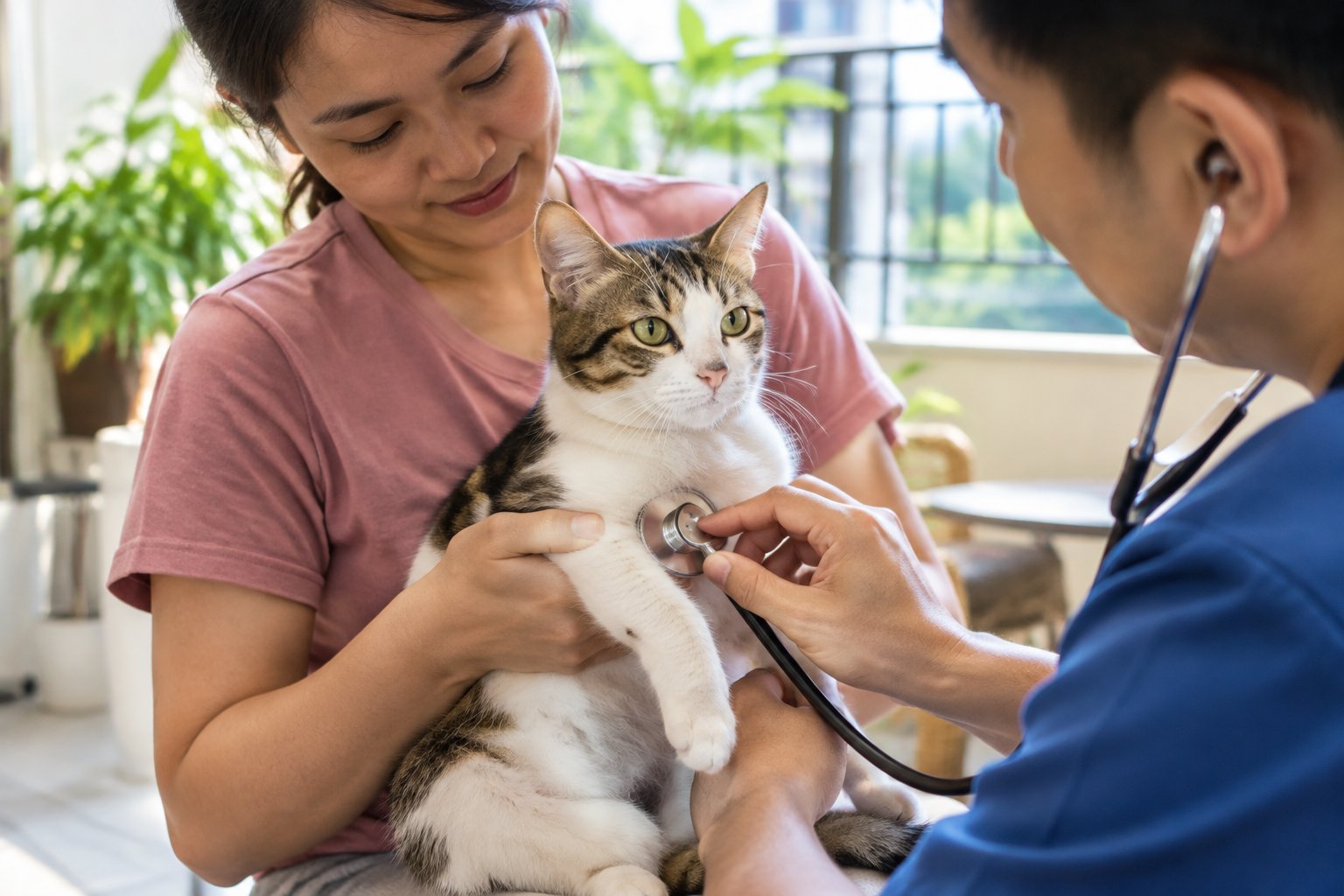
A vet will start with a detailed history: when coughing started, how often, what it sounds like, whether there is nasal discharge, appetite changes, weight loss or breathing difficulty. They will examine the chest, listen to the heart and lungs, check the mouth and throat, and assess breathing rate and effort.
Depending on findings, tests may include:
- Chest X-rays to look for asthma patterns, pneumonia, fluid or heart enlargement.
- Blood tests to check for infection, inflammation and organ function.
- Heartworm testing, especially in cats with access to mosquitoes.
- Airway sampling in some cases, though this usually requires sedation and is not routine.
- Endoscopy if a foreign body is suspected.
Treatment depends on the diagnosis. There is no single "cat cough medicine"; vets treat the underlying cause.
Treatment options by cause
| Cause | Typical treatment approach | Home care focus |
|---|---|---|
| Hairballs | Grooming, high-fibre diet, vet-approved hairball products | Regular brushing, hydration |
| Asthma | Inhaled corticosteroids via spacer, oral steroids, bronchodilators; avoid irritants | Dust control, no smoke or sprays |
| Bacterial infection | Antibiotics only if bacterial infection is confirmed | Rest, hydration, isolation from other cats |
| Heartworm | Supportive care, prevention of further exposure; adult worms are not safely treatable in cats | Mosquito control, vet-recommended prevention |
| Foreign body | Removal under sedation or anaesthesia | Prevent access to string, bones, small objects |
| Heart disease or fluid | Diuretics, heart medication, drainage if needed | Low-stress environment, monitor breathing |
In Malaysia, prices for consultations, X-rays and medicines vary by clinic and location. Ask your vet for an estimate before treatment and discuss what is essential versus optional.
Managing asthma at home
Asthma is one of the most common chronic causes of coughing in cats. Many cats can be well controlled with an inhaler used through a spacer and mask. This takes patience and training. Start by letting your cat sniff the mask, reward calm behaviour, and build up gradually. Never force the mask on a struggling cat. Your vet can show you how to use the device and how to recognise when control is poor.
Keep a symptom diary. Note coughing episodes, time of day, possible triggers and breathing rate at rest. This helps your vet adjust treatment and avoid unnecessary medication changes.
Hairball management that actually helps
Hairballs are common in Malaysian homes where cats groom frequently. Practical steps:
- Brush your cat several times a week, more often during shedding periods.
- Feed a complete diet; some cats benefit from increased fibre, but sudden diet changes can cause stomach upset.
- Use only vet-approved hairball remedies. Petroleum-based products should not be used long-term without advice.
- If your cat is coughing up hairballs more than occasionally, or also has vomiting, diarrhoea or weight loss, book a vet visit.
Preventing coughing where possible
Not all causes are preventable, but you can reduce risk:
- Keep cats indoors or in secure enclosures to reduce exposure to infectious cats and foreign bodies.
- Control mosquitoes with screens and safe repellents; avoid mosquito coils and sprays around cats.
- Avoid smoking indoors and minimise incense and strong fragrances.
- Use low-dust litter and clean litter trays regularly.
- Maintain regular parasite prevention as advised by your vet.
- Keep up with vaccinations and annual health checks.
When to see a vet
Contact a vet promptly if your cat:
- Coughs several times a day or most days.
- Has a cough that has lasted more than a few days.
- Shows nasal or eye discharge, fever, lethargy or reduced appetite.
- Is losing weight or has a poor coat.
- Has frequent hairballs or vomiting.
Seek emergency care immediately if your cat:
- Breathes with an open mouth or visibly uses abdominal muscles.
- Has blue, pale or grey gums.
- Collapses or cannot settle.
- Coughs up blood.
- Has a sudden severe coughing fit after chewing on string, bones or plants.
Do not wait to "see if it passes" when breathing is affected. Cats hide illness well and can deteriorate quickly.
Living with a coughing cat in Malaysia
Malaysian homes often combine air-conditioning, ceiling fans, open windows and humid outdoor air. These can affect cats with sensitive airways. In a Kuala Lumpur apartment, dust from balcony screens and air-conditioning filters can build up quickly; regular cleaning helps. In a Johor terrace house, cats may have more access to mosquitoes and garden plants, so mosquito control and preventing chewing on plants matter. During the Penang rainy season, dampness can worsen mould and dust mites indoors, so ventilate rooms and dry bedding thoroughly.
Questions to ask your vet
- What is the most likely cause of my cat's cough?
- Which tests are needed now, and which can wait?
- What are the risks and costs of each option?
- How will we know treatment is working?
- What signs mean I should return immediately?
- Is heartworm prevention appropriate for my cat?
Bottom line
Cat coughing treatment in Malaysia is not one-size-fits-all. Hairballs, asthma, infections, heartworm and foreign bodies all require different approaches. Safe home care focuses on reducing irritants, grooming, hydration and monitoring breathing. Persistent or distressing coughing needs a vet, and breathing difficulty is always an emergency. Never give human cough medicine to a cat. With the right diagnosis and a clear plan, most coughing cats can be helped.
This article is general information and does not replace veterinary advice. Always consult a licensed veterinarian for diagnosis and treatment of your cat.
Related reading
- Cat Health Guide Malaysia: Symptom Check, Red-Flag Triage & When to See a Vet
- Cat Itching Treatment in Malaysia: A Practical Guide for Itchy Cats
- Coughing in Cats: Causes and Care (Malaysia Guide)
- Coughing in Cats in Malaysia: Causes, When to Worry & What to Do
- Signs of Diarrhea in Cats in Malaysia: What's Normal, What's Not
- Signs of Ear Mites in Cats in Malaysia: How to Spot, Treat and Prevent Them
- Sneezing Blood in Cats: Causes and Care (Malaysia Guide)
- Sneezing Blood in Cats in Malaysia: Causes, What to Do, and When to See a Vet
- Anemia in Cats in Malaysia: Signs, Causes, and What to Do
- Blood Test for Cats: What to Expect (Malaysian Owner's Guide)
- Cat Anemia Treatment in Malaysia: A Practical Owner's Guide
- Cat Bad Breath Treatment in Malaysia: Causes, Home Care and When to See a Vet

