
Quick answer
Limping in cats means one or more legs are not working normally, usually because of pain, injury, infection or joint disease. Check for swelling, wounds and paw foreign bodies, restrict movement, and see a vet if your cat cannot bear weight, cries, or the limp lasts more than 24–48 hours.
What limping in cats actually looks like
Cats are good at hiding pain. A limping cat may not dramatically drag a leg. Instead, you might notice:
- A slight head bob when walking
- Shorter steps on one side
- Reluctance to jump onto the sofa or bed
- Sitting in a “meatloaf” position more often
- Licking one paw or leg excessively
- Being grumpy when touched near a limb
- Walking stiffly after rest
Because cats mask discomfort, a limp that appears “sudden” may have been developing for days. Watch your cat walk towards you on a non-slip surface, then away from you. Look from the side and from behind. A cat with hind-limb pain often drops its hips or takes shorter strides.
Common causes of limping in cats
Limping is a sign, not a diagnosis. The cause can be in the paw, leg, joint, spine or even elsewhere in the body. Common groups include:
Paw and nail problems
- Cuts, thorns, glass or grass seeds stuck between pads or toes
- Torn or overgrown nails, or nails caught in fabric
- Burns from hot surfaces or chemicals
- Fungal or bacterial infections between toes
Soft-tissue injuries
- Sprains and strains after jumping or landing awkwardly
- Muscle tears
- Bruising after a fall
Fight wounds and abscesses
Cats that go outdoors or live in multi-cat households may fight. A small puncture wound can seal over and form an abscess. The leg becomes swollen, hot and painful, and the cat may develop a fever. Sometimes the abscess bursts and drains pus.
Bone and joint problems
- Fractures after road traffic accidents or falls from height
- Dislocated joints
- Arthritis, especially in older cats
- Growth-plate injuries in young cats
Infections and systemic illness
- Tick-borne infections can cause lameness, fever and lethargy
- Bacterial infection of a joint or bone
- Immune-mediated joint disease
Nerve and spinal problems
- Spinal injury or disc disease
- Nerve damage after trauma
- Blood clot affecting the hind legs, which is an emergency
Cancer
Bone tumours are uncommon but possible, especially in older cats with persistent, progressive lameness.
How to check your cat at home safely
You can gather useful information before seeing a vet, but safety comes first. A painful cat may bite or scratch even if it is usually gentle.
- Watch first. Let your cat walk on a non-slip floor. Note which leg seems affected and whether the cat bears weight.
- Look for obvious wounds. Check for blood, swelling, or a paw held up.
- Check the paw gently. With a helper wrapping the cat in a towel, lift the paw and look between the toes and pads. Do not pull out anything deeply embedded.
- Feel for heat or swelling. Compare the affected leg with the opposite leg. Do not press hard.
- Note other signs. Is your cat eating, drinking, using the litter box normally? Any vomiting, fever or lethargy matters.
Stop immediately if your cat cries, struggles violently, or seems to be in severe pain. Do not give any medication without veterinary advice.
What NOT to do
- Do not give human painkillers. Paracetamol and ibuprofen are toxic to cats and can be fatal.
- Do not apply human creams or ointments unless your vet prescribes them.
- Do not force your cat to walk to “test” the leg.
- Do not attempt to remove deeply embedded objects yourself.
- Do not delay if your cat cannot bear weight or is in obvious pain.
Home care while you arrange a vet visit
If your cat is weight-bearing and otherwise well, you can take these steps while you arrange an appointment:
- Restrict activity. Confine your cat to a small, quiet room or a large crate. Avoid stairs, jumping and rough play.
- Provide soft bedding and easy access to food, water and a litter box.
- Use a low-sided litter box so your cat does not have to climb in.
- Keep the litter box clean and check for urine and stool output.
- Observe closely. Note whether the limp improves, worsens or stays the same.
- Prevent licking. If your cat is licking a wound excessively, ask your vet about a cone or protective collar.
When to see a vet
See a veterinarian promptly if you notice any of the following:
- Your cat cannot bear weight on the leg at all
- The limp lasts more than 24–48 hours
- There is swelling, heat, redness or discharge
- Your cat cries when touched or moves
- Your cat is lethargic, not eating, or has a fever
- There is a visible wound, especially a puncture
- Your cat is dragging a limb or knuckling over on the paw
- Sudden hind-limb weakness or paralysis
- The limp follows a fall, road accident or fight
- Your cat is very young or elderly
Emergency signs include sudden paralysis, severe pain, heavy bleeding, an open fracture, or a cat that is collapsed or struggling to breathe. Contact an emergency veterinary clinic immediately.
What to expect at the vet
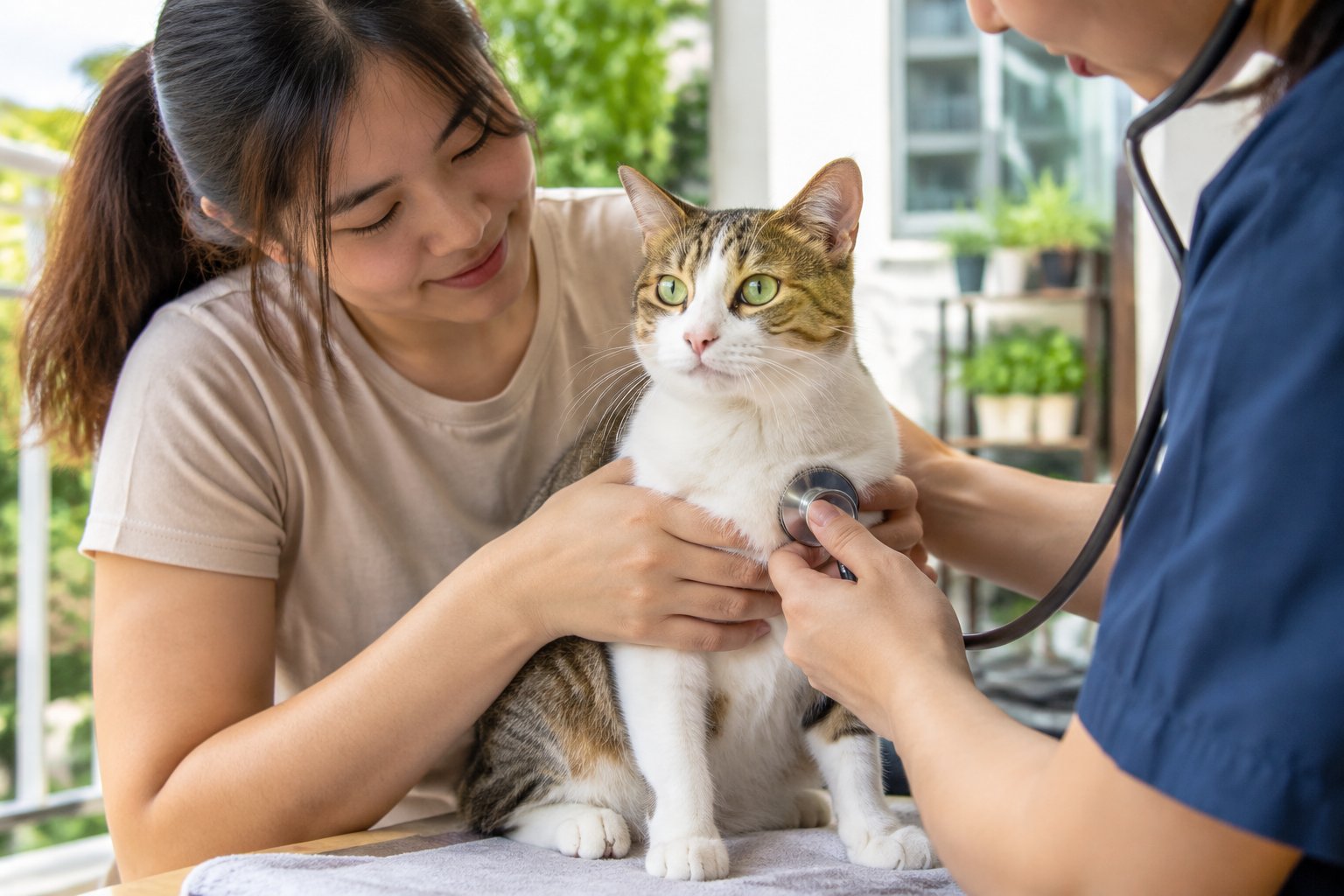
Your vet will ask about your cat’s history, indoor/outdoor access, recent fights or falls, and how long the limp has been present. They will examine your cat, watching it walk and gently feeling the limbs. Depending on findings, they may recommend:
- X-rays to check for fractures, arthritis or foreign bodies
- Blood tests to look for infection or underlying illness
- Fine needle aspiration of a swelling
- Wound exploration under sedation or anaesthesia
Treatment depends on the cause and may include rest, pain relief, antibiotics, wound care, a splint or bandage, or surgery. Your vet will give you specific instructions for your cat.
How to prevent limping where possible
Not all limps are preventable, but you can reduce risk:
- Keep cats indoors or in a secure enclosure to reduce fights, road accidents and falls.
- Check paws after outdoor access for grass seeds and thorns.
- Maintain a healthy weight to reduce joint strain.
- Provide safe jumping options such as ramps or steps for older cats.
- Trim nails regularly and check for overgrowth.
- Book regular vet check-ups, especially for senior cats.
Comparison table: limp severity and suggested action
| What you see | Possible meaning | Suggested action |
|---|---|---|
| Slight limp, cat still jumps and eats | Mild sprain, small paw injury | Restrict activity, monitor for 24 hours; vet if not improving |
| Obvious limp, reluctant to jump | Pain in joint or limb | See vet within 24–48 hours |
| Cannot bear weight, holds leg up | Fracture, abscess, severe sprain | See vet promptly or same day |
| Swelling, heat, discharge | Infection or abscess | See vet promptly |
| Dragging hind legs, sudden weakness | Clot, spinal or nerve problem | Emergency vet immediately |
| Limp after fight | Abscess or bite wound | See vet within 24 hours |
Malaysian context
In Malaysia, cats often have outdoor access, which increases the chance of fights, road accidents and paw injuries. In Kuala Lumpur apartments, cats may be kept indoors but can still injure themselves jumping from furniture or balconies. In Johor terrace houses, cats may roam into car porches or gardens and pick up grass seeds or thorns. Penang’s rainy season can make outdoor surfaces slippery and increase the risk of falls. Whatever your setup, the principles of rest, observation and timely veterinary care apply.
Vet disclaimer
This article is for general information only and is not a substitute for veterinary advice. Always consult a licensed veterinarian for diagnosis and treatment of your cat’s condition.
Related reading
- Anemia in Cats in Malaysia: Signs, Causes, and What to Do
- Blood Test for Cats: What to Expect (Malaysian Owner's Guide)
- Cat Anemia Treatment in Malaysia: A Practical Owner's Guide
- Cat Dental Pain Treatment in Malaysia: A Practical Owner's Guide
- Cat Ear Mites Treatment in Malaysia: A Complete Owner's Guide
- Cat Excessive Thirst Treatment in Malaysia: What to Do When Your Cat Drinks Too Much
- Cat Excessive Urination Treatment in Malaysia: A Practical Guide for Owners
- Cat Eye Infection Treatment in Malaysia: A Practical Owner's Guide

